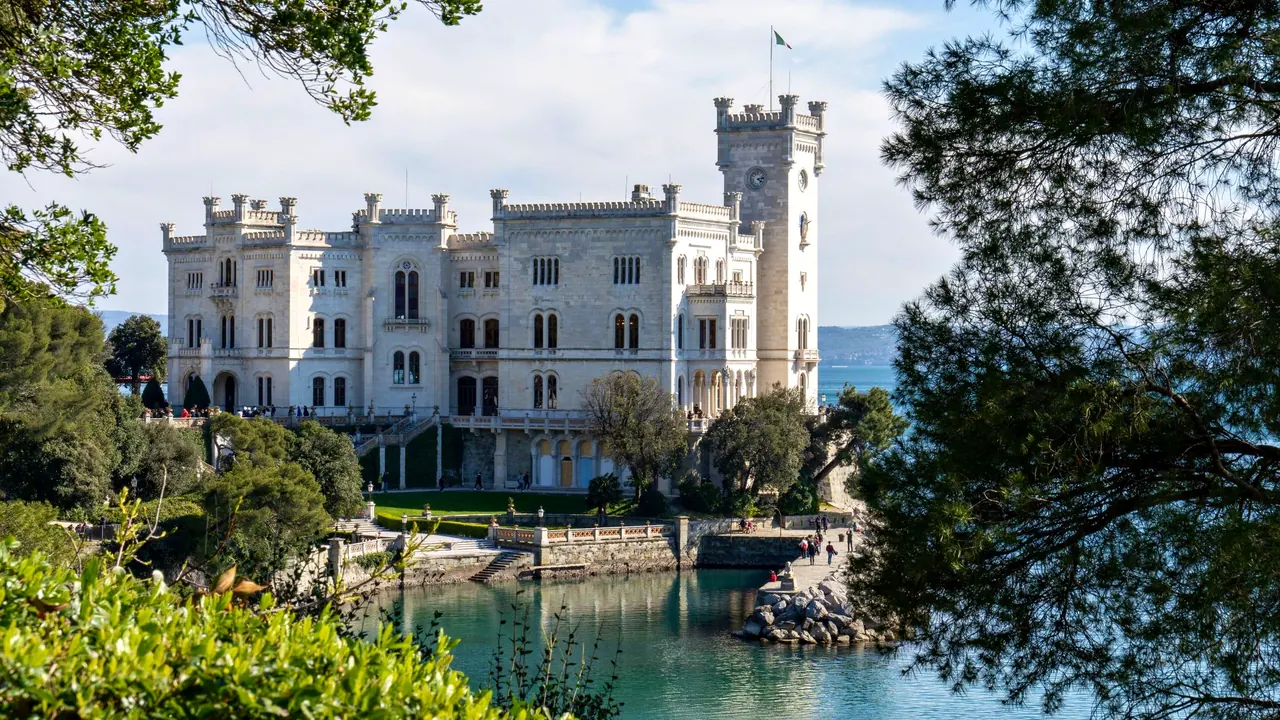
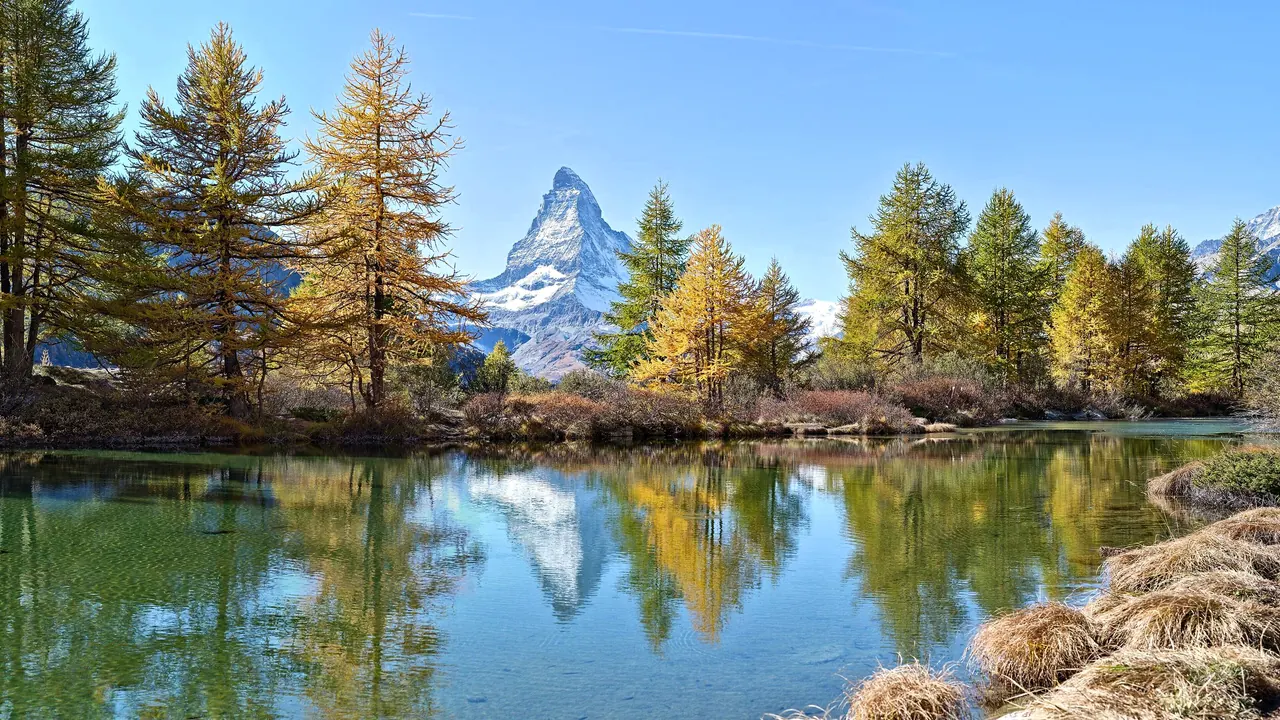
Photos: Trieste by Tibor Szabo, Pexels License; Zermatt by Roy Egloff, CC BY-SA 4.0, cropped.
Trieste or Zermatt?
Our verdict in twelve categories, each scored against the same fixed benchmark cities, and the climate month by month, so you can choose for your trip.
Choose Trieste for
- beaches
- prices
- day trips
Trieste suits a traveller who wants a city with layers. It has Habsburg squares and coffee houses, an opera house, and a sea you can swim in from June to September. Aquileia, Piran and even Venice are within a day's reach. It is also far kinder on the wallet, and evenings over a spritz by the water suit a slow, curious trip.
Choose Zermatt for
- nature and the outdoors
- wellness
- getting around
Choose Zermatt when the mountains are the whole point. The Matterhorn stands over a car-free village, lifts climb to glacier terrain and summer opens hundreds of kilometres of trails, so skiers, hikers and climbers get something Trieste's Karst cannot match. Expect to pay heavily for it, and to find little to do indoors beyond a good hotel spa.
Scoreboard
Twelve categories on one fixed scale from 0 to 100. The shaded stretch is the gap between the two.
Your match
Pick a travel style or drag the sliders, and both match scores follow your weighting.
Wins on beaches and prices with your weighting.
Wins on nature and the outdoors and wellness with your weighting.
What matters to you?
Category by category
What the scores mean for a trip.
Beaches & swimming
Neither has sand, but only Trieste has the sea. From June to September locals swim off the stepped platforms at Barcola, from the old bathing establishments in town and in the pebble coves at Sistiana, Duino and Grignano, and Piran's shore is under an hour away.
Zermatt has no sea and no bathing lake, and the tarns that reflect the Matterhorn are far too cold to swim in. There, a swim means a hotel pool.
Food & drink
Trieste has more to eat, and more character to it. There are buffet counters carving boiled pork with horseradish, jota and sardoni, Habsburg cakes, a coffee culture with its own vocabulary, and farmhouse osmize on the Karst pouring Vitovska and Terrano.
Zermatt's best meals are long lunches on chalet terraces around Findeln and Furi: raclette, air-dried beef and Valais wines. Its few ambitious fine-dining kitchens are the one thing Trieste lacks. Otherwise the choice is narrower and dearer, and much of it closes between seasons.
Culture & sights
This is one of the widest gaps between the two. Trieste has a whole city's worth of history: Piazza Unità facing the sea, the Canal Grande and San Spiridione, San Giusto's mosaics and castle, a Roman theatre, Miramare Castle and the Risiera di San Sabba memorial.
Zermatt's heritage is mountaineering, told through the Matterhorn Museum, the climbers' cemetery and the old larch barns of the Hinterdorf, and together they fill a morning. Culture is a reason to go to Trieste. In Zermatt it is an extra.
Nightlife
Neither is a place for a big night out, but their evenings are quiet in different ways. In Trieste the evening means aperitivo around Piazza Unità, the Canal Grande and Cavana, with student wine bars and, in summer, kiosks along the Barcola seafront.
Zermatt's is winter après-ski: ski boots and loud music in bars beside the slopes, then a few small clubs that stay open late on busy weekends. In summer and between seasons Zermatt goes to bed early, while Trieste's gentle evenings carry on all year.
Nature & outdoors
Zermatt is in another league here. The Matterhorn, a ring of four-thousand-metre peaks, the Gorner Glacier and lifts up to the Matterhorn Glacier Paradise give it skiing into Italy, summer glacier pistes, the Five Lakes walk and guided first ascents.
Trieste's outdoors are gentler but close at hand: the Strada Napoleonica above the gulf, the Rilke Path, the Val Rosandra gorge, the Grotta Gigante, and sailing or snorkelling off Miramare. It is a good mix of sea and limestone, not high mountains.
Day trips
Trieste is much the better base. Aquileia, Cividale, Palmanova, Grado and the Collio wine country are all about an hour away, and Piran is less than that across the Slovenian border. Ljubljana, Postojna and Venice make longer days.
Zermatt sits at the end of its valley, so every outing starts with the train down to the Rhône. Sion's castle hills and Brig's Stockalper Palace are worth seeing, but most visitors spend their spare days on the mountain instead.
Good for families
Both are safe and calm with children and neither is built around them, so the choice comes down to what a family likes doing. Trieste has castles, the Grotta Gigante, a small aquarium, a science centre and summer days at Barcola. On the other hand, swimming there is off rocks and the upper town is steep.
Zermatt's car-free streets, ski schools on the Sunnegga nursery slopes, marmots and cog railways suit active families. Rainy days are hard to fill, though, and the highest viewpoints are too much for small children.
Getting around
Zermatt is the easier of the two once you have arrived. The car-free village is a compact strip you can walk from end to end, the cog railway, funicular and gondolas start within walking distance of the centre, and electric taxis cover the edges.
Trieste's flat waterfront centre is just as walkable. The catch is San Giusto and the districts behind it, which mean long flights of steps. Anything further out relies on buses, boats to Muggia or a car for the Karst. Zermatt's own drawback is arriving by train via Täsch.
Shopping & style
Neither is a place to plan a trip around shopping, but Trieste gives you more to browse. Its old-town lanes of antique and second-hand dealers, the market stalls by the Canal Grande and food worth packing, such as freshly roasted coffee, Karst wine and presnitz, make a more varied afternoon than anything Zermatt offers. Corso Italia covers everyday clothes and shoes.
Zermatt beats Trieste in only one respect, which is kit. If you need boots, a proper shell or ski equipment, its mountain outfitters are far better stocked than any shop in Trieste. Beyond that there are watch boutiques for well-off skiers and Matterhorn souvenirs, so you shop there for what the trip needs, not for the pleasure of browsing.
Affordability
Trieste costs what a provincial northern Italian city costs, not what the famous ones charge. Rooms are reasonable for most of the year, but they get harder to find around the Barcolana regatta in autumn and in high summer, so book early for those weeks. Seafood restaurants and smarter hotels charge ordinary Italian city prices, which makes a comfortable stay fair value rather than a bargain.
Zermatt is one of the dearest places in the Alps. Even plain hotels are steep in season, and a drink with a Matterhorn view costs far more than it would almost anywhere else in Europe. The biggest savings come from sleeping down the valley in Täsch and eating supermarket picnics on the trail.
Live music & performing arts
Trieste has a real season. There is opera and ballet at the 19th-century Teatro Verdi, a Habsburg fondness for operetta, theatre at the Politeama Rossetti and summer concerts in the castle courtyard on San Giusto.
Zermatt has no theatre or concert hall, so its performances depend on timing: Zermatt Unplugged in spring and a chamber music festival in late summer. Outside those weeks, Trieste wins easily.
Wellness & relaxation
Zermatt is the better place to unwind in comfort. It has many hotel spas, several with day access and mountain views, and its car-free quiet and clear air make for proper pampering after a day on the slopes.
Trieste's relaxation is about pace instead: long sittings in coffee houses and sunset walks along the Molo Audace, with only hotel spas for treatments. Neither has thermal baths in town.
When should you go?
Pick your month. The climate figures are measured averages, not a forecast.
Trieste in July
Zermatt in July
Daytime high, °C
Rainfall in the month, mm
Where the figures come from
Zermatt has no weather station within reach, so its figures come from a gridded climate model rather than a measured record, and read a broad area rather than the city itself.
Temperature and rainfall are climate normals, averaged over the years shown. Trieste: 1991-2020 normals, Trieste (1.6 km from centre). Zermatt: 1991-2020 normals, TerraClimate 4 km grid at the town, no weather station within 90 km.
Trieste is warmest from June to September. Highs then reach 29°C, the sea at Barcola warms to 25°C and July is the sunniest month, so this is the swimming season. Autumn is the wettest stretch, with up to 125mm in November, though October is still mild enough for walking. Winters are cool rather than freezing, and spring is pleasant for the streets and the Karst.
Zermatt runs on a different calendar. Summer highs of about 14°C make July and August ideal for hiking. Winter days stay below freezing, around -2°C in January, and that is the ski season. Rain and snow are spread fairly evenly through the year, with the wettest month in November, the same as in Trieste.
Which traveller are you?
For a culture and arts trip, Trieste is the clear choice. Its Habsburg squares, San Giusto's mosaics, Miramare Castle, an opera season at the Teatro Verdi and Aquileia an hour away fill days that Zermatt's small mountaineering museum cannot.
On an outdoors trip, Zermatt is in a class of its own. The Matterhorn, glacier lifts above 3,800m, skiing across into Italy and hundreds of kilometres of summer trails go far beyond Trieste's Karst walks and caves, pleasant as those are for a gentler day.
On a tight budget, Trieste is the only realistic option. Buffet plates, standing-bar coffee, cheap buses and free swimming at Barcola keep costs down. In Zermatt the rooms, lifts and terrace lunches are steep, and self-catering only softens the bill.
Before you go
| Measure | Trieste | Zermatt |
|---|---|---|
| Official language | Italian | French, German, Italian, Romansh |
| Currency | Euro (EUR) | Swiss Franc (CHF) |
| Sockets | CFL230 V, 50 Hz | CJ230 V, 50 Hz |
| Driving side | Right | Right |
| Time zone | UTC+1, UTC+2 in summer | UTC+1, UTC+2 in summer |
| Emergency number | 112 | 112 |
| Elevation | 2 m | 1,624 m |
| Main airport | Trieste Airport (TRS)31 km from centre32 non-stop destinations | Geneva International Airport (GVA)128 km from centre150 non-stop destinations |
| Public holidays this year | 13 days | 9 days |
By the numbers
| Measure | Trieste | Zermatt |
|---|---|---|
| City population | 198,417 | 6,023 |
| People per km² | 2,332 | 25 |
| Museums within 10 km | 33 | 2 |
| UNESCO World Heritage sites within 50 km | 5 | 2 |
| Swim season, months above 21 °C | 4 months | - |
Where else could you go?
Every comparison below shares a destination with this one, so you can follow Trieste or Zermatt somewhere new.
- Piranvs Trieste
- Rovinjvs Trieste
- Chamonixvs Zermatt
- Ljubljanavs Trieste
- Interlakenvs Zermatt
- Bledvs Trieste