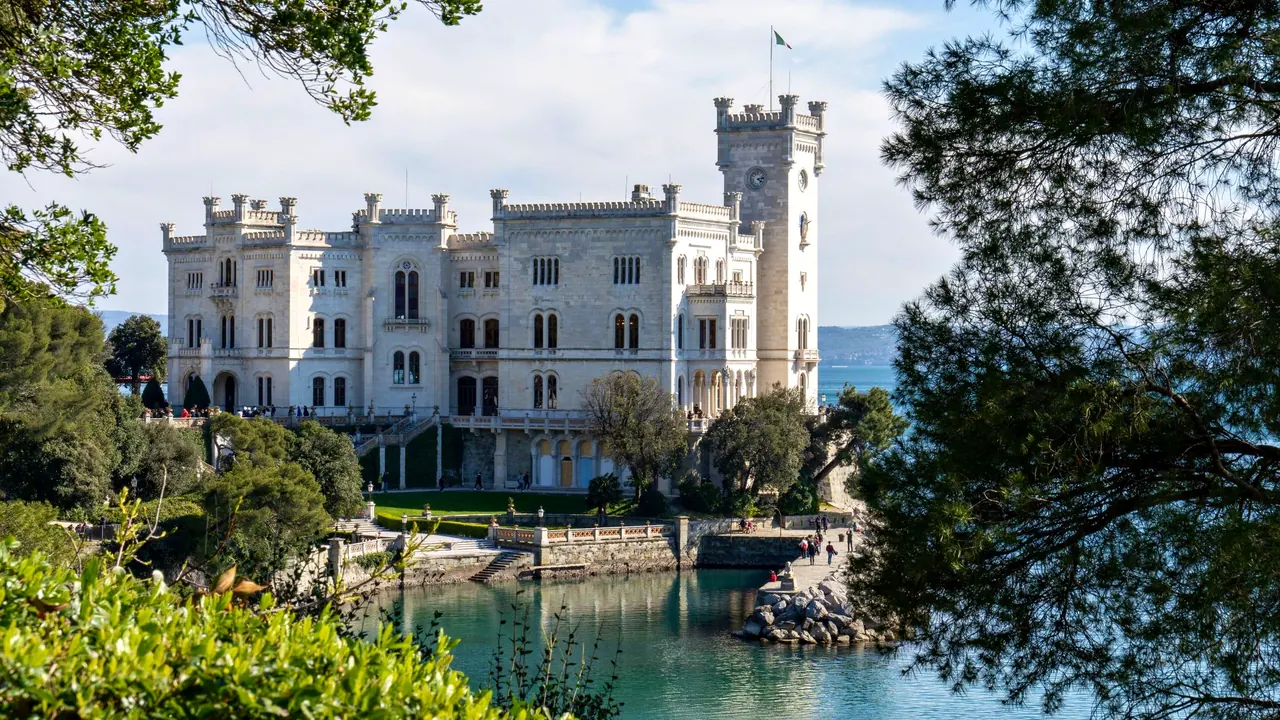
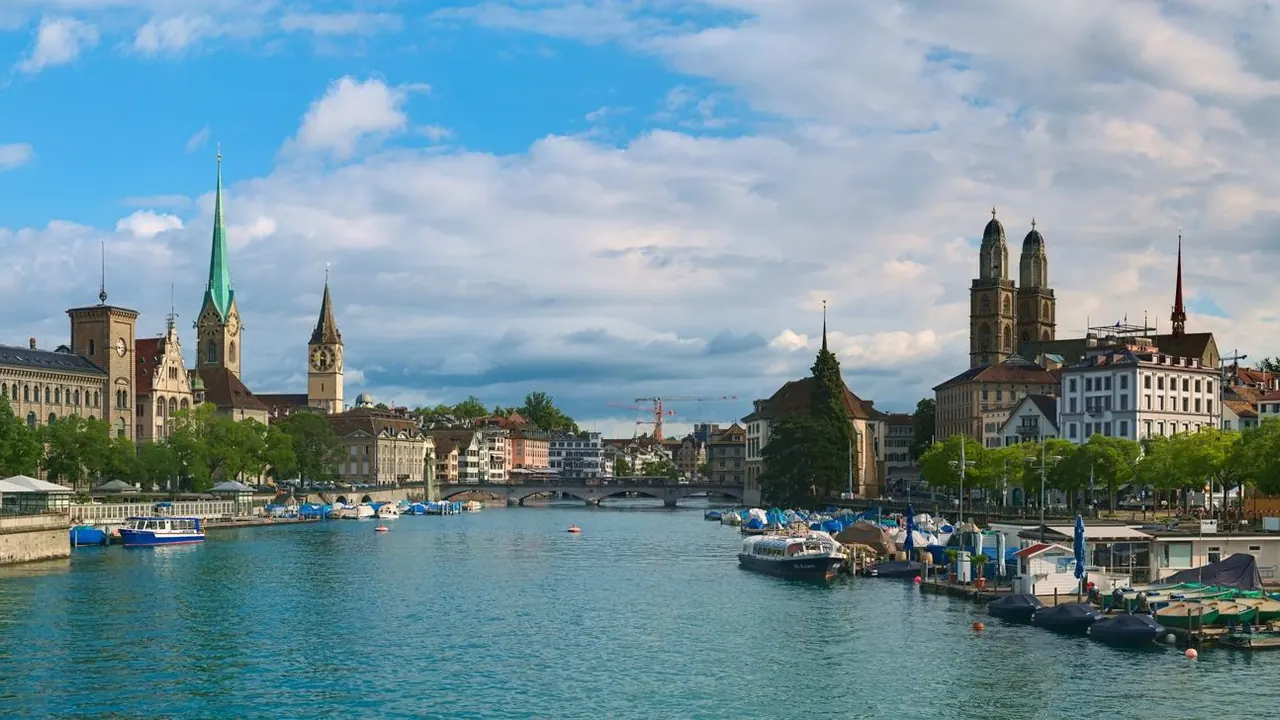
Photos: Trieste by Tibor Szabo, Pexels License; Zurich by Daniel Kraft, CC BY-SA 3.0, cropped.
Trieste or Zurich?
Our verdict in twelve categories, each scored against the same fixed benchmark cities, and the climate month by month, so you can choose for your trip.
Choose Trieste for
- prices
- beaches
- food and drink
Trieste suits travellers who want a sea city with a slower pulse: swimming off the rocks at Barcola, Habsburg coffee houses, buffet lunches of boiled pork, and an evening spritz on Piazza Unità. It costs far less than Zurich, and the Karst, Friuli and the Slovenian coast are all close by. That makes it better for a week of unhurried wandering than for a packed itinerary.
Choose Zurich for
- nightlife
- shopping
- getting around
Pick Zurich if ease and polish matter more than the budget. Trams and trains make every outing effortless, the zoo and the lake lidos keep children happy, and the Opernhaus and Tonhalle give it a stronger stage. The clubs of Kreis 4 and 5 run until morning in a way Trieste never does, and the Alps are close enough for hiking or a day's skiing. The catch is cost, because almost everything is expensive.
Scoreboard
Twelve categories on one fixed scale from 0 to 100. The shaded stretch is the gap between the two.
Your match
Pick a travel style or drag the sliders, and both match scores follow your weighting.
Wins on prices and beaches with your weighting.
Wins on nightlife and shopping with your weighting.
What matters to you?
Category by category
What the scores mean for a trip.
Beaches & swimming
Neither city has sand, but Trieste has the sea. At Barcola you swim from stepped concrete and pine-shaded lawns into a clear Adriatic. The pebble coves at Sistiana and Duino, or Piran across the border, make for a prettier day, and the season runs from June to September.
Zurich swims in its lake and in the Limmat, from wooden bathing houses, lidos and the Letten river baths, where people let the current carry them downstream. It makes a lovely dip after sightseeing, but the season is shorter and there is no coast to explore.
Food & drink
Trieste has the more distinctive table. There are buffet counters carving boiled pork with horseradish, jota soup, sardoni, Central European cakes, a coffee vocabulary of its own, and the Karst osmize selling Vitovska and Terrano. Fine dining is limited, though.
Zurich is polished rather than characterful, with Geschnetzeltes and rösti in the guild houses, fondue in winter and a respectable fine-dining tier. It is stronger on chocolate and the Luxemburgerli of the Paradeplatz tea rooms, but street food and markets are thin and every meal is expensive.
Culture & sights
In Trieste the whole city is the sight. Piazza Unità opens onto the sea, the Borgo Teresiano lines the Canal Grande, and San Giusto has its mosaics and castle above a Roman theatre. Miramare Castle, the great synagogue and the Risiera di San Sabba add layers of empire and war.
Zurich is stronger on museums than on streetscape: the Kunsthaus, the Swiss National Museum and the Rietberg, plus a tidy Altstadt with the Grossmünster and Chagall's Fraumünster windows. Its essentials fit comfortably into two or three days, while Trieste's history spreads over more ground.
Nightlife
Zurich is the place for a late night. At weekends the clubs in Kreis 4 and 5 and Zurich West run until morning, Langstrasse stays rough-edged and busy, and every August the Street Parade fills the lake shore with techno. The main brake is the price of a round.
Trieste's evenings are about aperitivo and dinner: spritz around Piazza Unità and in Cavana, a few student wine bars, and summer kiosks along Barcola. There are few clubs, and on winter weeknights the streets are quiet by midnight.
Nature & outdoors
Both cities have mountains nearby, but Zurich's are bigger. Rigi, Pilatus and the Glarus valleys are about an hour away for high-alpine hiking, the Uetliberg is a short train ride from the centre, and in winter Flumserberg is close enough for a day's skiing.
Trieste's outdoors is limestone and sea: the Strada Napoleonica above the gulf, the Rilke Path at Duino, the Val Rosandra gorge, and the Grotta Gigante and Škocjan caves. It also offers sailing and snorkelling in the Miramare reserve, which a lake cannot match, though the Bora can make winter walks bitter.
Day trips
Both are excellent bases, but they work in different ways. From Trieste your outings reach into three countries: Roman Aquileia with its mosaic floor, star-shaped Palmanova, Cividale and the Collio wine villages in Friuli, Piran and Ljubljana in Slovenia, and the Istrian towns for those with a car. Venice makes a long but realistic day by train.
Zurich is the easier base if you don't want to drive. Trains from the main station reach Lucerne, Bern, Basel and St Gallen's abbey library in about an hour each, the Rhine Falls pair with Stein am Rhein, and boats run up the lake to Rapperswil. Trieste's wine country and Istria, by contrast, are much easier by car.
Good for families
Zurich makes life with children much simpler. Its zoo has a Madagascar rainforest hall, the lake lidos have shallow areas, the boat trips suit all ages, the Technorama is a short ride away in Winterthur, and the trams take buggies easily.
Trieste is safe and calm but has fewer outings: the gardens at Miramare, the Grotta Gigante, a small aquarium and a science centre. Swimming off rocks and the steep streets behind the waterfront make it better for older children than for toddlers.
Getting around
Zurich is about as easy as cities get. Trams, the S-Bahn, funiculars and even the lake boats share one ticket, and the airport is a short train ride from the main station.
Trieste takes more effort. Its flat waterfront centre is easy to walk, buses run out to Barcola, Miramare and the Karst, and boats cross to Muggia. But San Giusto means long flights of steps, and you will want a car for the wine country and trips across the border.
Shopping & style
Zurich is the shopping city of the two, mainly thanks to the watchmakers, jewellers and department stores of Bahnhofstrasse. It also has design shops in the viaduct arches of Zurich West and boutiques in the Niederdorf, though prices are high everywhere.
Trieste has ordinary chain shops on Corso Italia. Its charm is in the antique shops of the old town and in things to eat and drink: roasted coffee, Karst wine and honey, and presnitz.
Affordability
Trieste is far easier on the wallet. Buffet plates, coffee at the bar and buses cost little, rooms are reasonable except in high summer and around the regatta, and the best pleasures, Barcola and the Karst paths, are free.
Zurich is among the most expensive places in the world to visit, from the simplest hotel room to a casual lunch. Supermarket picnics by the lake and the free lidos help, but the same trip will cost far more there.
Live music & performing arts
Zurich has the deeper stage. The Opernhaus is one of Europe's most respected opera houses, the Tonhalle Orchestra plays in a restored nineteenth-century hall, and the Schauspielhaus is a leading German-language theatre. Rote Fabrik and the venues of Kreis 4 and 5 cover jazz, indie and electronic music.
Trieste holds its own on opera, with the Teatro Verdi's season, a Habsburg love of operetta and summer concerts in the castle courtyard on San Giusto. Beyond the theatres, live music is thin.
Wellness & relaxation
For proper bathing, Zurich wins. There are thermal pools and a rooftop pool in the vaults of the old Hürlimann brewery, winter saunas in the lake bathing houses with cold plunges in between, and Baden's hot springs, in use since Roman times, twenty minutes away.
Trieste offers a slow pace rather than spas: long sittings in coffee houses and sunset strolls along the Molo Audace. For thermal baths you have to leave the city.
When should you go?
Pick your month. The climate figures are measured averages, not a forecast.
Trieste in July
Zurich in July
Daytime high, °C
Rainfall in the month, mm
Temperature and rainfall are climate normals, averaged over the years shown. Trieste: 1991-2020 normals, Trieste (1.6 km from centre). Zurich: 1991-2020 normals, Zurich Town / Ville. (2.2 km from centre).
Trieste has the longer warm season. From June to September the highs reach 29°C, July is the sunniest month, and the Adriatic warms to about 25°C in July and August, so swimming at Barcola is easy all summer. Late spring and early autumn are the best times for walking the streets and the Karst. The rain sets in from September, with November the wettest month at about 125mm, and winters are mild but grey, with the Bora adding a chill.
Zurich is cooler, with summer highs peaking around 24°C. That keeps sightseeing comfortable even in July, but May to August is also when most of its rain falls, so showers are common. Winter highs sit near 4°C and there is very little sun. The lake lidos and mountain walks belong to June to September, while winter is better suited to saunas and skiing.
Which traveller are you?
On a trip on a tight budget, Trieste is the clear pick. Zurich is among the costliest cities anywhere, so money that would cover a few careful days there stretches to a full, unhurried week by the Adriatic, with good food and sea swimming included.
On a family trip with young children, choose Zurich. The city runs so smoothly, from its transport to its lake shore, that days with small children need little planning. Trieste is calm and safe, but it asks more effort of parents with toddlers.
For a beach and sun trip, Trieste wins. It has a real sea, a longer swimming season and noticeably sunnier summers, and anyone happy to swim off rocks will be in the water every day. Zurich's lake is lovely for a dip between sights, but it cannot carry a whole vacation.
Before you go
| Measure | Trieste | Zurich |
|---|---|---|
| Official language | Italian | French, German, Italian, Romansh |
| Currency | Euro (EUR) | Swiss Franc (CHF) |
| Sockets | CFL230 V, 50 Hz | CJ230 V, 50 Hz |
| Driving side | Right | Right |
| Time zone | UTC+1, UTC+2 in summer | UTC+1, UTC+2 in summer |
| Emergency number | 112 | 112 |
| Elevation | 2 m | 408 m |
| Main airport | Trieste Airport (TRS)31 km from centre32 non-stop destinations | Zürich Airport (ZRH)9 km from centre226 non-stop destinations |
| Public holidays this year | 13 days | 10 days |
By the numbers
| Measure | Trieste | Zurich |
|---|---|---|
| City population | 198,417 | 440,935 |
| People per km² | 2,332 | 5,016 |
| Museums within 10 km | 33 | 63 |
| UNESCO World Heritage sites within 50 km | 5 | 1 |
| Swim season, months above 21 °C | 4 months | - |
Where else could you go?
Every comparison below shares a destination with this one, so you can follow Trieste or Zurich somewhere new.