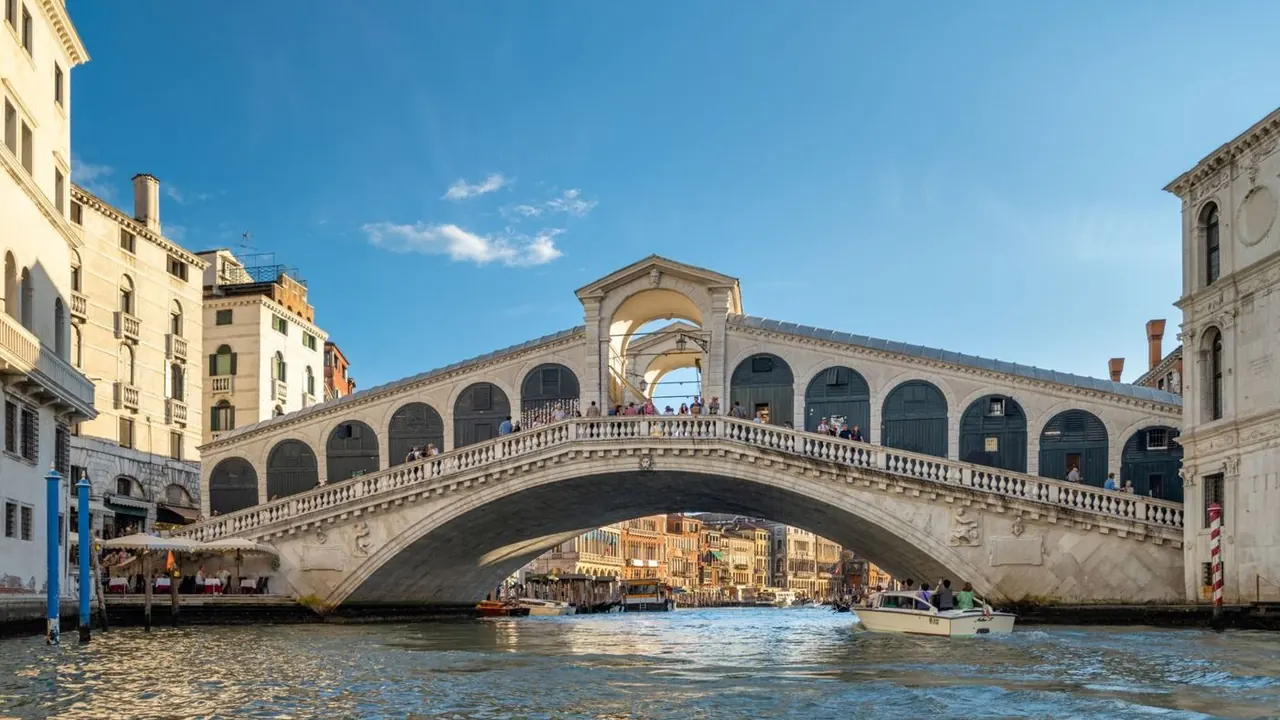
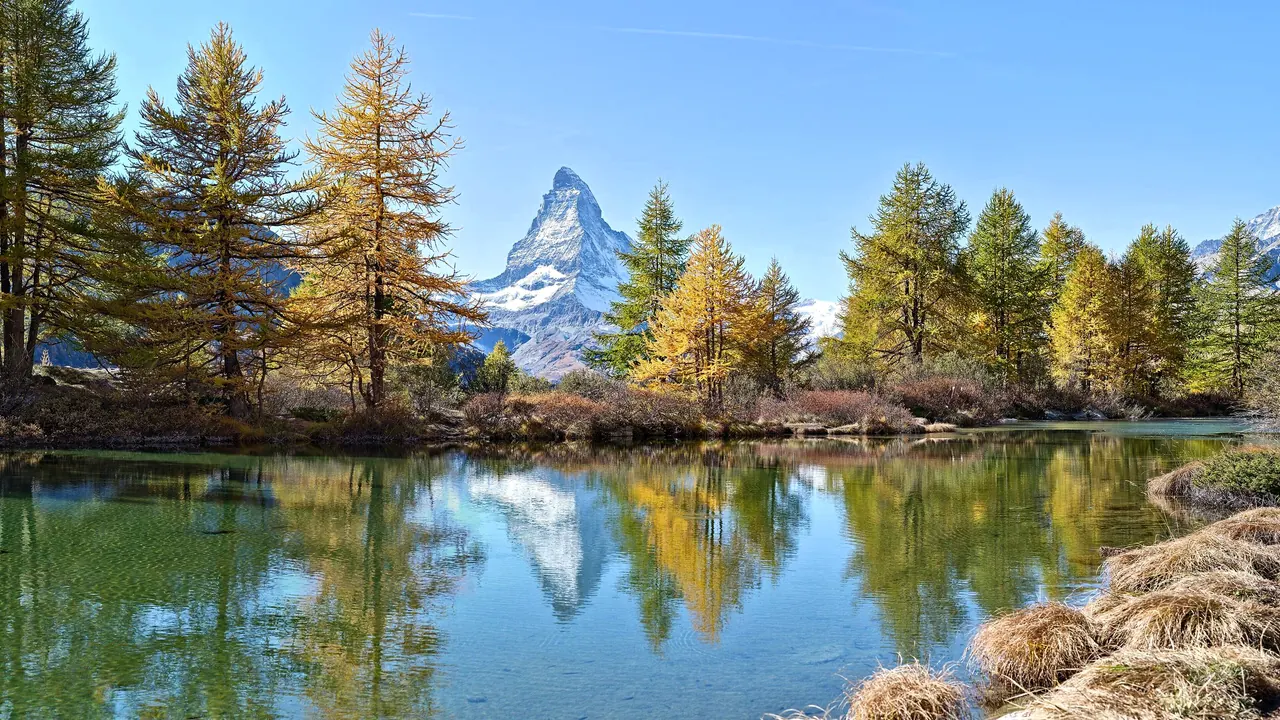
Photos: Venice by David Vives, Pexels License; Zermatt by Roy Egloff, CC BY-SA 4.0, cropped.
Venice or Zermatt?
Our verdict in twelve categories, each scored against the same fixed benchmark cities, and the climate month by month, so you can choose for your trip.
Choose Venice for
- culture and sights
- beaches
- day trips
Venice is for travellers who want a city to look at and walk through: palaces and churches on water, great Venetian painting, opera at La Fenice and an easy run of fast trains to Padua, Verona and Vicenza. It also has a sandy beach at the Lido for a hot afternoon. It suits a culture-led trip where evenings start with cicchetti at a bar counter and end with a quiet walk along the canals.
Choose Zermatt for
- nature and the outdoors
- getting around
- wellness
Choose Zermatt if the mountains are the point of the trip. The Matterhorn stands over the village, lifts climb to glaciers and high ridges, and the same slopes serve skiers in winter and hikers in summer. There is little culture or shopping to speak of, and it costs even more than Venice, but for skiing, walking and alpine air it has few equals.
Scoreboard
Twelve categories on one fixed scale from 0 to 100. The shaded stretch is the gap between the two.
Your match
Pick a travel style or drag the sliders, and both match scores follow your weighting.
Wins on culture and sights and beaches with your weighting.
Wins on nature and the outdoors and getting around with your weighting.
What matters to you?
Category by category
What the scores mean for a trip.
Beaches & swimming
Venice has an actual beach: the Lido's long sandy shore, with gentle, shallow water that is warm in summer, and quieter Pellestrina beyond it. It makes a pleasant afternoon away from the sights, even if the water is greenish rather than clear.
Zermatt has nothing comparable. The lakes above the village are too cold to swim in even in August, so swimming means a hotel pool.
Food & drink
Venice has the more rewarding table. Its bacari around the Rialto and in Cannaregio serve cicchetti such as creamed salt cod and sarde in saor, and the Rialto market supplies the cuttlefish risotto and lagoon seafood. The catch is the tourist menus along the main routes.
Zermatt eats well for a village, though the range is narrow. The best of it is a long lunch on a chalet terrace at Findeln or Zum See, with raclette, air-dried beef and Valais wines in view of the Matterhorn.
Culture & sights
There is a wide gap here. Venice is a sight in itself, with the Basilica of San Marco, the Doge's Palace and the Grand Canal palazzi, as well as Titian at the Frari, the Accademia's Venetian masters and the Guggenheim's modern collection. A week barely covers it.
Zermatt's heritage fits into a morning: the Matterhorn Museum and the story of the 1865 first ascent, the climbers' cemetery and the old larch-wood granaries of the Hinterdorf. People come for the peaks.
Nightlife
Neither is a place for a big night out, and the difference is in style. Venice is at its liveliest at aperitivo hour, with spritzes on the Fondamenta della Misericordia and students in Campo Santa Margherita. After midnight the canals go quiet.
Zermatt's evenings depend on the season. Winter après-ski fills the slope-side bars with ski boots and loud music, and a few late bars on the main street keep going. In summer the hikers go to bed early.
Nature & outdoors
This is where Zermatt is far ahead. The Matterhorn rises right above the village, surrounded by four-thousand-metre peaks and the Gorner Glacier. Lifts serve skiing that crosses into Italy, and in summer they open hundreds of kilometres of trails where marmots and ibex live.
Venice's outdoors is flat and watery. It has the salt marshes of the northern lagoon around Torcello, with herons and flamingos, rowing and kayaking, and long bike rides along the Lido sea walls.
Day trips
Venice is much better placed for outings. Fast trains reach Padua's Scrovegni Chapel in half an hour and Verona's arena in a little more than an hour, with Vicenza and the Brenta villas on the way. Murano, Burano and Torcello are reached by boat without leaving the lagoon.
From Zermatt, every outing starts with the long train ride down the valley. Sion's castle hills and Brig's Stockalper Palace are worth a day, but most visitors would rather spend a spare day up in the mountains.
Good for families
Both are car-free and broadly matched for children, but they suit different families. Venice works best for short stays with older children who enjoy vaporetto rides, glass-blowing on Murano and the shallow Lido beach. Stepped bridges and summer crowds make pushchairs hard work.
Zermatt suits active families. It has ski schools and nursery slopes at Sunnegga in winter and marmot-spotting walks in summer, but rainy days are hard to fill and the thin air at the highest viewpoints is hard on small children.
Getting around
Both centres are walked rather than driven, and Zermatt is the easier of the two. Its compact village strip has electric taxis, ski buses and lifts all close to the centre. The only real effort is the climb to hotels on the slopes.
In Venice the alleys twist and dead-end at canals, hundreds of stepped bridges make luggage a struggle, and the main vaporetto lines are slow and crowded. Arriving by train at Santa Lucia, though, is simpler than changing at Täsch.
Shopping & style
Venice offers far more to browse. There is Murano glass, Burano lace, papier-mâché masks, marbled paper and furlane slippers from real workshops in Dorsoduro and Castello, plus fashion houses on Calle Larga XXII Marzo. It pays to avoid the imported fakes along the main routes.
Zermatt has one street of watch boutiques, souvenirs and serious ski and mountaineering outfitters. The outdoor gear is excellent, but there is little else to buy.
Affordability
Both are expensive, but Venice is easier on a budget. Standing at a bar counter for cicchetti, staying in Cannaregio or Mestre and visiting in late autumn all bring costs down noticeably.
Zermatt is expensive right through the trip. Plain hotels, terrace lunches and the lift and cog-railway tickets every visitor needs all cost a lot. Self-catering and a bed down the valley in Täsch help, but only so much.
Live music & performing arts
Venice has a real stage. La Fenice, where Verdi and Rossini held premieres, runs a full season of opera, ballet and concerts, and the Teatro Goldoni and the Biennale festivals add drama and contemporary work. On top of that there are Vivaldi concerts in churches most nights.
Zermatt has no theatre or concert hall. Outside the spring Zermatt Unplugged festival and the late-summer chamber music weeks, live music means a band in an après-ski bar.
Wellness & relaxation
Zermatt is the more restful choice. Its many hotel spas, several with Matterhorn views, sit in a village of clear air and no traffic noise, which is especially calm after a day's skiing, although peak weeks feel more active than slow.
Venice is quiet early in the morning, on Giudecca and in residential Castello, but its daytime crowds take some avoiding. For real thermal bathing you need to go to Abano Terme, about an hour away near Padua.
When should you go?
Pick your month. The climate figures are measured averages, not a forecast.
Venice in July
Zermatt in July
Daytime high, °C
Rainfall in the month, mm
Where the figures come from
Zermatt has no weather station within reach, so its figures come from a gridded climate model rather than a measured record, and read a broad area rather than the city itself.
Temperature and rainfall are climate normals, averaged over the years shown. Venice: 1991-2020 (sunshine 1971-2000, rainfall 1981-2010) normals, Venezia / Tessera (6.7 km from centre). Zermatt: 1991-2020 normals, TerraClimate 4 km grid at the town, no weather station within 90 km.
Venice is best in late spring and early autumn, when the streets are pleasant for long walks. From June to September the Adriatic off the Lido is warm enough to swim, reaching about 25°C in August, but July highs near 29°C with humidity make sightseeing on foot tiring at midday. June and October are the wettest months, and winter is cold and often grey, though still workable for museums and churches.
Zermatt runs on two separate seasons. From December to March daytime highs sit around -2°C, which is cold enough for reliable snow and skiing. Summer brings highs of about 14°C in July and August, fresh rather than warm, ideal for hiking and the high lifts. November is the wettest month at 130mm and much of the village shuts between seasons, so spring and late autumn suit Venice far better than Zermatt.
Which traveller are you?
On a culture and arts trip, Venice is the clear pick. The Doge's Palace, the Accademia, Tintoretto at San Rocco, the Biennale and an opera season at La Fenice fill a week, while Zermatt's mountaineering heritage takes a single morning.
For an outdoors trip, Zermatt wins easily. Lifts reach the Gornergrat and glacier terrain above 3,800m, with skiing into Italy in winter and the Five Lakes walk and Europaweg in summer. Venice offers lagoon kayaking and flat cycling on the Lido.
On a beach and sun trip, only Venice works. The Lido has kilometres of shallow, sandy shore on the Adriatic, and the resort beaches at Jesolo are nearby. Zermatt has no sea or bathing lake, just snowmelt tarns and hotel pools.
Before you go
| Measure | Venice | Zermatt |
|---|---|---|
| Official language | Italian | French, German, Italian, Romansh |
| Currency | Euro (EUR) | Swiss Franc (CHF) |
| Sockets | CFL230 V, 50 Hz | CJ230 V, 50 Hz |
| Driving side | Right | Right |
| Time zone | UTC+1, UTC+2 in summer | UTC+1, UTC+2 in summer |
| Emergency number | 112 | 112 |
| Elevation | 2 m | 1,624 m |
| Main airport | Venice Marco Polo Airport (VCE)7 km from centre103 non-stop destinations | Geneva International Airport (GVA)128 km from centre150 non-stop destinations |
| Public holidays this year | 13 days | 9 days |
By the numbers
| Measure | Venice | Zermatt |
|---|---|---|
| City population | 250,369 | 6,023 |
| People per km² | 602 | 25 |
| Museums within 10 km | 52 | 2 |
| UNESCO World Heritage sites within 50 km | 5 | 2 |
| Swim season, months above 21 °C | 4 months | - |
Where else could you go?
Every comparison below shares a destination with this one, so you can follow Venice or Zermatt somewhere new.
- Paduavs Venice
- Chamonixvs Zermatt
- Interlakenvs Zermatt
- Luganovs Zermatt
- Piranvs Venice
- Lausannevs Zermatt