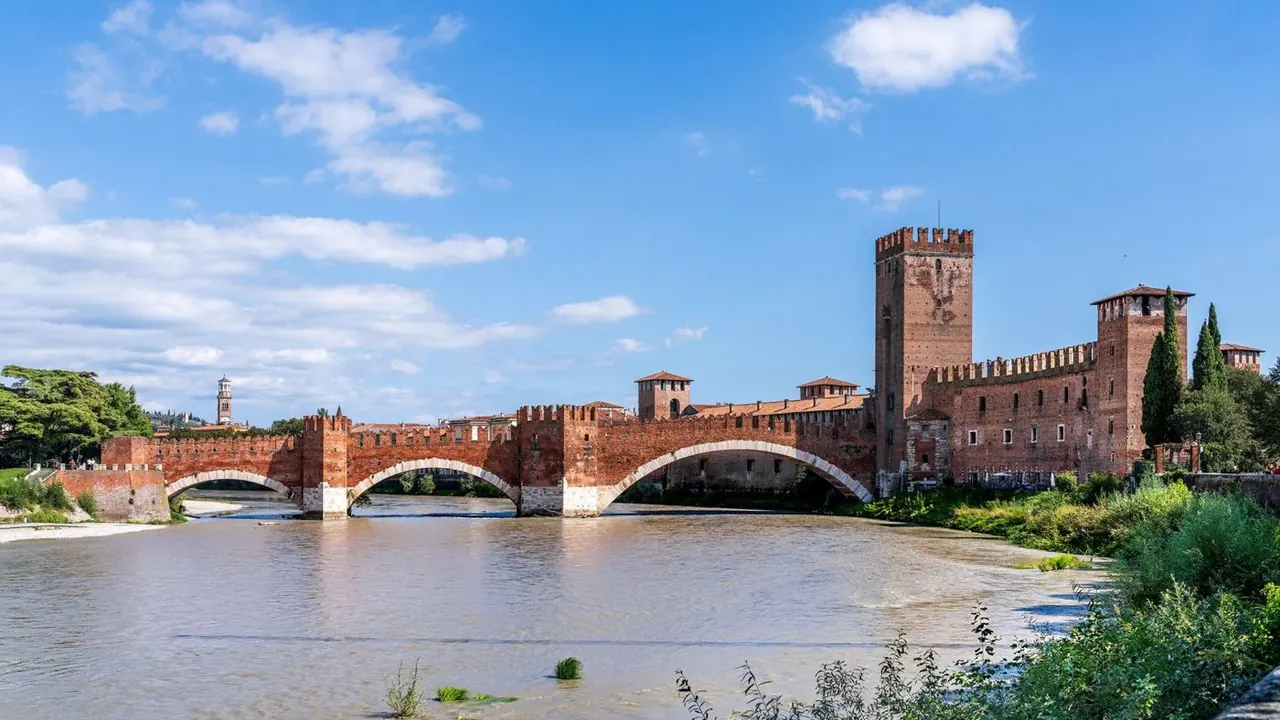
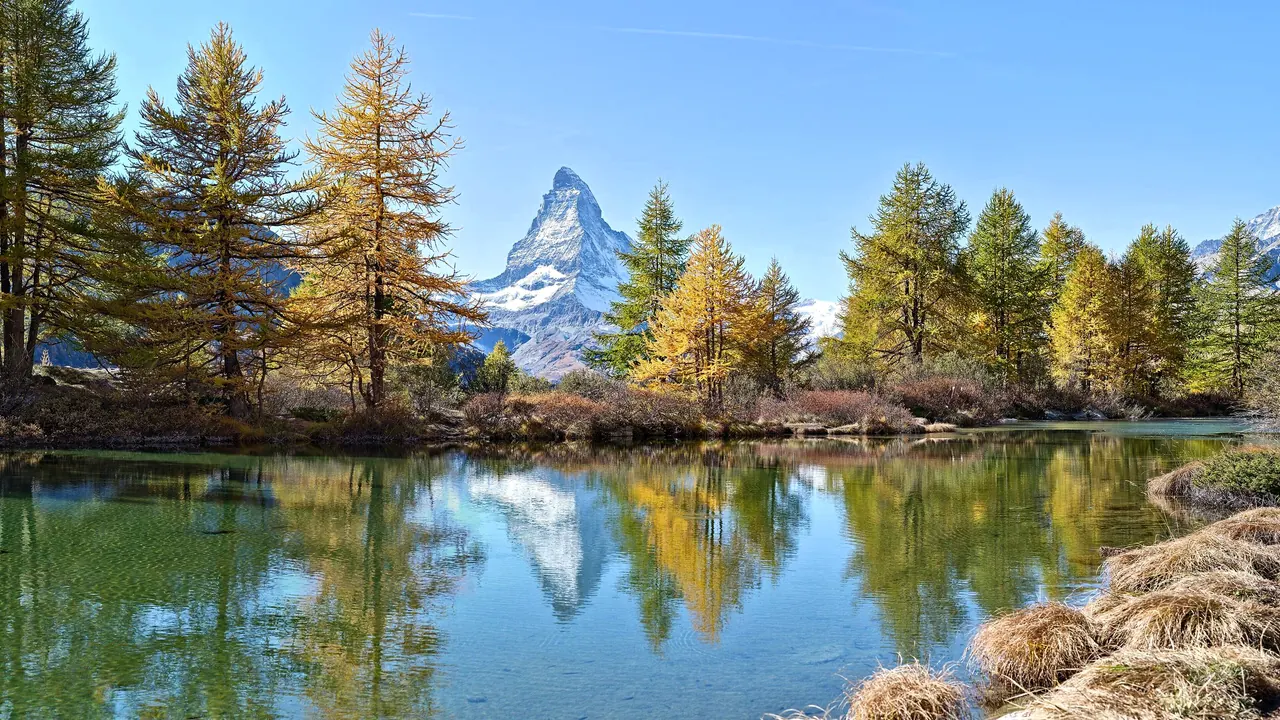
Photos: Verona by NorbertNagel, CC BY-SA 4.0, cropped; Zermatt by Roy Egloff, CC BY-SA 4.0, cropped.
Verona or Zermatt?
Our verdict in twelve categories, each scored against the same fixed benchmark cities, and the climate month by month, so you can choose for your trip.
Choose Verona for
- day trips
- culture and sights
- live music and the arts
Verona is the better choice for a trip built around towns, food and evenings out. Its compact Roman and medieval centre, the summer opera in the Arena and the Valpolicella and Soave cellars on the doorstep fill a few days easily. Then the rail line opens up Venice, Vicenza, Padua and Mantua, with Lake Garda close by for swimming. It suits travellers who want variety, warm weather and a base that rewards moving around.
Choose Zermatt for
- nature and the outdoors
- getting around
- wellness
Zermatt is for people who come for the mountains themselves. The Matterhorn stands over a car-free village, the lifts climb to glacier level, and the trails, ski runs and guided ascents are among the finest in the Alps. There is little culture, shopping or nightlife beyond après-ski, and the bills are steep. For skiers, hikers and climbers, though, nothing in Verona's surroundings comes close.
Scoreboard
Twelve categories on one fixed scale from 0 to 100. The shaded stretch is the gap between the two.
Your match
Pick a travel style or drag the sliders, and both match scores follow your weighting.
Wins on day trips and culture and sights with your weighting.
Wins on nature and the outdoors and getting around with your weighting.
What matters to you?
Category by category
What the scores mean for a trip.
Beaches & swimming
Verona has the edge. It has no sea, but the southern shore of Lake Garda is about half an hour away, warm enough by midsummer for easy swimming, with lidos, lawns down to the water and Sirmione's limestone shelves.
Zermatt has nothing comparable. Its mountain tarns are glacier-fed and far too cold to swim in, so the only option is a hotel pool.
Food & drink
Verona offers more depth and more choice. Amarone risotto, bigoli with duck and bollito with pearà are served in wood-panelled osterie around Piazza delle Erbe and in Veronetta. Valpolicella, Soave and Bardolino are made within a short drive, so the evening glass at a counter is local in the truest sense.
Zermatt's best eating is up on the mountain. Long chalet lunches in Findeln or Furi come with raclette, air-dried beef and Valais wines, and the Matterhorn in view. The range is narrow, though, and many kitchens close between seasons.
Culture & sights
This is one of the widest gaps between the two. Verona's UNESCO-listed centre holds a Roman amphitheatre and theatre, the Scaliger tombs, the Romanesque San Zeno and Scarpa's Castelvecchio museum, enough for two or three full days.
Zermatt's heritage is about climbing. The Matterhorn Museum tells the story of the 1865 first ascent, the mountaineers' cemetery holds the graves of climbers lost on the peaks, and the old larch barns stand in the Hinterdorf. Together they fill a morning.
Nightlife
Neither place is a destination for a big night out, but Verona offers more, and all year round. Aperitivo tables spill into Piazza delle Erbe, the student bars in Veronetta stay busy later, and on summer opera nights the centre fills again near midnight.
Zermatt's nightlife is seasonal and louder. Slope-side après-ski bars and a few clubs on the main street run late in winter. In summer, hikers turn in early, and between seasons the village goes quiet.
Nature & outdoors
Zermatt is far ahead. The Matterhorn rises directly above the village, glaciers and dozens of four-thousand-metre peaks surround it, and lifts carry you to the high terrain in minutes. Skiing goes on into summer on the glacier, and the walks run from the Five Lakes trail to the Europaweg suspension bridge.
Verona's countryside is gentler and more cultivated. Vineyard walks and cycling in Valpolicella, the Lessinia plateau and the ridges of Monte Baldo above Garda make good days out, but they are foothills by comparison.
Day trips
Verona is one of the best bases in northern Italy. Venice, Vicenza, Padua and Mantua are all an easy train ride away, and the Garda towns and the Soave and Valpolicella wine country are closer still.
From Zermatt, every outing starts with the long train ride down the valley. Sion's castle hills and Brig's Stockalper Palace are worth seeing, but most visitors would rather spend a spare day higher up the mountain.
Good for families
Verona does more for children, though mostly just outside the city. Gardaland, the water parks on the southern Garda shore and the safari park at Parco Natura Viva are all about half an hour away, and the flat, pedestrian centre is easy with a pushchair.
Zermatt's strengths are calm and safety. With no traffic, nursery slopes at Sunnegga, marmots and cog railways, it works well for families who ski or hike together. Rainy days are harder to fill, though, and the highest viewpoints can be too cold and thin-aired for small children.
Getting around
Zermatt makes it simpler. Once you arrive by train, everything is on foot or by electric taxi, and the Gornergrat railway, the Sunnegga funicular and the gondolas all leave within walking distance of the centre. The only real effort is a steep walk with luggage to the hotels on the slopes.
Verona's centre is just as easy to cover on foot, and the railway is excellent for Venice and Milan. Reaching the wine villages, the Lessinia and some Garda attractions is awkward without a car, though, and driving into the old town is restricted.
Shopping & style
Verona has more to browse. Italian fashion labels line the marble paving of Via Mazzini, smaller boutiques fill Corso Porta Borsari, and the wine shops, Garda olive oil and pandoro make good things to take home.
Zermatt has a single main street of Swiss watch and jewellery boutiques and souvenir shops. Its genuine strength is ski and mountaineering gear, which is worth knowing if you need equipment.
Affordability
Neither is a bargain, but Verona is much easier on the wallet. Rooms in the centre are dear, especially on opera nights. Still, simple meals in Veronetta, cheap local wine and a centre you can walk keep daily spending moderate, and staying near the station helps.
Zermatt is expensive on every count. Rooms, terrace lunches and lift tickets all cost well above the European norm, and only self-catering or sleeping down the valley in Täsch makes a real difference.
Live music & performing arts
Verona has one of Europe's great summer stages. Grand Verdi and Puccini productions play to thousands in the Roman Arena, Shakespeare and jazz are staged in the Roman theatre, and the Teatro Filarmonico runs a season in the cooler months.
Zermatt has no theatre or concert hall. Its calendar depends on two festivals, Zermatt Unplugged in spring and a chamber music festival in the church in late summer. Outside those weeks, live music means a band in an après-ski bar.
Wellness & relaxation
The two are evenly matched but relax you in different ways. Verona draws on warm springs nearby: the thermal pools at Sirmione facing the lake, the spring-fed lake near Lazise and the old Roman springs at Caldiero. In town, the calm comes from long lunches and the Giardino Giusti.
Zermatt has no springs. What it has is an unusual number of fine hotel spas with mountain views, along with clear air and car-free quiet. The mood there is more about recovering after a day on the slopes than slowing down.
When should you go?
Pick your month. The climate figures are measured averages, not a forecast.
Verona in July
Zermatt in July
Daytime high, °C
Rainfall in the month, mm
Where the figures come from
Zermatt has no weather station within reach, so its figures come from a gridded climate model rather than a measured record, and read a broad area rather than the city itself.
Temperature and rainfall are climate normals, averaged over the years shown. Verona: 1991-2020 normals, Verona / Villafranca (11.6 km from centre). Zermatt: 1991-2020 normals, TerraClimate 4 km grid at the town, no weather station within 90 km.
Verona is at its best in May and June, when the days are warm and long and the streets are comfortable for walking. July and August peak at around 30°C and are the sunniest months. That is warm enough for swimming at Lake Garda but heavy for sightseeing at midday. September stays warm, but it is also the wettest month at about 85mm, and the rain keeps up through October and November. Winter is cool and grey, with little sun, though it still suits museums and churches.
Zermatt runs on a different calendar. From December to March daytime highs sit around or below freezing, about -2°C in midwinter, and that cold keeps the ski season going. July and August reach only about 14°C. That is good hiking weather, but it is never warm enough for a beach day. Summer therefore suits both places, Verona for heat and long evenings and Zermatt for the high trails. In winter, Zermatt is the one with a clear purpose.
Which traveller are you?
On a culture and arts trip, Verona wins clearly. The Arena, San Zeno, Castelvecchio and summer opera under the stars give it real depth, and Vicenza, Padua and Venice are all a short train ride away. Zermatt's mountaineering heritage takes up a morning.
For an outdoors trip, Zermatt is in a different league. Lifts climb to over 3,800m, hundreds of kilometres of trails lead to lakes and huts, and in winter the skiing crosses into Italy. Verona's Valpolicella walks and Monte Baldo are pleasant but much gentler.
On a trip on a tight budget, Verona is the only realistic option. Student osterie in Veronetta, wine counters with snacks and a walkable centre keep costs down. Zermatt's rooms, meals and lift passes make it one of the dearest places in the Alps.
Before you go
| Measure | Verona | Zermatt |
|---|---|---|
| Official language | Italian | French, German, Italian, Romansh |
| Currency | Euro (EUR) | Swiss Franc (CHF) |
| Sockets | CFL230 V, 50 Hz | CJ230 V, 50 Hz |
| Driving side | Right | Right |
| Time zone | UTC+1, UTC+2 in summer | UTC+1, UTC+2 in summer |
| Emergency number | 112 | 112 |
| Elevation | 59 m | 1,624 m |
| Main airport | Verona Villafranca Valerio Catullo Airport (VRN)10 km from centre96 non-stop destinations | Geneva International Airport (GVA)128 km from centre150 non-stop destinations |
| Public holidays this year | 13 days | 9 days |
By the numbers
| Measure | Verona | Zermatt |
|---|---|---|
| City population | 255,588 | 6,023 |
| People per km² | 1,285 | 25 |
| Museums within 10 km | 18 | 2 |
| UNESCO World Heritage sites within 50 km | 5 | 2 |
Where else could you go?
Every comparison below shares a destination with this one, so you can follow Verona or Zermatt somewhere new.
- Chamonixvs Zermatt
- Paduavs Verona
- Interlakenvs Zermatt
- Luganovs Zermatt
- Lausannevs Zermatt
- Venicevs Verona