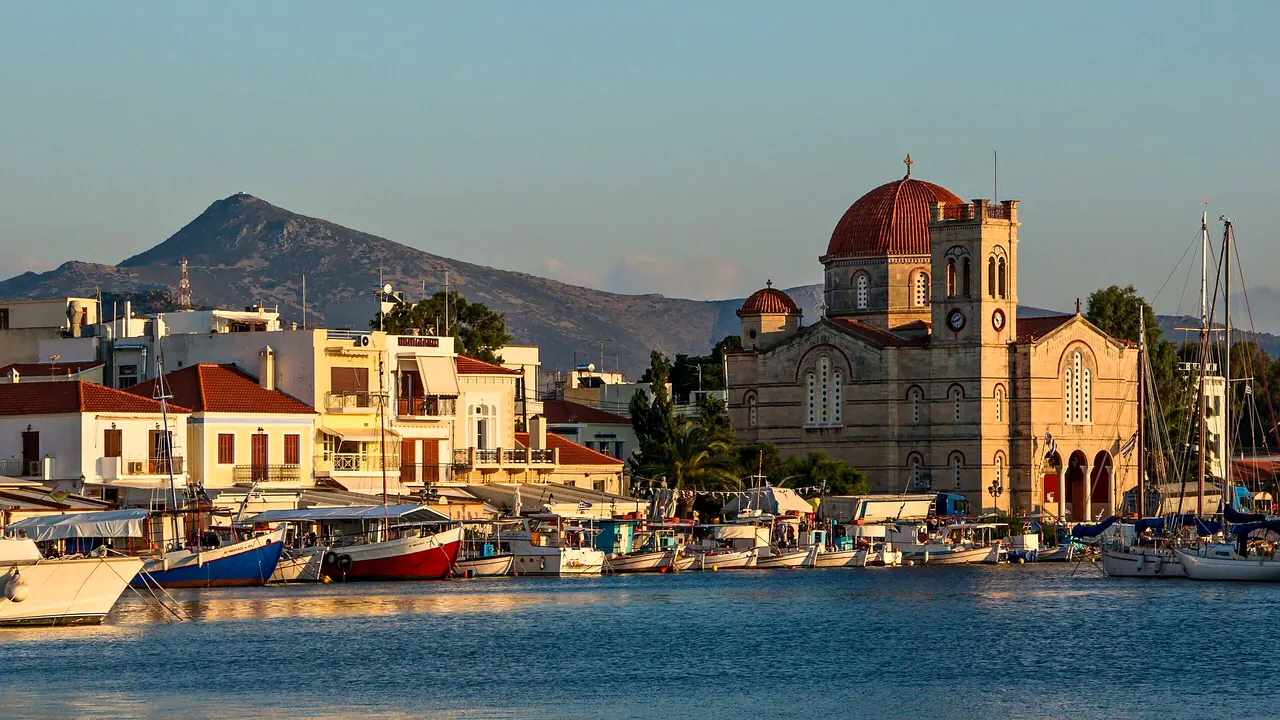
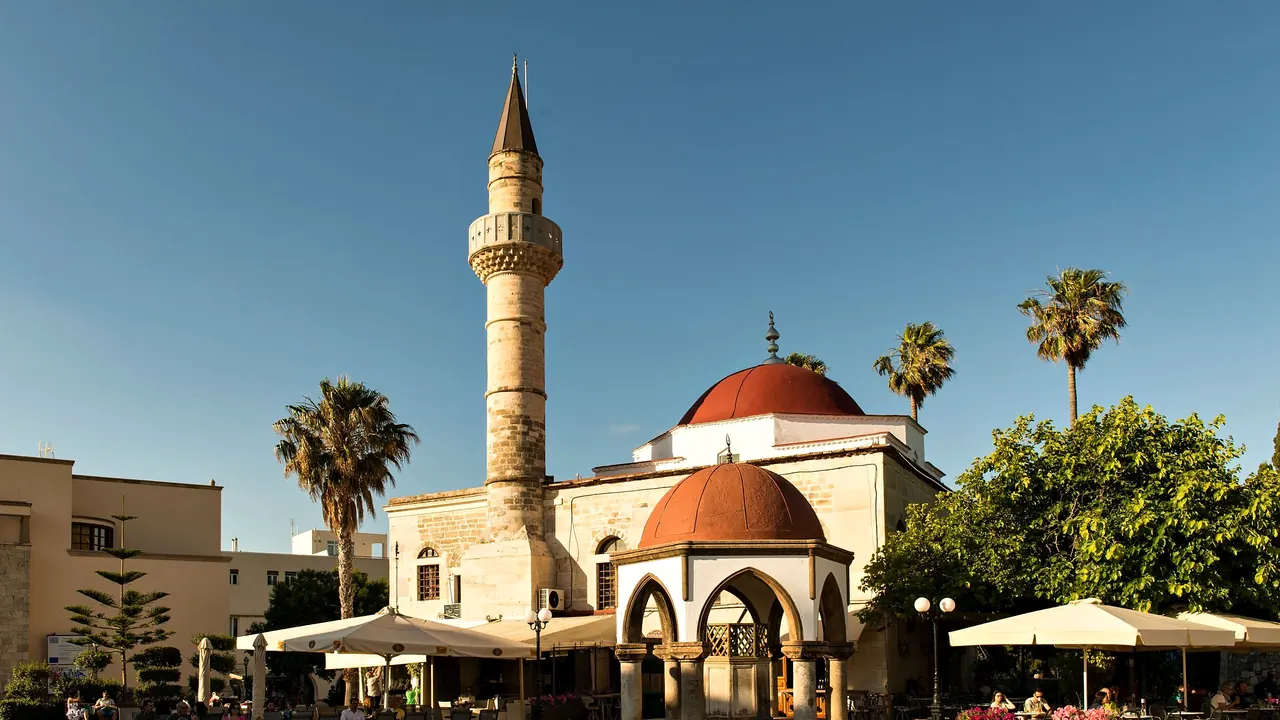
Photos: Aegina by Jebulon, CC0; Kos by Wolfgang Weiser, Pexels License.
Aegina or Kos?
Our verdict in twelve categories, each scored against the same fixed benchmark cities, and the climate month by month, so you can choose for your trip.
Choose Aegina for
- day trips
- culture and sights
Aegina suits a slower, more Greek kind of island stay, and it suits travellers who want Athens close at hand. The fast boat from Piraeus is short, so you can pair a few days of swimming off the rocks at Perdika and walking up to the Temple of Aphaia with a day at the Acropolis. Most of the other visitors are Athenians, which keeps the tavernas honest and the evenings unhurried. It gives up long sandy beaches, resort comforts and any real night out.
Choose Kos for
- nightlife
- beaches
- families
Kos is the better pick for a classic beach vacation. Long sandy strands run along the north coast and there are sheltered bays on the Kefalos peninsula. The resorts are built around families, Kardamena and the old quarter of Kos Town keep going late, and a hot spring runs into the sea at Therma. You trade Aegina's local feel for a more package-oriented island, but you get far more beach, more to do with children and more life after dark.
Scoreboard
Twelve categories on one fixed scale from 0 to 100. The shaded stretch is the gap between the two.
Your match
Pick a travel style or drag the sliders, and both match scores follow your weighting.
Wins on day trips and culture and sights with your weighting.
Wins on nightlife and beaches with your weighting.
What matters to you?
Category by category
What the scores mean for a trip.
Beaches & swimming
Kos is the stronger beach island by a wide margin. Its north coast is one long run of sand through Tigaki, Marmari and Mastichari, with shallow water and room to spread out. The Kefalos peninsula adds the island's prettiest bays, Agios Stefanos with its chapel on the islet of Kastri among them. The one catch is the meltemi, which can make the north-coast sea choppy in high summer, so the calmer swimming moves south.
Aegina's swimming is smaller and more local. Agia Marina is its only long sandy resort beach. Elsewhere you have little coves at Marathonas and Aiginitissa, rocks near Perdika for diving into clear water, and the pine-fringed pebble cove on Moni. It is pleasant for a dip between other plans, but it will not satisfy anyone who wants a long sandy beach every day.
Food & drink
Neither island is a reason to travel for food, and both serve honest Greek island cooking. What differs is where the good meals are. On Aegina they are hard to miss: most diners are Athenians over for the weekend, so the ouzeries behind the old fish market and the fish tavernas on the quay at Perdika stay local. The pistachio, grown all over the interior, turns up in nearly everything.
Kos makes you look a little harder. Its resorts lean towards multilingual menus and all-inclusive buffets. Head up to Zia and Pyli, to the harbours at Mastichari and Kamari, or into the back streets of Kos Town for pitaroudia and wine-cured krasotyri, and the small wineries near Kefalos are worth a visit too.
Culture & sights
The two are fairly evenly matched, but the history is shaped differently. Aegina has one outstanding monument, the Doric Temple of Aphaia on its pine-covered hill. Around it are the lone column at Kolona, the ruined Byzantine town of Paleochora and the neoclassical streets left from Aegina town's brief time as the first capital of modern Greece.
Kos spreads its history through the main town itself, with the Ancient Agora, the Odeon, Roman mosaics and the Casa Romana all among the streets. The Knights' Neratzia Castle guards the harbour, and the terraced Asklepieion stands a short ride away. Kos gives more variety across the eras, while Aegina has the single finer temple.
Nightlife
Kos is far livelier after dark, at least from June to September. The lanes of Kos Town's old quarter fill with loud bars until the small hours, Lambi has beach clubs, and Kardamena is a full party resort with late clubs and a young crowd.
On Aegina a night out means a long dinner and cocktails on the harbour, busiest on summer weekends when Athenians stay up past midnight. There is effectively no clubbing, and on weekday nights the island is quiet early. That suits couples, but anyone who wants to dance has to take the ferry back to Athens.
Nature & outdoors
The landscapes are about equally modest, but they offer different activities. Aegina's walking centres on the cone of Mount Oros, about 530m high, past the old sanctuary of Zeus. Its quiet orchard roads suit a scooter or a bicycle, and the sheltered Saronic Gulf makes for easy sailing.
Kos has higher ground in the Dikeos range, where trails climb through pine woods to sunset views from Mount Christos. It also has wildlife, with peacocks in the Plaka forest and flamingos on the Alikes salt lake in the cooler months. The same meltemi that roughens its beaches makes Marmari, Tigaki and Psalidi good for windsurfing and kitesurfing.
Day trips
Aegina is the better base for outings, mainly because Athens is about forty minutes away by fast boat, so the Acropolis and the national museums are an easy day out. Closer still is pine-wooded Agistri. Hydra and Poros make longer island days, and with a car Epidaurus and the Methana peninsula are within reach.
Kos offers a different mix. Bodrum, across the water in Turkey, is a short ferry ride away, though you need a passport. Nisyros lets you walk to the rim of a volcanic crater, and Kalymnos has a sponge-diving harbour. These are memorable days, but nothing matches having a capital city on the doorstep, and on both islands the ferry timetable decides your day.
Good for families
Kos is much better set up for children. The north-coast beaches shelve gently into shallow water, many resorts have pools and kids' clubs, there is a large water park near Marmari, and the flat cycle paths around Kos Town make family rides easy. Families who want peaceful nights should simply avoid staying in Kardamena.
Aegina is safe and easy but offers little beyond the basics. Agia Marina and Marathonas have shallow sandy water, and a boat to Moni to see the peacocks and deer makes a good half-day. After that it is swimming and ice cream, which keeps toddlers happy and leaves teenagers bored.
Getting around
Both islands are simple to get around, and the difference is mostly one of size. Aegina is small enough that no drive takes much over half an hour, and its harbour town is flat and walkable. You reach it by ferry from Piraeus rather than by air, and since the buses are sparse, most visitors rent a scooter.
Kos is long and narrow, so trips can take up to an hour, but it has its own airport, buses along the main road to the big resorts, and good cycle lanes either side of Kos Town. The hill villages and the far south-west still call for a hire car or scooter for a day or two.
Shopping & style
Neither island is a shopping destination, though Kos has slightly more to browse. Its old-quarter lanes sell leather, sandals, sponges and jewellery, and the Italian-era market hall on Eleftherias Square is good for herbs and local produce. On Aegina the harbour shops mostly sell pistachios in every form, alongside a few ceramics, and a bag of those nuts is the obvious thing to take home.
Affordability
Both islands sit in the middle of the Greek price range, but they get there by different routes. Aegina stays reasonable because it is mainly a weekend escape for Athenians, so a plate of grilled fish or a morning coffee on the harbour is priced for Greek visitors, and the ferry over and a rented scooter cost little. The cost that moves is the room. A bed for a Friday and Saturday in August is hard to find and costs more, while the same stay midweek or in June and September comes noticeably cheaper.
Kos keeps its prices down by catering to large numbers, since so much of the island is built for package and all-inclusive travel, and Kardamena, Tigaki and Marmari have no shortage of mid-range apartments. Here finding a room is rarely the problem. What pushes the bill up is high summer and the extras, a sunbed every day and dinners on the harbour front. Eating in the inland villages, cycling to the beach and paying the small entry fees at the ruins keep a stay on Kos sensibly priced.
Live music & performing arts
Both are thin on live performance and offer nothing year-round. Kos has the edge in setting: its summer Hippokrateia festival stages concerts, theatre and dance in the Asklepieion, the Roman Odeon and the castle. On Aegina it comes down to open-air cinema and Greek music in tavernas, but Athens and the ancient theatre at Epidaurus are close enough for an evening of real theatre.
Wellness & relaxation
Kos has more to offer for unwinding. At Therma a hot sulphur spring runs down to a pebble beach, where bathers build stone pools in which the hot water mixes with the sea. The larger beach resorts commonly have spas too.
Aegina has no bathing tradition and only a few small hotel spas. What it has is calm: weekday lunches in Perdika and the stillness of Paleochora's hillside chapels. It works for a rest, but there is very little to book in the way of treatments.
When should you go?
Pick your month. The climate figures are measured averages, not a forecast.
Aegina in July
Kos in July
Daytime high, °C
Rainfall in the month, mm
Where the figures come from
Aegina's temperatures are measured 32 km from the centre, at Athinai Airport.
Aegina has no rain gauge within 25 km of the centre, so its rainfall comes from a gridded climate dataset read at the destination rather than from a gauge further away.
Kos has no rain gauge within 25 km of the centre, so its rainfall comes from a gridded climate dataset read at the destination rather than from a gauge further away.
Temperature and rainfall are climate normals, averaged over the years shown. Aegina: 1991-2020 normals, Athinai Airport (31.8 km from centre). Kos: 1993-2020 (rainfall 1991-2020) normals, Kos Airport (23.2 km from centre).
Both islands are warm enough for swimming from June to October, and in each the sea is at its warmest in August. The difference is in the extremes. Aegina gets hotter, with highs around 33°C in July and August and very long sunny days, so walking up to Aphaia or Mount Oros is best saved for early morning. Kos peaks a little lower at about 31°C, though the meltemi wind on its north coast can make high summer feel fresher and the sea rougher. For sightseeing on foot, May and late September to October are the comfortable months on both.
Winter is where they part. On Kos the rain sets in hard from November, reaching about 170mm in January, which makes it a poor choice from late autumn to early spring. Aegina's winter is far drier, at around 50mm a month in January, and its mild, fairly sunny spring makes April a reasonable month for a quiet visit close to Athens, even though the sea is still too cool for most swimmers.
Which traveller are you?
On a beach and sun trip, Kos is the clear choice. It has long sandy beaches along the north coast from Tigaki to Mastichari, calmer and clearer bays around Kefalos and Paradise Beach, and plenty of space, where Aegina has mostly small coves and swimming off the rocks.
For a culture and arts trip, Aegina has the edge. The Temple of Aphaia is one of the most complete temples in Greece, Paleochora's frescoed chapels are close by, and with Athens a short boat ride away you can add the Acropolis and the city's great museums in a day.
For a food and nightlife trip, Kos wins on the nights out. The bars in the old quarter of Kos Town and the clubs in Kardamena run into the small hours all summer. Aegina's evenings end with ouzo on the harbour, though its tavernas are just as good as those on Kos.
Before you go
| Measure | Aegina | Kos |
|---|---|---|
| Official language | Greek | Greek |
| Currency | Euro (EUR) | Euro (EUR) |
| Sockets | CF230 V, 50 Hz | CF230 V, 50 Hz |
| Driving side | Right | Right |
| Time zone | UTC+2, UTC+3 in summer | UTC+2, UTC+3 in summer |
| Emergency number | 112 | 112 |
| Main airport | Athens Eleftherios Venizelos International Airport (ATH)176 non-stop destinations | Kos International Airport "Ippokratis" (KGS)75 non-stop destinations |
| Public holidays this year | 15 days | 15 days |
By the numbers
| Measure | Aegina | Kos |
|---|---|---|
| Population | 13,056 | 33,387 |
| People per km² | 149 | 115 |
| Swim season, months above 21 °C | 5 months | 5 months |
Where else could you go?
Every comparison below shares a destination with this one, so you can follow Aegina or Kos somewhere new.