Austrian Alps or French Alps?
Our verdict in twelve categories, each scored against the same fixed benchmark cities, and the climate month by month, so you can choose for your trip.
Choose Austrian Alps for
- live music and the arts
- getting around
- culture and sights
The Austrian side suits travellers who want a full programme around the mountains. Salzburg and Innsbruck bring baroque streets, Habsburg palaces and, in summer, festival opera, and thermal towns such as Bad Gastein make rest days easy. Within a main valley, trains and Postbus lines get you about without a car. Children are well looked after almost everywhere, and the bills, though high, are a little gentler. It is the better choice for families, music lovers and anyone who wants culture and spa days alongside their hiking or skiing.
Choose French Alps for
- food and drink
Food lovers and climbers lean towards the French Alps. Savoyard cheese bought at the farm, lake fish, Savoie whites and Annecy's old-town markets make the table the stronger reason to come, and Chamonix puts the highest glaciated terrain in the Alps within reach of a valley base. Geneva is close enough for an evening in the city, and Lyon makes a full day out by train. In return, expect to pay more, depend more on a car and find fewer sights once you are back down in the valley.
Scoreboard
Twelve categories on one fixed scale from 0 to 100. The shaded stretch is the gap between the two.
Your match
Pick a travel style or drag the sliders, and both match scores follow your weighting.
Wins on live music and the arts and getting around with your weighting.
Wins on food and drink with your weighting.
What matters to you?
Category by category
What the scores mean for a trip.
Beaches & swimming
Neither has a coast, so swimming means lakes. Austria's Carinthian lakes, the Wörthersee, Millstätter See and their neighbours, warm up to the mid-20s in high summer, and towns like Velden run full lido summers with lawns and diving boards.
The French side has one excellent lake in Annecy, plus Lac du Bourget and the pebbly Lake Geneva shore, but the water is a little cooler and the small beaches crowd on summer weekends. For a real bathing stay, Carinthia is the better bet.
Food & drink
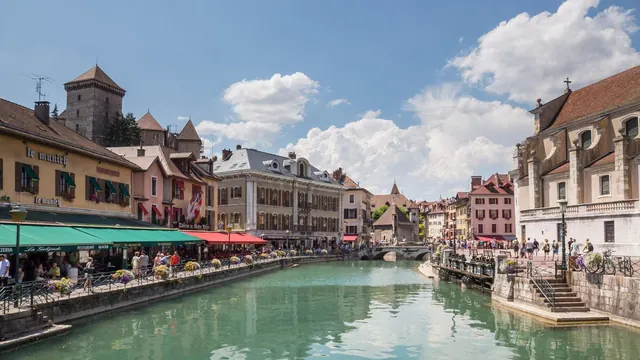
Both regions cook hearty mountain food, but the French side eats better. Savoyard cooking has a deeper larder: Reblochon and Beaufort bought at the farm, lake perch and féra, Savoie whites and Chartreuse, and Annecy's old-town markets to graze through.
Austria's Kaiserschmarrn, Gröstl and Käsespätzle are at their best on a hut terrace, and Salzburg's café cakes are a real pleasure, but day-to-day menus feel narrower. Both have top-end kitchens in their smartest resorts, and both repeat themselves in ordinary ski villages.
Culture & sights
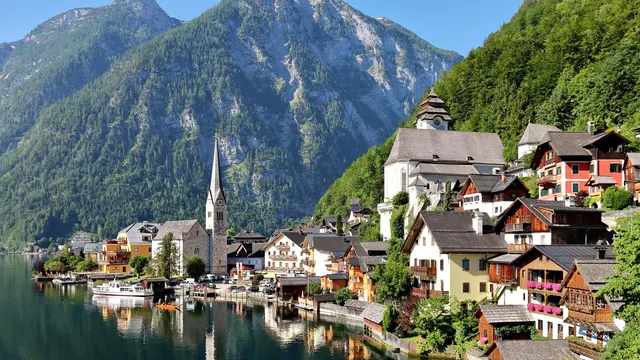
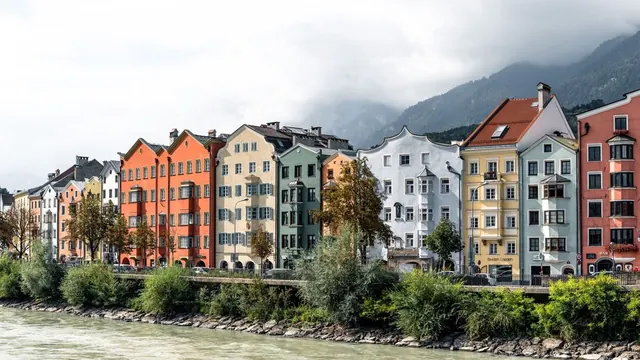
Austria has far more to see. Salzburg alone, with its fortress, cathedral, Residenz and Mozart's birthplace, outweighs any French Alpine town, and Innsbruck's Golden Roof and Hofkirche, Hallstatt's salt-mining heritage and the Admont abbey library add to it.
The French towns offer pleasant half days rather than a reason to travel: Annecy's canals and Palais de l'Isle, the ducal château in Chambéry, Grenoble's fine-arts museum and Briançon's Vauban walls.
Nightlife
Austrian après-ski is the louder and longer affair. In Ischgl, St Anton, Saalbach and Mayrhofen the huts are full of ski boots on tables and Schlager by late afternoon, and the village bars and clubs keep going deep into the night. Innsbruck's students keep a modest bar scene going through the rest of the year.
The French party crowd gathers in Val Thorens, Val d'Isère and Méribel, with Courchevel's expensive glamour and Chamonix's climbers' bars as the variations. Summer evenings in France are better spent on Annecy's lakeside terraces than in the resorts, many of which are asleep by ten.
Nature & outdoors
This is the one area where neither side wins outright, as both rank among the great mountain landscapes of Europe. The difference is in character. France has the higher drama, with Mont Blanc, glacier access from the Aiguille du Midi and the vast linked ski areas of the Tarentaise.
Austria spreads its terrain more evenly, with the Grossglockner and Krimml waterfalls in the Hohe Tauern, valley after valley in Tyrol with staffed huts and marked trails, and lakes in the Salzkammergut and Carinthia for paddling between hikes.
Day trips
Both offer good outings, and the difference lies in where they lead. From Salzburg and Innsbruck the trips stay largely Alpine and historic, Hallstatt, Bad Ischl, Hall in Tirol, Berchtesgaden, with Munich, the Bavarian castles and South Tyrol within reach.
The French bases look outward to cities and neighbours. Geneva is under an hour away, ferries cross Lake Geneva to Lausanne, and Lyon and Italy's Aosta valley are easy from Annecy and Chamonix, though the deep Tarentaise valleys leave little time for anything.
Good for families
Austria is the easier place to take children. Its child-focused hotels with playrooms, pools and kids' clubs are a national speciality, resorts such as Serfaus-Fiss-Ladis are designed around young skiers, and summer lifts lead to adventure trails and toboggan runs, with Innsbruck's Alpine Zoo and the Hellbrunn trick fountains for rest days.
The French Alps do well with car-free resorts like Avoriaz and Flaine, strong ski schools and Annecy's shallow lake beaches, but there is less built purely for fun, and long transfers and altitude tire small children faster.
Getting around
Moving around is noticeably simpler in Austria. Trains run along the Inn valley, over the Arlberg and into the Gastein valley, Postbus lines climb the side valleys, and guest cards often cover local buses, so a single-valley stay works without a car.
On the French side, arrival is the hurdle: a flight to Geneva, Lyon or Grenoble, then a transfer or drive, with snow chains on many winter roads. Trains reach Annecy, Chamonix and Bourg-Saint-Maurice, but summer touring between lakes and passes really needs a car.
Shopping & style
Neither is a shopping destination, and both sell local character more than fashion. Austria's strength is traditional dress, with dirndls, loden and felt hats on Salzburg's Getreidegasse, plus Tyrolean wood carving, Wattens crystal and the December Christmas markets.
France leans towards technical gear and food: Chamonix's mountaineering shops, Opinel knives, Beaufort wheels and Génépi from Annecy's markets. Both have a small luxury enclave, Kitzbühel and Lech against Courchevel and Megève.
Affordability
Neither region is cheap, but Austria is the gentler on the wallet. Half-board guesthouses, farm stays in quieter valleys and summer stays in Carinthia keep costs reasonable, and guest cards that bundle transport and lifts help further.
The big French resorts in school-vacation weeks are harder to budget for, with mountain lunches and resort drinks priced high and Courchevel among Europe's costliest addresses. Savings come from self-catering, low-season weeks and ordinary-priced towns such as Grenoble and Chambéry.
Live music & performing arts
Here the gap is wide. The Salzburg Festival, Bregenz's floating opera stage on Lake Constance, the Schubertiade in Vorarlberg villages and Erl's opera seasons put Austria on the classical-music map, and Salzburg keeps concerts going through the year with Mozart Week and the Mozarteum.
The French Alps have Grenoble's arts centre and chamber orchestra, chamber music at Évian and summer concerts in mountain churches, but anyone wanting opera usually heads to Lyon or Geneva.
Wellness & relaxation
In Austria, thermal water and sauna culture run through the whole region. In France they are concentrated in a few spa towns. Bad Gastein's radon springs and healing gallery, the imperial spa of Bad Ischl and the Aqua Dome's outdoor pools facing the Ötztal peaks are only the headline names, because hotels in almost every valley have serious sauna worlds and quiet rooms.
France's strengths lie in Aix-les-Bains, Évian and Saint-Gervais in its wooded gorge, which suit a quiet cure, and upmarket ski hotels add pools with snow views. Away from those towns and Lake Annecy, the French resorts are built more for activity than for rest.
When should you go?
Pick your month. The climate figures are measured averages, not a forecast.
Austrian Alps in July
French Alps in July
Daytime high, °C
Rainfall in the month, mm
Where the figures come from
French Alps's temperatures are measured 35 km from the centre, at Bourg-St-Maurice.
French Alps's station stands 179 m below the place it is measured for, so that place is likely a little cooler than the figures say.
French Alps has no rain gauge within 25 km of the centre, so its rainfall comes from a gridded climate dataset read at the destination rather than from a gauge further away.
Temperature and rainfall are climate normals, averaged over the years shown. Austrian Alps: 1991-2020 normals, Innsbruck-Flughafen (4.1 km from centre). French Alps: 1999-2020 (rainfall 1991-2020) normals, Bourg-St-Maurice (35.1 km from centre).
The two regions warm up at much the same pace, with summer highs of about 26°C on the Austrian side and 27°C on the French, and lake swimming in both from late June to early September. They differ in when the rain falls. Around the main Austrian bases summer is the wettest season, peaking at about 144mm in August, though July is also the sunniest month, and the cold months from December to February are the driest. Spring and early autumn are mild and settled, good for walking in the towns.
In the French Alps the pattern is reversed. The summer months are the least wet, and the heaviest falls come in late autumn and winter, with about 169mm in December, which the high resorts receive as snow. For a dry summer of hiking and lake days the French side has the edge, while the Austrian side's quieter, drier winter months suit town visits and Christmas markets.
Which traveller are you?
For a culture and arts trip, base yourself in Salzburg in the Austrian Alps, with the old town, the fortress and the Mozarteum's concerts all on foot. Time the stay for the July and August festival, and add Innsbruck by train or Hallstatt as a day out.
On a family trip with young children, the Austrian Alps keep the days simple. Pick one valley and stay put, where villages are short and safe to walk, and in summer head south to Carinthia, whose warm, shallow lake lidos make for easy swimming afternoons.
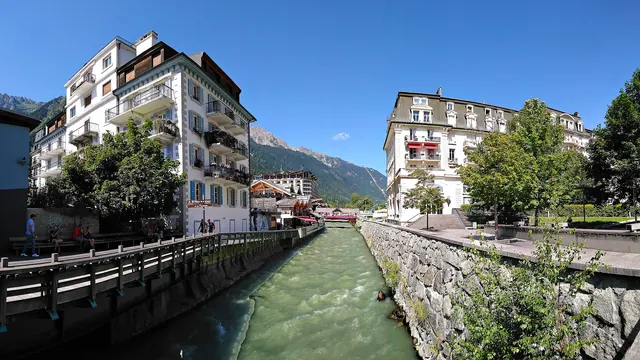
For mountaineers and serious Alpine walkers, choose the French Alps and stay in Chamonix rather than a Tarentaise resort. Come in July or August, the least wet months, arrive by the mountain train from Saint-Gervais, and hire a local guide before stepping onto a glacier.
Before you go
| Measure | Austrian Alps | French Alps |
|---|---|---|
| Official language | German, Austrian Sign Language | French |
| Currency | Euro (EUR) | Euro (EUR) |
| Sockets | CF230 V, 50 Hz | CE230 V, 50 Hz |
| Driving side | Right | Right |
| Time zone | UTC+1, UTC+2 in summer | UTC+1, UTC+2 in summer |
| Emergency number | 112 | 112 |
| Main airport | Innsbruck Airport (INN)40 non-stop destinations | Geneva International Airport (GVA)150 non-stop destinations |
| Public holidays this year | 16 days | 11 days |
Where else could you go?
Every comparison below shares a destination with this one, so you can follow Austrian Alps or French Alps somewhere new.
- Bavariavs Austrian Alps
- Dolomitesvs Austrian Alps
- Swiss Alpsvs French Alps
- Lake Comovs French Alps
- Lake Gardavs Austrian Alps
- Lake Comovs Austrian Alps