Austrian Alps or Umbria?
Our verdict in twelve categories, each scored against the same fixed benchmark cities, and the climate month by month, so you can choose for your trip.
Choose Austrian Alps for
- nightlife
- families
- wellness
The Austrian Alps are for travellers whose vacation happens outdoors and at altitude. Skiing from December to April, hut-to-hut walking and lake swimming in summer, resorts that look after children as a matter of course, and a sauna or thermal bath at the end of the day give it a range of active and restorative trips that Umbria cannot match. The price is high, especially in the famous ski villages.
Choose Umbria for
- prices
- food and drink
- culture and sights
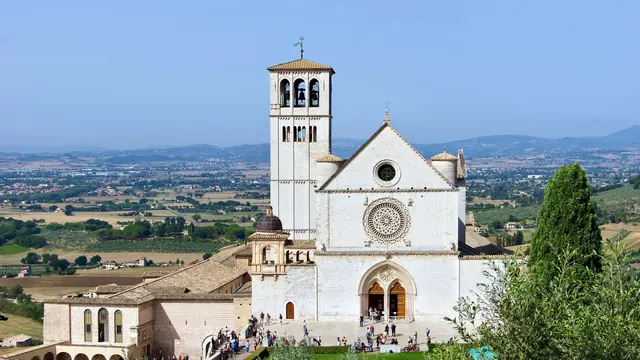
Umbria rewards a slower trip built around art, food and small towns. From a single farmhouse base you can spend each day in a different hill town, standing under Giotto's frescoes in Assisi or Signorelli's in Orvieto, then eating truffle pasta with a glass of Sagrantino, and it costs less than the Alps or neighbouring Tuscany. Evenings are quiet, children have little laid on for them, and there is no snow or sea to plan around.
Scoreboard
Twelve categories on one fixed scale from 0 to 100. The shaded stretch is the gap between the two.
Your match
Pick a travel style or drag the sliders, and both match scores follow your weighting.
Wins on nightlife and families with your weighting.
Wins on prices and food and drink with your weighting.
What matters to you?
Category by category
What the scores mean for a trip.
Beaches & swimming
Neither region has a coast, but the Austrian Alps make far more of their lakes. In Carinthia, the Wörthersee and Millstätter See warm to the mid-20s in high summer, and towns like Velden and Pörtschach have proper lidos with lawns, piers and diving boards.
Umbria's swimming comes down to Lake Trasimeno, which is warm and shallow but often cloudy and muddy underfoot, plus the odd cold river pool in the Valnerina. Most visitors there swim in their farmhouse pool.
Food & drink
Umbria is the better place to eat. Its cooking comes from a few outstanding local products: black truffle shaved over strangozzi, Norcia's pork, Castelluccio lentils and Trevi oil. Add Sagrantino and Orvieto whites tasted at the estates, and food becomes a reason to go.
The Austrian Alps serve hearty dishes like Kaiserschmarrn, Gröstl and Käsespätzle, which taste best on a hut terrace after a hike. There is serious fine dining in the Arlberg and Kitzbühel, but everyday menus in the ski villages tend to look alike. Neither region offers much seafood or international cooking.
Culture & sights
Umbria has the stronger art. The Basilica of St Francis in Assisi, Orvieto's cathedral with Signorelli's Last Judgement and the Perugino holdings in Perugia's national gallery are of the first rank. Gubbio, Todi and Spello are each a medieval set piece in their own right.
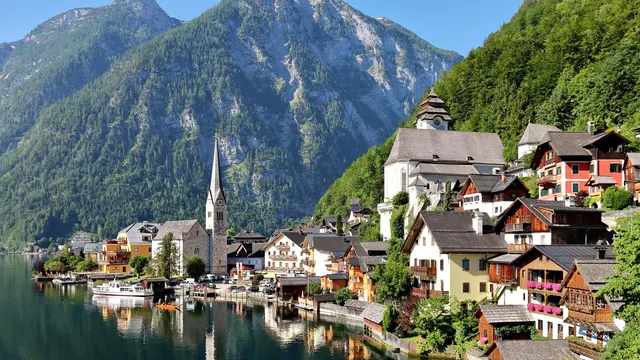
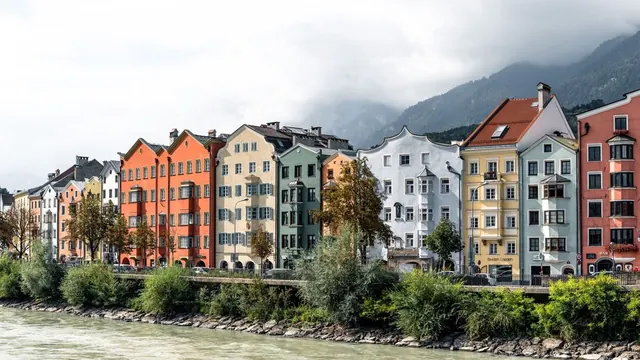
The Austrian Alps put their heritage in a few places: baroque Salzburg under its fortress, Innsbruck's Hofburg and Hofkirche, and the salt-mining landscape around Hallstatt. Both regions are seen by moving between towns, but in Umbria the towns sit closer together and carry more great painting.
Nightlife
The Austrian Alps win clearly in winter. In Ischgl, St Anton, Saalbach and Mayrhofen, après-ski starts in slopeside huts in the late afternoon and carries on in village bars and clubs into the night. Outside the ski season, Innsbruck's students keep a few bars busy and the resorts go quiet.
Umbria has no clubs to speak of. Perugia's cathedral steps and wine bars fill with students on warm evenings, but elsewhere the night ends with dinner and a walk along the town walls.
Nature & outdoors
This is the Austrian Alps' strongest suit. The Hohe Tauern around the Grossglockner, glaciers at the head of the Ötztal and Stubaital, ski areas among the largest in Europe, and a summer network of staffed huts, via ferratas and bike trails put serious mountains within reach of almost every valley.
Umbria's countryside is gentler: olive groves, oak woods and river valleys. Its drama is in the east, where the Monti Sibillini top 2,000m above the flowering plain of Castelluccio, the Valnerina offers rafting and the Marmore Falls drop about 165m. It is lovely walking country in spring and autumn, but there is no skiing and nothing on an Alpine scale.
Day trips
Day trips are what Umbria does best. From a base near Perugia or Spoleto, Gubbio, Todi, Spello, Bevagna, Montefalco and Norcia are all within a short drive. Cortona, Montepulciano and Siena lie across the Tuscan border, and Rome is about an hour by train from Orvieto.
The Austrian Alps have fine outings too, with Hallstatt and the Salzkammergut from Salzburg, Berchtesgaden and Munich over the German border, and Hall in Tirol or Bolzano from Innsbruck. The difference is distance. Alpine trips cross passes and valleys, while Umbria gives you a new town every morning with little time spent driving.
Good for families
The Austrian Alps are far better set up for children. Resorts such as Serfaus-Fiss-Ladis and the Zillertal run nursery slopes and ski schools, hotels built for families are a national speciality, and summer brings adventure trails, toboggan runs and Innsbruck's Alpine Zoo.
Umbria suits a calm family stay at a farmhouse with a pool and animals, and the shallow water of Lake Trasimeno is easy for small swimmers. Beyond that, the highlights are churches and steep cobbled towns that are hard going with a pushchair, so families who need a programme of activities soon run out of things to do.
Getting around
You can manage without a car in the Austrian Alps if you stay in one valley. Trains run along the Inn valley and over the Arlberg, Postbus lines climb the side valleys, and guest cards often cover local buses. Linking several valleys and lakes is still easier by car.
In Umbria a car is close to essential. The regional line links Perugia, Assisi, Spello and Spoleto, but buses to Todi or Montefalco are infrequent and the countryside can't be reached without driving. Cars are kept out of the hill-town centres, so you park below the walls and ride up by escalator or funicular.
Shopping & style
Neither region is a shopping destination, but the Austrian Alps offer a little more choice. Salzburg's Getreidegasse and Innsbruck's old town sell dirndls, loden and felt hats, Kitzbühel and Lech have a few luxury boutiques, and the Christmas markets add December crafts.
Umbria's shopping is about craft and food. You can buy painted majolica straight from the Deruta workshops, hand-loomed linen in Montefalco, cashmere from outlets near Perugia, and hams and truffles in Norcia. There are no luxury streets.
Affordability
Umbria is clearly the cheaper of the two. Farmhouse stays cost less than across the border in Tuscany, trattoria lunches are good value and most sights are churches that cost little or nothing. The main expenses are a hire car and the occasional truffle dish.
The Austrian Alps are expensive, especially in winter, when lift passes, ski hire and lessons add up and the Arlberg and Kitzbühel are among the dearest addresses in the Alps. Farm stays in quieter valleys, summer in Carinthia and half-board can soften the cost, but they don't close the gap.
Live music & performing arts
Both regions are at their best in summer, but the Austrian Alps have the bigger stages. The Salzburg Festival brings leading orchestras and opera singers, Bregenz stages opera on its floating stage on Lake Constance, and the Schubertiade and Erl festivals fill out the year. Outside these, Salzburg also has Mozart Week in January.
Umbria's highlights lean towards jazz and mixed programmes. In July, Umbria Jazz fills Perugia's squares with free street concerts alongside the headline acts, and Spoleto's Festival dei Due Mondi stages opera, theatre and dance in a Roman theatre. The rest of the year, performances are occasional.
Wellness & relaxation
The Austrian Alps are the stronger choice for proper spa time. Bad Gastein's radon springs and healing gallery, the thermal baths at Bad Hofgastein and Längenfeld, and the long sauna tradition in valley hotels make bathing a central part of the trip.
Umbria's restorative appeal lies in its pace. You can spend the day over a long lunch, take in an olive-grove view, book a massage or yoga at a country house, or find silence in the hermitages above Assisi. Its few spa towns are minor, and anyone who wants hot springs drives over the border into Tuscany.
When should you go?
Pick your month. The climate figures are measured averages, not a forecast.
Austrian Alps in July
Umbria in July
Daytime high, °C
Rainfall in the month, mm
Where the figures come from
Umbria's temperatures are measured 53 km from the centre, at Frontone.
Umbria has no rain gauge within 25 km of the centre, so its rainfall comes from a gridded climate dataset read at the destination rather than from a gauge further away.
Temperature and rainfall are climate normals, averaged over the years shown. Austrian Alps: 1991-2020 normals, Innsbruck-Flughafen (4.1 km from centre). Umbria: 1991-2020 normals, Frontone (52.9 km from centre).
The two regions keep different calendars. In the Austrian Alps winter, with highs around 4°C in the valleys where most visitors stay, belongs to skiing, and walking weather runs from May to September. High summer is warm enough for the Carinthian lakes but is also the wettest time, with about 144mm in August as afternoon storms build over the peaks. Even so, July is the sunniest month. September and early October are often the most settled for hiking.
Umbria works the other way round. Summer is hot and dry, with July reaching about 30°C, which is too warm for long climbs up steep hill-town streets at midday but fine for the farmhouse pool. Rain arrives in autumn and peaks around 97mm in November, and winters are cool but milder than in the Alps. For Umbria, May, June and September are the best months, and in late spring and early autumn both regions are pleasant for walking.
Which traveller are you?
On a family trip with children, the Austrian Alps make the easier choice. Settle in one resort valley, winter or summer, and the days organise themselves without a car. It costs more than Umbria, but children soon tire of churches.
For a relaxing and wellness trip, the Austrian Alps win, best in the quiet weeks of early summer or autumn. Base yourself in the Gastein valley and bathing becomes the daily routine. Umbria offers slow days, but little warm water.
On a trip on a tight budget, Umbria goes further. Sleep in a smaller town like Foligno rather than Assisi or Orvieto in summer, and plan one truffle dinner, not several. In the Alps, even the quiet valleys cost more.
Before you go
| Measure | Austrian Alps | Umbria |
|---|---|---|
| Official language | German, Austrian Sign Language | Italian |
| Currency | Euro (EUR) | Euro (EUR) |
| Sockets | CF230 V, 50 Hz | CFL230 V, 50 Hz |
| Driving side | Right | Right |
| Time zone | UTC+1, UTC+2 in summer | UTC+1, UTC+2 in summer |
| Emergency number | 112 | 112 |
| Main airport | Innsbruck Airport (INN)40 non-stop destinations | Perugia San Francesco d'Assisi – Umbria International Airport (PEG)17 non-stop destinations |
| Public holidays this year | 16 days | 13 days |
By the numbers
| Measure | Austrian Alps | Umbria |
|---|---|---|
| Population | - | 852,085 |
| People per km² | - | 101 |
Where else could you go?
Every comparison below shares a destination with this one, so you can follow Austrian Alps or Umbria somewhere new.
- Bavariavs Austrian Alps
- Dolomitesvs Austrian Alps
- Tuscanyvs Umbria
- Lake Gardavs Austrian Alps
- Lake Comovs Austrian Alps
- Cinque Terrevs Umbria