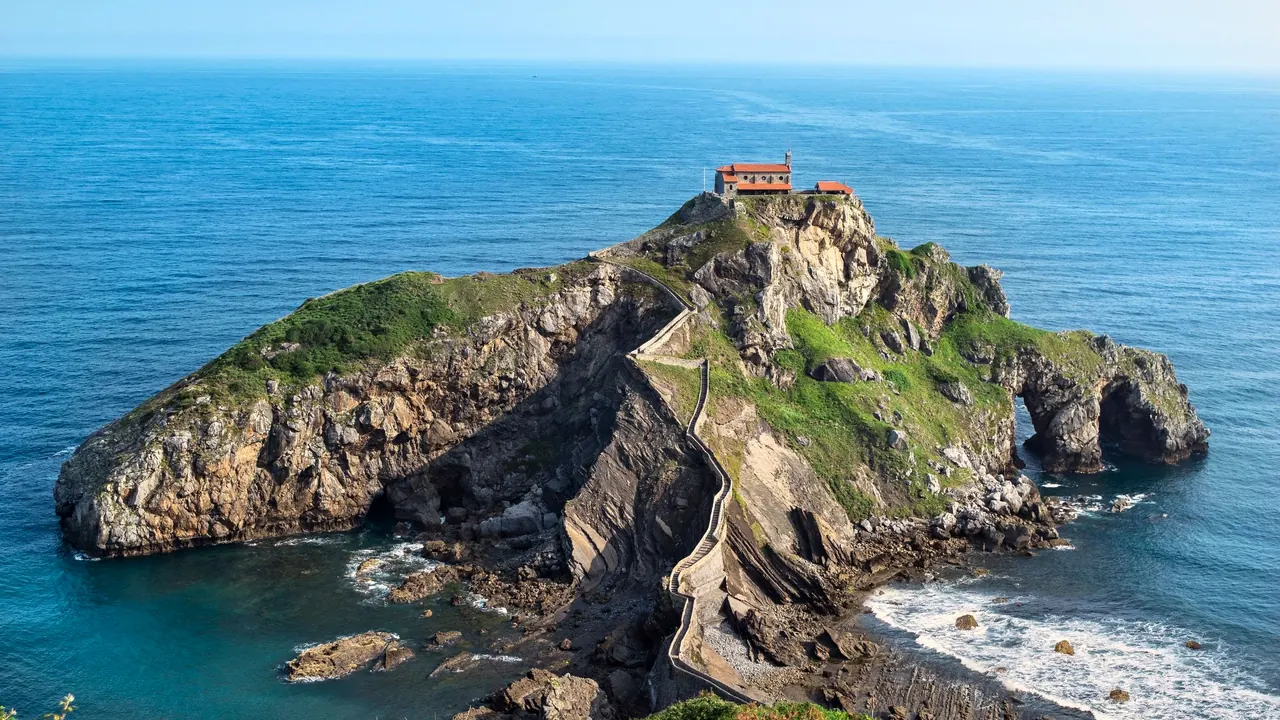
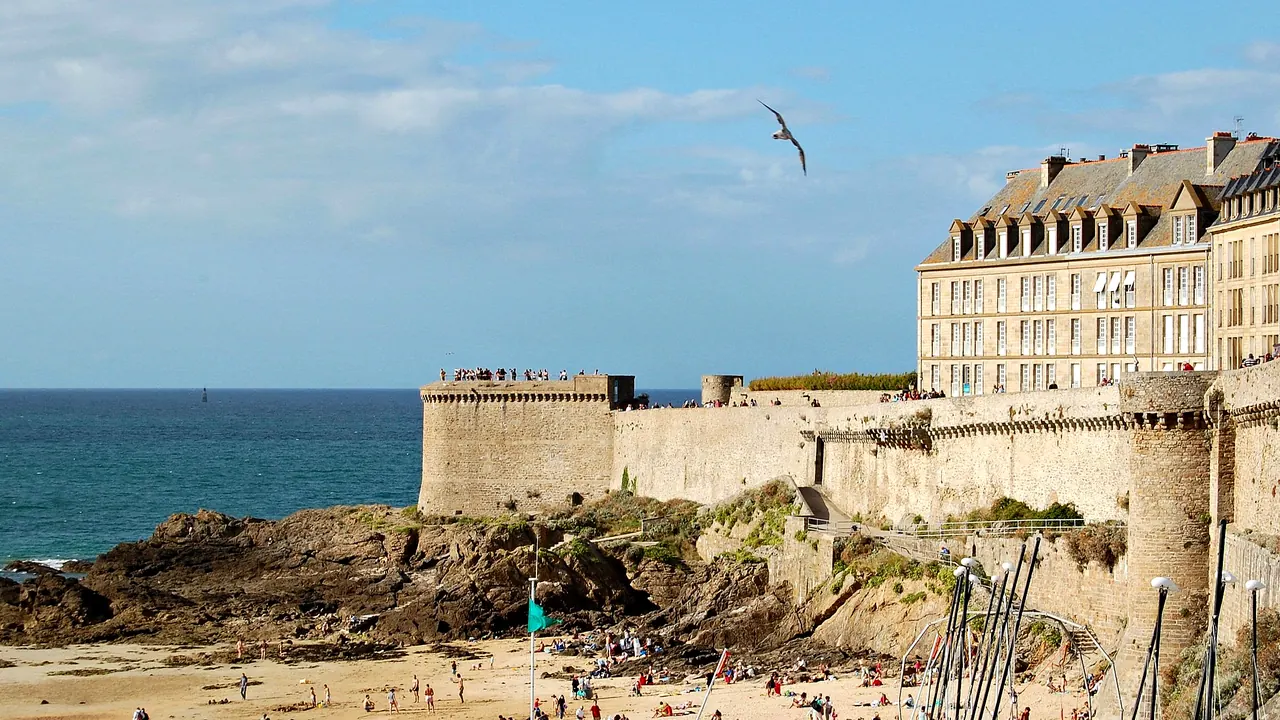
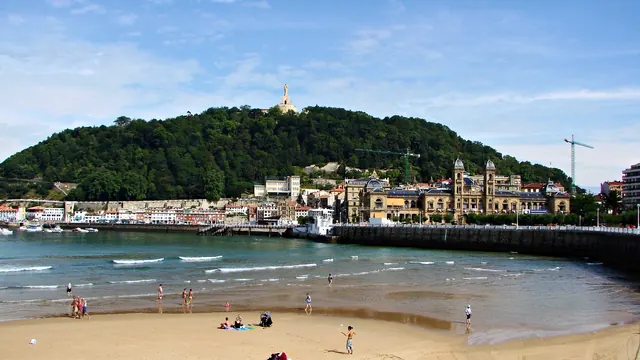
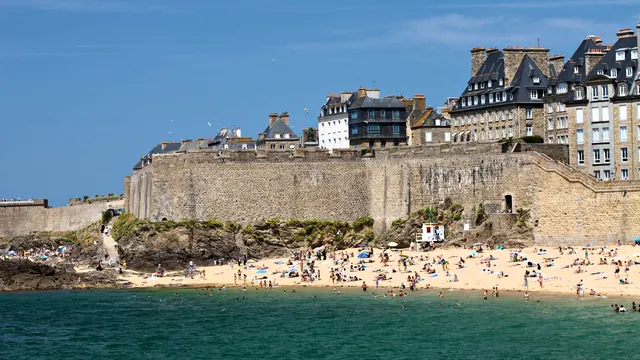
Photos: Basque Country by Enrique, Pexels License; Brittany by Pline, CC BY-SA 3.0, cropped.
Basque Country or Brittany?
Our verdict in twelve categories, each scored against the same fixed benchmark cities, and the climate month by month, so you can choose for your trip.
Choose Basque Country for
- food and drink
- nightlife
- shopping
The Basque Country is the better pick for a vacation built around eating and city evenings. The pintxos rounds of San Sebastián's Parte Vieja and Bilbao's Casco Viejo, the cider houses and the grilled fish of Getaria go well beyond anything on the Breton table. Add three compact cities about an hour apart, the Guggenheim, livelier nights and good public transport, and it suits couples and friends who want food and cities with the coast on the side. They need to accept frequent rain and dear summer rooms in San Sebastián.
Choose Brittany for
- wellness
- families
- prices
Brittany is the slower, more rural choice, and the stronger one for families and for rest. Its long coast of sandy bays, rock pools, sailing schools, gîtes and campsites makes an easy seaside vacation with children, and as the home of thalassotherapy it suits a spa stay at Quiberon or Dinard. Evenings are quiet, the sea is brisk and a car is close to essential, but the summers are drier and sunnier.
Scoreboard
Twelve categories on one fixed scale from 0 to 100. The shaded stretch is the gap between the two.
Your match
Pick a travel style or drag the sliders, and both match scores follow your weighting.
Wins on food and drink and nightlife with your weighting.
Wins on wellness and families with your weighting.
What matters to you?
Category by category
What the scores mean for a trip.
Beaches & swimming
These two are well matched for beaches, but the beaches are very different. The Basque Country's best is urban: La Concha is a calm shell of sand inside a city bay, with Zurriola next door for surfers and the beaches near Bilbao below green headlands. The water is a few degrees warmer, which makes long swims comfortable at the height of summer.
Brittany has far more coast and a classic resort culture: wide bays at Carnac and Bénodet, pink granite coves at Ploumanac'h, and tidal flats at Saint-Malo that empty for hundreds of metres. The sea is colder and the tides are large, but there is a beach for every mood.
Food & drink
Food is the widest gap between them, and it favours the Basque Country. Pintxos bars cook hot dishes to order, and the hills around San Sebastián hold a remarkable cluster of celebrated restaurants. Add pil-pil cod, txuleta steaks, cider houses from January to April and Rioja Alavesa wine, and eating can be the whole point of the trip.
Brittany eats very well in its own lane: Cancale oysters, shellfish platters, buckwheat galettes with cider, salted butter in everything. Beyond Breton and classic French cooking, though, the range is narrow outside Rennes.
Culture & sights
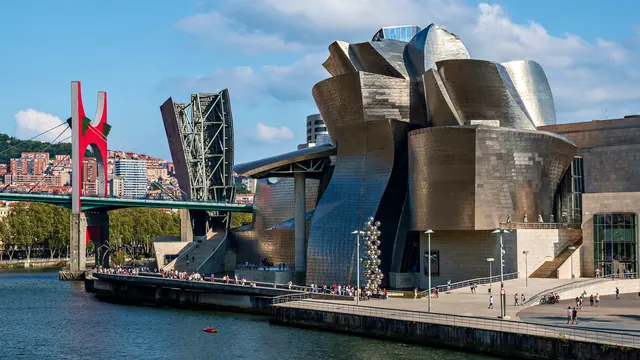
Both have plenty to see, in different forms. The Basque Country's sights are concentrated in its cities: the Guggenheim and the Fine Arts Museum in Bilbao, Belle Époque San Sebastián and the medieval rings of Vitoria-Gasteiz, plus Gernika and Loyola.
Brittany's heritage is scattered across small towns and open country. The menhir rows of Carnac are among Europe's great prehistoric sites, and walled or half-timbered towns such as Saint-Malo, Dinan, Vitré and Concarneau fill a touring itinerary. Its museums are modest, so come for monuments rather than galleries.
Nightlife
The Basque Country is clearly livelier after dark. The early-evening bar round in Bilbao and San Sebastián runs on into cocktail bars and late pubs, and a few clubs stay open past dawn at weekends. In August, Bilbao's Aste Nagusia and San Sebastián's Semana Grande fill the streets until the early hours.
In Brittany, going out mostly means student Rennes and a few busy summer resorts. Most of the coast is quiet by midnight, and a village fest-noz is the night out to look for.
Nature & outdoors
Both are green Atlantic country, but the landscapes differ. The Basque Country is steep, with inland limestone ridges of around 1,500m for day hikes, the tilted flysch cliffs of the Geopark between Zumaia and Deba, and Mundaka's famous wave.
Brittany is low and shaped by its coast. The GR34 path follows nearly the whole shoreline past Cap Fréhel and Pointe du Raz, islands such as Ouessant and Belle-Île add more walking, and the Sept-Îles have gannets and puffins. The Gulf of Morbihan is a sheltered place to kayak or sail.
Day trips
Outings are plentiful in both regions. The Basque Country's best excursions cross borders and change the scenery: the French Basque towns of Biarritz and Bayonne, the cave cellars of Laguardia in the wine country, Pamplona, and Burgos cathedral.
Brittany's excursions lean towards islands and the sea. Boats run to Belle-Île, the Gulf of Morbihan and flowery, car-free Bréhat, while Mont-Saint-Michel is about an hour from Saint-Malo and Nantes is within reach in the south-east.
Good for families
Brittany is the easier family destination. It is built for children's seaside vacations, with self-catering gîtes, campsites, rock pools at low tide, sailing schools at almost every resort, and Océanopolis or the Saint-Malo aquarium for grey days. Young swimmers need watching in the cold water and strong tides.
The Basque Country works best from a San Sebastián base. La Concha's water is calm, and the Monte Igueldo funicular, the aquarium and children out late in the squares make it fun. Outside that city there is less aimed at families, and the rain is more frequent.
Getting around
The Basque Country is far easier without a car. Bilbao, San Sebastián and Vitoria are about an hour apart by frequent coaches, each centre is walkable, Bilbao has its Foster-designed metro, and Euskotren reaches the French border. You only need a car for wine country and the hills.
Brittany has fast trains to Rennes and regional lines to its main towns, but the coast, the megaliths and the villages really need a car. Summer roads clog and island trips depend on ferries, so it works best with one base and a car.
Shopping & style
Neither is a shopping destination, but the Basque Country offers more. Bilbao's Gran Vía has the Spanish chains and a department store, and San Sebastián's Centro has good independent boutiques. The best things to take home are still edible: Idiazabal cheese, Getaria anchovies and txakoli.
Brittany's shopping is regional crafts and food: Quimper faience, striped sailor tops, salted caramels and Guérande salt, with the Saturday market at Place des Lices in Rennes as the highlight.
Affordability
Costs are similar, and both run high at the peak of summer. In the Basque Country the expensive part is staying in San Sebastián, so base yourself in Bilbao or Vitoria and eat pintxos and set lunches.
In Brittany the bills climb in the July and August resorts and with seafood platters. Campsites, gîtes, crêperies, toll-free roads and travelling in June or September keep it reasonable.
Live music & performing arts
The two are on a par for live music and performance but differ in character. The Basque Country leans towards the concert hall and jazz. There is San Sebastián's Jazzaldia in July and the Quincena Musical's classical season in August, plus a year-round opera season at Bilbao's Euskalduna hall and two orchestras.
Brittany's music is rooted in its Celtic tradition: bagad pipe bands, fest-noz dances, the vast Festival Interceltique in Lorient and Les Vieilles Charrues at Carhaix. Rennes keeps an opera house and the December Transmusicales going outside the summer.
Wellness & relaxation
Brittany is the clear choice for a restorative stay. Thalassotherapy started at Roscoff, and seawater spas with heated pools and algae treatments line the seafront from Quiberon and Carnac to Dinard and Perros-Guirec. They are calmest in spring and autumn.
The Basque Country offers one memorable spa experience, the seawater pools in the old bathing pavilion on La Concha, plus the springs at Zestoa. Otherwise, relaxing there means slow lunches, promenade walks and a farmhouse stay in the hills.
When should you go?
Pick your month. The climate figures are measured averages, not a forecast.
Basque Country in July
Brittany in July
Daytime high, °C
Rainfall in the month, mm
Where the figures come from
Basque Country's station stands 253 m above the place it is measured for, so that place is likely a little warmer than the figures say.
Brittany has no rain gauge within 25 km of the centre, so its rainfall comes from a gridded climate dataset read at the destination rather than from a gauge further away.
Brittany's sunshine is measured 89 km from the centre, at Rennes.
Temperature and rainfall are climate normals, averaged over the years shown. Basque Country: 1991-2020 normals, San Sebastian / Igueldo (10 km from centre). Brittany: 2004-2020 (sunshine 1991-2020, rainfall 1991-2020) normals, Vannes-Meucon (8.1 km from centre).
The two coasts are about equally warm in summer, with afternoons in the low twenties from June to September. The real differences are rain and sea. The Basque coast is wet all year: even July and August bring roughly twice Brittany's rainfall, and November is very wet at about 203mm. In return its sea warms to about 22°C in August, so swimming in San Sebastián is genuinely pleasant from July to early September. Brittany's sea tops out around 18°C, so it is a brisk dip, but its summers are noticeably drier and sunnier. July is its warmest month at about 24°C.
Outside summer, Brittany's dry, sunny April and May and its calm September suit coastal walking and spa stays. In late spring and early autumn the Basque Country works well for city sightseeing and hill walks, as long as you pack for showers. Winter is cool and grey in both. Brittany is a little colder, while the Basque coast is far wetter, so neither is a winter beach destination.
Which traveller are you?
For a food and nightlife trip, choose the Basque Country. Evenings move from counter to counter through San Sebastián's Parte Vieja and Bilbao's Casco Viejo, the region's celebrated restaurants and cider houses are within reach, and the bars and August fiestas run far later than anything in Brittany.
On a family trip with young children, Brittany is easier. Gîtes, campsites and small resorts are simple to run, the beaches have rock pools and sailing schools, and Océanopolis covers a wet day. The Basque Country has La Concha's calm water but fewer family-scale places to stay.
For a relaxing and wellness trip, Brittany has the clear advantage. Thalassotherapy began here, and seawater spas line the coast from Quiberon to Perros-Guirec. Add car-free islands and quiet granite villages. The Basque Country has one fine seawater centre in San Sebastián and little else.
Before you go
| Measure | Basque Country | Brittany |
|---|---|---|
| Official language | Spanish | French |
| Currency | Euro (EUR) | Euro (EUR) |
| Sockets | CF230 V, 50 Hz | CE230 V, 50 Hz |
| Driving side | Right | Right |
| Time zone | UTC+1, UTC+2 in summer | UTC+1, UTC+2 in summer |
| Emergency number | 112 | 112 |
| Main airport | Bilbao Airport (BIO)73 non-stop destinations | Nantes Atlantique Airport (NTE)97 non-stop destinations |
| Public holidays this year | 13 days | 11 days |
By the numbers
| Measure | Basque Country | Brittany |
|---|---|---|
| Population | 3,193,513 | 4,687,381 |
| Swim season, months above 21 °C | 2 months | None |
Where else could you go?
Every comparison below shares a destination with this one, so you can follow Basque Country or Brittany somewhere new.
- Bordeauxvs Basque Country
- Normandyvs Brittany
- Loire Valleyvs Brittany
- Devonvs Brittany
- Dordognevs Basque Country
- Jurassic Coastvs Brittany