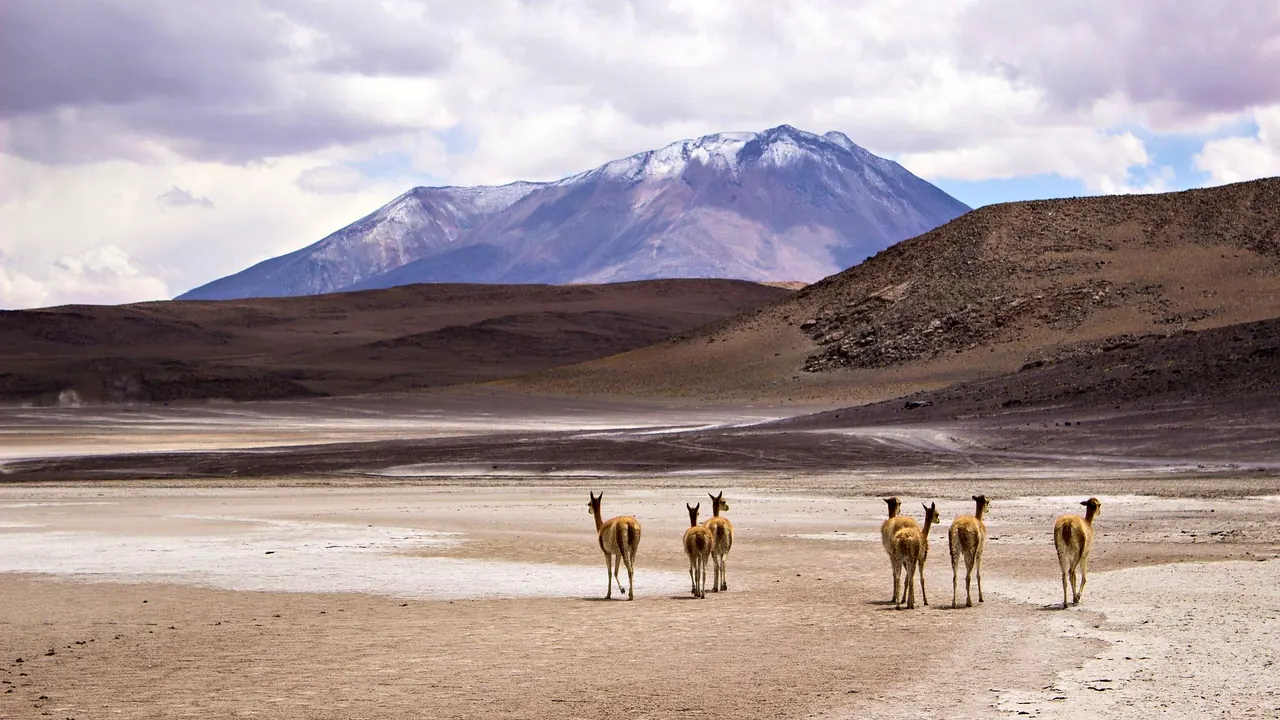
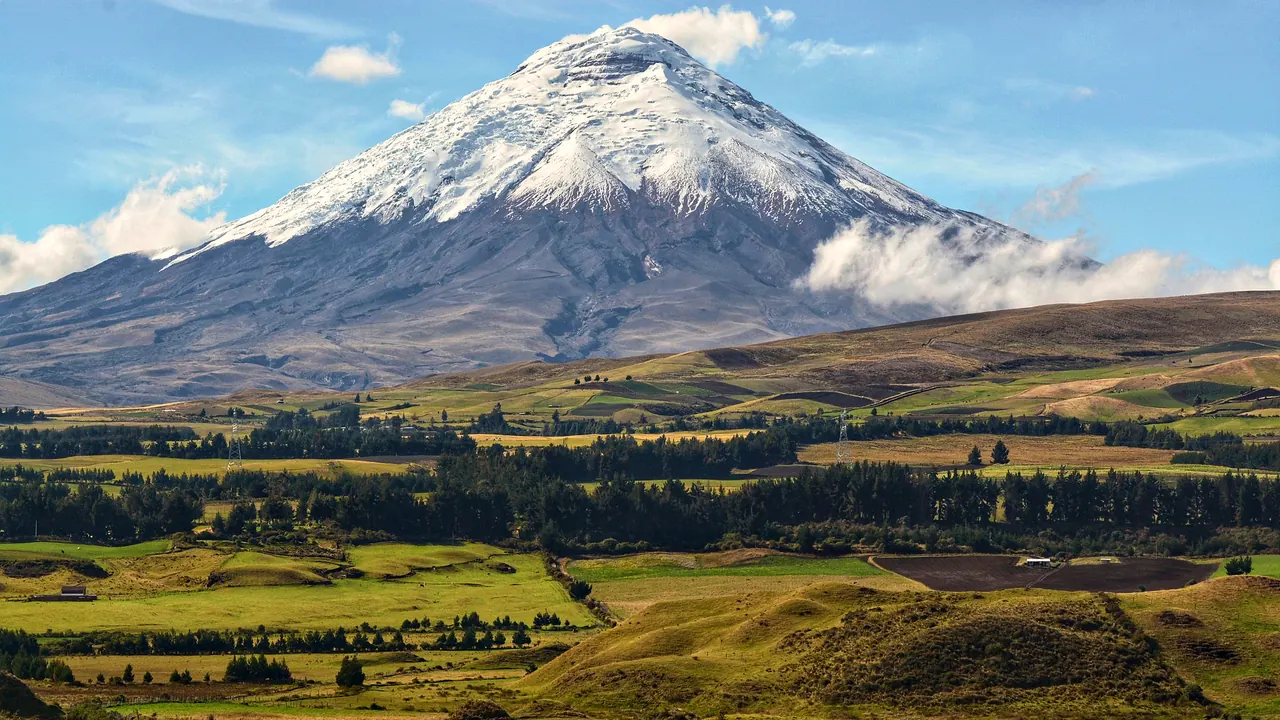
Photos: Bolivia by João Aguiar, Pexels License; Ecuador by DΛVΞ GΛRCIΛ, Pexels License.
Bolivia or Ecuador?
Our verdict in twelve categories, each scored against the same fixed benchmark cities, and the climate month by month, so you can choose for your trip.
Choose Bolivia for
- prices
- live music and the arts
Choose Bolivia for a rougher, higher and cheaper adventure built around landscapes on a huge scale: the Salar de Uyuni and its coloured lagoons, the glaciers of the Cordillera Real, and the colonial towns of Potosí and Sucre. It suits travellers with time, a tolerance for altitude and long journeys, and a budget they want to stretch. It especially rewards those who plan around a festival such as Oruro's carnival.
Choose Ecuador for
- beaches
- wellness
- families
Ecuador is the easier and more varied choice. Volcanoes, cloud forest, Amazon and coast lie a short distance apart, and the Galápagos make a separate trip of their own. Families, anyone short of time, and travellers who want to end with a few beach days or hot springs will find it smoother going, as long as the budget allows for the islands.
Scoreboard
Twelve categories on one fixed scale from 0 to 100. The shaded stretch is the gap between the two.
Your match
Pick a travel style or drag the sliders, and both match scores follow your weighting.
Wins on prices and live music and the arts with your weighting.
Wins on beaches and wellness with your weighting.
What matters to you?
Category by category
What the scores mean for a trip.
Beaches & swimming
Here the gap could hardly be wider. Bolivia is landlocked. Its nearest thing to a beach is the strip of sand at Copacabana on Lake Titicaca, where water near 12°C allows a brief, bracing dip at most.
Ecuador has a real Pacific coast, with surf and long sand at Montañita, Ayampe and Olón and the wild crescent of Los Frailes in Machalilla. On the Galápagos there are white bays such as Tortuga Bay, where sea lions lie beside the swimmers. The coast suits a few days of rest rather than a resort stay, but at least it is there.
Where in Ecuador: Galápagos Islands, Machalilla National Park, Montañita, Ayampe
Food & drink
Both countries cook hearty highland food built on potatoes, and in both the covered markets serve the best-value meals. Ecuador comes out a little ahead because it has a coast. Ceviche in citrus broth, encebollado for breakfast and Guayaquil's plantain bolones give it a seafood side that Bolivia, with only Titicaca trout, cannot match, and its cacao and coffee are worth seeking out.
Bolivia's strengths are its mid-morning salteñas, Cochabamba's standing as the country's food city, and the wine and singani of the Tarija valleys. La Paz and Quito each have a small tier of modern Andean restaurants, so in either country the capital is where to eat best.
Culture & sights
Both countries are strong on colonial heritage and close enough to call even, but the weight sits differently. Bolivia spreads its heritage across several places: Potosí's silver history, with its mint and the Cerro Rico mines, Sucre's white colonial centre, the pre-Inca stones of Tiwanaku and the painted Jesuit churches of Chiquitos.
Ecuador concentrates its heritage in Quito. The large historic core, gilded La Compañía and the San Francisco monastery fill several days, Cuenca is a calmer second city, and Guayasamín's Capilla del Hombre covers modern art. Ecuador has the better museums, while Bolivia has the older and more varied ruins.
Where in Bolivia: Potosí, Sucre, La Paz and Tiwanaku, Chiquitos missions
Where in Ecuador: Quito, Cuenca, Ingapirca
Nightlife
Neither country is a reason to travel for going out, and the two are on a par. Bolivia's late scene belongs to lowland Santa Cruz, with big clubs around Equipetrol. The bars of La Paz in Sopocachi come with the handicap of 3,600m of altitude.
Ecuador's best nights are found in the craft-beer bars of Quito's La Floresta, the louder Mariscal district and among Guayaquil's warmer coastal crowd. It also has Montañita, a beach party town with no equivalent in Bolivia.
Nature & outdoors
Nature is the main draw in both countries, and they are close, so the choice is between kinds of landscape. Bolivia's are vast and stark: the Salar de Uyuni, the geysers and flamingo lagoons of Eduardo Avaroa on a multi-day jeep trip, the glaciers of the Cordillera Real and the Death Road ride down into the Yungas.
Ecuador packs more variety into shorter distances. Along the Avenue of the Volcanoes it has Cotopaxi and the Quilotoa loop, Mindo's cloud forest is full of hummingbirds, and Baños offers rafting and canyoning. Then there are the Galápagos, where tortoises, iguanas and sea lions can be watched at arm's length. Both countries reach the Amazon, Bolivia through Madidi and Ecuador through Cuyabeno and Yasuní.
Where in Bolivia: Salar de Uyuni, Eduardo Avaroa Reserve, Cordillera Real, Madidi National Park
Where in Ecuador: Galápagos Islands, Avenue of the Volcanoes, Amazon (Cuyabeno and Yasuní), Mindo
Day trips
Ecuador's day trips are easier to fit in. From Quito, Otavalo's market combined with Cotacachi makes a full but manageable day, and the equator monument is close by. From Cuenca there is Ingapirca, along with the silver and textile villages of Gualaceo and Chordeleg.
Bolivia has fine outings too, such as Tiwanaku from La Paz and the Sunday weaving market at Tarabuco from Sucre. More of its excursions, though, including Copacabana and Potosí, work better with an overnight stay, and Tarija's vineyards are best explored from a base of a few days.
Where in Bolivia: La Paz, Sucre, Tarija, Santa Cruz
Where in Ecuador: Quito, Cuenca
Good for families
With children, Ecuador is far more workable of the two, as long as they are of school age. The Galápagos bring wildlife within reach, with sea lions and snorkelling in shallow bays, and Baños adds ziplines and waterfall rides.
Bolivia is hard going for families. Much of the classic route lies between 3,600m and 4,500m, the journeys are long and cold, and little is built for children. Families do better staying low, in Santa Cruz and Samaipata or on the pampas river trips from Rurrenabaque, and should save the Uyuni jeep trip for sturdy teenagers.
Where in Bolivia: Santa Cruz, Samaipata, Rurrenabaque, Salar de Uyuni
Where in Ecuador: Galápagos Islands, Baños, Cuyabeno
Getting around
Ecuador is much easier to move around, mainly because it is smaller. Its highland sights line up along the Pan-American Highway, served by frequent buses, flights link Quito, Guayaquil and Cuenca, and Quito has a metro line. Mountain roads are still slow and winding.
In Bolivia the distances are wider, overnight buses and rough tracks are normal, and road blockades can close routes with little warning. The Salar can only be reached on an organised 4x4 tour. On a short trip domestic flights become close to essential, though the cable cars of La Paz are a pleasure in their own right.
Where in Bolivia: La Paz, Sucre, Santa Cruz
Where in Ecuador: Quito, Cuenca
Shopping & style
Both are countries for craft markets, with no luxury shopping to speak of. Ecuador has the edge with Otavalo's large textile market around the Plaza de los Ponchos and Cuenca's Panama hat workshops, where you can watch a genuinely Ecuadorian product being woven. It also has silver filigree, tagua carvings and fine chocolate.
Bolivia answers with alpaca and carnival masks around Sagárnaga and the Witches' Market in La Paz, Jalq'a and Tarabuco weavings in Sucre and silverwork in Potosí. Its range is narrower but stranger.
Where in Bolivia: La Paz, Sucre and Tarabuco, Cochabamba, Potosí
Where in Ecuador: Otavalo, Cuenca, Quito
Affordability
Bolivia is the cheaper of the two, and the difference runs through the whole trip. Market lunches, buses and guesthouses cost very little, Sucre makes a long, comfortable stay easy to afford, and even the Uyuni jeep tours and Amazon lodges are reasonable for what they include.
Ecuador's highlands are inexpensive too, especially Cuenca and Baños. The trips many people come for are another matter: the Galápagos, with the park fee, the flight and the boats, and the all-inclusive lodges of Cuyabeno and Yasuní can take up much of a budget.
Where in Bolivia: Sucre, La Paz, Potosí, Cochabamba
Where in Ecuador: Cuenca, Quito, Baños, Otavalo
Live music & performing arts
Neither country has much formal concert life, and Bolivia comes out ahead because of its festivals. The Carnival of Oruro, with its devil dances and brass bands, and the Gran Poder parade in La Paz are huge masked processions, and the Chiquitos missions hold a festival of baroque music.
Ecuador has the finer stage in Quito's Teatro Nacional Sucre, home to opera and the symphony, and Inti Raymi brings music to the villages around Otavalo in June, but there is less to plan a trip around. In both countries, an evening at a peña is the most reliable way to hear Andean music.
Where in Bolivia: Oruro, La Paz, Chiquitos missions, Sucre
Where in Ecuador: Quito, Otavalo
Wellness & relaxation
Ecuador is the better place to slow down, thanks to its volcanic hot springs. Papallacta has pools in the páramo about an hour and a half from Quito, Baños has public baths beneath a waterfall, and Cuenca has its own thermal suburb. For longer rests there are Vilcabamba's yoga retreats and hacienda stays.
Bolivia's soaks are fewer and simpler: the dawn pool at Polques on the Uyuni route and the warm crater lake near Potosí. Its restful places are towns rather than spas, mild Sucre and green Samaipata.
Where in Bolivia: Sucre, Samaipata, Uyuni southern route, Potosí
Where in Ecuador: Papallacta, Baños, Vilcabamba
When should you go?
Pick your month, and for a country the place in it. The climate figures are measured averages, not a forecast.
Where in Bolivia
Where in Ecuador
La Paz (Bolivia) in July
Quito (Ecuador) in July
Daytime high, °C
Rainfall in the month, mm
Where the figures come from
La Paz (Bolivia) has no weather station within reach, so its figures come from a gridded climate model rather than a measured record, and read a broad area rather than one spot.
Quito (Ecuador)'s station stands 208 m above the city centre, so the centre is likely a little warmer than the figures say.
Temperature and rainfall are climate normals, averaged over the years shown. La Paz (Bolivia): 2001-2020 normals, NASA POWER reanalysis grid, no weather station within 90 km. Quito (Ecuador): 1961-1990 (rainfall 1981-2010) normals, Izobamba-Santa Catalina (16.8 km from centre).
Bolivia is at its best in the dry winter from May to September. La Paz gets very little rain then but stays cool, around 14°C by day, with cold nights, while Sucre is milder at about 21°C and pleasant for walking. The rains run from December to March in both cities. They make the roads harder going, but they also bring the mirror effect to the Salar de Uyuni.
Ecuador's highlands feel like spring all year. Quito stays near 18°C, it is driest from June to August and sunniest in July and August, and March and April are its wettest months. On the coast and the Galápagos the warm season runs from December to May, with hot days and the sea at its warmest in February and March, around 27°C, the best time for swimming. Those same two months are when Guayaquil gets its heaviest rain. From June the Galápagos stay dry, but the water cools to about 22°C by August.
Which traveller are you?
On a beach and sun trip, Ecuador is the only real choice. Bolivia has no coast at all. Ecuador has surf towns like Montañita, the wild sand of Los Frailes, and Galápagos bays where snorkelling beside sea lions is part of an ordinary day.
For a trip on a tight budget, Bolivia stretches money further. Market meals, buses and guesthouses cost little everywhere, and even its headline Uyuni jeep tour is affordable. Ecuador's big draws, the Galápagos and the Amazon lodges, add expensive extras to a cheap mainland trip.
On a family trip with children, Ecuador is much the easier country. Shorter journeys, Galápagos wildlife and the ziplines and waterfall rides of Baños suit school-age children. In Bolivia, high altitude and long, cold road journeys weigh heavily on young travellers.
More comparisons
Each shares a side with Bolivia or Ecuador.
Where else could you go?
Set Bolivia or Ecuador against any other country.