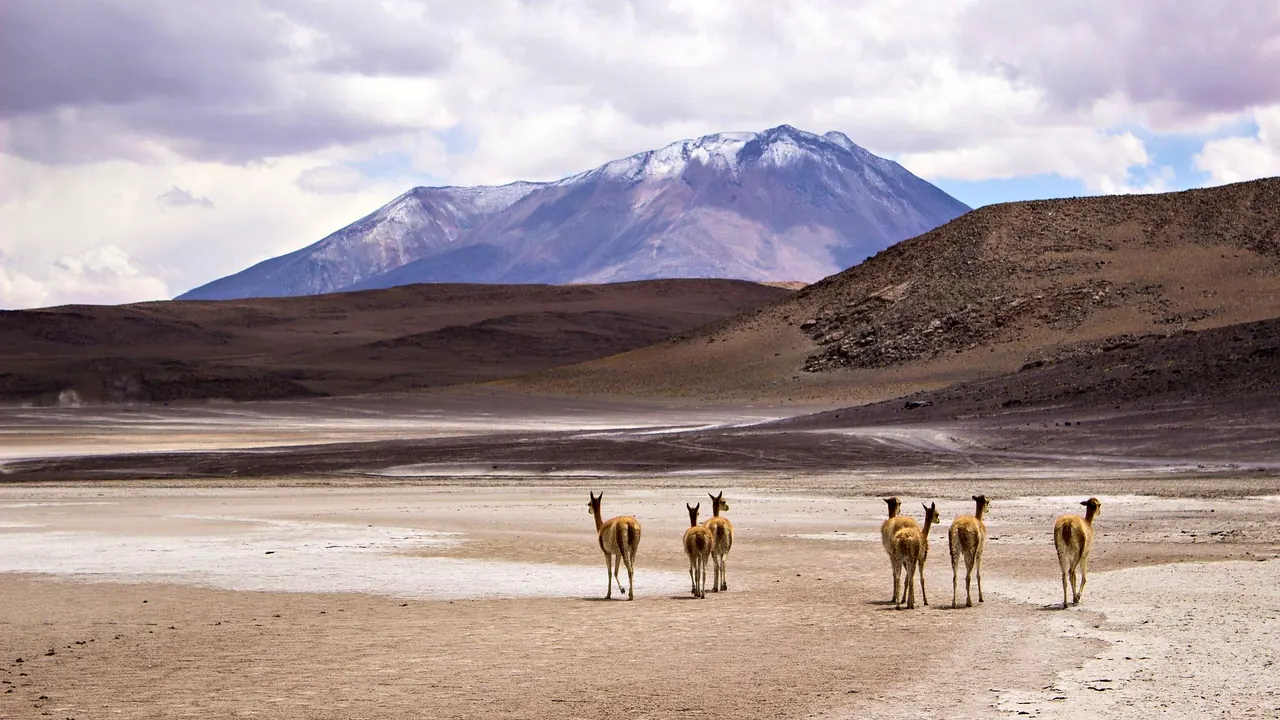
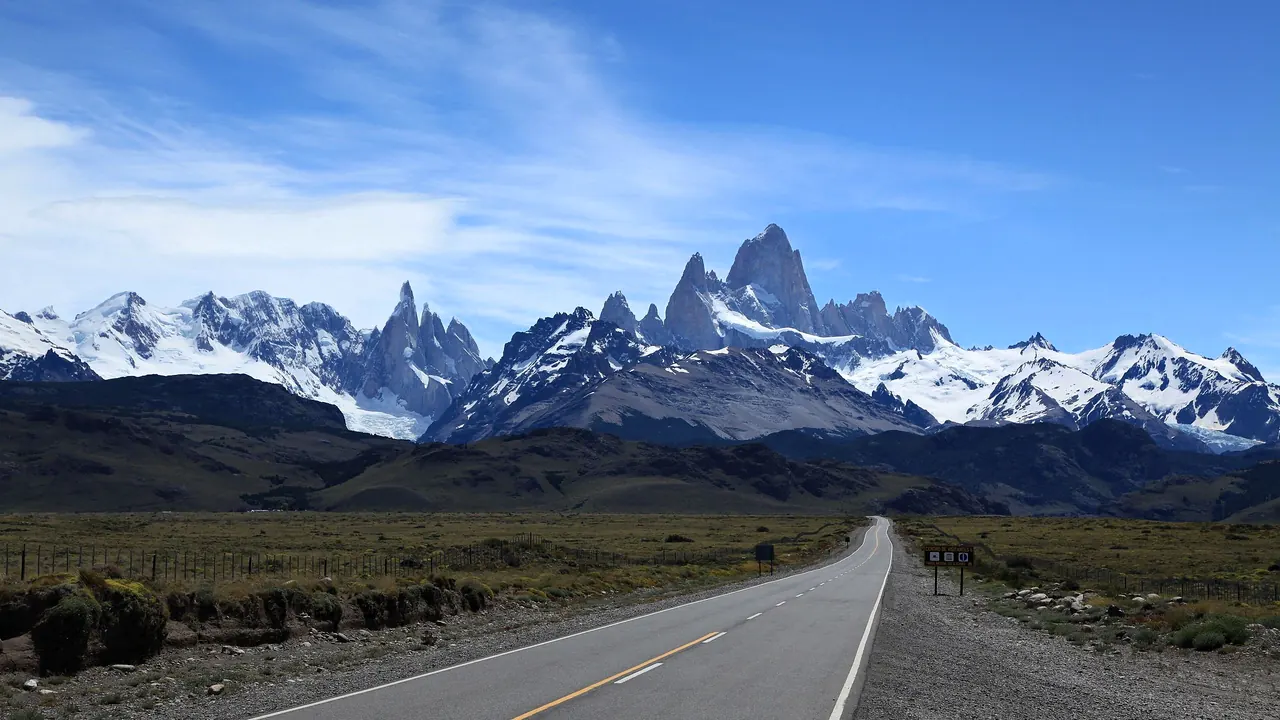
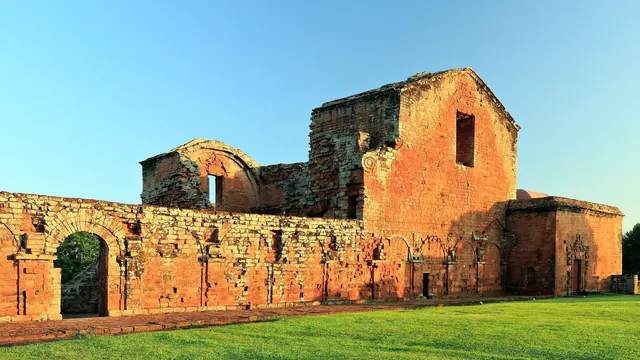
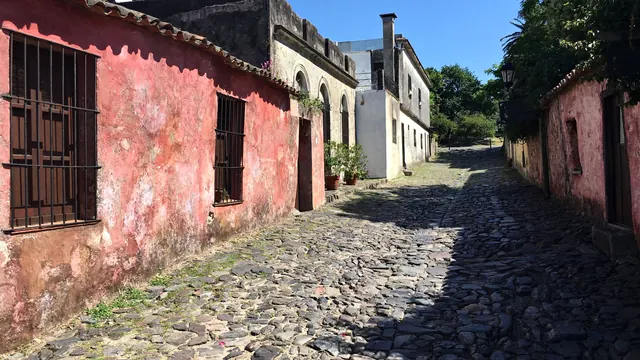
Photos: Bolivia by João Aguiar, Pexels License; Argentina by Liam Quinn from Canada, CC BY-SA 2.0, cropped.
Bolivia or Argentina?
Our verdict in twelve categories, each scored against the same fixed benchmark cities, and the climate month by month, so you can choose for your trip.
Choose Bolivia for
- prices
- culture and sights
Bolivia suits the traveller who comes for the landscape and is happy to rough it a little for it. The Salar de Uyuni, the flamingo lagoons of the southern altiplano and the colonial silver towns of Potosí and Sucre are unlike anything else on the continent, and the whole trip costs remarkably little. In return you get thin air, long and bumpy journeys and quiet evenings, so it works best for fit adults with time to acclimatise.
Choose Argentina for
- families
- nightlife
- beaches
Argentina is the better pick for a rounded trip that mixes wild places with city pleasures. Glaciers, Iguazú and Patagonian trails sit alongside Buenos Aires, with its late dinners, tango halls, theatres and shops, and the wine country around Mendoza. It is easier with children and more comfortable to travel, though it costs noticeably more, and its regions are far apart, so most visitors pick two or three and fly between them.
Scoreboard
Twelve categories on one fixed scale from 0 to 100. The shaded stretch is the gap between the two.
Your match
Pick a travel style or drag the sliders, and both match scores follow your weighting.
Wins on prices and culture and sights with your weighting.
Wins on families and nightlife with your weighting.
What matters to you?
Category by category
What the scores mean for a trip.
Beaches & swimming
Bolivia has no coast at all. The nearest it comes to a beach is the strip of sand at Copacabana on Lake Titicaca, where the water is far too cold for more than a quick dip.
Argentina at least has a real beach season. Mar del Plata, Pinamar, Cariló and Villa Gesell line the Atlantic with wide sand and busy summer crowds. Even so, the sea is cool and windy, and Las Grutas is the warmest swimming in the south. It is enough for a few days at the beach in January, but not a reason to fly in.
Where in Argentina: Mar del Plata, Pinamar and Cariló, Villa Gesell, Las Grutas
Food & drink
Argentina eats better and more widely. Buenos Aires has the depth, from wood-fired parrillas to old confiterías and Palermo's modern kitchens, and the trip comes with wine country in Mendoza and Cafayate. The northwest around Salta adds empanadas, locro and tamales.
Bolivia's cooking is plainer and more local: market counters in La Paz, Sucre and Cochabamba, potatoes and quinoa, Titicaca trout and the mid-morning salteña. La Paz has a small set of serious Andean restaurants, and Tarija has its own wine and singani. Away from the cities, and especially on the Uyuni circuit, meals are basic.
Where in Bolivia: La Paz, Cochabamba, Tarija, Sucre
Where in Argentina: Buenos Aires, Mendoza, Salta and Cafayate, Patagonia
Culture & sights
The two are evenly matched, but the heritage is very different. Bolivia's is older and spread through its towns: the silver mint and mines of Potosí, Sucre's whitewashed colonial centre, the pre-Inca stones of Tiwanaku and the painted Jesuit churches of Chiquitos, still in use.
Argentina's is gathered mostly in one grand capital. Buenos Aires was built in a European style, with the palaces of Recoleta, its marble cemetery and the country's best art collections, while Córdoba's Jesuit Block and the adobe villages of the Quebrada de Humahuaca add a colonial thread. Choose Bolivia for archaeology and colonial towns, and Argentina for museums and city architecture.
Where in Bolivia: Potosí, Sucre, La Paz and Tiwanaku, Chiquitos missions
Where in Argentina: Buenos Aires, Córdoba, Salta, Quebrada de Humahuaca
Nightlife
Argentina is one of the great late-night countries. Clubs fill after two in the morning in Buenos Aires, where you also find Palermo's cocktail bars and tango milongas, and the habit carries on in Córdoba's student quarters, in Rosario and in the summer resorts.
In Bolivia, going out means Santa Cruz, with its clubs in Equipetrol, or the bars of Sopocachi in La Paz, where the altitude makes a big night harder going. Most of the classic route goes to bed early before dawn tours.
Where in Bolivia: Santa Cruz, La Paz, Sucre
Where in Argentina: Buenos Aires, Córdoba, Rosario, Mar del Plata
Nature & outdoors
Both countries are superb here, and the choice comes down to the kind of wild you want. Bolivia's is the high Andes at their strangest: the white Salar de Uyuni, the coloured lagoons and geysers of the Eduardo Avaroa reserve, the glaciated Cordillera Real and the Death Road dropping into the Yungas cloud forest. Much of it lies above 3,600m, so even gentle walks take effort. Lower down, Madidi's rainforest and the canyons of Toro Toro bring a very different landscape.
Argentina's is glaciers, lakes, waterfalls and wildlife. You can walk on the Perito Moreno Glacier, trek beneath Fitz Roy from El Chaltén, kayak and climb easy summits around Nahuel Huapi, stand beside the falls at Iguazú and watch whales and penguins at Península Valdés. In between come the red gorges of Salta and Jujuy, Aconcagua above Mendoza and the mountains of Tierra del Fuego behind Ushuaia.
Where in Bolivia: Salar de Uyuni, Eduardo Avaroa Reserve, Cordillera Real, Madidi National Park
Where in Argentina: Los Glaciares National Park, Nahuel Huapi National Park, Iguazú Falls, Península Valdés
Day trips
Argentina's bases have more within easy reach. From Buenos Aires you can take the ferry to Colonia del Sacramento, the train to the Tigre delta or a drive to the gaucho town of San Antonio de Areco. Mendoza has its bodegas on the doorstep and Córdoba its Jesuit estancias.
Bolivia offers a handful of classics, all with early starts: Tiwanaku from La Paz, the Tarabuco Sunday market from Sucre, Samaipata from Santa Cruz and the vineyards around Tarija. Beyond these, the distances push most outings into overnight stays.
Where in Bolivia: La Paz, Sucre, Tarija, Santa Cruz
Where in Argentina: Buenos Aires, Córdoba, Mendoza, Quebrada de Humahuaca
Good for families
Argentina is the much easier country with children. The best of it, from the Iguazú catwalks and the Península Valdés wildlife to snow in Bariloche and summer on the beach at Mar del Plata, is at comfortable altitudes, and families are welcome everywhere. The late dinners and long distances are the main hurdles.
Bolivia's altitude, cold and rough roads make it hard work with young children. Families do better staying low around Santa Cruz and Samaipata, or flying to Rurrenabaque for river trips among caimans and monkeys. The Uyuni jeep trip suits hardy teenagers.
Where in Bolivia: Santa Cruz, Samaipata, Rurrenabaque, Salar de Uyuni
Where in Argentina: Iguazú Falls, Península Valdés, Bariloche, Mar del Plata
Getting around
Neither country is quick to cross, but Argentina is more comfortable. Its sleeper buses are good and domestic flights link the regions, usually via Buenos Aires, where the subte and walkable neighbourhoods make city days easy. Mendoza is flat and easy on foot, though Patagonia and the northwest often call for a hire car.
Bolivia asks for more patience. Buses are slow on rough mountain roads, blockades can close routes, the Salar is reached only by 4x4 tour, and steep streets at altitude are tiring to walk. Flights save days, and the cable cars of La Paz are a pleasure in themselves.
Where in Bolivia: La Paz, Sucre, Santa Cruz
Where in Argentina: Buenos Aires, Mendoza
Shopping & style
Argentina has the stronger shopping, nearly all of it in Buenos Aires. Palermo Soho has local design labels, the city makes its own leather goods, and the San Telmo antiques fair takes over the old streets on Sundays. Outside the capital there are ponchos in Salta and gaucho silver in San Antonio de Areco.
Bolivia is purely crafts and markets, but they are colourful ones. You will find alpaca knitwear and ritual stalls around La Paz's Witches' Market, fine Jalq'a and Tarabuco weavings in Sucre and silverwork in Potosí.
Where in Bolivia: La Paz, Sucre and Tarabuco, Cochabamba, Potosí
Where in Argentina: Buenos Aires, Salta and Jujuy, San Antonio de Areco, Bariloche
Affordability
Bolivia is far cheaper, and a careful traveller can live well on very little. Sucre and Potosí are especially easy on the wallet, and even the Uyuni jeep tours and Amazon lodges are reasonable for what they include.
Argentina is mid-range, and how far your money goes changes with its currency from year to year. Salta, Jujuy and Córdoba are good value. Palermo restaurants, Uco Valley wine lodges, Patagonian excursions and the domestic flights you will almost certainly need push costs up.
Where in Bolivia: Sucre, La Paz, Potosí, Cochabamba
Where in Argentina: Salta and Jujuy, Córdoba, Mendoza, Buenos Aires
Live music & performing arts
Argentina has a far fuller stage life. The Teatro Colón is one of the world's great opera houses, Avenida Corrientes is lined with theatres, and tango is everywhere, from staged shows to neighbourhood milongas. The folk peñas of Salta and the Cosquín festival carry the tradition beyond the capital.
Bolivia's music comes mostly through festivals: the devil dances of the Oruro Carnival, the Gran Poder parade in La Paz and baroque music in the Chiquitos missions. Outside those events, the peñas of La Paz and Sucre, with charango and panpipes, are the steadiest night of music.
Where in Bolivia: Oruro, La Paz, Chiquitos missions, Sucre
Where in Argentina: Buenos Aires, Salta, Cosquín, Mendoza
Wellness & relaxation
Argentina offers more ways to slow down. Thermal towns such as Termas de Río Hondo and Federación, the Cacheuta springs in an Andean gorge and quiet stays on estancias or among the vines of the Uco Valley and Cafayate all make for restful days.
In Bolivia, rest is simpler and more improvised: a dawn soak at Polques beside a lagoon on the Uyuni route, the warm crater lake near Potosí, or a few unhurried days in Sucre or Samaipata. Spas are hard to find.
Where in Bolivia: Sucre, Samaipata, Uyuni southern route, Potosí
Where in Argentina: Termas de Río Hondo, Entre Ríos thermal towns, Mendoza (Cacheuta and the Uco Valley), Copahue
When should you go?
Pick your month, and for a country the place in it. The climate figures are measured averages, not a forecast.
Where in Bolivia
Where in Argentina
La Paz (Bolivia) in July
Buenos Aires (Argentina) in July
Daytime high, °C
Rainfall in the month, mm
Where the figures come from
La Paz (Bolivia) has no weather station within reach, so its figures come from a gridded climate model rather than a measured record, and read a broad area rather than one spot.
Temperature and rainfall are climate normals, averaged over the years shown. La Paz (Bolivia): 2001-2020 normals, NASA POWER reanalysis grid, no weather station within 90 km. Buenos Aires (Argentina): 1991-2020 normals, Aeroparque Bs. As. Aerodrome (4.9 km from centre).
Bolivia is at its best in the dry season from May to September. La Paz gets as little as 9mm of rain in June, and the clear skies suit the Salar, the lagoons and trekking, though highland nights are bitterly cold. La Paz stays cool by day all year, while Sucre is mild and pleasant for walking in every month. From December to March the rain sets in at both. That wet spell is also when the Salar floods into its famous mirror.
Argentina's best months depend on the region. December to February is the season for Patagonia and the Lakes, when Bariloche is dry and sunny. In winter Bariloche gets heavy rain, up to 172mm in June, and snow for skiing. High summer is also the brief beach season on the Atlantic coast, where the sea stays cool. Buenos Aires reaches 29°C in January and Mendoza 33°C, so spring and autumn are more comfortable for city walks and vineyard visits. Iguazú is warm and humid for most of the year, with a milder winter of around 22°C in June and July, when there is also less rain. Ushuaia stays cool even in midsummer.
Which traveller are you?
For a food and nightlife trip, Argentina is the clear choice. Buenos Aires has parrillas, Italian-style pizza and dinners that start late, followed by bars and clubs open until daylight, and Mendoza adds long winery lunches. Bolivia's evenings end early outside two cities.
On a trip on a tight budget, Bolivia goes much further. Market lunches, salteñas, buses and colonial guesthouses in Sucre or Potosí cost very little. In Argentina, Patagonian excursions and domestic flights quickly eat into the budget, and Buenos Aires restaurants are not cheap.
On a family trip with children, Argentina is far easier. Iguazú's catwalks, whales at Península Valdés and beach resorts like Mar del Plata are made for families at sea level. Much of Bolivia's classic route lies above 3,600m, with long, cold journeys and little built for children.
More comparisons
Each shares a side with Bolivia or Argentina.
Where else could you go?
Set Bolivia or Argentina against any other country.