Argentina
Buenos Aires
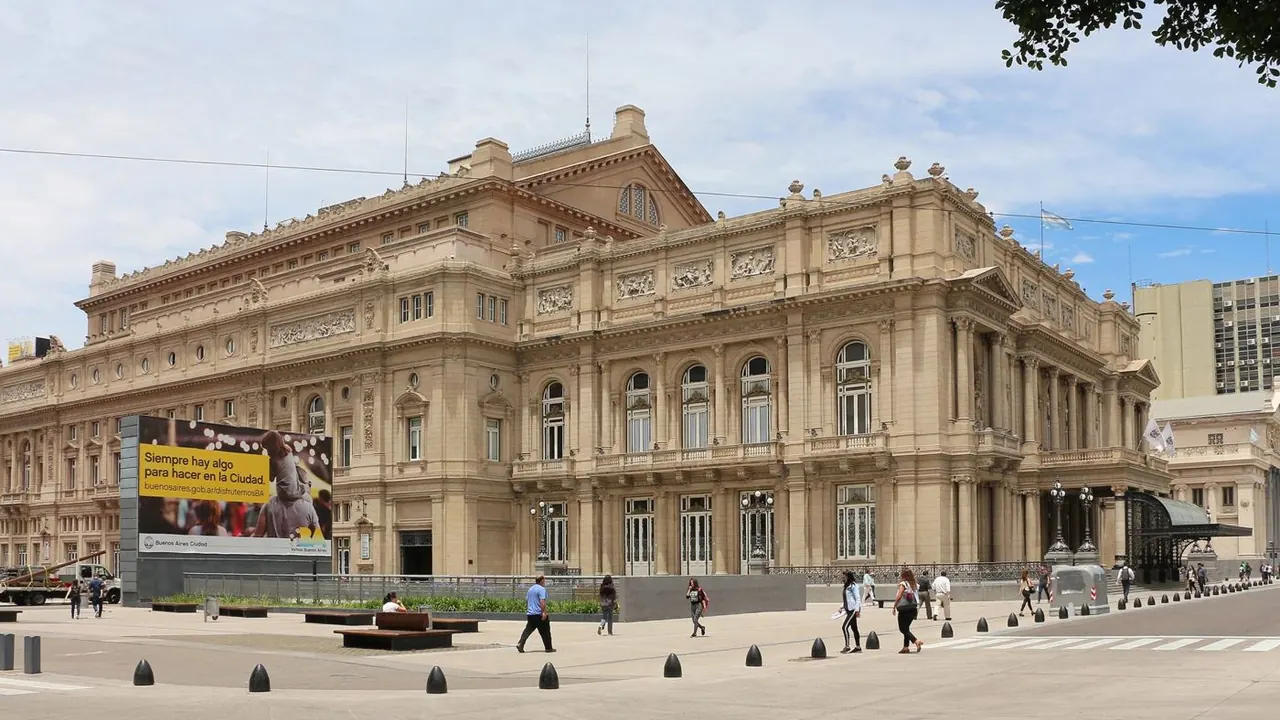
The Teatro Colón
- Nightlife95
- Food & drink75
- Live music & the arts75
Photo: Bernard Gagnon, CC BY-SA 4.0, cropped
Match
57
Every category weighted equally
- Beach & sun49
- Culture & arts64
- Food & nightlife66
- Family trip50
- Outdoors50
- Relax & unwind48
- Shopping & style62
- On a budget56
Buenos Aires in twelve categories
Our verdict on each, scored 0 to 100 against the same fixed benchmark cities, so a score means the same thing on every page.
Beaches & swimming. Scores 7 out of 100.
Food & drink. Scores 75 out of 100.
Culture & sights. Scores 71 out of 100.
Nightlife. Scores 95 out of 100.
Nature & outdoors. Scores 38 out of 100.
Day trips. Scores 60 out of 100.
Good for families. Scores 52 out of 100.
Getting around. Scores 62 out of 100.
Shopping & style. Scores 60 out of 100.
Affordability. Scores 55 out of 100.
Live music & performing arts. Scores 75 out of 100.
Wellness & relaxation. Scores 28 out of 100.
Buenos Aires category by category
Beaches & swimming
7Buenos Aires faces water but not a beach. The Rio de la Plata is a vast, brown estuary, too silty and polluted for swimming, and the riverside promenades of the Costanera are for walking and sunbathing on the grass, not for going in. The Atlantic resorts where porteños spend their summers, such as Mar del Plata, are a long drive or bus ride south, a trip of several days rather than an afternoon.
In the hot months from December to February, locals cool off in hotel and club pools or leave the city altogether. If swimming is a big part of your vacation, plan a separate stay on the coast.
Food & drink
75Eating here revolves around beef. Neighbourhood parrillas grill whole menus of cuts, offal and chorizo over wood and charcoal, served with chimichurri and a bottle of Malbec from Mendoza. Around that sits a big Italian heritage, which shows in the thick pizza by the slice, fresh pasta and ice cream as good as any in Europe, plus empanadas, choripán from street stalls and the sweet comfort of dulce de leche in everything from medialunas to alfajores.
Café culture runs deep, with grand old coffee houses such as Café Tortoni on Avenida de Mayo and corner bars where people linger for hours. Palermo has the most ambitious modern kitchens and wine bars. Dinner starts late, rarely before nine. What the city lacks is range: outside beef, pasta and pastry, the choice narrows quickly.
Culture & sights
71The city's main sight is the city itself: Parisian-style boulevards, mansard roofs and grand apartment blocks put up when Argentina was one of the richest countries in the world. Avenida de Mayo leads from the pink Casa Rosada on the Plaza de Mayo past the Palacio Barolo to the Congress, and Recoleta has the most elegant streets, along with its cemetery, a maze of marble mausoleums where Eva Perón lies.
For museums, the Museo Nacional de Bellas Artes has a strong European and Argentine collection and MALBA covers Latin American modern art, with Frida Kahlo and Xul Solar among its names. San Telmo keeps the colonial-era streets and old tango halls, and La Boca the painted tin houses of Caminito. It is a city for long walks rather than a checklist of world-famous landmarks.
Nightlife
95Nights run on a different clock here. Dinner starts at ten or later, the bars fill around midnight, and clubs barely open their doors before two, staying busy until the sun is up and sometimes long after. Weekends feel endless, and even weeknights stay lively in the busier districts.
Palermo, split into Soho and Hollywood, is the centre of it, with cocktail bars hidden behind unmarked doors, rooftop terraces and craft-beer bars. The big clubs gather near the river and in Palermo's warehouse streets, with electronic music taken seriously. San Telmo has older, scruffier bars, and the milongas, where locals dance tango until the small hours, are some of the most memorable nights out in the city. The crowd is young and well dressed, and it rarely gets messy.
Nature & outdoors
38Buenos Aires sits on flat pampas beside a river so wide it looks like a sea, and there are no hills, mountains or cliffs anywhere near. In town, the green space comes from the Bosques de Palermo, with its rose garden, lakes and long jogging and cycling loops, and the Reserva Ecológica Costanera Sur, a riverside wetland of marsh and birdlife a short walk from the skyscrapers of Puerto Madero.
The best outdoor escape is the Paraná Delta beyond Tigre, about an hour north, a maze of brown channels and wooded islands you can explore by launch, rowing boat or kayak. Out on the pampas, estancias offer horse riding across open grassland. Hikers looking for real landscape need to fly to Patagonia or the Andes.
Day trips
60The best day out crosses the river. Fast ferries reach Colonia del Sacramento in Uruguay in a little over an hour, and its cobbled Portuguese old town, a UNESCO site, is small enough to explore on foot before the evening boat back. Closer to home, Tigre is about an hour by train, a riverside town with a fruit market and rowing clubs where the boats into the delta leave from.
Inland, San Antonio de Areco keeps the gaucho tradition alive with silversmiths, saddlers and estancias, and the pilgrimage town of Luján has a huge neo-Gothic basilica. La Plata, the provincial capital about an hour away, is a planned city with a large cathedral and a natural history museum. Beyond these the list thins, because the pampas stretch out for hundreds of kilometres.
Good for families
52Argentines take children everywhere, and you will see families out at dinner well after ten and children running around the plazas on summer nights. The parks of Palermo, with their lakes, pedal boats and playgrounds, are the easiest place to spend an afternoon, and the planetarium sits right there among them. The Museo de los Niños in the Abasto area and the hands-on science exhibits around the city work well on a rainy day.
The bigger attractions are outside the centre: the Temaikèn biopark, about an hour north, and the amusement park and boat trips at Tigre. Day to day, the city asks some effort. Distances are long, traffic is heavy, pavements are often broken, and the late dining hours can be hard on younger children.
Getting around
62Buenos Aires is flat and laid out on a regular grid, so walking within a neighbourhood is easy and pleasant, especially under the plane trees of Palermo and Recoleta. The problem is distance: the city is huge, and San Telmo, the centre, Recoleta and Palermo are each a long walk from the next.
The Subte, the oldest metro in the Southern Hemisphere, covers the centre and Palermo but misses La Boca and many outer districts. The colectivo buses go everywhere and run day and night, though the routes take some learning. One rechargeable card covers both. Taxis and ride-hailing are plentiful, and a car is never needed, though traffic on the big avenues is heavy. Keep an eye on bags on crowded lines and buses.
Shopping & style
60Leather is the thing to buy: jackets, bags and shoes made from Argentine hides, sold in workshops and specialist shops around Villa Crespo and the centre. Palermo Soho is the best area for browsing, with independent Argentine designers, homeware and small concept stores spread along leafy streets, and Avenida Alvear in Recoleta has the city's most expensive boutiques.
Markets add character. The Sunday fair along Calle Defensa in San Telmo runs for blocks with antiques, old soda siphons, tango records and crafts, and the weekend fair outside the Recoleta Cemetery sells silverwork, mate gourds and ponchos. Galerías Pacífico, an arcade with painted domes, is the grandest place to shop in the centre. International luxury labels are fewer than in many big cities.
Affordability
55Buenos Aires is a middling destination for price. Public transport is very cheap, neighbourhood parrillas and pizzerias give a lot of food for the money, and good wine costs little by international standards. Hotels are usually more affordable than in a big European capital of the same size.
Against that, the restaurants, cocktail bars and boutiques of Palermo, Recoleta and Puerto Madero charge prices much like a European city, and imported goods are expensive. Argentina's currency has a long history of sharp swings, so what a visitor pays in their own money can feel quite different from one trip to the next. Check the exchange situation before you go, including the best way to pay by card or in cash.
Live music & performing arts
75The Teatro Colón is the centrepiece, one of the great opera houses of the world, with acoustics musicians rave about and a season of opera, ballet and symphony concerts. Guided tours show the building during the day if tickets are hard to find. Avenida Corrientes is the city's theatre street, lined with playhouses staging Spanish-language plays, musicals and revues, and the independent theatre scene beyond it is one of the largest in the Spanish-speaking world.
Tango is the reason many people come. You can watch polished dinner shows aimed at visitors, but the real thing is the milongas, where locals dance in neighbourhood halls late into the night, often with live orchestras and classes beforehand. Folk music peñas and a good jazz and rock circuit round it out, though most of it is in Spanish.
Wellness & relaxation
28Buenos Aires is not a city for unwinding. It has no bathing tradition of its own, and wellness here means hotel spas and day spas in Palermo and Recoleta offering massages and treatments, which are pleasant enough but not a reason to come. Argentina's thermal springs are far away in other provinces.
The pace is loud and intense, with heavy traffic, crowded avenues and nights that run until dawn. What slows it down is the porteño habit of lingering. Nobody hurries you out of a café after one coffee, and the sobremesa, the long talk at the table after a meal, can stretch through an afternoon. Sunday mornings are the quietest time in the city, when the streets empty and the avenues fall silent while everyone sleeps off the night before.
When should you go?
Pick a month to see what it is like. The climate figures are measured averages, not a forecast.
Buenos Aires in July
Daytime high, °C
Rainfall in the month, mm
The whole year
Shaded against this city’s own year: the deepest cell is its best month for that figure and the palest its weakest.
Temperature and rainfall are climate normals, averaged over the years shown. Buenos Aires: 1991-2020 normals, Aeroparque Bs. As. Aerodrome (4.9 km from centre).
Before you go
| Measure | Buenos Aires |
|---|---|
| Official language | Spanish |
| Currency | Argentine Peso (ARS) |
| Sockets | CI220 V, 50 Hz |
| Driving side | Left |
| Time zone | UTC-3 |
| Emergency number | 117 or 911 |
| Elevation | 25 m |
| Main airport | Ezeiza International Airport - Ministro Pistarini (EZE)28 km from centre48 non-stop destinations |
| Public holidays this year | 16 days |
By the numbers
| Measure | Buenos Aires |
|---|---|
| City population | 3,121,707 |
| People per km² | 15,355 |
| Museums within 10 km | 76 |
| UNESCO World Heritage sites within 50 km | 1 |
| Swim season, months above 21 °C | 4 months |
Compare Buenos Aires with
Every comparison with a written verdict behind it.