Argentina
Mendoza
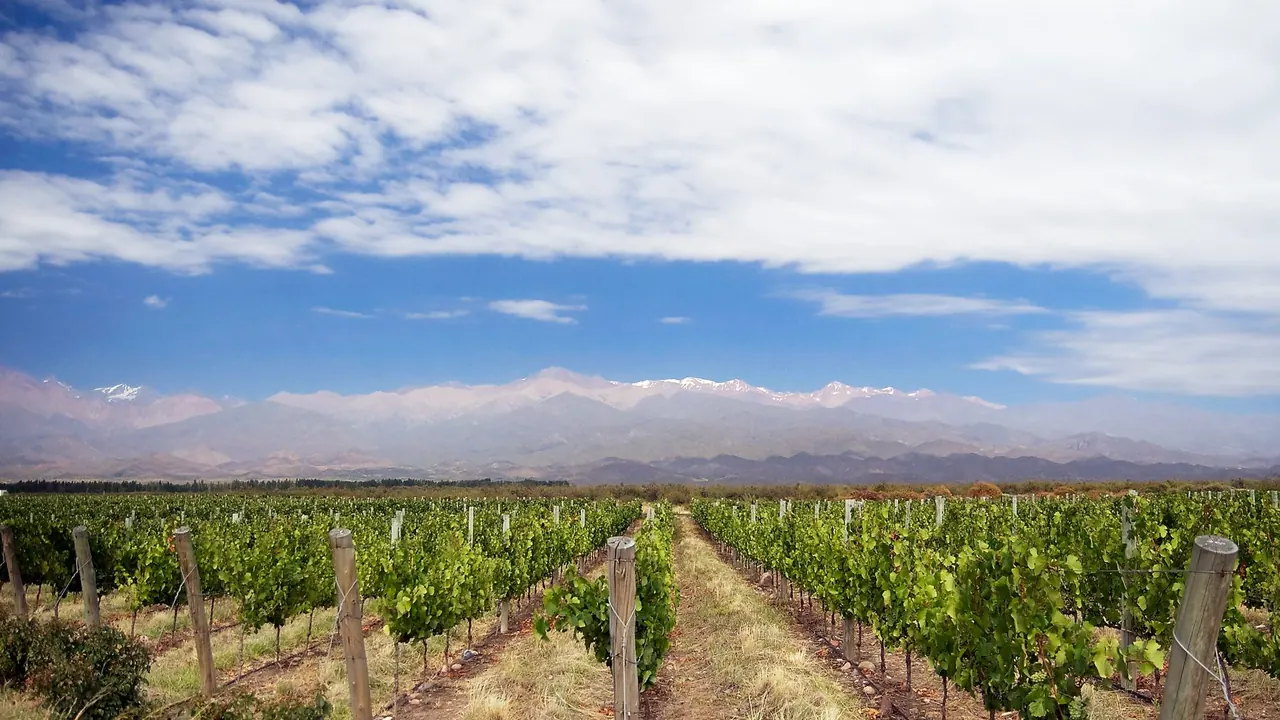
Vine rows before the snow-capped Andes in the Uco Valley
- Nature & outdoors83
- Food & drink68
- Affordable cities56
Match
46
Every category weighted equally
- Beach & sun45
- Culture & arts45
- Food & nightlife45
- Family trip46
- Outdoors51
- Relax & unwind48
- Shopping & style45
- On a budget47
Mendoza in twelve categories
Our verdict on each, scored 0 to 100 against the same fixed benchmark cities, so a score means the same thing on every page.
Beaches & swimming. Scores 6 out of 100.
Food & drink. Scores 68 out of 100.
Culture & sights. Scores 30 out of 100.
Nightlife. Scores 40 out of 100.
Nature & outdoors. Scores 83 out of 100.
Day trips. Scores 52 out of 100.
Good for families. Scores 42 out of 100.
Getting around. Scores 48 out of 100.
Shopping & style. Scores 33 out of 100.
Affordability. Scores 56 out of 100.
Live music & performing arts. Scores 33 out of 100.
Wellness & relaxation. Scores 55 out of 100.
Mendoza category by category
Beaches & swimming
6Mendoza is a long way inland, at the foot of the Andes. The Chilean coast lies on the far side of the mountains, a full day's drive over a high pass, so it is no option for a beach day. In the hot summers locals cool off in hotel and club pools, or drive about an hour to the Potrerillos reservoir, a mountain lake that is better for its views than for swimming. Plan for a pool, not a beach.
Food & drink
68Most people come to Mendoza for the wine. This is the heart of Argentine Malbec, and some of the best meals of a trip are long, slow lunches at wineries in Luján de Cuyo, Maipú and the Uco Valley. These are set menus of many courses, each paired with a wine, eaten with the Andes in view. Olive oil, dried fruit and local goat round out the regional larder.
In the city itself, eating is more straightforward Argentine fare. There are parrillas grilling beef over wood, empanadas mendocinas with olives and egg, and late dinners on terraces under the plane trees along Arístides Villanueva and in the Fifth Section. Wine bars pour a long list by the glass. Beyond the steak-and-wine canon the range is limited, so variety-seekers will notice the gaps.
Culture & sights
30An earthquake destroyed the old colonial city in 1861. The Mendoza that replaced it was laid out for safety, with wide streets, low buildings, irrigation channels along every kerb and a central square ringed by four smaller ones. That planned, tree-shaded grid is the main sight. Plaza Independencia and the tiled Plaza España are the highlights.
The ruins of the original settlement are kept at the Museo del Área Fundacional. Above the huge Parque San Martín stands Cerro de la Gloria, a monument to San Martín's army that crossed the Andes. There are a few modest museums of art and regional history. A day or two covers it, and few visitors choose Mendoza for its sights.
Nightlife
40Evenings start late here, as they do across Argentina. Dinner rarely begins before 9 or 10, and Arístides Villanueva fills with students and young locals at its bars and pavement tables until well after midnight. Chacras de Coria, a leafy suburb to the south, has a quieter wine-bar evening, and on weekends a few large clubs on the edge of the metro area run until dawn. The mood is relaxed and sociable rather than wild, and many visitors with an early winery or mountain start keep their nights short.
Nature & outdoors
83The Andes are the backdrop to everything in Mendoza. Within about an hour the road climbs into the Potrerillos valley, where the Mendoza River runs fast enough for rafting and kayaking and the Cordón del Plata offers serious high-altitude hiking. Closer in, paragliders launch from Cerro Arco above the city, and the dry foothills are good for horse riding and mountain biking.
A longer full day up the old Uspallata road leads to Puente del Inca and the Aconcagua park, where the highest summit in the Americas rises to 6,961m. In winter the small Vallecitos ski area is reachable, and cycling between vineyards is popular year round. The climate is dry and sunny, though summer afternoons in the city are hot.
Day trips
52Day trips from Mendoza all lead into wine country, and the region rewards more than one outing. Maipú, just south of the city, is flat and easy to cycle between old family bodegas and olive groves. Luján de Cuyo, a little further, is the classic Malbec heartland of larger estates, and its village of Chacras de Coria has a small leafy plaza worth a stroll. The Uco Valley, about an hour and a half away, has high-altitude vineyards and bold modern wineries against the mountains.
There is little to visit of any other kind. The city of San Juan lies around two and a half hours north, which is too far for a comfortable day. The small towns along the mountain road are stops on the way rather than places to visit for their own sake. For a traveller who isn't interested in wine, the list is very short.
Good for families
42Mendoza is easy-going with children, and Argentine family life is woven into its evenings, with kids out on the plazas late. The huge Parque San Martín has a lake, paddle boats, playgrounds and space to run. Outside town, the hot pools at Cacheuta and gentle family rafting sections at Potrerillos make good days out. There is little else built for children, though. The winery circuit, the main reason most adults come, is a poor fit for them, and summer heat in the city can be draining.
Getting around
48The centre is a flat, shaded grid that is a pleasure to walk, with the plazas, Arístides Villanueva and the park all within a short stroll. A light-rail line, the Metrotranvía, runs south towards Godoy Cruz and Maipú, and city buses cover the wider metro area on a stored-value card. Many visitors rent bikes in Maipú to ride between wineries.
The trouble is that most of what people come for lies outside the city. Luján de Cuyo, the Uco Valley and the mountain road are best reached by hired car, a driver or an organised tour. Watch for the open irrigation channels along the kerbs when walking at night.
Shopping & style
33Shopping in Mendoza mostly means wine. Bottles from small producers that rarely leave Argentina fill specialist shops in the centre and the cellar doors of the wineries. Olive oil, dried fruit and leather goods are the other things worth carrying home. On weekends a craft fair sets up in Plaza Independencia. Beyond that, the Peatonal Sarmiento pedestrian street and a couple of large malls on the city's edge cover everyday fashion, with little in the way of design boutiques or luxury.
Affordability
56Day-to-day costs in the city are moderate. Simple hotels, buses, empanadas and steak dinners are reasonably priced for a traveller from Europe or North America. The expense comes with the wine country. Tasting fees, multi-course winery lunches, boutique vineyard lodges and the drivers or tours needed to reach them are priced with foreign visitors in mind, and they add up quickly. Prices for visitors also follow Argentina's volatile currency, so the same trip can feel cheap one year and expensive another.
Live music & performing arts
33Mendoza's great stage moment is the Fiesta Nacional de la Vendimia, the grape-harvest festival in late summer. It ends with an enormous night-time show of music, dance and light in the Frank Romero Day amphitheatre, set in the hills of Parque San Martín. For the rest of the year the offer is modest. The provincial philharmonic and touring productions play at the Teatro Independencia, and there are folk music nights with cueca and Cuyo guitar song. Live music in bars rounds it out. A visitor will find something to attend, but not a reason to come.
Wellness & relaxation
55The city moves slowly. Shops close through the hot hours of the afternoon, and life is lived on shaded terraces and in leafy plazas. The main bathing option is the Cacheuta hot springs, about 40km up the Mendoza River canyon, where thermal pools have drawn bathers for more than a century. There is a public thermal park as well as a quieter spa. Out in Luján de Cuyo and the Uco Valley, vineyard lodges with spas and grape-based treatments make for restful stays, though they are aimed at people booking a retreat rather than dropping in.
When should you go?
Pick a month to see what it is like. The climate figures are measured averages, not a forecast.
Mendoza in July
Daytime high, °C
Rainfall in the month, mm
The whole year
Shaded against this city’s own year: the deepest cell is its best month for that figure and the palest its weakest.
Temperature and rainfall are climate normals, averaged over the years shown. Mendoza: 1991-2020 normals, Mendoza Aerodrome (8.5 km from centre).
Before you go
| Measure | Mendoza |
|---|---|
| Official language | Spanish |
| Currency | Argentine Peso (ARS) |
| Sockets | CI220 V, 50 Hz |
| Driving side | Left |
| Time zone | UTC-3 |
| Emergency number | 117 or 911 |
| Elevation | 769 m |
| Main airport | Governor Francisco Gabrielli International Airport (MDZ)8 km from centre5 non-stop destinations |
| Public holidays this year | 16 days |
By the numbers
| Measure | Mendoza |
|---|---|
| City population | 127,160 |
| People per km² | 2,355 |
| Museums within 10 km | 1 |
| UNESCO World Heritage sites within 50 km | 0 |
Compare Mendoza with
Every comparison with a written verdict behind it.