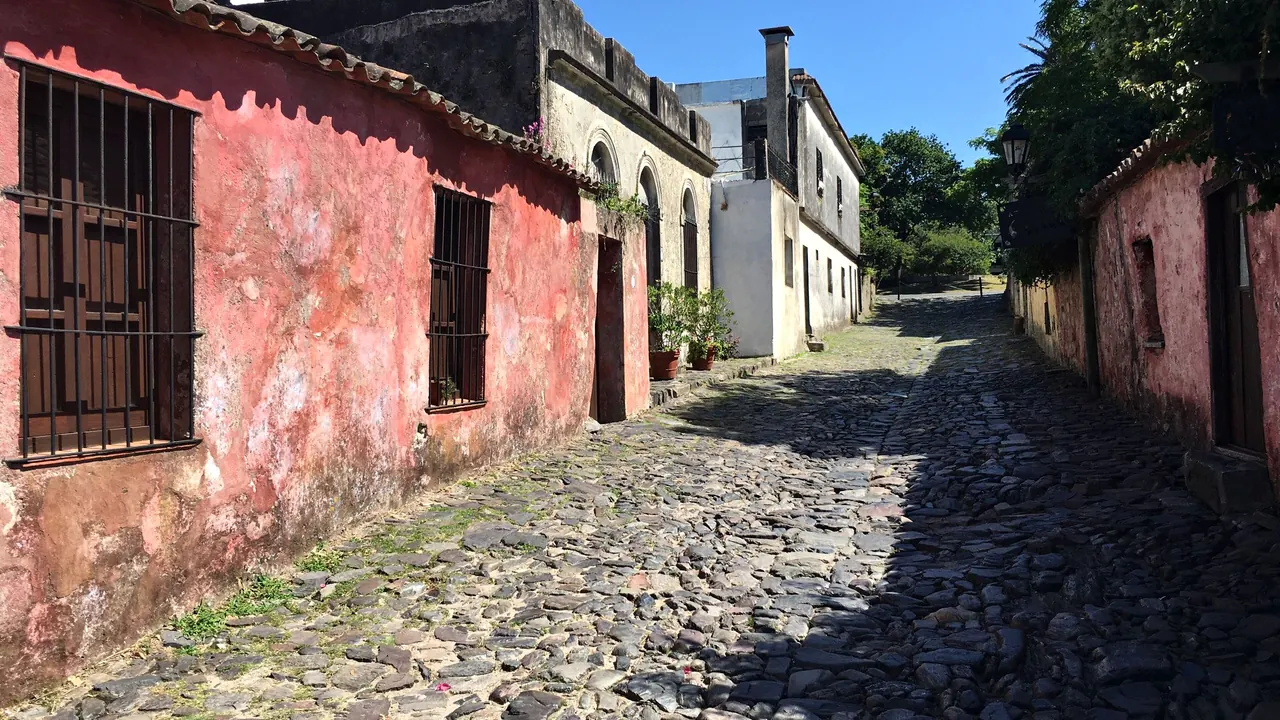
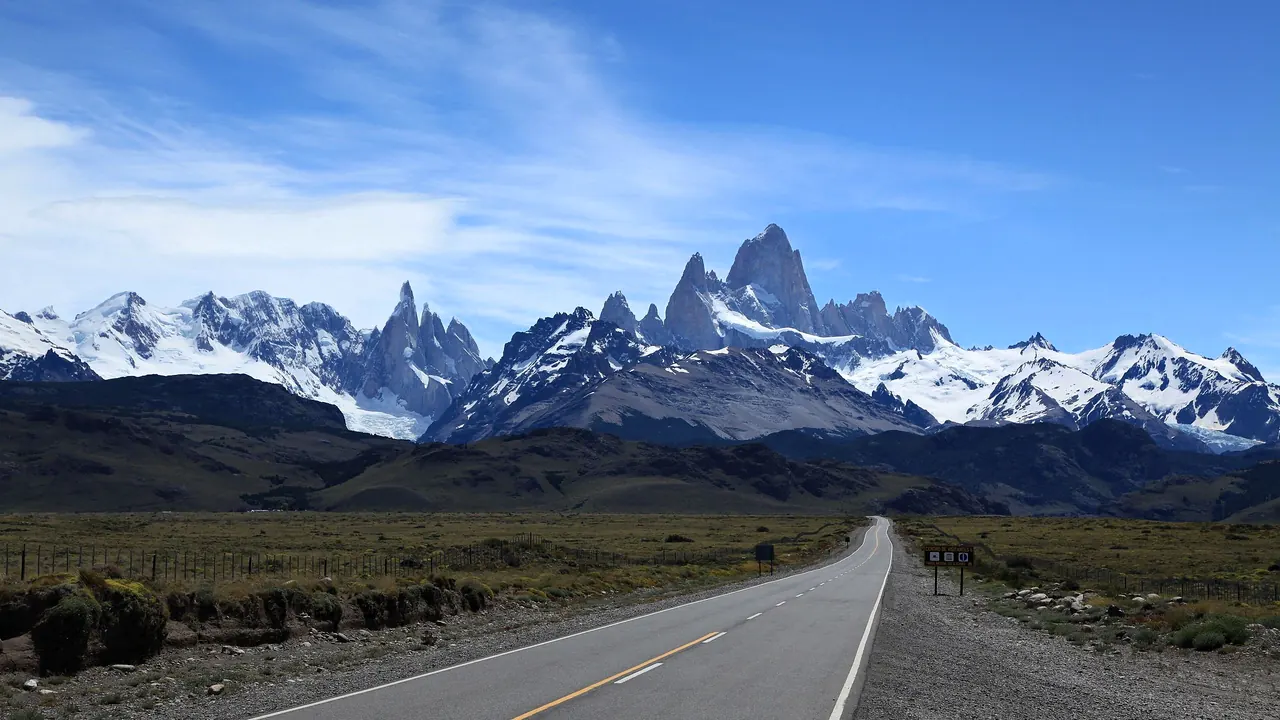
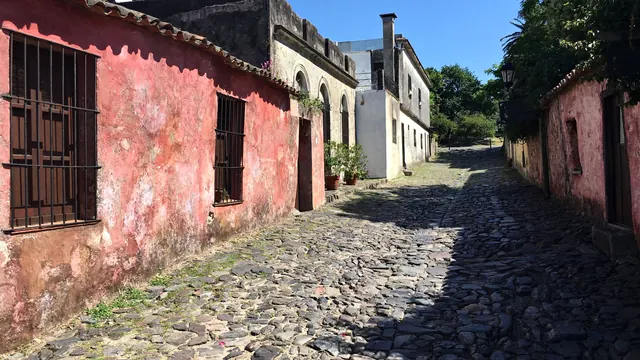
Photos: Uruguay by Fredlyfish4, CC BY-SA 4.0, cropped; Argentina by Liam Quinn from Canada, CC BY-SA 2.0, cropped.
Uruguay or Argentina?
Our verdict in twelve categories, each scored against the same fixed benchmark cities, and the climate month by month, so you can choose for your trip.
Choose Uruguay for
- beaches
- getting around
Uruguay suits a traveller who wants one small country, a coastline to settle into and very little time spent in transit. Summer beaches from Punta del Este to the Rocha dunes, a grill lunch at the Mercado del Puerto and an afternoon in Colonia's cobbled lanes are all a few hours apart by coach, and the pace stays slow throughout.
Choose Argentina for
- nature and the outdoors
- shopping
- nightlife
Argentina is the choice for range and scale. Its glaciers, lakes and the rainforest at Iguazú are in a different league, Buenos Aires gives it far more food, nightlife and stage life, and day-to-day costs tend to be lower. The catch is distance: each region is a separate trip, usually by plane, so it rewards a longer vacation or a tightly chosen route.
Scoreboard
Twelve categories on one fixed scale from 0 to 100. The shaded stretch is the gap between the two.
Your match
Pick a travel style or drag the sliders, and both match scores follow your weighting.
Wins on beaches and getting around with your weighting.
Wins on nature and the outdoors and shopping with your weighting.
What matters to you?
Category by category
What the scores mean for a trip.
Beaches & swimming
Beaches are Uruguay's clearest advantage. Its whole coast is made for swimming and lazing, and the variety comes within a short stretch. Sheltered Playa Mansa and surfy Playa Brava lie on either side of Punta del Este, polished José Ignacio comes next, and further east are the wild Rocha strands at La Paloma, Cabo Polonio and Punta del Diablo. Montevideo has its own city beaches along the Rambla.
Argentina's beaches are mainly a summer pastime for Argentines, around Mar del Plata, Pinamar and Villa Gesell. They are wide and sociable but windier, and the water is no warmer than Uruguay's. Las Grutas has warmer water but is far from anything else, and few visitors from abroad plan a trip around the sand.
Where in Uruguay: Punta del Este, José Ignacio, Rocha coast, Montevideo
Where in Argentina: Mar del Plata, Pinamar and Cariló, Villa Gesell, Las Grutas
Food & drink
Both cuisines are built on beef cooked over wood embers, so the parrilla is common ground, as are pasta and pizza from Italian immigration. Argentina goes much further. Buenos Aires adds old confiterías, bakeries and a serious modern restaurant scene in Palermo, the northwest eats empanadas salteñas, humita and locro, and Patagonia brings lamb and king crab.
Uruguay's food is narrower, centred on the grills of the Mercado del Puerto and the chivito, with Tannat from Canelones and Carmelo as the pleasant surprise. Even so, wine lovers will find Mendoza's Malbec vineyards under the Andes the bigger draw.
Where in Uruguay: Montevideo, Canelones wine country, José Ignacio and Garzón, Carmelo
Where in Argentina: Buenos Aires, Mendoza, Salta and Cafayate, Patagonia
Culture & sights
Argentina has the weightier heritage. Buenos Aires alone has the Recoleta Cemetery, the Casa Rosada, San Telmo, La Boca and the country's best art at the Bellas Artes and MALBA. Beyond the capital are Córdoba's Jesuit Block, Salta's colonial centre and the adobe villages of the Quebrada de Humahuaca.
Uruguay's sights are fewer and smaller in scale: Colonia del Sacramento's Portuguese lanes, the Teatro Solís and art deco Montevideo, the meat-packing works at Fray Bentos and Casapueblo. Together they fill a pleasant few days rather than give a reason to cross the world.
Where in Uruguay: Colonia del Sacramento, Montevideo, Fray Bentos, Punta Ballena
Where in Argentina: Buenos Aires, Córdoba, Salta, Quebrada de Humahuaca
Nightlife
Both countries keep the same late hours, with dinner around ten and clubs filling after two. The difference is depth. Argentina has Buenos Aires every night of the year, from Palermo's cocktail bars to tango milongas, as well as student bars in Córdoba, riverside Rosario and the summer resorts.
Uruguay's nights are concentrated in two places. Punta del Este and La Barra host polished beach parties in January and February, and Montevideo has a quieter year-round circuit of bars in Ciudad Vieja and Pocitos. Elsewhere the towns go to bed.
Where in Uruguay: Punta del Este and La Barra, Montevideo
Where in Argentina: Buenos Aires, Córdoba, Rosario, Mar del Plata
Nature & outdoors
This is the widest gap between the two. Argentina has some of the world's great landscapes: the Perito Moreno Glacier and Fitz Roy in Los Glaciares, the lakes and peaks of Nahuel Huapi, Iguazú Falls in its rainforest and the whales and penguins of Península Valdés. The northwest adds salt flats and red gorges.
Uruguay is low and rolling, and its outdoors is gentle: the dunes and sea lions of Cabo Polonio, the lagoons and forests around Santa Teresa, the gorge of Quebrada de los Cuervos and horse riding on estancias. It suits a relaxed day in the open air, not treks or mountains.
Where in Uruguay: Cabo Polonio, Santa Teresa and the Rocha lagoons, Quebrada de los Cuervos, Sierras de Minas
Where in Argentina: Los Glaciares National Park, Nahuel Huapi National Park, Iguazú Falls, Península Valdés
Day trips
Argentina offers more from its bases. From Buenos Aires you can reach the Tigre delta, the gaucho town of San Antonio de Areco and even Colonia by ferry. Córdoba, Mendoza and the Quebrada de Humahuaca each have their own ring of Jesuit estancias, bodegas and adobe villages.
Uruguay's outings run along a single line from Montevideo: the Canelones vineyards under an hour away, Punta del Este to the east and Colonia to the west. The ferry from Colonia to Buenos Aires takes about an hour and goes furthest. The trips are compact and easy, but the list is shorter.
Where in Uruguay: Colonia del Sacramento, Punta del Este, Canelones wine country, Carmelo
Where in Argentina: Buenos Aires, Córdoba, Mendoza, Quebrada de Humahuaca
Good for families
Both are relaxed with children, who stay up for late dinners in either country. Argentina has the more memorable outings for them: the catwalks over Iguazú Falls, whales and penguins on the Patagonian coast, boat trips by the glacier, snow in Bariloche and the Temaikèn wildlife park near Buenos Aires. Flights between regions are the cost.
Uruguay makes a simpler beach vacation in a small, unhurried country, with gentle river beaches at Playa Mansa, Piriápolis and Atlántida. Beyond parks, a planetarium and a modest zoo, there is little built for children.
Where in Uruguay: Punta del Este, Piriápolis, Montevideo, Atlántida
Where in Argentina: Iguazú Falls, Península Valdés, Bariloche, Mar del Plata
Getting around
Uruguay is far easier to travel. Distances are short, the roads are good, and comfortable coaches from Montevideo's Tres Cruces terminal reach Colonia, Punta del Este and the Rocha coast in a few hours. Only the coast beyond Punta del Este, the wineries and the estancias really call for a car.
Argentina is very long, so most routes become a chain of domestic flights, often through Buenos Aires, or overnight buses. The capital's subte and compact Mendoza are simple to use, but Patagonia and the northwest mean gravel roads, hire cars or tours.
Where in Uruguay: Montevideo, Colonia del Sacramento, Punta del Este
Where in Argentina: Buenos Aires, Mendoza
Shopping & style
Argentina is the better place to shop, mostly thanks to Buenos Aires. Palermo Soho is full of small fashion and design labels, leather is made in the city, Alvear Avenue has the formal boutiques and San Telmo holds its antiques fair on Sundays. The regions add ponchos and silver in Salta and the Quebrada, gaucho goods in San Antonio de Areco and chocolate in Bariloche.
Uruguay has a handful of good things to bring home: leather, hand-knitted wool, silver-fitted mate gourds and Tannat. Its one characterful outing is the Sunday market on Tristán Narvaja, and there is no fashion scene to speak of.
Where in Uruguay: Montevideo, Punta del Este, Colonia del Sacramento
Where in Argentina: Buenos Aires, Salta and Jujuy, San Antonio de Areco, Bariloche
Affordability
Argentina is usually easier on a budget, though the swings of its currency make it dearer in some years than others. Salta, Jujuy and Córdoba are the cheapest areas. Costs climb in Patagonia's glacier towns and with the domestic flights needed to reach them.
Uruguay surprises many visitors with prices close to southern Europe's, and Punta del Este and José Ignacio in January are very expensive. Montevideo's set lunches, older Piriápolis and the simpler Rocha villages such as La Paloma are the ways to keep costs down.
Where in Uruguay: Montevideo, Rocha coast, Piriápolis
Where in Argentina: Salta and Jujuy, Córdoba, Mendoza, Buenos Aires
Live music & performing arts
Stage life in both countries centres on the capital, but Buenos Aires has far more of it. The Teatro Colón is one of the great opera houses, Avenida Corrientes is lined with theatres, and tango ranges from dinner shows to neighbourhood milongas. Outside the capital, Salta's peñas and the Cosquín folk festival add a strong regional tradition.
Montevideo has the Teatro Solís and small tango venues, plus something Argentina does not: candombe drumming in Barrio Sur and Palermo, and the long Carnaval of murga choirs and Llamadas parades. That season is worth planning around. The rest of the year the offer is modest.
Where in Uruguay: Montevideo
Where in Argentina: Buenos Aires, Salta, Cosquín, Mendoza
Wellness & relaxation
Neither country is a spa destination. In both, the thermal bathing lies away from the main routes and is used mostly by locals. Uruguay's hot springs at Daymán, Arapey and Guaviyú are family pool complexes five or six hours from Montevideo, so the easier calm is in the Rocha villages outside the summer rush, in Garzón or on an estancia.
Argentina's springs vary more, from the spa town of Termas de Río Hondo to Cacheuta in an Andean gorge and Copahue's volcanic mud. Its wine lodges in the Uco Valley and Cafayate add spa treatments and slow days among the vines.
Where in Uruguay: Salto thermal springs, Paysandú thermal springs, Rocha coast, Garzón
Where in Argentina: Termas de Río Hondo, Entre Ríos thermal towns, Mendoza (Cacheuta and the Uco Valley), Copahue
When should you go?
Pick your month, and for a country the place in it. The climate figures are measured averages, not a forecast.
Where in Uruguay
Where in Argentina
Montevideo (Uruguay) in July
Buenos Aires (Argentina) in July
Daytime high, °C
Rainfall in the month, mm
Temperature and rainfall are climate normals, averaged over the years shown. Montevideo (Uruguay): 1991-2020 (rainfall 1971-2000) normals, Carrasco (19.2 km from centre). Buenos Aires (Argentina): 1991-2020 normals, Aeroparque Bs. As. Aerodrome (4.9 km from centre).
Both countries follow the southern seasons, but Uruguay's year is simpler. Its coast is a summer place. From late December to early March the beaches are at their best, and the sea off Punta del Este reaches about 23°C in February. Montevideo's mild spring and autumn are good for walking the Ciudad Vieja. Winter is grey and cool, with highs around 15°C in July, and rain falls fairly evenly through the year.
Argentina's regions peak at different times. Patagonia is for November to March, when Bariloche is dry and sunny, though even then Ushuaia only reaches about 14°C. Bariloche's wet winter, with 172mm of rain in June, brings snow for skiing instead. Mendoza is hot in midsummer, around 33°C in January, so the vineyards are more comfortable in spring and autumn. Iguazú is warm and humid all year and wettest from October to January. Buenos Aires is at its best in spring and autumn, when it is warm without January's sticky heat.
Which traveller are you?
On a beach and sun trip, Uruguay wins. Beaches are what the whole country goes on vacation for, and calm Playa Mansa, surfy Playa Brava and the Cabo Polonio dunes share one short coast. Argentina's Mar del Plata and Pinamar suit a few summer days.
For an outdoors trip, Uruguay's gentle lagoons, dunes and estancia rides cannot match Argentina. There you can walk on the Perito Moreno Glacier, hike beneath Fitz Roy, kayak the lakes around Bariloche and see whales at Península Valdés and the falls at Iguazú.
On a food and nightlife trip, Uruguay's grills, Tannat and Punta del Este's summer parties are enjoyable but limited. Argentina goes further. Buenos Aires adds Palermo's cocktail bars, late milongas and serious modern restaurants, and beyond the capital there are Mendoza's Malbec and Salta's empanadas.
More comparisons
Each shares a side with Uruguay or Argentina.
Where else could you go?
Set Uruguay or Argentina against any other country.