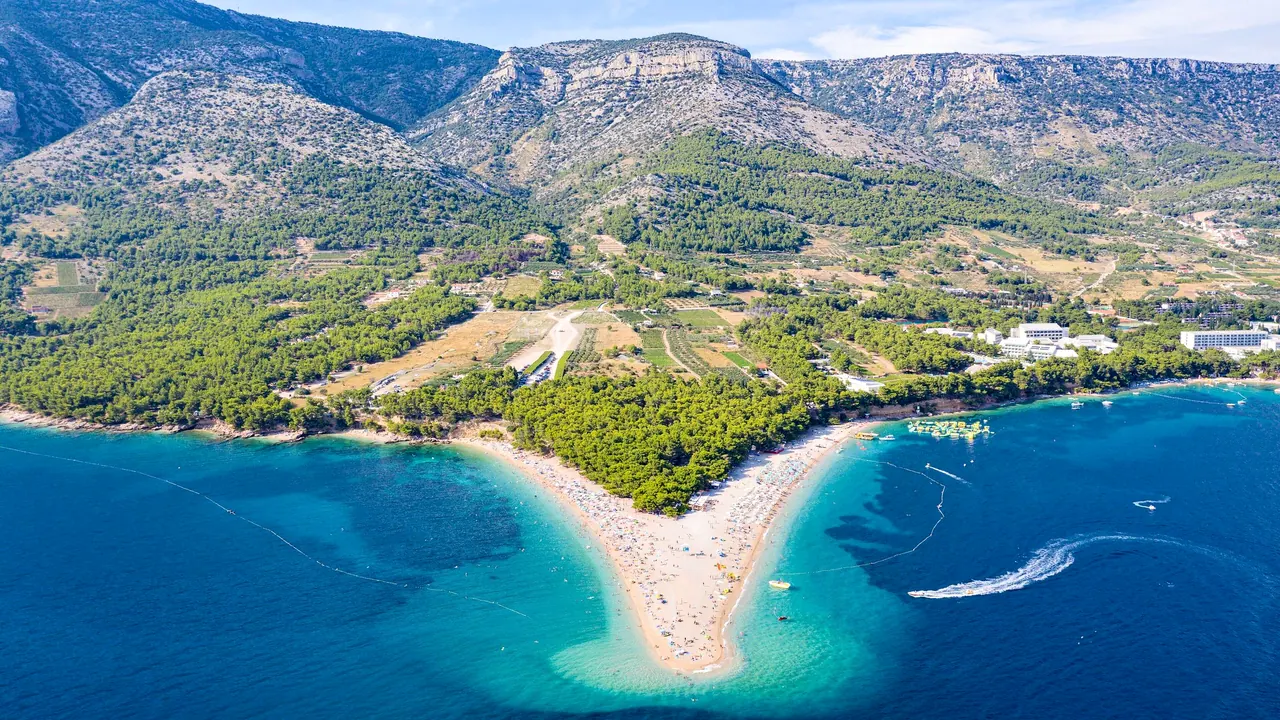
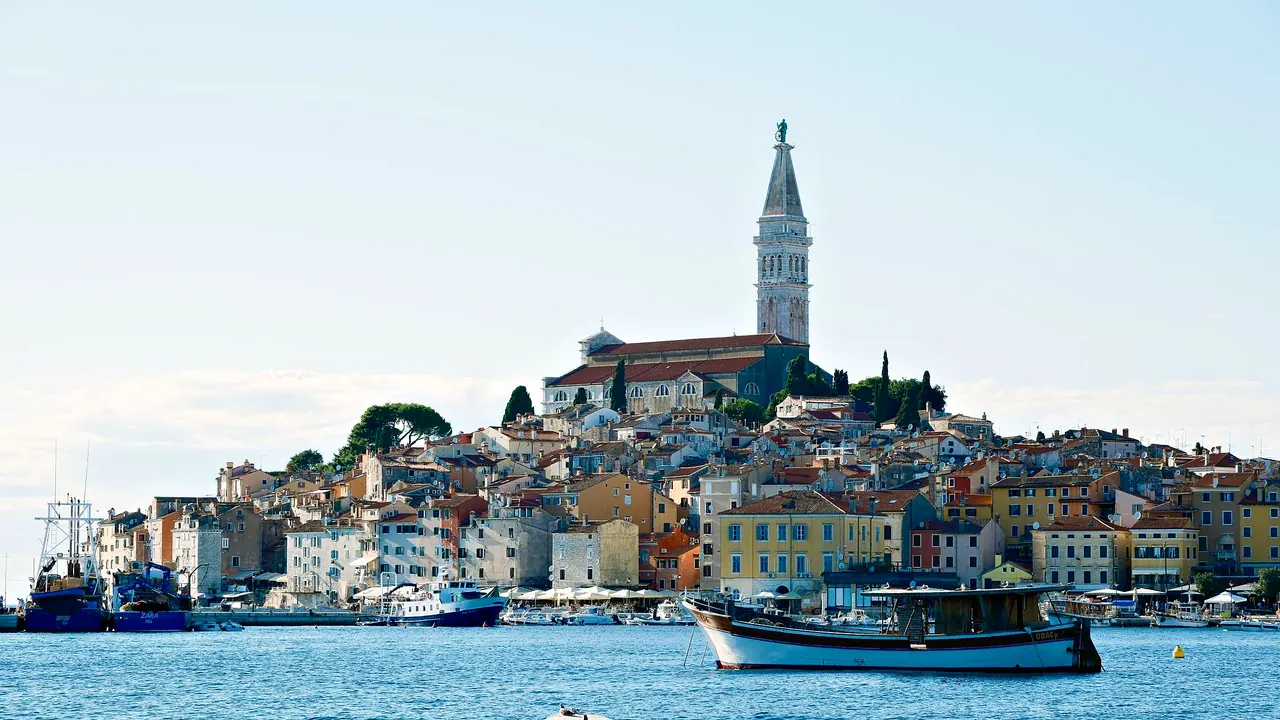
Photos: Brač by dronepicr, CC BY 2.0, cropped; Istria by Ramon Karolan, Pexels License.
Brač or Istria?
Our verdict in twelve categories, each scored against the same fixed benchmark cities, and the climate month by month, so you can choose for your trip.
Choose Brač for
- beaches
Brač suits a slow beach vacation centred on one island: days at Zlatni Rat or the quieter coves beyond it, a morning hike up Vidova Gora, a windsurfing session in the Bol channel and long dinners on a harbour front. Its summers are hotter and sunnier and its best beach is finer than anything in Istria. In return you get a short food menu, little culture and quiet evenings, and anything bigger means a ferry to Split.
Choose Istria for
- culture and sights
- food and drink
- day trips
Pick Istria if the beach is only one part of the trip you have in mind. Roman Pula, the gold mosaics of Poreč, the truffle and wine country around Motovun and the walled hill towns give every day a different shape. With a car you can also reach Piran, Trieste or the Slovenian caves. Its coves are rocky and less striking than Bol's, but families find far more made for children, and food lovers will eat better.
Scoreboard
Twelve categories on one fixed scale from 0 to 100. The shaded stretch is the gap between the two.
Your match
Pick a travel style or drag the sliders, and both match scores follow your weighting.
Wins on beaches with your weighting.
Wins on culture and sights and food and drink with your weighting.
What matters to you?
Category by category
What the scores mean for a trip.
Beaches & swimming
Brač has the finest single beach of the two. Zlatni Rat at Bol is a long spit of fine pebble backed by pines, with quieter coves beyond it to the west. The north coast adds shallow town beaches and Lovrečina, one of its rare sandy bays. Zlatni Rat is crowded at midday in high summer, but Istria has no beach to match it.
Istria's swimming is mostly from rocky ledges, pebbles and concrete platforms. It is wildest in the Kamenjak cape coves near Premantura and easiest in the shallow bays around Medulin. The water is very clear in both and you need water shoes in both. The difference is that Istria has many good spots rather than one great one.
Food & drink
Istria is the far stronger place to eat. It has black and white truffles from the forests around Motovun and the Mirna valley, slow-cooked boškarin beef and Lim Bay oysters. Fish restaurants in Rovinj and Novigrad go all the way up to fine dining, and Malvazija and Teran are poured in cellars across the hills.
Brač eats simply and well, but within a narrow range: octopus cooked under an iron lid, lamb, spit-roasted vitalac, Dol's walnut cake, good olive oil and red wine from above Bol. The best tables are in inland villages such as Dol and Nerežišća, while the harbour fronts lean towards menus written for visitors.
Culture & sights
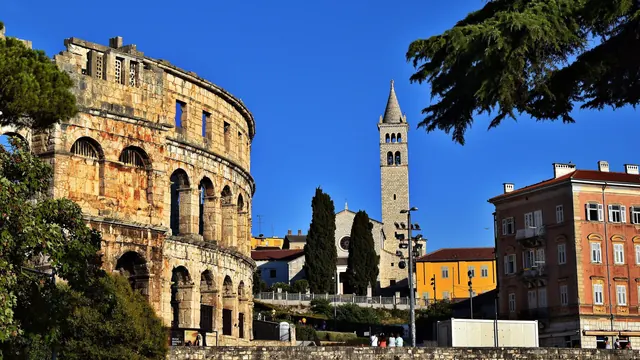
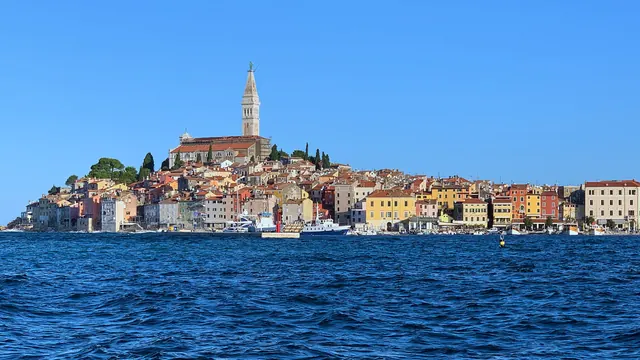
This is the widest gap between the two. Istria has two sights of real weight, Pula's Roman Arena and the sixth-century mosaics of the Euphrasian Basilica. Around them are Rovinj's hilltop old town, the walled hill towns and the Beram frescoes, enough for a week of touring.
Brač's heritage is smaller and quieter. It has the cliffside hermitage of Pustinja Blaca, Illyrian walls at Škrip, the stonemasons of Pučišća and a Tintoretto in Bol's Dominican monastery. Neither has large museums, but on Brač the sights fill a few unhurried days rather than a whole trip.
Nightlife
Neither is a party destination, but Istria offers more after dark. Rovinj's waterfront and Poreč's old town fill with terraces in summer, seasonal clubs and beach bars run on the Poreč and Medulin coasts, and Pula's students keep bars open beyond the season. Brač has Bol's beach bars and a few late open-air venues in July and August, and otherwise quiet harbours. Those who want a real party take the catamaran to Hvar town.
Nature & outdoors
Istria has more variety outdoors. The ridge of Učka, about 1,400m high, gives the best hiking. The Parenzana railway path and signposted routes between hill towns make it a real cycling region, and the Lim inlet, Kamenjak and the Brijuni national park add more.
Brač is wilder and narrower in what it offers: a bare karst plateau climbing to Vidova Gora, a steep morning hike from Bol and a cliff walk to Blaca. Its strongest outdoor draw is the water, where a reliable summer westerly makes the Bol channel a serious windsurfing and kitesurfing spot. On both, walking is best in spring and autumn.
Day trips
Istria is on the mainland, which makes day trips much easier. Hill towns, coastal towns and wine roads are all a short drive from any base. Piran, Trieste, Opatija, the Postojna and Škocjan caves and even Ljubljana are within a few hours.
From Brač, every day out starts with a boat. Split and Diocletian's Palace are under an hour away by car ferry, Trogir is close behind, and catamarans and ferries reach Hvar and Makarska. It is a good list in summer, but it shrinks with the ferry timetable once the season ends.
Good for families
Istria is much better set up for children. Around Poreč, Umag and Medulin there are large campsites and resort villages with pools. Add water parks, a dinosaur park near Funtana, Pula's aquarium in an old fort and a safari park on Brijuni. The shallow bays at Medulin and Premantura suit small children.
Brač offers a calmer, simpler version. Supetar, Sutivan and Postira have sheltered, shallow beaches, apartments with kitchens and relaxed harbour evenings, but nothing is built for children, and the water at Zlatni Rat gets deep fairly quickly. Both are very hot in midsummer, so early beach mornings suit either.
Getting around
You need a car in both, but driving is easier in Istria. A motorway runs down the west side, the main towns are rarely much more than an hour apart, and coastal buses link Pula, Rovinj, Poreč and Umag. In summer, parking near the old towns fills early.
Getting to Brač starts with a ferry, with long queues on summer weekends, and the island's buses run too rarely to plan around. The roads are quiet, but the road over the plateau from Supetar to Bol is slow and winding. Within Bol or Supetar you can walk everywhere.
Shopping & style
Neither is a place to shop, and both mainly sell what they produce. Istria has more to take home: truffle products from Motovun and Buzet, single-estate olive oil, wine bought at the cellar, and galleries on Rovinj's Grisia street and in the artists' village of Grožnjan. Brač's best buys are carved stone from Pučišća, olive oil, honey and lavender, and for anything more people go to Split.
Affordability
Costs are much the same in both. Each is expensive in July and August and noticeably easier on the budget in June and September. What differs is how you save. On Brač it means private rooms in north-coast or inland villages, but car ferry fares add up. In Istria it means campsites, farm stays and wine bought straight from the producer, while truffle and seafood dinners in Rovinj quickly push the bill up.
Live music & performing arts
Istria has a stage that Brač lacks: Pula's Roman Arena, which holds open-air concerts and the long-running film festival on summer evenings. Grožnjan fills with young musicians in summer, and Pula's theatre carries on through the rest of the year. Brač has no theatre or regular venue, only summer concerts on the squares of Bol and Supetar and the occasional klapa evening. For opera or theatre, people cross to Split's summer festival.
Wellness & relaxation
In both, rest comes more from the slow pace than from treatments, and spas are found in the larger resort hotels. Istria adds something Brač does not have: Istarske Toplice, a thermal spring in the Mirna valley used since Roman times. It also has farmhouse stays among the inland olive groves.
On Brač, the calm is in quiet harbours like Milna, Povlja and Sumartin and in the stone villages of the interior. June and September are the gentlest months, when the island feels restful rather than busy.
When should you go?
Pick your month. The climate figures are measured averages, not a forecast.
Brač in July
Istria in July
Daytime high, °C
Rainfall in the month, mm
Where the figures come from
Brač's temperatures are measured 34 km from the centre, at Split / Marjan.
Brač has no rain gauge within 25 km of the centre, so its rainfall comes from a gridded climate dataset read at the destination rather than from a gauge further away.
Brač's sunshine is measured 34 km from the centre, at Split / Marjan.
Istria's temperatures are measured 57 km from the centre, at Trieste.
Istria has no rain gauge within 25 km of the centre, so its rainfall comes from a gridded climate dataset read at the destination rather than from a gauge further away.
Temperature and rainfall are climate normals, averaged over the years shown. Brač: 1991-2020 (sunshine 1971-2000) normals, Split / Marjan (33.5 km from centre). Istria: 1991-2020 normals, Trieste (56.5 km from centre).
The two share the same Adriatic rhythm, but Brač runs warmer, drier and sunnier. Around its main resort area the sea is warm enough to swim from June into early October. July and August reach about 31°C with very little rain, which is perfect on the beach and punishing on the bare plateau. Istria's summer peaks a couple of degrees cooler at about 29°C, and its sea is warmest in August at 26°C. Swimming there runs from June to late September, and summers bring a little more rain and fewer hours of sun than on Brač.
May and September are the months for walking and touring in both. Autumn brings the rain to both, and on Brač November is the wettest month at about 125mm. Winters are cool in both and too cold for the beach, with Istria a few degrees colder than Brač.
Which traveller are you?
On a beach and sun trip, Brač is the stronger choice. Zlatni Rat and the coves running west towards Murvica make finer bathing than Istria's rocky ledges and concrete platforms, summers are sunnier, and the sea stays swimmable into early October.
For a culture and arts trip, Istria wins clearly. Pula's Roman Arena, the Euphrasian Basilica's mosaics, Rovinj's old town and hill towns like Motovun and Hum offer far more than Brač's cliff hermitage and stone villages, and the Arena hosts summer concerts.
On a food and nightlife trip, Istria again. Truffles, boškarin beef, Lim Bay oysters and cellar tastings of Malvazija and Teran outclass Brač's short konoba menus, and Rovinj, Poreč and student-filled Pula keep evenings going longer than Bol does.
Before you go
| Measure | Brač | Istria |
|---|---|---|
| Official language | Croatian | Croatian |
| Currency | Euro (EUR) | Euro (EUR) |
| Sockets | CF230 V, 50 Hz | CF230 V, 50 Hz |
| Driving side | Right | Right |
| Time zone | UTC+1, UTC+2 in summer | UTC+1, UTC+2 in summer |
| Emergency number | 112 | 112 |
| Main airport | Split Saint Jerome Airport (SPU)69 non-stop destinations | Pula Airport (PUY)34 non-stop destinations |
| Public holidays this year | 14 days | 14 days |
By the numbers
| Measure | Brač | Istria |
|---|---|---|
| Population | 14,434 | - |
| People per km² | 36 | - |
| Swim season, months above 21 °C | 4 months | 4 months |
Where else could you go?
Every comparison below shares a destination with this one, so you can follow Brač or Istria somewhere new.