Brazil
Florianopolis
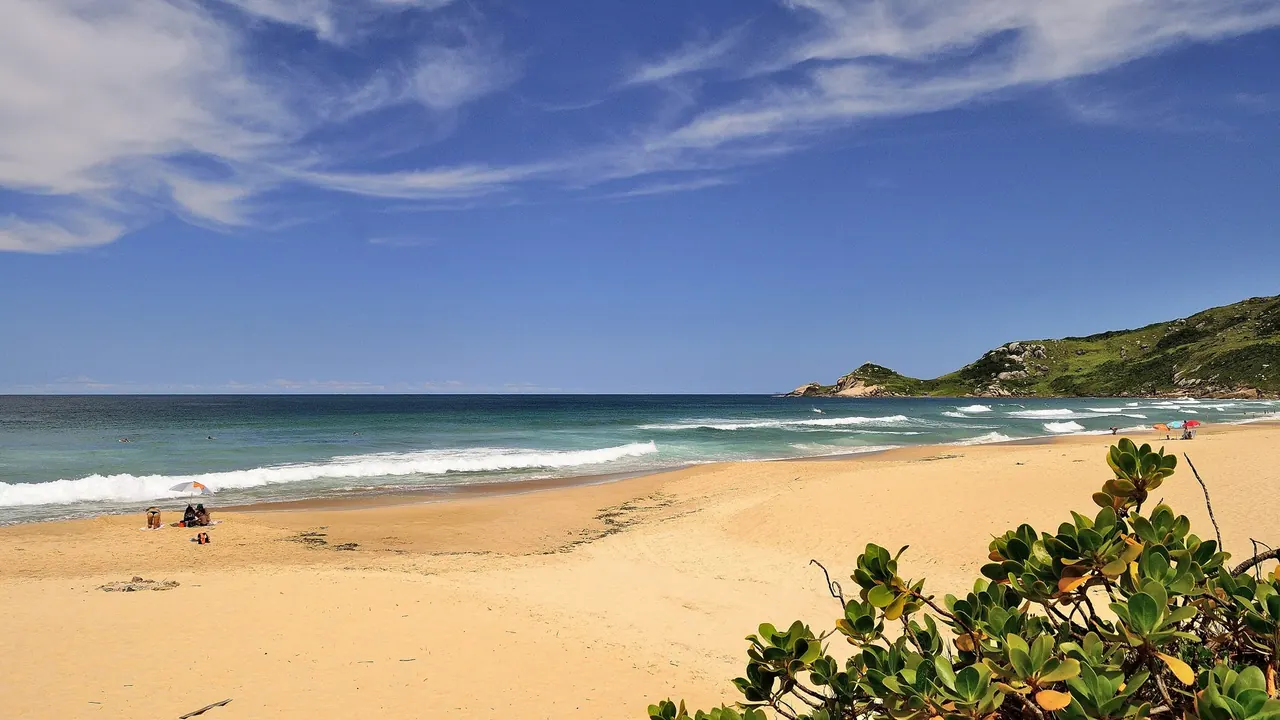
Praia Mole in Florianopolis
- Beaches85
- Nature & outdoors78
- Nightlife60
Match
52
Every category weighted equally
- Beach & sun58
- Culture & arts44
- Food & nightlife48
- Family trip55
- Outdoors57
- Relax & unwind55
- Shopping & style46
- On a budget52
Florianopolis in twelve categories
Our verdict on each, scored 0 to 100 against the same fixed benchmark cities, so a score means the same thing on every page.
Beaches & swimming. Scores 85 out of 100.
Food & drink. Scores 58 out of 100.
Culture & sights. Scores 33 out of 100.
Nightlife. Scores 60 out of 100.
Nature & outdoors. Scores 78 out of 100.
Day trips. Scores 50 out of 100.
Good for families. Scores 60 out of 100.
Getting around. Scores 28 out of 100.
Shopping & style. Scores 33 out of 100.
Affordability. Scores 60 out of 100.
Live music & performing arts. Scores 28 out of 100.
Wellness & relaxation. Scores 45 out of 100.
Florianopolis category by category
Beaches & swimming
85Beaches are the reason most people come to Florianopolis. Santa Catarina island has dozens of them, and they differ a lot from one coast to the next. The north shore around Jurere, Canasvieiras and Daniela faces sheltered bays with calm, warmer water. The east side, at Mole, Joaquina, Mocambique and Campeche, is open Atlantic with long sand, real surf and stronger currents. In the south, Lagoinha do Leste and Naufragados can only be reached on foot or by boat and feel wild.
From December to March the sea reaches about 24°C and the whole island lives outdoors. In winter it drops to around 17°C, and swimming becomes something for the brave. Lifeguards watch the main beaches in summer, but the surf beaches call for care.
Food & drink
58Seafood is the core of eating here, shaped by the Azorean settlers who fished these bays. Most of Brazil's farmed oysters come from the island's southern and northern waters. Waterfront villages such as Ribeirao da Ilha and Santo Antonio de Lisboa serve them raw, gratinated or steamed, at tables right by the water. The classic big meal is the sequencia de camarao, a long run of shrimp dishes, and grilled fish with pirao is everywhere.
The Mercado Publico in the centre is the place for a cold chope and fried snacks among the fishmongers. Beyond seafood, churrascarias and good bakeries cover the basics, but there is little range, and beach-town menus repeat themselves.
Culture & sights
33Florianopolis is not a city you visit for its sights, but it has more heritage than its beaches suggest. The Hercilio Luz suspension bridge is the city's symbol. Around Praca XV de Novembro you find the cathedral, the pink Palacio Cruz e Sousa with the state history museum, and the yellow 19th-century Mercado Publico. The real character is in the Azorean villages of Santo Antonio de Lisboa and Ribeirao da Ilha, with whitewashed churches and colourful houses facing the water. The 18th-century fortresses that once guarded the bay, including Sao Jose da Ponta Grossa on the island and Anhatomirim by boat, round it out. A day or two covers it.
Nightlife
60In summer Florianopolis is one of Brazil's party destinations. Jurere Internacional has the glossy beach clubs with daytime sessions that run into the night, and big-name DJs play the clubs during high season and Carnival. Lagoa da Conceicao has a looser, younger night of bars and street drinking, and many nights end around the lagoon.
The scene depends heavily on the season. From December to Carnival the island is full and goes out late. In winter many beach venues close, and evenings shrink to the bars of Lagoa and the city centre.
Nature & outdoors
78The island is green, hilly and ringed by headlands, and a lot of it is protected land. Trails cross the Atlantic forest to remote beaches. The walk to Lagoinha do Leste and the path along the Costa da Lagoa, where only boats and walkers go, are the best known. The Lagoa da Conceicao is a big brackish lagoon for kitesurfing, windsurfing and stand-up paddling, and the Joaquina dunes beside it are used for sandboarding.
Surfing is a serious part of island life, with consistent breaks on the east coast. On the mainland, the Serra do Tabuleiro state park adds forested hills. From roughly July to November, southern right whales calve off the coast to the south, about an hour and a half away.
Day trips
50The mainland of Santa Catarina offers a varied but modest set of outings. Balneario Camboriu, about an hour and a half north, is a high-rise beach city with a cable car over the headland. Blumenau and Pomerode, around two hours inland, are towns settled by German immigrants, with half-timbered houses and a beer tradition that peaks during Blumenau's Oktoberfest. To the south, Garopaba and Praia do Rosa are relaxed surf towns, and Laguna has a preserved colonial centre. Closer in, the bay villages of Governador Celso Ramos and a boat trip to the Anhatomirim fortress make easy half days.
Good for families
60For families, Florianopolis works as a beach vacation. The northern beaches, such as Canasvieiras, Jurere and Daniela, have gentle water, shallow edges and plenty of space, and Brazilians make children welcome everywhere. Sandboarding at Joaquina and boat trips across the bays go down well with older children. Beto Carrero World, a large theme park, is about an hour and a half north at Penha. The island itself has little else made for children. The surf beaches on the east coast need watching, and long summer traffic jams between the beaches can wear out small passengers.
Getting around
28The island is about 50km long, and its beaches, villages and the centre are strung out along a few narrow roads. The bus network works through hub terminals, so even short trips between beaches often mean a change and a long ride. In summer the bridges and the roads to the north and to Lagoa slow to a crawl. Most visitors rent a car or use ride-hailing apps. The best plan is to stay near the beaches you care about rather than cross the island every day. The old centre is walkable, but it is a small part of a stay.
Shopping & style
33Shopping is practical rather than a draw. Large air-conditioned malls in the city cover Brazilian fashion and beachwear brands, and Jurere and Lagoa have a scatter of surf and swimwear boutiques. The local craft is renda de bilro, a bobbin lace made by women in the Azorean villages, sold along with ceramics in Santo Antonio de Lisboa and around the Mercado Publico. Beyond that there is little to seek out.
Affordability
60Florianopolis is one of the more expensive places in Brazil, though most foreign visitors still find it moderate. Simple seafood restaurants, bakeries, buses and car hire are reasonable. Summer accommodation is a different matter, especially around Carnival and New Year, and Jurere Internacional is priced as a luxury enclave. Outside December to March, rooms get much cheaper and the island is far better value.
Live music & performing arts
28Live performance is a small part of a visit. The 19th-century Teatro Alvaro de Carvalho in the centre and the larger Centro Integrado de Cultura stage theatre, dance and concerts, and touring Brazilian artists come through. Bars around Lagoa and the centre have samba, MPB and acoustic sets on many nights. Local folklore such as the boi-de-mamao, an Azorean-rooted street pageant, shows up at festivals rather than on a regular stage.
Wellness & relaxation
45Wellness here mostly comes from the island's slower pace. Outside high season, the villages of the south and the quieter corners of Lagoa feel calm and unhurried. Yoga studios and small retreats cater to the surf-and-health crowd. Spa culture is limited to hotel spas and a few day spas. The nearest proper bathing is on the mainland, at the hot springs of Santo Amaro da Imperatriz and Aguas Mornas, under an hour inland, where a long-established spa town grew up around warm mineral water. In peak summer the island is crowded and loud.
When should you go?
Pick a month to see what it is like. The climate figures are measured averages, not a forecast.
Florianopolis in July
Daytime high, °C
Rainfall in the month, mm
The whole year
Shaded against this city’s own year: the deepest cell is its best month for that figure and the palest its weakest.
Temperature and rainfall are climate normals, averaged over the years shown. Florianopolis: 1991-2020 normals, Florianopolis (1.7 km from centre).
Before you go
| Measure | Florianopolis |
|---|---|
| Official language | Portuguese |
| Currency | Brazilian Real (BRL) |
| Sockets | CN60 Hz |
| Driving side | Right |
| Time zone | UTC-3 |
| Emergency number | Police 190, ambulance 192, fire 193 |
| Elevation | 3 m |
| Main airport | Hercílio Luz International Airport (FLN)9 km from centre21 non-stop destinations |
| Public holidays this year | 14 days |
By the numbers
| Measure | Florianopolis |
|---|---|
| City population | 587,486 |
| People per km² | 870 |
| Museums within 10 km | 11 |
| UNESCO World Heritage sites within 50 km | 0 |
| Swim season, months above 21 °C | 7 months |
Compare Florianopolis with
Every comparison with a written verdict behind it.