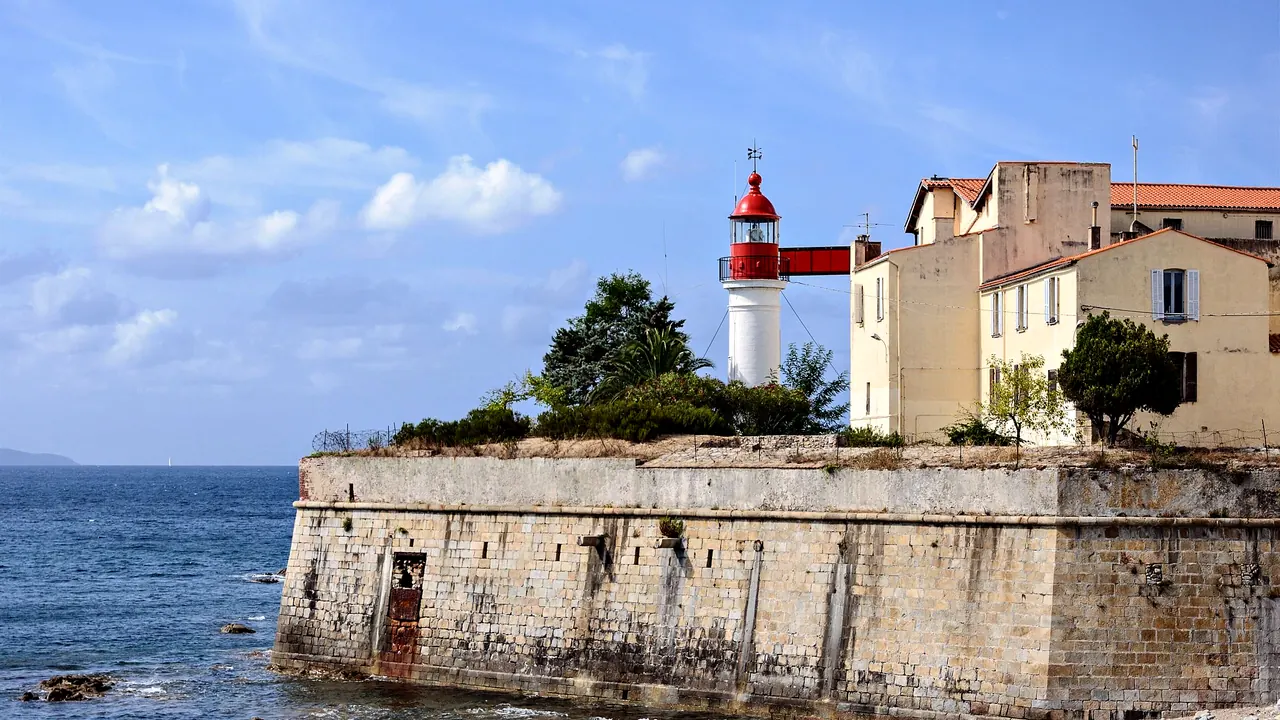
Photos: Corsica by Myrabella, CC BY-SA 3.0, cropped.
Brittany or Corsica?
Our verdict in twelve categories, each scored against the same fixed benchmark cities, and the climate month by month, so you can choose for your trip.
Choose Brittany for
- getting around
- live music and the arts
- day trips
Brittany suits a slower, more varied seaside trip where the weather matters less than the places. Its strengths are the things Corsica lacks: compact walled towns and megalith sites close together, easy outings from almost any base, crêperies and oyster beds, seawater spas and a living Celtic music scene. It is also the easier and cheaper choice for families who want to stay in one gîte or campsite and fill the days without long drives.
Choose Corsica for
- beaches
- nature and the outdoors
Corsica is the trip for travellers who want warm, clear water and real mountains, and are happy to pay for them. The southern beaches are Mediterranean at its finest, and the interior offers serious hiking, canyoning and diving. You give up easy transport, much variety after dark and good value in high summer, so choose it for the landscape and the sea and plan around a car and one or two well-placed bases.
Scoreboard
Twelve categories on one fixed scale from 0 to 100. The shaded stretch is the gap between the two.
Your match
Pick a travel style or drag the sliders, and both match scores follow your weighting.
Wins on getting around and live music and the arts with your weighting.
Wins on beaches and nature and the outdoors with your weighting.
What matters to you?
Category by category
What the scores mean for a trip.
Beaches & swimming
Both have long, varied coastlines, but Corsica's beaches are in a different league for swimming. Its southern bays around Porto-Vecchio and Bonifacio have the pale sand and clear turquoise water of the best Mediterranean shores, and the sea is warm enough from June to October.
Brittany has plenty of sand too, from the wide south-coast bays at Carnac and Quiberon to the pink granite coves of Ploumanac'h. It is a traditional bucket-and-spade coast with wind shelters and sailing schools, but the water stays cool even in August and the large tides decide which beach works on a given day.
Food & drink
Brittany eats better overall, built on the sea and the dairy: oysters from Cancale, shellfish platters in the harbour towns, buckwheat galettes with cider and salted butter in everything. Rennes adds a deeper restaurant scene and the great Saturday market at Place des Lices.
Corsica's cooking looks inland rather than to the sea, with cured pork, brocciu, chestnut flour and wild boar, plus serious wine from Patrimonio and Sartène. The catch is that the best of it is found in village inns, while the beach resorts often serve forgettable summer menus.
Culture & sights
Brittany has the richer and more concentrated heritage. The rows of menhirs at Carnac are among Europe's great prehistoric sites, and Saint-Malo, Dinan, Vannes, Quimper and Concarneau pack ramparts, half-timbered streets and parish closes into short distances.
Corsica's sights are fewer and further apart: Genoese citadels and watchtowers, Bonifacio on its white cliffs, Corte's upper town and Napoleon's Ajaccio, with Filitosa's carved stones for prehistory. They reward a road trip, but much of the pleasure is the setting rather than the monuments themselves.
Nightlife
Neither is a place to travel for nightlife, though Brittany has a little more to offer. Rennes, a large student city, keeps bars busy late through the year, and a village fest-noz gives a night out Corsica has no equivalent for. Corsica comes alive only in high summer, with open-air clubs in the hills behind Porto-Vecchio and late beach bars at Calvi, and goes quiet early the rest of the time.
Nature & outdoors
Brittany's outdoors is gentle and almost entirely coastal. The GR34 path runs past Cap Fréhel and Pointe du Raz, gannets and puffins nest at Sept-Îles, the Gulf of Morbihan is ideal for sailing and kayaking, and the Atlantic shores have good surf. Inland, though, it is low moorland and canal towpath.
Corsica is wilder and far more dramatic. High mountains rise within sight of the sea, and the GR20 crosses them as one of Europe's hardest treks. The red rocks of Piana, the Scandola sea caves and the Bavella needles stand out, and there is canyoning, diving and sea kayaking on top.
Day trips
Brittany is far easier for outings. From Saint-Malo you can reach Mont-Saint-Michel, Dinan and Cancale, from Quiberon Belle-Île, and in the west Quimper, Locronan and Pont-Aven make an easy loop, so almost any base has a full week of days out.
In Corsica, slow mountain roads keep each base to its own few outings: the Balagne villages from Calvi, Cap Corse from Bastia, Sartène from the south. Its one distinctive extra is the short ferry crossing from Bonifacio to northern Sardinia.
Good for families
Children in Brittany spend their days in rock pools at low tide and at sailing schools, and on wet days there are Océanopolis in Brest and the Saint-Malo aquarium. Families base themselves in gîtes and campsites, and the drives between sights are short, so it takes less planning.
Corsica works for families who mainly want calm water, especially the shallow bays around Porto-Vecchio, plus river pools and boat trips. Little is built for children, though, and long, winding drives are hard on young passengers.
Getting around
Fast trains run from Paris to Rennes, and regional lines carry on to Saint-Malo, Vannes, Quimper and Brest, so the main Breton towns work without a car. You will still want one for the coast and the villages, but the toll-free dual carriageways make that driving easy.
In Corsica a car is all but essential, and its narrow, twisting roads take far longer than the map suggests. The little railway between Ajaccio, Corte, Bastia and Calvi is a scenic ride rather than a proper network, and it does not reach the south.
Shopping & style
Brittany is good for regional crafts and treats: Quimper faience, striped sailor tops, salted caramels and Guérande salt in the old towns, with excellent weekly markets and real high-street shopping in Rennes. Corsica's best buys are mostly things to eat and drink, such as charcuterie, cheese and wine, plus hand-forged knives and Balagne crafts. Beyond those there are only a few summer boutiques, so Brittany gives you more to browse.
Affordability
Brittany is the more affordable of the two, though neither is cheap in high summer. Campsites, gîtes, crêperies and toll-free roads keep a trip reasonable, and the costs mainly climb at seafood platters and in resorts like Dinard.
Corsica is expensive in July and August, when coastal rooms, resort restaurants, car hire and ferry crossings all add up. Inland villages, campsites and June or September travel ease the bill.
Live music & performing arts
Brittany has a far stronger music culture. Bagad pipe bands and fest-noz dances are part of everyday village life, summer brings the Festival Interceltique in Lorient and Les Vieilles Charrues, and Rennes keeps an opera house and national theatre running all year.
Corsica's distinctive offer is polyphonic singing, close-harmony male voices heard in churches in summer, along with jazz in Calvi. Outside those, the island has little live performance.
Wellness & relaxation
Brittany is built for a restful stay. Thalassotherapy began in Roscoff, and seawater spas line the seafront at Quiberon, Carnac, Dinard and Bénodet, so a spa-centred trip in spring or autumn is easy to plan.
Corsica relaxes you in a different way, through heat, long lunches and quiet mountain villages. Its formal options are limited to hotel spas and a few simple thermal springs such as Pietrapola.
When should you go?
Pick your month. The climate figures are measured averages, not a forecast.
Brittany in July
Corsica in July
Daytime high, °C
Rainfall in the month, mm
Where the figures come from
Brittany has no rain gauge within 25 km of the centre, so its rainfall comes from a gridded climate dataset read at the destination rather than from a gauge further away.
Brittany's sunshine is measured 89 km from the centre, at Rennes.
Temperature and rainfall are climate normals, averaged over the years shown. Brittany: 2004-2020 (sunshine 1991-2020, rainfall 1991-2020) normals, Vannes-Meucon (8.1 km from centre). Corsica: 1991-2020 normals, Ajaccio (5.1 km from centre).
Brittany's summer is short and fresh. July and August are the beach months, with highs around 24°C and a sea that only reaches about 18°C, so swimming stays brisk. Spring and September are mild and fairly dry, which makes them the best time for the coastal path and the old towns. From October the Atlantic rain sets in heavily, peaking in November at around 121mm, and the winter months are grey and cool.
Corsica runs a good deal warmer and sunnier through every month. On the coast, swimming works from June to October, with the sea near 25°C in August, and July is almost rainless. High summer brings highs of about 29°C, too hot for long walks at low altitude, so April, May, late September and October suit hiking and sightseeing better. Rain returns in autumn, and winter is mild but damp.
Which traveller are you?
On a beach and sun trip, Corsica is the clear pick. Pale sand at Palombaggia, Santa Giulia and Rondinara, turquoise water warm enough to swim for five months and reliable summer sunshine beat Brittany's tidal bays and cool Atlantic sea.
For an outdoors trip, Corsica again. Granite peaks rise straight out of the sea, with the GR20, the Bavella needles, Restonica lakes, canyoning rivers and diving around Scandola and Lavezzi. Brittany's coastal path is lovely but gentler.
On a relaxing and wellness trip, Brittany wins. It is a birthplace of thalassotherapy, with seawater spas on the seafront from Quiberon to Perros-Guirec, and calm granite villages around them. Corsica offers quiet and long siestas but little formal spa culture.
Before you go
| Measure | Brittany | Corsica |
|---|---|---|
| Official language | French | French |
| Currency | Euro (EUR) | Euro (EUR) |
| Sockets | CE230 V, 50 Hz | CE230 V, 50 Hz |
| Driving side | Right | Right |
| Time zone | UTC+1, UTC+2 in summer | UTC+1, UTC+2 in summer |
| Emergency number | 112 | 112 |
| Main airport | Nantes Atlantique Airport (NTE)97 non-stop destinations | Ajaccio Napoléon Bonaparte airport (AJA)29 non-stop destinations |
| Public holidays this year | 11 days | 11 days |
By the numbers
| Measure | Brittany | Corsica |
|---|---|---|
| Population | 4,687,381 | 355,486 |
| People per km² | - | 41 |
| Swim season, months above 21 °C | None | 4 months |
Where else could you go?
Every comparison below shares a destination with this one, so you can follow Brittany or Corsica somewhere new.
- Sardiniavs Corsica
- French Rivieravs Corsica
- Normandyvs Brittany
- Cinque Terrevs Corsica
- Loire Valleyvs Brittany
- Tuscanyvs Corsica