Brittany or French Alps?
Our verdict in twelve categories, each scored against the same fixed benchmark cities, and the climate month by month, so you can choose for your trip.
Choose Brittany for
- live music and the arts
- prices
- culture and sights
Brittany suits travellers who want a coast to explore at a gentle pace. It has beach towns and oyster ports, the standing stones of Carnac, walled towns such as Dinan and Saint-Malo, and a summer of Celtic music. It is cheaper than the Alps, trains reach the main towns, and one base with a car covers a lot of ground.
Choose French Alps for
- nature and the outdoors
- nightlife
- shopping
Pick the French Alps when the mountains themselves are the point of the trip. Skiing in the linked areas of the Tarentaise, walking beneath Mont Blanc, cycling the great passes or swimming in Lake Annecy make a more dramatic and more active stay, and winter evenings in the resorts are livelier. Expect to pay more, and to give up much of the history and music Brittany offers.
Scoreboard
Twelve categories on one fixed scale from 0 to 100. The shaded stretch is the gap between the two.
Your match
Pick a travel style or drag the sliders, and both match scores follow your weighting.
Wins on live music and the arts and prices with your weighting.
Wins on nature and the outdoors and nightlife with your weighting.
What matters to you?
Category by category
What the scores mean for a trip.
Beaches & swimming
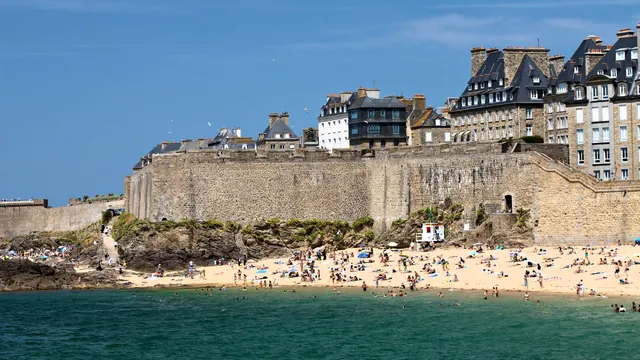
Brittany offers a real seaside. It has sandy bays at Carnac, Quiberon and Bénodet, pink granite coves at Ploumanac'h, and the vast tidal beaches of Saint-Malo and Dinard. The Atlantic stays cool, so swims are short and bracing, and the tides decide which beach works on a given day.
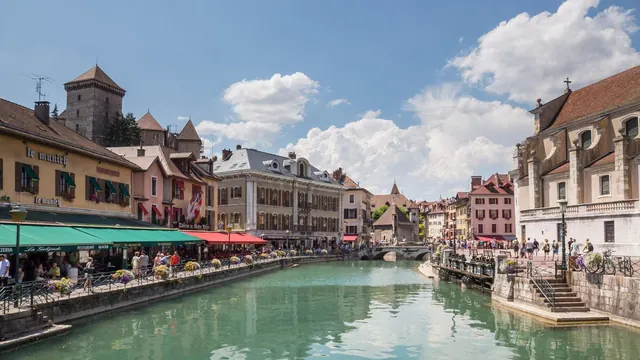
The Alps have no sea, only lake beaches. In high summer Lake Annecy's water is warmer than the Breton sea, but its grassy beaches are small, crowded at weekends and only open for swimming in a short season. Choose the Alps for a lakeside dip and Brittany for whole days on the sand.
Food & drink
Both regions eat well from their own produce, but the flavours are opposite. Brittany means shellfish and dairy: Cancale oysters, seafood platters in the harbours, galettes with cider and salted butter in everything. Rennes has the widest choice of restaurants.
The Alps answer with cheese, in fondue, raclette and tartiflette, along with lake fish, Savoie whites and Chartreuse. The top end is grander around Lake Annecy, Megève and Courchevel. Over a week, Brittany's everyday seafood gives more variety than the repeated melted cheese of resort menus.
Culture & sights
Brittany gives a culture-minded visitor much more to see. There are the menhir rows of Carnac, Saint-Malo's walls, half-timbered Dinan and Vitré, the castles of Fougères and Josselin, and the parish closes of Finistère with their distinctly Breton character. A week moving between them is easily filled.
In the Alps, culture fills the gaps between outdoor days. Annecy's canals, the ducal château in Chambéry, Grenoble's fine-arts museum and Briançon's Vauban walls make rewarding half days, but they are not why people go.
Nightlife
The French Alps have the livelier nights, though almost entirely in winter. Après-ski in Val d'Isère, Val Thorens and Méribel starts in the afternoon and carries on into the clubs until late. In summer the scene shrinks to Annecy's lakeside terraces and Grenoble's student bars.
Brittany is calmer all year. Rennes is the one place for a proper night out, and the resorts stay up late only in summer. The most memorable evening is often a fest-noz in a village square.
Nature & outdoors
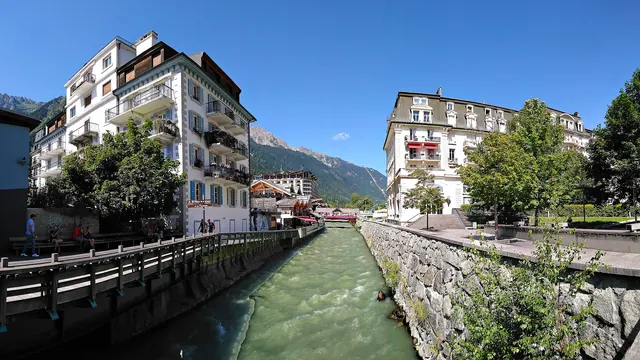
Both are fine for the outdoors, but the Alps are in another league. They have Mont Blanc above Chamonix, the cable car to the Aiguille du Midi, the Tour du Mont Blanc, ibex in the Vanoise and Écrins, and some of the largest linked ski areas in the world. Paragliding, via ferrata, rafting and the great cycling passes fill the summer.
Brittany's outdoors is coastal and gentler: the GR34 path over cliffs and pink granite, puffins and gannets on the Sept-Îles, kayaking among the islands of the Gulf of Morbihan and surf on the Atlantic beaches. It suits walkers and sailors rather than climbers or skiers.
Day trips
Brittany's outings stay close to its own coast, among islands and old towns, while the Alps look across borders. From almost any Breton base something is in easy reach: Mont-Saint-Michel from Saint-Malo, boats into the Gulf of Morbihan or out to Belle-Île and Ouessant, car-free Bréhat, or a circuit of Quimper, Locronan and Concarneau.
From Annecy or Lake Geneva, the Alps put you within easy reach of Geneva, the lake ferry to Lausanne and the Lavaux vineyards, and the train to Lyon. From Chamonix, the Mont Blanc tunnel leads to Aosta and Courmayeur. In the deep Tarentaise valleys, though, most of a day trip is spent on the road.
Good for families
A summer beach stay in Brittany and a ski week in the Alps are very different family vacations, and both work. Brittany gives children sand, rock pools, sailing lessons and crêpes, with a gîte or campsite as an easy base and Océanopolis or the Saint-Malo aquarium for grey days. The cool water and big tides mean young swimmers need watching.
The Alps are built around ski schools, with snow gardens for beginners and car-free resorts where you walk from the apartment to the slope. In summer there is the railway to the Mer de Glace, along with alpine farms and Annecy's shallow lake beaches. Altitude, cold mornings and long transfer days make it harder going with toddlers.
Getting around
Brittany is the easier region to get around. Fast trains reach Rennes from Paris and continue to Saint-Malo, Vannes, Quimper and Brest, and the main roads are toll-free. Despite summer traffic on the coast roads, one base and a car cover most of the region.
In the Alps, moving about is simple once you are in a resort, where lifts link whole valleys. Getting there means flying to Geneva, Lyon or Grenoble and taking a transfer, with Saturday queues and snow chains in winter. In summer the lakes and passes sit in separate valleys along winding roads.
Shopping & style
Neither is a fashion destination, but the Alps give shoppers more. Chamonix is one of Europe's best places to buy climbing and ski gear, Megève and Courchevel have luxury boutiques, and Geneva is close for wider choice.
Brittany's shopping is regional and small-scale: Quimper faience, striped sailor tops, salted-butter caramels and Guérande salt. The Saturday market at Place des Lices in Rennes is the best place to find them.
Affordability
Brittany is clearly the cheaper trip. Campsites, gîtes and crêperies keep costs moderate, and June or September brings them down further. Only the summer resorts and the seafood platters push bills up.
A ski week in the Alps adds lift passes, equipment, lessons and mountain lunches to lodging that is already costly, and the smartest resorts are among the priciest places to stay in Europe. To keep the bill down, go in summer or in a low-season week, or stay in towns such as Grenoble or Chambéry.
Live music & performing arts
Brittany has far more live music, rooted in its Celtic tradition. There are bagad pipe bands and fest-noz dances, and summer festivals such as the Festival Interceltique in Lorient, Les Vieilles Charrues at Carhaix and the Festival de Cornouaille in Quimper. Rennes adds an opera house and a national theatre.
In the Alps, Grenoble carries the year-round programme, and summer brings chamber music at Évian and concerts in mountain churches. In winter, entertainment is mostly bands in après-ski bars.
Wellness & relaxation
Brittany's spas run on seawater and the Alps' on thermal springs, and the Alpine spa towns make the more complete cure stay. In Brittany, thalassotherapy began at Roscoff, and seafront centres at Quiberon, Carnac and Dinard offer heated seawater pools and algae wraps. Car-free islands and harbour walks keep the pace slow, though the air is bracing rather than warm.
The Alps have Belle Époque Aix-les-Bains, lakeside Évian and the baths of Saint-Gervais in a gorge below Mont Blanc, as well as quieter towns where the cure is the whole point. In winter, hotel spas in the upmarket ski resorts look out on the snow.
When should you go?
Pick your month. The climate figures are measured averages, not a forecast.
Brittany in July
French Alps in July
Daytime high, °C
Rainfall in the month, mm
Where the figures come from
Brittany has no rain gauge within 25 km of the centre, so its rainfall comes from a gridded climate dataset read at the destination rather than from a gauge further away.
Brittany's sunshine is measured 89 km from the centre, at Rennes.
French Alps's temperatures are measured 35 km from the centre, at Bourg-St-Maurice.
French Alps's station stands 179 m below the place it is measured for, so that place is likely a little cooler than the figures say.
French Alps has no rain gauge within 25 km of the centre, so its rainfall comes from a gridded climate dataset read at the destination rather than from a gauge further away.
Temperature and rainfall are climate normals, averaged over the years shown. Brittany: 2004-2020 (sunshine 1991-2020, rainfall 1991-2020) normals, Vannes-Meucon (8.1 km from centre). French Alps: 1999-2020 (rainfall 1991-2020) normals, Bourg-St-Maurice (35.1 km from centre).
Brittany is mildest and sunniest from June to September, with highs of around 24°C in July. The sea reaches only about 18°C in July and August, so even at its best swimming is bracing. Spring and early autumn are dry enough for coastal walking. From October the rain rises sharply, and the winter months are wet and grey, though rarely cold.
The French Alps, measured in the valleys, are warmer in summer, at about 27°C in July, so June to September is the time for lakes and high walks. Winter is colder than in Brittany, with January highs of only a few degrees. Rain is heavier than in Brittany in every month and peaks at about 169mm in December, so even in summer you should expect frequent showers.
Which traveller are you?
For a culture and arts trip, choose Brittany. Base yourself in one old walled town and you can drive to a different site each day. Go in high summer if you want the festivals as well. In the Alps, sightseeing mostly fills wet afternoons.
On a trip on a tight budget, Brittany is the safer bet. Rent a cottage in an inland village outside July and August, and buy your picnics at the markets. In the Alps, the cheap trip usually means leaving out the skiing.
On an outdoors trip, the French Alps are the clear pick in either season: winter for skiing, June to September for high walks, climbing and cycling. Stay in Chamonix to be in the high mountains, or in Annecy for gentler outings. Brittany suits walkers who prefer coastal paths.
Before you go
| Measure | Brittany | French Alps |
|---|---|---|
| Official language | French | French |
| Currency | Euro (EUR) | Euro (EUR) |
| Sockets | CE230 V, 50 Hz | CE230 V, 50 Hz |
| Driving side | Right | Right |
| Time zone | UTC+1, UTC+2 in summer | UTC+1, UTC+2 in summer |
| Emergency number | 112 | 112 |
| Main airport | Nantes Atlantique Airport (NTE)97 non-stop destinations | Geneva International Airport (GVA)150 non-stop destinations |
| Public holidays this year | 11 days | 11 days |
By the numbers
| Measure | Brittany | French Alps |
|---|---|---|
| Population | 4,687,381 | - |
| Swim season, months above 21 °C | None | - |
Where else could you go?
Every comparison below shares a destination with this one, so you can follow Brittany or French Alps somewhere new.
- Swiss Alpsvs French Alps
- Lake Comovs French Alps
- Normandyvs Brittany
- Black Forestvs French Alps
- French Rivieravs French Alps
- Provencevs French Alps