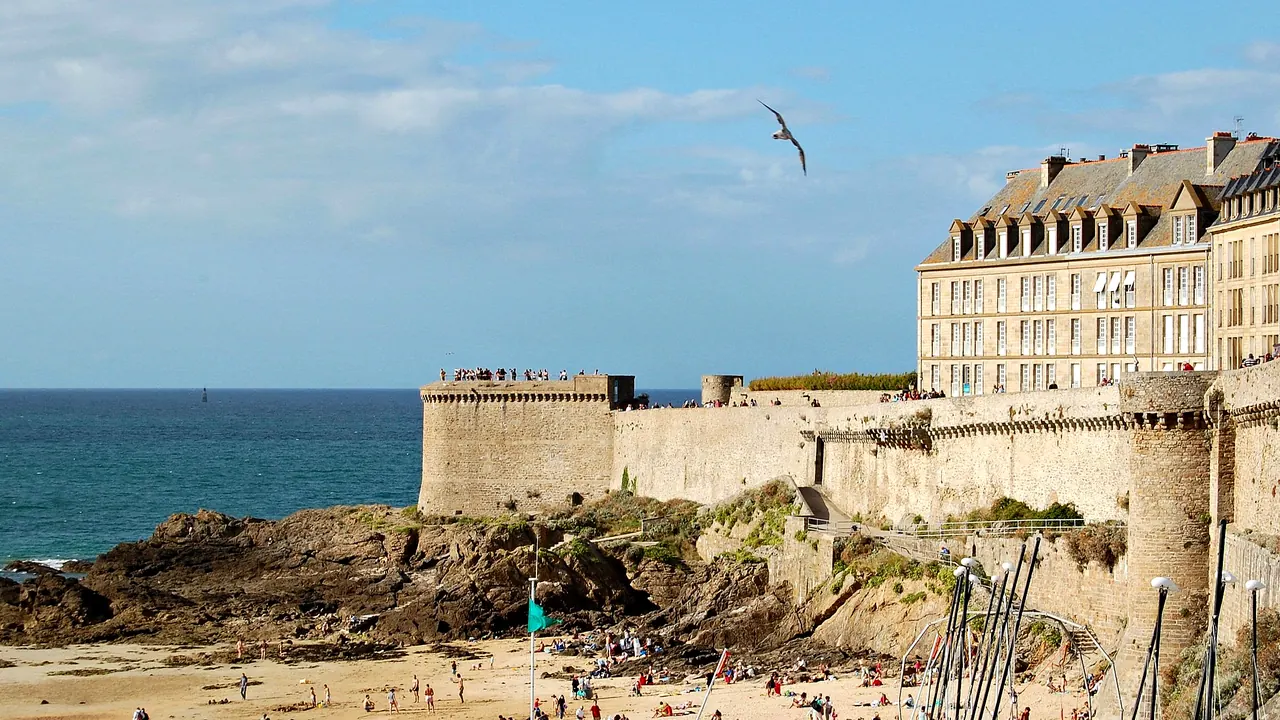
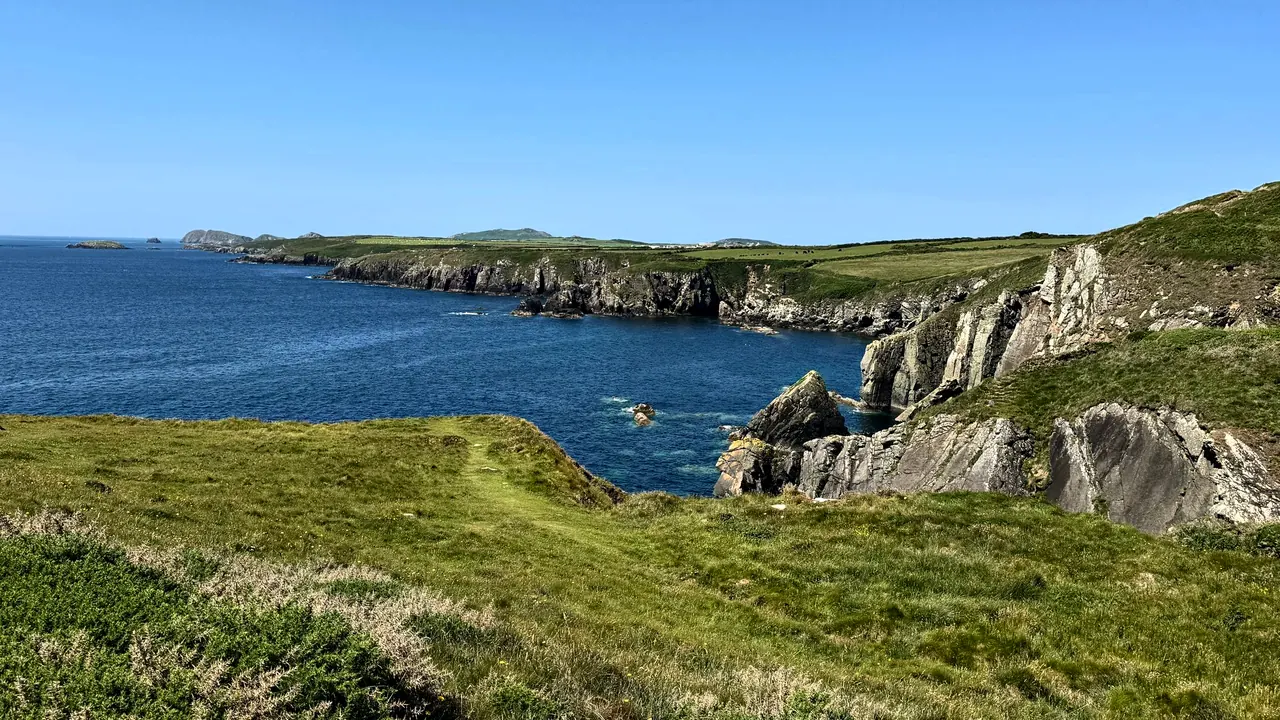
Photos: Brittany by Pline, CC BY-SA 3.0, cropped; Pembrokeshire by Petra Nesti, Pexels License.
Brittany or Pembrokeshire?
Our verdict in twelve categories, each scored against the same fixed benchmark cities, and the climate month by month, so you can choose for your trip.
Choose Brittany for
- live music and the arts
- wellness
- day trips
Brittany suits travellers who want a fuller trip with more variety. It is the warmer of the two in summer, and it adds a serious food culture of oysters, galettes and cider, a long list of walled towns and megaliths, island crossings, Celtic festivals and seafront thalassotherapy spas. Pick it for a longer stay with a car and one or two well-chosen bases, or if you want evenings and wet days to offer as much as the beach.
Choose Pembrokeshire for
- nature and the outdoors
Pembrokeshire is a smaller, quieter and wilder coast, and its national park cliffs and offshore wildlife match anything in Brittany. Choose it for coast-path walking, puffins, seals and surf, followed by a pint in a village inn. Don't expect much from its restaurants, its nightlife or its rainy days. It rewards travellers who want the outdoors and very little else.
Scoreboard
Twelve categories on one fixed scale from 0 to 100. The shaded stretch is the gap between the two.
Your match
Pick a travel style or drag the sliders, and both match scores follow your weighting.
Wins on live music and the arts and wellness with your weighting.
Wins on nature and the outdoors with your weighting.
What matters to you?
Category by category
What the scores mean for a trip.
Beaches & swimming
The two are broadly level as beach destinations, but the beaches feel different. Brittany's is a classic resort coast, with wide sandy bays at Carnac, Quiberon and Bénodet, sailing schools, wind shelters on the sand and the vast tidal flats of Saint-Malo and Dinard. It also has the sheltered Gulf of Morbihan, where the water is a little warmer.
Pembrokeshire's beaches are wilder and often emptier: Barafundle, a cove you can only reach on foot, the long open sweep of Newgale and the surf beach at Whitesands. Lifeguards cover many of them in summer. Its sea is the colder of the two, so wetsuits and short dips are the norm, and a grey week ends beach plans more easily than in Brittany.
Food & drink
Food is one of the clearest gaps between the two. Brittany has a real eating culture built on seafood and dairy: Cancale and Morbihan oysters, scallops from Saint-Brieuc, buckwheat galettes with dry cider, and salted butter in everything from kouign-amann to caramel. Rennes adds a proper restaurant scene, and the harbour towns serve full shellfish platters.
Pembrokeshire has fine raw material, such as crab and lobster, salt-marsh lamb and farmhouse cheeses. Good restaurants are few, though, and they are mostly in St Davids, Fishguard and Narberth. Elsewhere, expect pub menus and fish and chips, or cook for yourself with produce from the farm shops.
Culture & sights
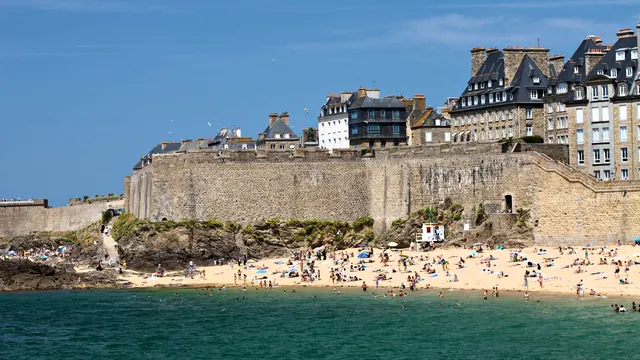
Both regions spread their heritage across the countryside rather than gathering it in one city, but Brittany has much more of it. The rows of menhirs at Carnac are among Europe's great prehistoric sites. There are also the walls of Saint-Malo and Concarneau, half-timbered Dinan and Vitré, castles at Fougères and Josselin, and the parish closes of Finistère, enough for a week or more.
Pembrokeshire's highlights are fewer but distinctive. St Davids is a cathedral city the size of a village, Pembroke Castle is the birthplace of Henry VII, and the Pentre Ifan burial chamber lies in the hills that supplied Stonehenge's bluestones. A few days covers it.
Nightlife
Neither is a place for clubbing, but Brittany has more going on. Rennes is a large student city whose bars on Rue Saint-Michel fill from Thursday, and the summer resorts stay busy into the evening. A fest-noz dance night adds something you won't find in Wales.
In Pembrokeshire, the liveliest it gets is harbour pubs in Tenby on a summer weekend. Everywhere else it means village inns, a folk session or a quiz, and quiet lanes by eleven.
Nature & outdoors
Both are outstanding coasts for the outdoors, and the difference is in what kind. Pembrokeshire packs its strengths into one compact national park. Its coast path covers about 300km of cliffs, arches and stacks, and boat trips reach the puffins of Skomer, the seals of Ramsey and the huge gannet colony on Grassholm. Coasteering, surfing and sea kayaking fill the active days.
Brittany's coast is far longer and more varied, from the pink granite of the north to Pointe du Raz and the Crozon peninsula. On the Gulf of Morbihan you can sail and kayak among islands, and the Nantes-Brest canal towpath gives easy cycling inland. Wildlife watching is more scattered, with the Sept-Îles reserve as its main seabird site.
Day trips
Brittany is much better for day trips. Mont-Saint-Michel is about an hour from Saint-Malo. Ferries cross to Belle-Île, Ouessant and car-free Bréhat, and Quimper, Locronan and Pont-Aven make an easy loop in the west. Nantes, the old ducal capital, is also within reach.
From Pembrokeshire, the outings are pleasant but small: the monks' island of Caldey off Tenby, Cardigan and colourful Aberaeron up the coast, and Dylan Thomas's boathouse at Laugharne. Gower and Swansea take about two hours, and none of these is a major destination.
Good for families
Both are traditional family seaside regions with rock pools, sandy beaches and an easy pace, but Brittany has more to fill the days. Sailing and kayak schools are everywhere, and the slightly warmer summers help. Océanopolis in Brest and the Saint-Malo aquarium are proper wet-day options, and gîtes and campsites make self-catering easy.
Pembrokeshire's days are simpler: crabbing off harbour walls, boat trips to see seals and puffins, and a farm park with an indoor funfair when it rains. Tenby and Saundersfoot have beaches right in town, but there are no big attractions, and the colder sea limits paddling.
Getting around
You will want a car in either, but Brittany has the better rail network. Fast trains reach Rennes from Paris, regional lines continue to Saint-Malo, Vannes, Quimper and Brest, and between the towns the dual carriageways are toll-free and easy to drive.
Pembrokeshire is smaller and takes about an hour to cross, but many beaches lie down narrow hedge-lined lanes where you have to pull in to pass, and beach car parks fill early in summer. Branch lines and seasonal coast-path buses help walkers rather than replace a car.
Shopping & style
Shopping in both regions is about local crafts rather than fashion, and Brittany has the wider range. You'll find hand-painted Quimper faience, striped sailor tops, fleur de sel and butter caramels, the big Saturday market at Place des Lices, and high-street and department stores in Rennes.
Pembrokeshire's best buys are Welsh blankets from its working woollen mills and local art from the St Davids galleries. Narberth's independent shops and antiques make the most rewarding afternoon, and there is little else.
Affordability
The two cost about the same, and both get expensive in July and August, when coastal rooms fill up. Brittany's savings come from campsites, inland gîtes, crêperie meals and toll-free roads, and its costs climb with seafood platters and smart coastal restaurants.
In Pembrokeshire, the limited supply of good rooms pushes peak-summer rates up. Day-to-day spending is gentler there, with free beaches and coast path, moderate pub meals and self-catering. In both, the shoulder seasons are noticeably cheaper.
Live music & performing arts
Brittany has far more live music. Its Celtic tradition is part of everyday life, with bagad pipe bands and fest-noz nights. In summer come the large festivals: the Interceltique at Lorient, Les Vieilles Charrues at Carhaix and the Festival de Cornouaille in Quimper. Rennes adds an opera house and a national theatre all year.
Pembrokeshire's highlight is the classical music festival held in St Davids Cathedral in early summer. Otherwise there are small theatres in Milford Haven and Fishguard, pub folk sessions and the odd choir.
Wellness & relaxation
Brittany has a real spa tradition. Thalassotherapy began in Roscoff, and seawater spas line the seafronts of Quiberon, Carnac, Dinard and Perros-Guirec, so you can plan a whole stay around treatments, ideally in spring or autumn.
Pembrokeshire has no bathing culture and only a few hotel spas and farmhouse retreats. What it offers instead is quiet: empty lanes outside August, a cottage with a sea view, and long walks on the cliffs.
When should you go?
Pick your month. The climate figures are measured averages, not a forecast.
Brittany in July
Pembrokeshire in July
Daytime high, °C
Rainfall in the month, mm
Where the figures come from
Brittany has no rain gauge within 25 km of the centre, so its rainfall comes from a gridded climate dataset read at the destination rather than from a gauge further away.
Brittany's sunshine is measured 89 km from the centre, at Rennes.
Pembrokeshire's temperatures are measured 46 km from the centre, at Aberporth.
Pembrokeshire has no rain gauge within 25 km of the centre, so its rainfall comes from a gridded climate dataset read at the destination rather than from a gauge further away.
Temperature and rainfall are climate normals, averaged over the years shown. Brittany: 2004-2020 (sunshine 1991-2020, rainfall 1991-2020) normals, Vannes-Meucon (8.1 km from centre). Pembrokeshire: 1991-2020 normals, Aberporth (46.2 km from centre).
Brittany is warmer and sunnier through the summer. Daytime highs reach about 24°C in July, and June to September are its drier months. In Pembrokeshire, July and August rarely get much above 18°C. The Welsh coast also gets wetter as the summer goes on, and its sunniest month is May, so late spring and early summer are often its best weeks. The sea is cool in both and reaches only about 18°C in Brittany in high summer. Pembrokeshire's sea peaks a degree lower in August and September, which is why wetsuits are common there.
Spring and early autumn suit walking in both. Brittany stays mild well into September. From October to December both turn wet and grey, with about 121mm of rain in November, and the short, dim winter days suit a quiet stay with walks rather than a beach trip.
Which traveller are you?
For an outdoors trip, Pembrokeshire has the edge. Its coast path runs through one compact national park, with puffins on Skomer, seals on Ramsey, coasteering on the cliffs where the sport began, and surf at Freshwater West, all within about an hour's drive.
On a food and nightlife trip, Brittany is the clear choice. It has Cancale oysters, shellfish platters in the harbour towns, crêperies everywhere and Rennes's student bars, with a fest-noz in a village square as a bonus. Pembrokeshire offers good crab, pubs and quiet roads by eleven.
For a relaxing and wellness trip, choose Brittany. Its seafront thalassotherapy centres at Quiberon, Carnac, Dinard and elsewhere let you build a stay around seawater pools and treatments. Pembrokeshire has peace and views but only a handful of hotel spas.
Before you go
| Measure | Brittany | Pembrokeshire |
|---|---|---|
| Official language | French | English |
| Currency | Euro (EUR) | Pound Sterling (GBP) |
| Sockets | CE230 V, 50 Hz | G230 V, 50 Hz |
| Driving side | Right | Left |
| Time zone | UTC+1, UTC+2 in summer | UTC, UTC+1 in summer |
| Emergency number | 112 | 112 or 999 |
| Main airport | Nantes Atlantique Airport (NTE)97 non-stop destinations | Cardiff International Airport (CWL)32 non-stop destinations |
| Public holidays this year | 11 days | 8 days |
By the numbers
| Measure | Brittany | Pembrokeshire |
|---|---|---|
| Population | 4,687,381 | 125,818 |
| People per km² | - | 78 |
| Swim season, months above 21 °C | None | None |
Where else could you go?
Every comparison below shares a destination with this one, so you can follow Brittany or Pembrokeshire somewhere new.
- Cornwallvs Pembrokeshire
- Snowdoniavs Pembrokeshire
- Devonvs Pembrokeshire
- Jurassic Coastvs Pembrokeshire
- Cotswoldsvs Pembrokeshire
- Isles of Scillyvs Pembrokeshire