China
Shanghai
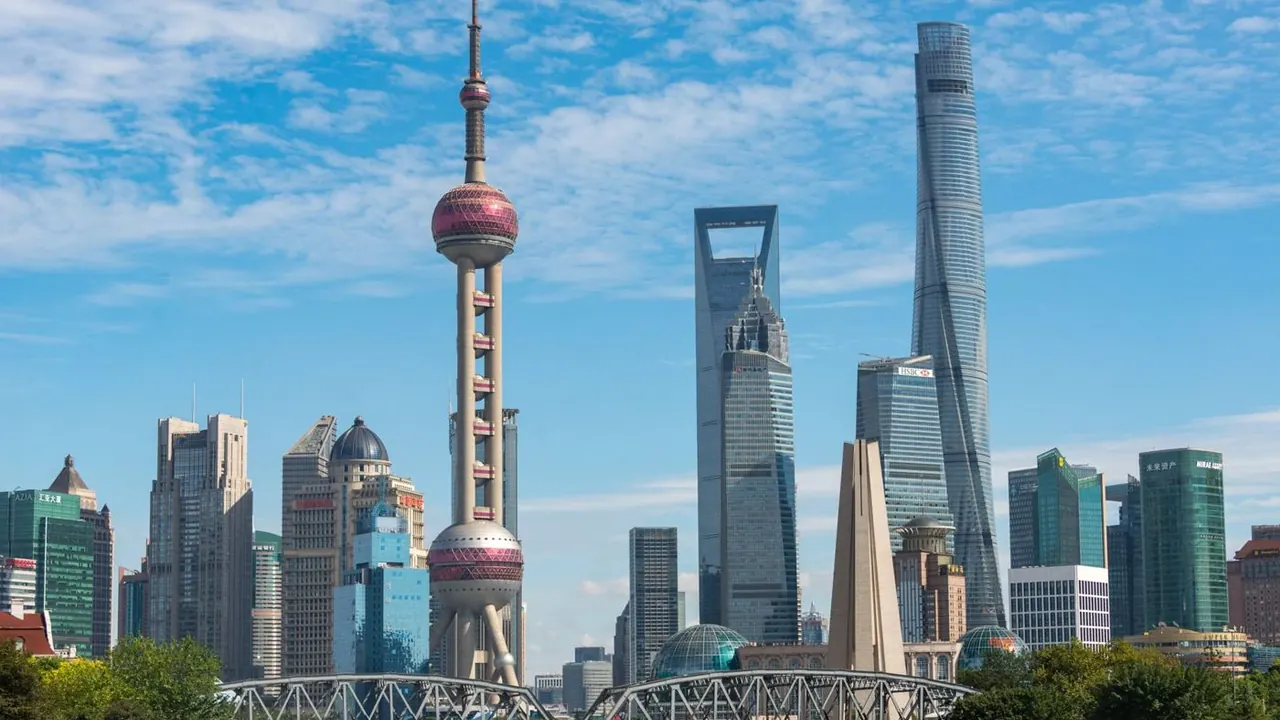
The Oriental Pearl Tower and Shanghai Tower
- Day trips90
- Food & drink88
- Getting around85
Photo: xiquinhosilva, CC BY 2.0, cropped
Match
66
Every category weighted equally
- Beach & sun58
- Culture & arts73
- Food & nightlife73
- Family trip62
- Outdoors60
- Relax & unwind59
- Shopping & style73
- On a budget64
Shanghai in twelve categories
Our verdict on each, scored 0 to 100 against the same fixed benchmark cities, so a score means the same thing on every page.
Beaches & swimming. Scores 10 out of 100.
Food & drink. Scores 88 out of 100.
Culture & sights. Scores 72 out of 100.
Nightlife. Scores 80 out of 100.
Nature & outdoors. Scores 25 out of 100.
Day trips. Scores 90 out of 100.
Good for families. Scores 80 out of 100.
Getting around. Scores 85 out of 100.
Shopping & style. Scores 82 out of 100.
Affordability. Scores 55 out of 100.
Live music & performing arts. Scores 66 out of 100.
Wellness & relaxation. Scores 55 out of 100.
Shanghai category by category
Beaches & swimming
10Shanghai sits on the coast, but it is not a beach city. The shoreline is the mouth of the Yangtze, wide mudflats and silty brown water, and nobody swims off the city. The nearest option is Jinshan City Beach, about an hour and a half south by train and metro, where a sea wall encloses a filtered bay with sand. The water is warm in summer but the setting is industrial.
In practice, swimming here means a hotel pool. Visitors who want a real beach fly south to Hainan or go to the islands of the Zhoushan archipelago, which takes far more than a day.
Food & drink
88Shanghai is one of the great places to eat in Asia. The local benbang cooking is sweet and soy-rich: red-braised pork, drunken chicken, hairy crab in autumn, and the soup dumplings and pan-fried shengjian buns that most visitors queue for at least once. Mornings start at breakfast stalls with scallion pancakes, fried dough sticks and soy milk, and noodle shops serve bowls with crab roe or scallion oil.
Beyond the local food, the city brings together cuisines from every part of China, from Sichuan and Hunan to Xinjiang and Yunnan, alongside a deep international scene and a high-end tier of Chinese and Western fine dining. The old lanes of the former French Concession are full of cafés and small bistros, and coffee is taken seriously. Wet markets in residential neighbourhoods show how locals shop and cook.
Culture & sights
72Shanghai's heritage is mostly from its treaty-port century, and it is distinctive. The Bund lines the Huangpu with banks and trading houses in neoclassical and Art Deco style, facing the towers of Lujiazui across the river, a pairing that is the city's defining view. The former French Concession has plane-tree avenues, villas and shikumen lane houses, and areas like Tianzifang and the lanes around Xintiandi show how that housing works.
The Shanghai Museum holds one of China's finest collections of bronzes, ceramics, calligraphy and painting. Older sights are fewer: the Ming-era Yu Garden and its temple bazaar, the Jade Buddha Temple and Jing'an Temple. Add the Propaganda Poster museum, the Long Museum and the art spaces along the West Bund, and there is several days' worth, though the classical Chinese heritage lies largely outside the city.
Nightlife
80Shanghai has one of Asia's strongest nights out. The cocktail scene is its signature: speakeasies behind unmarked doors in the former French Concession, hotel bars high above the Bund looking at the lit-up Pudong skyline, and craft beer and wine bars along the old residential streets. Clubs range from large, polished venues with international DJs to smaller underground rooms playing techno and house, and the busiest run until dawn at weekends.
The scene is spread out, so a night usually means picking an area: the Bund for views and glamour, Xuhui and Jing'an for bars, and clusters of clubs around the central districts. Drinks in the smarter places cost as much as in any Western capital, and the city stays safe to move around late.
Nature & outdoors
25Shanghai is a flat, dense megacity on the Yangtze delta, and nature is limited. Within the city there are good parks such as Century Park and the Riverside paths of the West Bund and Pudong, which are pleasant for cycling and running along the Huangpu. The Sheshan hills to the southwest are low wooded mounds, and Chongming Island, reached by tunnel and bridge, has wetlands, forest parks and birdwatching at Dongtan.
Dianshan Lake on the western edge offers some boating and lakeside walking. For proper hills, bamboo forest and hiking, visitors head to Moganshan or the mountains of Zhejiang and Anhui, which take more than a day.
Day trips
90Day trips are one of the strongest reasons to base yourself in Shanghai. High-speed trains reach Suzhou in about half an hour, with its classical gardens, canals and silk heritage, and Hangzhou in about an hour, with West Lake, its temples and the tea villages of Longjing in the hills above. Nanjing, a former imperial capital with Ming walls, the Sun Yat-sen Mausoleum and major museums, is about an hour and a half away.
Closer still are the canal towns of the delta: Zhujiajiao within the city's own boundaries, and Zhouzhuang, Tongli, Xitang and Wuzhen within two hours, with stone bridges, waterside houses and boat rides. They can be crowded at weekends, so a weekday visit pays off. Wuxi and Shaoxing, the town of yellow rice wine, add further options.
Good for families
80Shanghai works well with children. Shanghai Disney Resort is a full theme park on the metro, and the Haichang Ocean Park and Legoland on the city's edges add more big days out. The Shanghai Science and Technology Museum and the Natural History Museum are large and hands-on, the aquarium sits at the foot of the Pudong towers, and the zoo and Century Park give space to run.
The city is safe and clean, the metro has lifts and is easy with a buggy, and Chinese culture is warm towards children. The hard parts are the hot, humid summers, the crowds during the national travel weeks around Chinese New Year and early October, and the distances between sights, which make a day tiring for small legs.
Getting around
85Shanghai has one of the largest metro systems in the world, clean, air-conditioned and signed in English, with lifts at most stations and lines reaching the airports, the railway stations and Disneyland. The Maglev runs from Pudong airport towards the city at startling speed. Taxis are plentiful and ride-hailing apps are widely used.
Walking is pleasant in the former French Concession and along the Bund, but the city is huge and sights are spread across both sides of the river, so journeys between areas often take 30 to 45 minutes underground. Ferries across the Huangpu are a cheap, scenic shortcut. Nobody needs a car, and visitors should set up mobile payments before arriving, as cash is rarely used.
Shopping & style
82Shopping in Shanghai runs from the very top to the very local. West Nanjing Road and Lujiazui have glossy malls full of luxury flagships, and the East Nanjing Road pedestrian street is lined with big department stores, some dating to the early twentieth century. Huaihai Road adds global fashion chains.
The more interesting finds are in the former French Concession, where small boutiques on streets like Wukang Road and Anfu Road sell Chinese designer fashion, ceramics and homeware. Fabric markets turn out tailored suits and qipao in a few days, and the lanes around Yu Garden and Tianzifang sell tea, silk and souvenirs, with plenty of imitation goods among them.
Affordability
55Shanghai is the most expensive city in mainland China, but for a visitor it is middling rather than dear. Local food is the bargain: dumplings, noodle bowls and breakfast snacks cost very little, and the metro and taxis are cheap. Many museums are free or inexpensive.
The costs come with comfort. Good hotels in central areas such as the Bund and Jing'an are priced like a European capital, and cocktails, imported wine and Western restaurants cost as much as in any global city. Eating where locals eat keeps a trip reasonable.
Live music & performing arts
66Acrobatics are the evening most visitors see in Shanghai: tumbling, balancing and contortion acts staged in large theatres as a regular fixture of the city's nights out. For something older, the city is a home of Chinese opera. The refined Kunqu tradition has its own Shanghai troupe, Yue opera grew up in Shanghai's theatres, and Peking opera plays at the Yifu Theatre near People's Square, in a house dating from the 1920s.
Western forms are well served too. The Shanghai Symphony Orchestra plays in its own concert hall, and the Shanghai Grand Theatre and the Oriental Art Center in Pudong host opera, ballet and touring musicals, often in English. Jazz has deep roots from the 1930s, when the Bund's hotels and ballrooms made this Asia's jazz city, and a handful of jazz clubs and small rock and electronic venues keep live music going.
Wellness & relaxation
55Shanghai has a real bathing and massage culture, though it is less visible to visitors. Large bath centres offer hot pools, saunas, massage, buffet food and rest halls where people stay for hours or overnight, and foot-massage parlours are on almost every residential street. Luxury hotels add spas at the top end, and traditional Chinese medicine clinics offer acupuncture and cupping.
The city itself is fast and crowded. Calm comes from the tea houses, the quiet lanes of the former French Concession, temple courtyards and morning tai chi in the parks.
When should you go?
Pick a month to see what it is like. The climate figures are measured averages, not a forecast.
Shanghai in July
Daytime high, °C
Rainfall in the month, mm
The whole year
Shaded against this city’s own year: the deepest cell is its best month for that figure and the palest its weakest.
Temperature and rainfall are climate normals, averaged over the years shown. Shanghai: 1991-2020 normals, Shanghai / Hongqiao (8.1 km from centre).
Before you go
| Measure | Shanghai |
|---|---|
| Official language | Putonghua |
| Currency | Yuan Renminbi (CNY) |
| Sockets | ACI220 V, 50 Hz |
| Driving side | Right |
| Time zone | UTC+8 |
| Emergency number | Police 110, ambulance 120, fire 119 |
| Elevation | 4 m |
| Main airport | Shanghai Pudong International Airport (PVG)33 km from centre207 non-stop destinations |
| Public holidays this year | 6 days |
By the numbers
| Measure | Shanghai |
|---|---|
| City population | 24,870,895 |
| People per km² | 3,922 |
| Museums within 10 km | 45 |
| UNESCO World Heritage sites within 50 km | 0 |
| Swim season, months above 21 °C | 5 months |
Compare Shanghai with
Every comparison with a written verdict behind it.