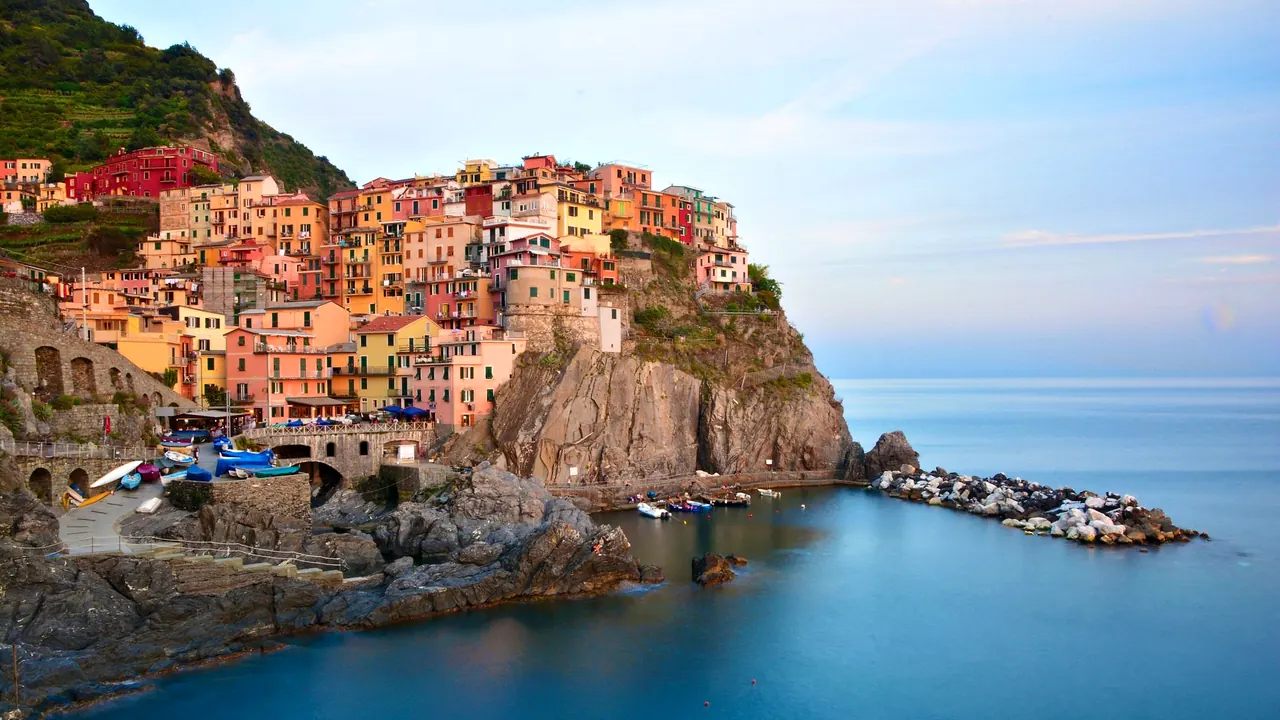
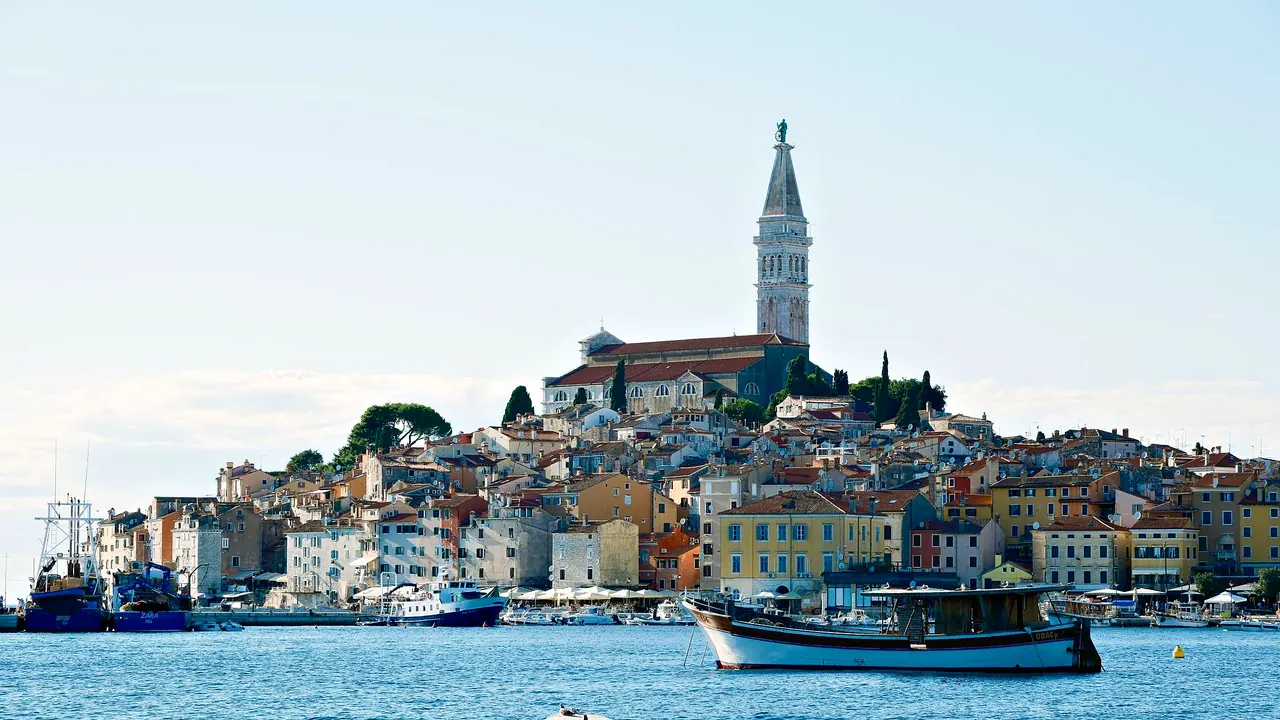
Photos: Cinque Terre by Narcisa Aciko, Pexels License; Istria by Ramon Karolan, Pexels License.
Cinque Terre or Istria?
Our verdict in twelve categories, each scored against the same fixed benchmark cities, and the climate month by month, so you can choose for your trip.
Choose Cinque Terre for
- nature and the outdoors
- getting around
Cinque Terre suits walkers who want a short, concentrated stay without a car. Its cliff paths link five villages through vineyards and olive terraces, and a train runs along the coast to carry you back. Everything is within a few minutes of everything else. In return you get thin evenings, a narrow menu, steep steps everywhere and rooms that are hard to find.
Choose Istria for
- families
- culture and sights
- nightlife
Istria is the better choice for almost any longer or broader trip. It has more serious food, a deeper layer of Roman and Venetian heritage, more beaches and more to do with children, all in a region you tour by car between the coast and the hill towns. It suits families, food lovers and anyone who wants a week of variety rather than a few days of one beautiful stretch of coast.
Scoreboard
Twelve categories on one fixed scale from 0 to 100. The shaded stretch is the gap between the two.
Your match
Pick a travel style or drag the sliders, and both match scores follow your weighting.
Wins on nature and the outdoors and getting around with your weighting.
Wins on families and culture and sights with your weighting.
What matters to you?
Category by category
What the scores mean for a trip.
Beaches & swimming
Neither is a sandy coast. Istria has much more of it to swim from, with wild coves on the Kamenjak cape, resort shorelines around Poreč and Umag and pebble bays at Rabac, so you can choose a different spot each day.
Cinque Terre has one real beach, at Monterosso. Elsewhere you swim off harbour slipways and rock shelves, which makes for lovely quick dips between walks but not for long days by the sea.
Food & drink
Cinque Terre does a few Ligurian things very well: pesto with trofie, focaccia, Monterosso anchovies and fried fish eaten on the harbour wall. Its range is narrow, though, and many village menus are written for day-trippers.
Istria offers a whole cuisine to explore. It has black and white truffles inland, boškarin beef and pršut in family taverns, Lim Bay shellfish and some of the finest olive oil anywhere. Wine tastings in its hill cellars are part of the trip in a way that Sciacchetrà, however rare, cannot match.
Culture & sights
In Cinque Terre the landscape is the monument: terraced villages on rock, a few striped parish churches and a watchtower, all seen in a day or two.
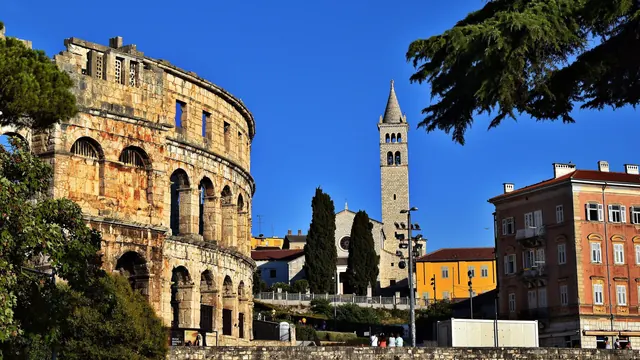
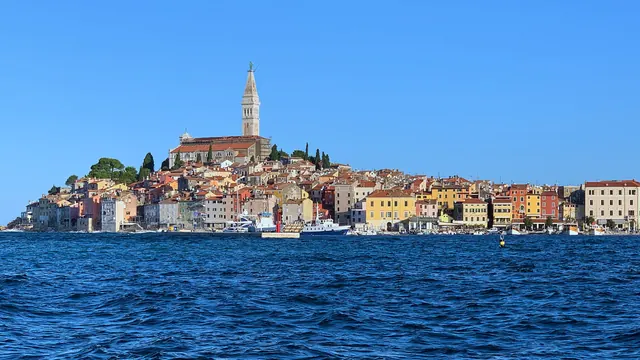
Istria has major individual sights as well as pretty towns. Pula's Arena and the gold mosaics of the Euphrasian Basilica in Poreč stand out, alongside Rovinj's old town, the walled hill towns of Motovun and Hum and the frescoes at Beram. That is enough to fill several days.
Nightlife
Cinque Terre's evening is a sunset drink on a harbour wall, and then the villages go quiet. A proper night out means the train to La Spezia.
Istria is livelier without being a party coast. Rovinj and Poreč fill with terrace bars in summer, Pula has bars all year round thanks to its students, and beach bars and a few seasonal clubs appear around Poreč and Medulin.
Nature & outdoors
For walking, Cinque Terre has the edge. The cliff path between the villages and the ridge trail above them, through vineyards and chestnut woods, are the main reason to come, and the marine reserve adds kayaking to the grottoes.
Istria's outdoors is gentler and more spread out. It suits cyclists best, on the old Parenzana railway line and the routes between hill towns. Hikers head for the ridge of Učka, and the Kamenjak cape is good for kayaking and windsurfing.
Day trips
Cinque Terre's day trips run on rails. The coastal line carries you south into Tuscany for the Leaning Tower in Pisa, walled Lucca and the marble quarries above Carrara, and north to Genoa's medieval lanes and the Riviera bays of Sestri Levante and Portofino. Boats from the gulf cross to Portovenere. None of it needs a car, and Pisa is little more than an hour away.
Istria offers a little more, and more of it takes you into another country. Inside the region, the hill towns, the wine roads and the Brijuni islands make easy outings from any base. Beyond it lie Venetian Piran in Slovenia, Trieste in Italy, the Karst caves at Postojna and Škocjan, and even Ljubljana. The catch is that nearly all of this means a day at the wheel rather than a seat on a train.
Good for families
Istria was built for family seaside trips, with campsites and resorts that have pools and playgrounds, water parks, a dinosaur park and Pula's aquarium. The shallow bays near Medulin and Premantura suit small children.
Cinque Terre suits older children who enjoy walking. With younger ones, the steps, crowded paths and lack of anything made for children wear thin quickly. Flat Monterosso and its beach are the only easy base.
Getting around
Cinque Terre is one of the few coasts where a car is a hindrance. A frequent local train threads the five villages, with ferries and footpaths in between, and the effort comes only from summer crowds and stairs.
In Istria it is the other way round. A car is close to essential, because buses link only the main coastal towns, leaving the wineries, hill towns and most beaches out of reach. In high summer you should also expect slow resort roads and early-filling car parks.
Shopping & style
Neither is a place to shop for clothes. In both, the best things to take home are edible. Istria offers a wider choice: truffle products from Motovun and Buzet, estate olive oil and wine bought at the cellar door, plus galleries on Rovinj's Grisia street and in Grožnjan. Cinque Terre's equivalent is a jar of pesto, some anchovies and a bottle of Sciacchetrà.
Affordability
Istria is the cheaper of the two, mainly because it has far more places to stay. Campsites, private apartments and inland farm stays all bring costs down, especially in June or September.
Cinque Terre's few small village rooms are in heavy demand, and path access is paid. Simple food and the train keep daily spending modest, and many people on a budget sleep in La Spezia or Levanto and travel in.
Live music & performing arts
Cinque Terre has almost nothing beyond the odd church concert and saints' day processions with bands.
Istria has a real summer season, centred on open-air concerts and the long-running film festival in Pula's Roman Arena. In summer Grožnjan's squares and churches fill with young musicians. Out of season, though, both regions are quiet.
Wellness & relaxation
Neither has much of a spa culture. Istria at least has the Roman-era thermal springs of Istarske Toplice and hotel spas in Rovinj, Poreč and Umag, and you can slow right down in an inland farmhouse among olive groves.
Cinque Terre's restfulness comes only from the absence of cars and the quiet of early mornings or the shoulder seasons. On a crowded summer afternoon there is little of it.
When should you go?
Pick your month. The climate figures are measured averages, not a forecast.
Cinque Terre in July
Istria in July
Daytime high, °C
Rainfall in the month, mm
Where the figures come from
Cinque Terre's temperatures are measured 78 km from the centre, at Pisa / S. Giusto.
Cinque Terre has no rain gauge within 25 km of the centre, so its rainfall comes from a gridded climate dataset read at the destination rather than from a gauge further away.
Istria's temperatures are measured 57 km from the centre, at Trieste.
Istria has no rain gauge within 25 km of the centre, so its rainfall comes from a gridded climate dataset read at the destination rather than from a gauge further away.
Temperature and rainfall are climate normals, averaged over the years shown. Cinque Terre: 1991-2020 normals, Pisa / S. Giusto (77.8 km from centre). Istria: 1991-2020 normals, Trieste (56.5 km from centre).
Both coasts are warm enough for swimming from June to September, and Istria's sea is a touch warmer at its peak, about 26°C in August. Midsummer is hot in both places. Cinque Terre reaches 30°C in July and August, which makes the coastal path hard going at midday. It is also slightly sunnier through the summer. May, June and September are the comfortable months for walking in either region, with sea swims still possible at either end of that window.
The real difference comes in autumn. Cinque Terre turns very wet in October and November, at around 170mm a month, enough to close sections of trail, while Istria's autumn is noticeably drier. Winter is mild on the Ligurian coast and a few degrees cooler in Istria, but neither is a beach destination from November to April.
Which traveller are you?
On a family trip with children, Istria is far easier. It has campsites and resort villages with pools, water parks near Poreč, shallow bays around Medulin and short drives. Cinque Terre's stairways, crowded trains and cliffs make it hard work with small children.
For an outdoors trip, Cinque Terre is the walker's choice. You can hike village to village on the Sentiero Azzurro or along the higher ridge path and take the train home. Istria's strengths are gentler, with cycling on the Parenzana and hiking on Učka.
For a food and nightlife trip, Istria wins clearly. It has truffles in the hill towns, oysters from the Lim Bay, Malvazija cellars and fish restaurants up to fine dining, followed by terraces and bars in Rovinj, Poreč and Pula. Cinque Terre's evenings end early.
Before you go
| Measure | Cinque Terre | Istria |
|---|---|---|
| Official language | Italian | Croatian |
| Currency | Euro (EUR) | Euro (EUR) |
| Sockets | CFL230 V, 50 Hz | CF230 V, 50 Hz |
| Driving side | Right | Right |
| Time zone | UTC+1, UTC+2 in summer | UTC+1, UTC+2 in summer |
| Emergency number | 112 | 112 |
| Main airport | Pisa International Airport (PSA)82 non-stop destinations | Pula Airport (PUY)34 non-stop destinations |
| Public holidays this year | 13 days | 14 days |
By the numbers
| Measure | Cinque Terre | Istria |
|---|---|---|
| Swim season, months above 21 °C | 4 months | 4 months |
Where else could you go?
Every comparison below shares a destination with this one, so you can follow Cinque Terre or Istria somewhere new.
- Portofinovs Cinque Terre
- Tuscanyvs Cinque Terre
- Elbavs Cinque Terre
- Plitvice Lakesvs Istria
- Lake Gardavs Cinque Terre
- Dolomitesvs Istria