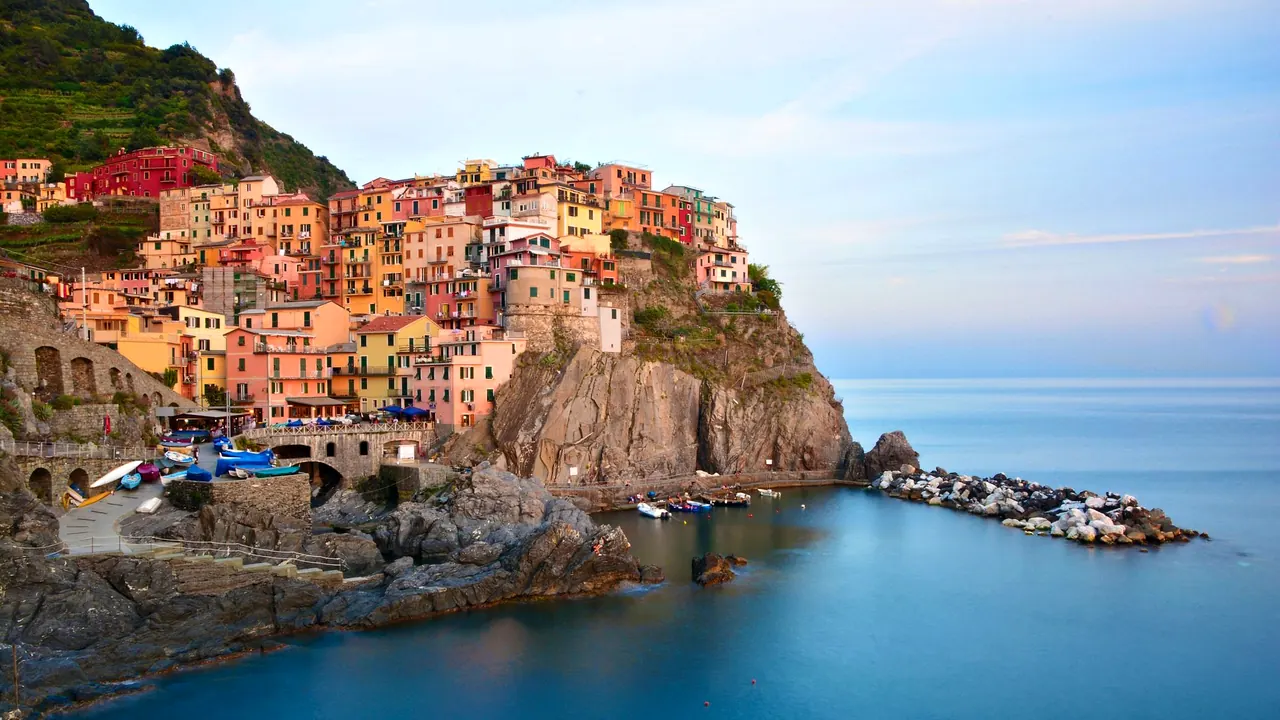
Photos: Cinque Terre by Narcisa Aciko, Pexels License.
Cinque Terre or Swiss Alps?
Our verdict in twelve categories, each scored against the same fixed benchmark cities, and the climate month by month, so you can choose for your trip.
Choose Cinque Terre for
- beaches
- prices
- food and drink
Cinque Terre suits walkers who want the sea at the end of every path. The draw is five cliff villages joined by trails and a coastal train, with swims off the rocks, Ligurian pesto and anchovies, and a glass of terraced white at sunset. It is a compact trip of a few days, and though rooms are dear, it costs far less than the mountains.
Choose Swiss Alps for
- wellness
- families
- live music and the arts
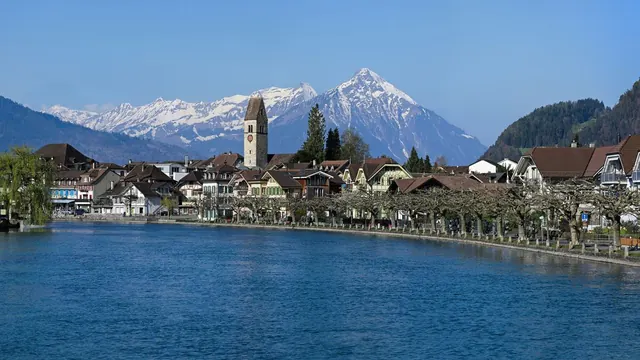
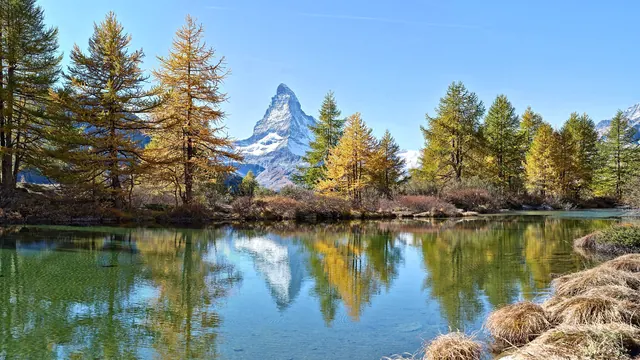
The Swiss Alps are for travellers who want the landscape on a grand scale and the comfort to enjoy it. Glaciers, lifts and marked trails make high country easy to reach, and thermal baths and quiet car-free villages give you somewhere to recover afterwards. Families do much better here than on the steep Ligurian steps. The cost is the catch: this is one of the most expensive places anywhere to vacation.
Scoreboard
Twelve categories on one fixed scale from 0 to 100. The shaded stretch is the gap between the two.
Your match
Pick a travel style or drag the sliders, and both match scores follow your weighting.
Wins on beaches and prices with your weighting.
Wins on wellness and families with your weighting.
What matters to you?
Category by category
What the scores mean for a trip.
Beaches & swimming
Cinque Terre has the sea, and that settles it. Monterosso's Fegina beach gives you proper sand and pebble for a full day by the water, and in the other villages you swim off the rocks at Manarola or the harbour at Vernazza between walks.
The Swiss Alps have only lake bathing. The lidos on Lake Thun and Lake Brienz are clean but cool, and Lake Lugano in Ticino is warmer but only for a short summer. In the Alps a swim is a break between hikes, never the purpose of the trip.
Food & drink
Both regions eat well within a narrow range, but from opposite larders. Cinque Terre cooks from the sea and the terraces: trofie with pesto, focaccia, Monterosso anchovies, fried fish in paper cones and the sweet Sciacchetrà wine. Watch out for menus written for day-trippers in the busiest villages.
The Alps are cheese country, with fondue, raclette and rösti served on hut terraces at the top of the lifts, plus the little-exported wines of Valais. Zermatt and St Moritz add expensive fine dining, which the Ligurian coast does not offer.
Culture & sights
Neither region has a major museum, and the heritage in each is tied to the landscape. In Cinque Terre the villages themselves are the sight: Vernazza's harbour, Corniglia on its ridge and the UNESCO-listed terraces. They are close together and seen in a day or two.
The Alps spread their interest across a much larger area. There are Carolingian frescoes at Müstair, Sion's twin hilltop castles, sgraffito houses in the Engadine and the open-air museum at Ballenberg. You get more variety, but you travel further between each sight.
Nightlife
Evenings in Cinque Terre mean a sunset drink on a harbour wall and an early night. A few bars in Monterosso and Riomaggiore stay open a little later, and for anything more you go to La Spezia.
The Alps have real nights out, but only in winter, when après-ski fills the terraces in Verbier and the bars at the foot of Zermatt's pistes. In summer the hiking bases go to sleep almost as early as the Ligurian villages.
Nature & outdoors
Cinque Terre is a fine walking coast. The Sentiero Azzurro runs along the cliffs through vineyards, the Sentiero Rosso follows the ridge above, and the marine reserve offers kayaking and diving. It is a small area, though, and the whole coast can be walked in a few days.
The Swiss Alps work on another scale. The Eiger and Jungfrau rise above Lauterbrunnen, the Matterhorn above Zermatt, and the Aletsch glacier and the Swiss National Park are within reach. Lifts take you straight into high country, and the region adds world-class skiing, paragliding and guided glacier tours.
Day trips
Both make excellent bases for outings, but the outings are of different kinds. From Cinque Terre the coastal railway leads to Tuscan cities, Pisa and Lucca, and to Genoa, Portofino and the castle towns of the Gulf of La Spezia. You get art cities and harbours, all on one line.
From the Alps, how far you can go depends on your base. The Bernese Oberland puts Bern, Thun and Lucerne within easy reach, and the west opens up Gruyères and Chillon on Lake Geneva. The destinations are smaller, but they come with beautiful train rides.
Good for families
With children, the Alps are much the easier choice. Grindelwald, Wengen and Saas-Fee have ski schools and nursery slopes in winter and adventure playgrounds and toboggan runs in summer, and simply riding the cable cars and lake steamers is an outing in itself. Car-free villages let children walk about freely.
Cinque Terre is built of stairways, so pushchairs are useless and Corniglia is hundreds of steps above its station. It suits older children who like walking. Families with little ones should stay in flat Monterosso, by the beach.
Getting around
Both are places where a car is a burden. Cinque Terre is simply one coastal train line with short hops between the villages, plus summer ferries. It is easy to use, but the carriages and platforms are crammed in season.
The Alps have a far larger network of trains, postbuses, steamers and lifts on connected timetables, reaching almost every village. The catch is distance: crossing from the Bernese Oberland to the Engadine takes a full day, so pick one or two bases.
Shopping & style
In Cinque Terre, what you bring home is mostly edible: pesto, jarred anchovies, lemon liqueur and Sciacchetrà, with some ceramics and linen.
The Alps offer a little more. St Moritz and Gstaad have luxury fashion and jewellery streets, and Zermatt and Interlaken sell watches and serious mountain gear. The best things to take home are still dairy cheese and Brienz woodcarving.
Affordability
Neither is cheap, but Cinque Terre hurts less. Rooms in the villages are dear for what you get, but focaccia, takeaway fish, simple trattorias and the cheap train keep daily costs down. Staying in La Spezia or Levanto cuts the bill further.
The Alps are expensive across the board: hotels, mountain lunches and especially the lifts and railways. Self-catering and travel passes help, but there is no cheap way to do them.
Live music & performing arts
For live music, the Alps are well ahead, but only in summer. The Verbier Festival and the Menuhin Festival around Gstaad bring top classical performers to ski resorts and village churches.
Cinque Terre has little beyond the odd church concert and the bands at saints' day processions. For a play or an orchestra, both regions send you to a city.
Wellness & relaxation
This is where the two differ most. The Alps have a long bathing tradition: Leukerbad's open-air hot pools beneath the cliffs, the stone thermal bath at Vals, Bad Ragaz and Scuol. Add the grand hotel spas and the stillness of car-free villages, and the whole region is made for recovery.
Cinque Terre offers a terrace above the sea and quiet evenings once the day visitors leave, and not much more. Come in spring or autumn if calm is what you want.
When should you go?
Pick your month. The climate figures are measured averages, not a forecast.
Cinque Terre in July
Swiss Alps in July
Daytime high, °C
Rainfall in the month, mm
Where the figures come from
Cinque Terre's temperatures are measured 78 km from the centre, at Pisa / S. Giusto.
Cinque Terre has no rain gauge within 25 km of the centre, so its rainfall comes from a gridded climate dataset read at the destination rather than from a gauge further away.
Swiss Alps has no rain gauge within 25 km of the centre, so its rainfall comes from a gridded climate dataset read at the destination rather than from a gauge further away.
Swiss Alps's sunshine is measured 66 km from the centre, at Sion.
Temperature and rainfall are climate normals, averaged over the years shown. Cinque Terre: 1991-2020 normals, Pisa / S. Giusto (77.8 km from centre). Swiss Alps: 2005-2020 (sunshine 1961-1990, rainfall 1991-2020) normals, Meiringen / Unterbach (19.5 km from centre).
Cinque Terre is at its best in spring and early autumn. April and May bring mild days in the high teens and low twenties with little rain, the best weather for the cliff paths. From June to September the sea is warm enough to swim, reaching about 25°C in August, and July and August are long, dry and sunny. Highs near 30°C also make the steep coastal path tiring at midday. September keeps the warm sea but the heat eases, so it suits swimming and walking together. From October the rain sets in hard, peaking at about 178mm in November, paths can close, and the winter stays wet.
Around the main valley resorts, the Swiss Alps follow almost the opposite pattern. Summer is pleasant rather than hot, around 24°C in July, and from late June to September is the hiking season. June to August are also the wettest months there, so expect showers on some days. September is drier and still mild, a good month for walking in both regions. In spring the valleys warm up, but the high passes stay closed until the snow clears. Winter is cold, close to 3°C by day in January even at valley level, and is the season for skiing rather than walking.
Which traveller are you?
On a beach and sun trip, Cinque Terre is the clear choice. Monterosso has a real sandy beach, the other villages have rock ledges into warm, clear sea, and the summer is long and sunny. The Alps offer only cool lakes.
On a family trip with young children, the Swiss Alps work far better. Car-free resorts, cable cars, summer toboggan runs, gentle ski schools and lakes for paddling keep children busy. The Ligurian villages are built of steps that defeat pushchairs.
For a relaxing and wellness trip, choose the Swiss Alps. Leukerbad's hot springs, the stone baths at Vals and serious resort spas sit in quiet mountain villages. Cinque Terre has no spa culture, and its lanes are crowded on summer afternoons.
Before you go
| Measure | Cinque Terre | Swiss Alps |
|---|---|---|
| Official language | Italian | French, German, Italian, Romansh |
| Currency | Euro (EUR) | Swiss Franc (CHF) |
| Sockets | CFL230 V, 50 Hz | CJ230 V, 50 Hz |
| Driving side | Right | Right |
| Time zone | UTC+1, UTC+2 in summer | UTC+1, UTC+2 in summer |
| Emergency number | 112 | 112 |
| Main airport | Pisa International Airport (PSA)82 non-stop destinations | Zürich Airport (ZRH)226 non-stop destinations |
| Public holidays this year | 13 days | 10 days |
By the numbers
| Measure | Cinque Terre | Swiss Alps |
|---|---|---|
| Swim season, months above 21 °C | 4 months | - |
Where else could you go?
Every comparison below shares a destination with this one, so you can follow Cinque Terre or Swiss Alps somewhere new.
- Portofinovs Cinque Terre
- French Alpsvs Swiss Alps
- Lake Comovs Swiss Alps
- Tuscanyvs Cinque Terre
- Black Forestvs Swiss Alps
- Lake Gardavs Cinque Terre