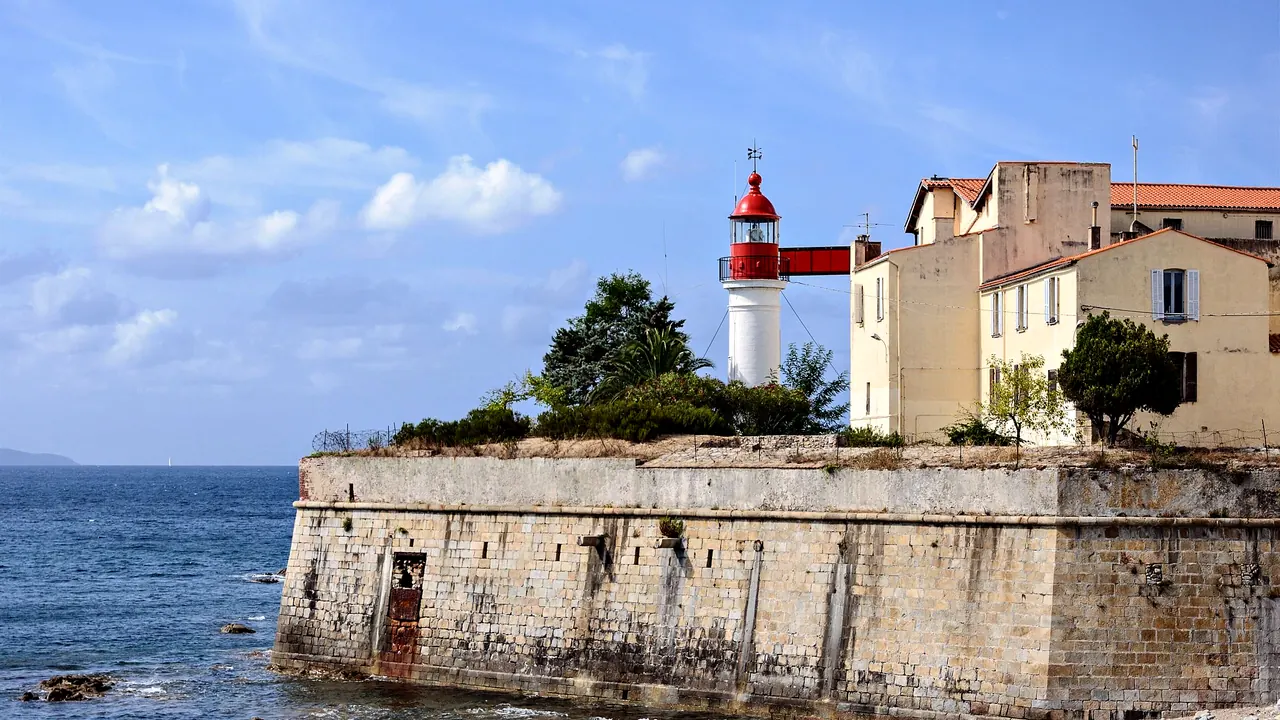
Photos: Corsica by Myrabella, CC BY-SA 3.0, cropped.
Corsica or Umbria?
Our verdict in twelve categories, each scored against the same fixed benchmark cities, and the climate month by month, so you can choose for your trip.
Choose Corsica for
- beaches
- nature and the outdoors
- families
Corsica is the choice for a vacation built around the sea and the mountains. The far south and the Agriates have some of the finest sand and clearest water in the Mediterranean, and behind them rises a granite interior of high peaks, gorges and long trails. It suits travellers who have a car and are happy to settle at one base and spend their days on beaches, boat trips and walks. In return they have to accept high summer prices and slow roads.
Choose Umbria for
- day trips
- culture and sights
- getting around
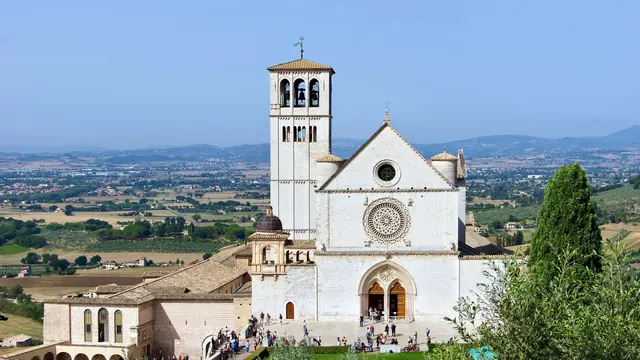
For art, towns and food, Umbria is the stronger choice. Assisi, Orvieto, Perugia and a string of smaller hill towns hold frescoes and cathedrals of the first rank, each a short drive from the next, with truffle cooking and Sagrantino estates in between. It costs less, it is easier to drive and it rewards slow touring by day. Anyone who wants to swim in the sea should look elsewhere.
Scoreboard
Twelve categories on one fixed scale from 0 to 100. The shaded stretch is the gap between the two.
Your match
Pick a travel style or drag the sliders, and both match scores follow your weighting.
Wins on beaches and nature and the outdoors with your weighting.
Wins on day trips and culture and sights with your weighting.
What matters to you?
Category by category
What the scores mean for a trip.
Beaches & swimming
Corsica is one of the Mediterranean's great beach destinations. The far south has pale sand and clear water at Palombaggia, Santa Giulia and Rondinara. In the Agriates, Saleccia and Lotu are reached by boat, and the west coast has granite coves. The famous southern bays fill early in August, so a car helps.
Umbria has no coast at all. You swim at the small beaches on Lake Trasimeno, where the water is warm and shallow but often cloudy, with a muddy bottom in places, or in a farmhouse pool. The sea is at least two hours' drive away.
Food & drink
Both cook hill food built on pork, cheese and game rather than seafood, and neither offers much beyond its own tradition. Corsica's charcuterie, brocciu and chestnut dishes are distinctive and its Patrimonio wines are serious, and its coast adds grilled fish and lobster, which Umbria lacks. But the best meals are in inland inns and markets, and summer beach menus are often ordinary.
Umbria does country cooking with more depth. It has black truffle on handmade strangozzi, Norcia's butchery and Castelluccio lentils. Its wine is a reason to come in itself: Sagrantino around Montefalco and the whites of Orvieto. Perugia has the widest choice of restaurants.
Culture & sights
Corsica's sights are mostly about defence: the forts and towers Genoa built around its shores, Bonifacio's old town on white cliffs above the sea, Calvi's citadel, and Corte, once capital of the island's short-lived independent republic. Ajaccio adds Napoleon's birthplace and the Italian paintings of the Palais Fesch, and Filitosa has carved prehistoric stones. They make good stops on a road trip, but the setting usually matters more than what is inside.
Umbria is in another league for art. Giotto and Cimabue's frescoes line the Basilica of St Francis at Assisi, Signorelli's Last Judgement fills a chapel in Orvieto's cathedral, and Perugia's Galleria Nazionale holds Perugino and Piero della Francesca. Gubbio, Spoleto, Todi and Spello are each worth a day, and the hill towns themselves are the attraction more than any large museum.
Nightlife
Neither suits a big night out, and in both an evening usually means a long dinner and a drink. The difference is when and where. Corsica's livelier nights come in high summer, with large open-air clubs in the hills behind Porto-Vecchio and late beach and harbour bars in Calvi. Umbria's centre on Perugia, where university and language students fill the main street, the cathedral steps and the wine bars of the old town on warm evenings.
Nature & outdoors
Corsica is far more dramatic. Its peaks rise above 2,700m within sight of the sea, and the GR20 runs along the island's spine. The red rocks of the Calanques de Piana, the needles of Bavella and the Scandola cliffs are its high points. The sea adds diving, sailing and kayaking around Scandola and the Lavezzi islands.
Umbria is gentler, with olive groves and oak woods, until the Monti Sibillini rise in the east and the Castelluccio plain flowers in early summer. Rafting in the Valnerina, the Marmore Falls and the Spoleto to Norcia cycle path give it good variety, but on a smaller scale.
Day trips
On Corsica, slow mountain roads give each base only a few outings. From the south you can visit Sartène or take a ferry to Sardinia. Calvi is close to the Balagne villages, Bastia to Cap Corse, and Corte can be reached by the island railway.
Umbria is made for day trips. From Perugia or Spoleto a different hill town fills each day, such as Gubbio, Todi, Spello, Bevagna or Norcia. Cortona, Montepulciano and Siena are within easy reach, and Rome is a little over an hour by train from Orvieto.
Good for families
Corsica is the better pick for children, as long as the trip centres on the beach. Sheltered bays such as Santa Giulia have shallow, calm water, and the east and south coasts have campsites and resort villages with pools. River pools and boat trips to sea caves fill the other days. Winding drives are hard on young passengers, so one base works best.
Umbria offers a quieter version: a farmhouse with a pool and animals, Lake Trasimeno's shallow water, the Marmore Falls and an amusement park near Perugia. But its highlights are frescoed churches and steep cobbled towns, which tire children and are hard work with a pushchair.
Getting around
Both need a car, but Corsica is much harder to get around. Its narrow, winding roads make journeys far longer than the map suggests, and summer traffic slows the coast near the resorts. The narrow-gauge railway between Ajaccio, Corte, Bastia and Calvi is a pleasure in itself, but it misses the south.
Umbria is small and easy to drive, with short distances and light traffic outside Perugia. In the hill towns you park below the walls and ride up by escalator, lift or funicular. Without a car, trains link Perugia, Assisi, Spello and Spoleto, and Orvieto sits on the Rome to Florence line.
Shopping & style
Corsica mostly sells what it eats and drinks: charcuterie, cheese, chestnut flour, honey and island wine, along with hand-forged knives. The morning markets of Ajaccio and Bastia and the craft villages of the Balagne are the places to buy them. A few summer boutiques in Porto-Vecchio and Calvi are about all there is for clothes.
Umbria has more to browse beyond the larder. Deruta's workshops have painted majolica for centuries, Gubbio and Orvieto have their own ceramics, Montefalco and Bevagna weave linen, and there are cashmere outlets around Perugia. Norcia's shops are hung with hams and stocked with truffles, and Perugia's Corso Vannucci has ordinary high-street shops, though there are no luxury streets.
Affordability
Corsica is expensive in the months when people go. Rooms in Porto-Vecchio, Bonifacio and Calvi are dear in July and August, coastal restaurants charge resort prices, and ferries and car hire add up. Campsites, inland villages and a trip in June or September keep costs down.
Umbria is noticeably cheaper. Farmhouse stays and small hotels cost less than across the Tuscan border, set lunches are good value, local wine is cheap and churches cost little to enter. The bill rises with car hire, summer rooms in Assisi and Orvieto, and truffle dishes.
Live music & performing arts
Corsica's most distinctive sound is polyphonic singing, unaccompanied male voices in close harmony, heard in village and town churches mostly in summer. Add the jazz festival in Calvi and guitar evenings in the Patrimonio vineyards, and that is most of the year's offer. There is no opera.
Umbria stages far more, though it too is at its liveliest in summer. In July Umbria Jazz brings big names to Perugia and free bands to its squares, and from late June the Festival dei Due Mondi fills Spoleto's Roman theatre and opera house with opera, theatre and dance. Perugia's Teatro Morlacchi and Spoleto's opera house have seasons outside the festivals.
Wellness & relaxation
In both places rest comes from the slow pace rather than from spas, and neither has a real bathing tradition. In Corsica that means siestas, long lunches and quiet mountain villages. Spas are mostly found in upmarket hotels around Porto-Vecchio, Calvi and Ajaccio.
Umbria offers rest a little more deliberately. Many country houses have pools, massage or yoga, and Assisi's hermitages on Monte Subasio are a place for silence. There are also small, long-established spas at Fontecchio, San Gemini and Nocera Umbra.
When should you go?
Pick your month. The climate figures are measured averages, not a forecast.
Corsica in July
Umbria in July
Daytime high, °C
Rainfall in the month, mm
Where the figures come from
Umbria's temperatures are measured 53 km from the centre, at Frontone.
Umbria has no rain gauge within 25 km of the centre, so its rainfall comes from a gridded climate dataset read at the destination rather than from a gauge further away.
Temperature and rainfall are climate normals, averaged over the years shown. Corsica: 1991-2020 normals, Ajaccio (5.1 km from centre). Umbria: 1991-2020 normals, Frontone (52.9 km from centre).
Corsica is at its best in summer. On the coast where most visitors stay, the sea is warm enough to swim from June to October and reaches about 25°C in August. July is almost rainless, with 9mm, and the days are long and sunny. The heat at low altitude makes high summer better for the beach than for the trails, so walkers do best in May, June and September. Rain arrives with October and peaks in November at 115mm, though coastal winters stay mild.
Umbria's inland climate swings further. Winters are cold for Italy, around 7°C by day in January, so walking the streets is chilly. July reaches 30°C in the valleys, which makes the steep hill towns hard going at midday. April, May and late September into October are the most comfortable months for touring, and autumn brings the heaviest rain. Spring and autumn suit both destinations, but only Corsica has a beach season.
Which traveller are you?
On a beach and sun trip, Corsica is the obvious choice. Palombaggia, Santa Giulia and Rondinara have pale sand and turquoise water, and the Agriates add coves reached by boat. Landlocked Umbria has only the lake beaches of Trasimeno and a farmhouse pool.
For a culture and arts trip, Umbria is the clear pick. Giotto's frescoes in Assisi, Orvieto's cathedral, Perugia's gallery and the summer festivals in Spoleto and Perugia go far deeper than Corsica's citadels, Bonifacio and Napoleon's birthplace.
On a trip on a tight budget, Umbria makes the money go further. Farmhouse stays and village set lunches cost less than in the Tuscan hills, and most churches are cheap or free. Corsica's coast charges resort prices in summer, and ferries and car hire add to the bill.
Before you go
| Measure | Corsica | Umbria |
|---|---|---|
| Official language | French | Italian |
| Currency | Euro (EUR) | Euro (EUR) |
| Sockets | CE230 V, 50 Hz | CFL230 V, 50 Hz |
| Driving side | Right | Right |
| Time zone | UTC+1, UTC+2 in summer | UTC+1, UTC+2 in summer |
| Emergency number | 112 | 112 |
| Main airport | Ajaccio Napoléon Bonaparte airport (AJA)29 non-stop destinations | Perugia San Francesco d'Assisi – Umbria International Airport (PEG)17 non-stop destinations |
| Public holidays this year | 11 days | 13 days |
By the numbers
| Measure | Corsica | Umbria |
|---|---|---|
| Population | 355,486 | 852,085 |
| People per km² | 41 | 101 |
| Swim season, months above 21 °C | 4 months | - |
Where else could you go?
Every comparison below shares a destination with this one, so you can follow Corsica or Umbria somewhere new.
- Tuscanyvs Umbria
- Sardiniavs Corsica
- French Rivieravs Corsica
- Cinque Terrevs Umbria
- Cinque Terrevs Corsica
- Tuscanyvs Corsica