Denmark
Copenhagen
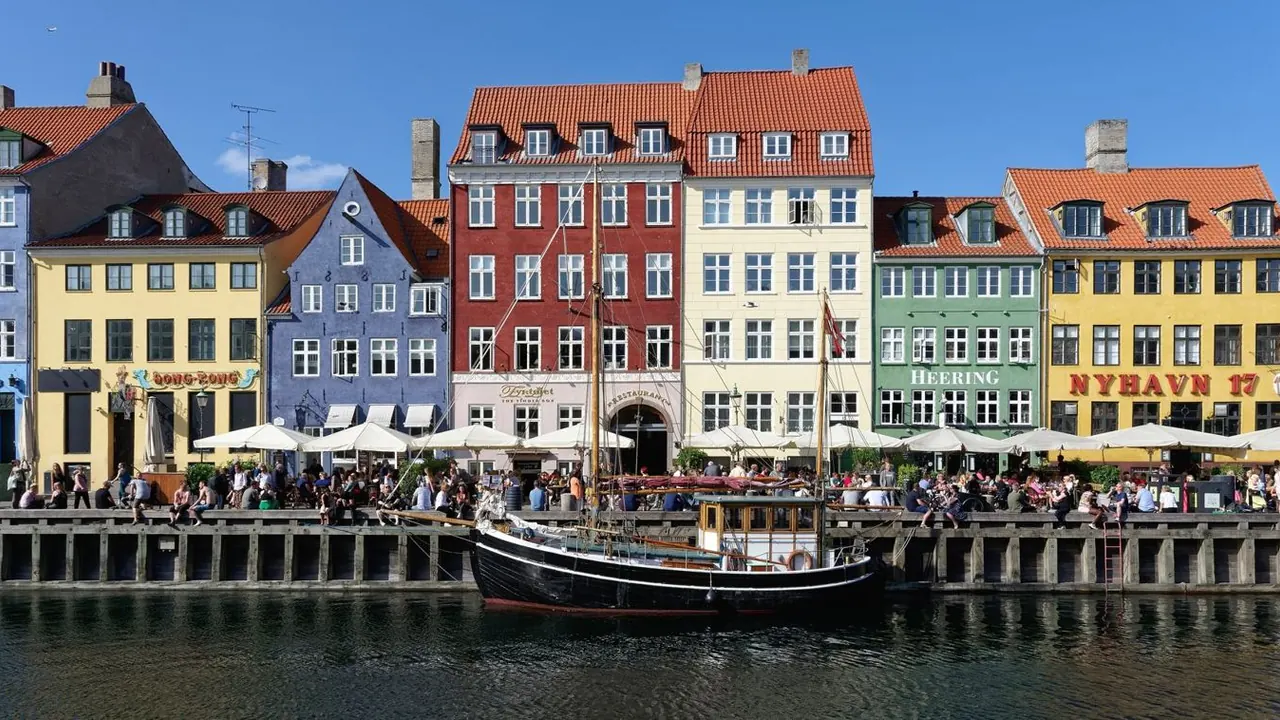
Nyhavn
- Families85
- Getting around85
- Food & drink76
Photo: Jakub Hałun, CC BY-SA 4.0, cropped
Match
62
Every category weighted equally
- Beach & sun57
- Culture & arts67
- Food & nightlife65
- Family trip61
- Outdoors59
- Relax & unwind59
- Shopping & style67
- On a budget57
Copenhagen in twelve categories
Our verdict on each, scored 0 to 100 against the same fixed benchmark cities, so a score means the same thing on every page.
Beaches & swimming. Scores 40 out of 100.
Food & drink. Scores 76 out of 100.
Culture & sights. Scores 72 out of 100.
Nightlife. Scores 60 out of 100.
Nature & outdoors. Scores 45 out of 100.
Day trips. Scores 72 out of 100.
Good for families. Scores 85 out of 100.
Getting around. Scores 85 out of 100.
Shopping & style. Scores 70 out of 100.
Affordability. Scores 18 out of 100.
Live music & performing arts. Scores 68 out of 100.
Wellness & relaxation. Scores 55 out of 100.
Copenhagen category by category
Beaches & swimming
40Copenhagen's swimming is unusual. The harbour water is clean enough to bathe in, and wooden harbour baths at Islands Brygge and along the quays let people jump in during a lunch break. Amager Strandpark, a long man-made beach with a lagoon, is a few metro stops from the centre, and Bellevue to the north is a classic Øresund beach with whitewashed lifeguard towers.
The water rarely gets above about 18-20°C in late summer, the season runs from roughly June to August, and the beaches are flat and sandy rather than dramatic. Swimming here is something you add to a summer city break. Nobody comes for a beach vacation.
Food & drink
76Copenhagen is one of the places where Nordic cooking was redefined, and its fine-dining tier, built on foraging, fermentation and local produce, is a reason in itself for some travellers to come. Below that sits a deep everyday culture. Open-faced smørrebrød on dense rye is the classic lunch, bakeries turn out cardamom buns and cinnamon swirls on almost every corner, and the Torvehallerne market halls near Nørreport gather produce, fish and coffee stalls under one roof.
Natural wine bars, serious coffee roasters and craft breweries fill Vesterbro and Nørrebro, and harbourside street-food markets serve a looser, cheaper crowd in summer. The pølsevogn hot-dog stand is the city's own street snack. Eating well is easy, though nothing about it is cheap.
Culture & sights
72The city's heritage is royal and maritime. Rosenborg Castle holds the crown jewels in a Renaissance palace inside the King's Garden, Amalienborg's four rococo palaces frame the changing of the guard, and Christiansborg on Slotsholmen houses parliament above medieval ruins. The colourful gabled houses of Nyhavn, the Round Tower with its spiral ramp and the twisting spire of Vor Frelsers Kirke in Christianshavn give the skyline its shape.
The museums are strong rather than world-famous: the National Museum for Danish history and Vikings, the National Gallery (SMK) and the Ny Carlsberg Glyptotek with its winter garden and antique sculpture. Danish design and modern architecture are a sight in themselves along the harbour. Three or four days covers it well.
Nightlife
60Weekend nights run late here, with many bars open until the small hours and clubs going until morning. The old Meatpacking District, Kødbyen, in Vesterbro is the main hub, with converted butchers' halls turned into bars and small clubs. Nørrebro's Blågårdsgade and Jægersborggade have a younger, scruffier bar crowd, and the cocktail scene around the centre is genuinely good.
In summer people drink by the harbour and on the canalside at Nyhavn and Christianshavn into the light evenings. Weeknights are much quieter, drinks are expensive, and the club scene is respectable rather than a reason to travel.
Nature & outdoors
45The landscape is flat and gentle. Dyrehaven, a former royal hunting forest north of the city, has hundreds of free-roaming deer among old oaks, and the coast road towards Helsingør makes an easy, scenic cycle ride along the Øresund. Amager Fælled, a large stretch of open common, and the lakes and ramparts around the centre give room for running and walking.
Kayaking and stand-up paddling in the harbour and canals are popular in summer. The chalk cliffs of Møns Klint, roughly two hours south, are the nearest dramatic scenery. There are no hills to climb, and the weather is cool and grey for much of the year.
Day trips
72North Zealand is the classic outing. Kronborg, the Renaissance castle at Helsingør that inspired Hamlet's Elsinore, is under an hour by train. Frederiksborg, a moated red-brick palace in Hillerød, and the Louisiana museum of modern art on the coast at Humlebæk can be combined on the same line. Roskilde, about half an hour west, has the royal burial cathedral and the Viking Ship Museum by the fjord.
Across the Øresund Bridge, Malmö is about half an hour away by train, and the medieval university town of Lund just beyond it, so a day in Sweden is easy. Closer in, the cobbled fishing village of Dragør near the airport makes a quiet half day.
Good for families
85Few capitals are this easy with children. Tivoli Gardens, an amusement park from 1843 right beside the central station, has old wooden rides, gardens and evening lights. The National Aquarium, Den Blå Planet, sits near the airport, and the zoo in Frederiksberg is large and well kept. Experimentarium, a hands-on science centre, and Bakken, an old fairground in Dyrehaven, are a short train ride north.
Daily life is set up for families: playgrounds in every park, prams on buses and trains, child-friendly cafés and calm streets that feel safe at any hour. Families cycle everywhere with children in cargo bikes. What it lacks is a big theme-park resort, and the weather limits outdoor days.
Getting around
85The centre is compact and flat, so most sights from Nyhavn to Rosenborg are a short walk apart. The driverless metro runs around the clock and links the airport to the centre in about a quarter of an hour, and S-trains, buses and yellow harbour buses share one ticket system.
Cycling is the local way to move, on wide, separated lanes with their own traffic lights, and renting a bike is the best way to see the city as residents do. Visitors should learn the hand signals and keep out of the bike lanes on foot. A car is never needed, and parking is scarce and costly.
Shopping & style
70Design is what Copenhagen sells best. Furniture, lighting, ceramics and homeware shops cluster around the centre, and Royal Copenhagen porcelain has its flagship on Amagertorv. The pedestrian street Strøget runs from City Hall Square to Kongens Nytorv with chains at one end and luxury labels at the other, and the old department stores Illum and Magasin du Nord are institutions.
For independent Scandinavian fashion and vintage, the side streets of the Latin Quarter and Jægersborggade in Nørrebro are better. Markets are a weak point beyond seasonal flea markets, and luxury fashion is limited, so this suits a design hunter more than a dedicated fashion shopper.
Affordability
18Copenhagen is one of the most expensive cities in Europe. Hotel rooms are costly even in the mid-range, eating out costs a lot at every level, and beer and wine in bars add up quickly. Transport is reasonable and many sights, from Nyhavn to the harbour baths and parks, cost nothing.
To keep costs down, visitors rely on bakeries and supermarkets for breakfast and lunch, picnics by the lakes and canals, and bicycles instead of taxis. A city pass helps if you plan to see many museums.
Live music & performing arts
68The Royal Danish Theatre spans three stages: the harbourfront Opera House, the Old Stage on Kongens Nytorv and the Playhouse by the water. The Royal Danish Ballet, one of the oldest in the world, keeps the Bournonville tradition alive. DR Koncerthuset, home of the Danish National Symphony Orchestra, is an acoustically outstanding hall in Ørestad.
Jazz has deep roots here, with small clubs in the centre, and the Copenhagen Jazz Festival takes over squares and courtyards every July. Rock and pop venues in Vesterbro and Nørrebro draw touring bands, and Tivoli's open-air stage hosts concerts in summer. Most theatre is in Danish, so visitors lean towards music and dance.
Wellness & relaxation
55Copenhagen's bathing culture is Nordic rather than thermal: wood-fired saunas floating in the harbour and on the beaches, followed by a plunge into cold water, a ritual locals keep up all winter. The harbour baths and the sea baths at Kastrup and Amager Strandpark are part of this, along with a handful of hotel and day spas.
The pace helps too. The city is calm, quiet and orderly, people take time over coffee, and the lakes, palace gardens and canals invite slow afternoons. There are no hot springs or historic thermal baths, so this suits travellers who enjoy hot and cold bathing rather than pampering.
When should you go?
Pick a month to see what it is like. The climate figures are measured averages, not a forecast.
Copenhagen in July
Daytime high, °C
Rainfall in the month, mm
The whole year
Shaded against this city’s own year: the deepest cell is its best month for that figure and the palest its weakest.
Temperature and rainfall are climate normals, averaged over the years shown. Copenhagen: 1991-2020 normals, Koebenhavn / Landbohoejskolen (2.4 km from centre).
Before you go
| Measure | Copenhagen |
|---|---|
| Official language | Danish |
| Currency | Danish Krone (DKK) |
| Sockets | CEFK230 V, 50 Hz |
| Driving side | Right |
| Time zone | UTC+1, UTC+2 in summer |
| Emergency number | 112 |
| Elevation | 14 m |
| Main airport | Copenhagen Kastrup Airport (CPH)8 km from centre196 non-stop destinations |
| Public holidays this year | 14 days |
By the numbers
| Measure | Copenhagen |
|---|---|
| City population | 667,099 |
| People per km² | 7,339 |
| Museums within 10 km | 72 |
| UNESCO World Heritage sites within 50 km | 5 |
| Swim season, months above 21 °C | None |
Compare Copenhagen with
Every comparison with a written verdict behind it.