Dolomites or French Alps?
Our verdict in twelve categories, each scored against the same fixed benchmark cities, and the climate month by month, so you can choose for your trip.
Choose Dolomites for
- getting around
- food and drink
- families
The Dolomites suit walkers more than anything. The pale limestone towers rise above meadows you can cross with small children, lifts leave from almost every village, and lunch on a hut terrace comes with Italian coffee and South Tyrolean wine. Buses and valley trains reach most resorts, so you can manage without a car. Nights are quiet, which is good for anyone who wants an early start and a calm evening, and less good for anyone who doesn't.
Choose French Alps for
- nightlife
- beaches
- wellness
Pick the French Alps if you want a summer by a lake as well as time in the mountains, or a ski week with a real party at the end of each day. Annecy's clear water and grassy shores give you swimming the Dolomites can't match, and the big Tarentaise resorts keep going well past midnight. The region also has old spa towns such as Aix-les-Bains and Évian, Mont Blanc's glaciers above Chamonix, and Geneva and Lyon close enough to visit.
Scoreboard
Twelve categories on one fixed scale from 0 to 100. The shaded stretch is the gap between the two.
Your match
Pick a travel style or drag the sliders, and both match scores follow your weighting.
Wins on getting around and food and drink with your weighting.
Wins on nightlife and beaches with your weighting.
What matters to you?
Category by category
What the scores mean for a trip.
Beaches & swimming
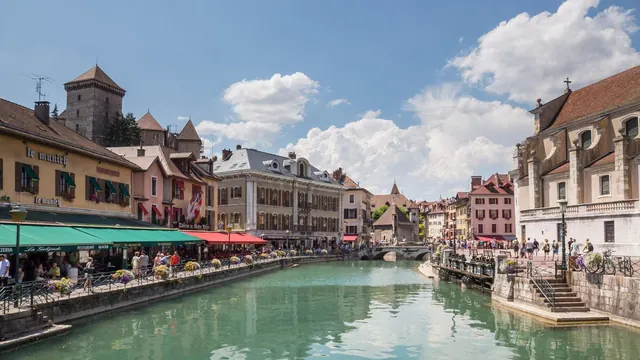
For swimming, the French Alps are clearly ahead. Lake Annecy is the main reason. The water is clear and warm in high summer, and you swim from grassy lawns and jetties at Talloires, Sévrier and Menthon-Saint-Bernard. Lac d'Aiguebelette and Lac du Bourget are quieter alternatives, and the shore of Lake Geneva at Évian has pebbly lidos.
In the Dolomites you have to plan for it. Braies and Misurina stay cold, so the bathing is down at Lake Caldaro on the wine route, in valley pools, or an hour's drive away at Riva on Lake Garda.
Food & drink
The two are close, but the cooking is different. The Dolomites sit where Alpine and Italian food meet. You get dumplings, speck and strudel, then a proper espresso, plus Ladin dishes in Gardena and Badia and polenta and trout in Trentino. Autumn Törggelen evenings with new wine and chestnuts are a reason to visit in their own right.
Savoy leans much more on cheese. Fondue, raclette and tartiflette are made with Beaufort and Reblochon bought from Aravis farms, and lake perch and Savoie white wine add some variety. Both regions have unusually good top-end kitchens: Alta Badia in the Dolomites, Annecy's lakeshore and Courchevel in France. Below that level, French resort menus can feel repetitive sooner.
Culture & sights
Neither region is a trip for sights alone, and they are evenly matched. The Dolomites' valley towns are medieval and church-centred: Bolzano's arcades and Ötzi the Iceman, the frescoed rooms of Trento's castle, Bressanone's cloister and Novacella Abbey. First World War tunnels on the high passes add history you won't find on the French side.
The French Alps offer more variety. Annecy's canals and island prison are among the prettiest old towns in the Alps, Chambéry was the ducal capital of Savoy, Grenoble has a serious fine-arts museum, and Briançon is ringed by Vauban's star-shaped walls.
Nightlife
The French Alps win clearly here, at least in winter. Val d'Isère, Val Thorens and Méribel go from dancing on the tables at slope-side restaurants to clubs open into the small hours. Chamonix mixes climbers with seasonal workers, and in summer Annecy's lakeside terraces and Grenoble's student bars keep some life going.
Après-ski in the Dolomites, in Selva, Canazei or Cortina, mostly ends by early evening. In summer most villages are asleep by eleven.
Nature & outdoors
Both are among the finest mountain landscapes on earth, and the difference lies in the scenery itself. The Dolomites are pale limestone towers rising out of green pasture, such as the Tre Cime, the Sassolungo and Seceda. The Alpe di Siusi gives walking that is unusually gentle for such scenery. For more height and exposure, the via ferrata cables, many first laid in the First World War, let non-climbers onto the high rock.
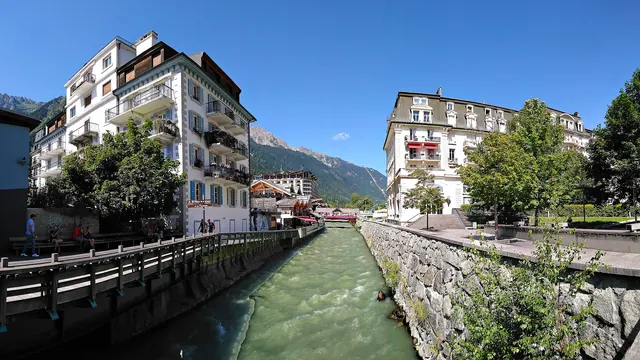
The French Alps are higher and covered in more ice. The cable car to the Aiguille du Midi takes you among glaciers and granite below Mont Blanc, and the Vanoise and Écrins parks have ibex and wild passes. Skiers can choose between the Sella Ronda in the Dolomiti Superski area and the huge linked areas of the Tarentaise, where the high glacier skiing is snow-sure.
Day trips
Day trips are about even, and the destinations show the difference. From Bolzano you can reach Merano, the wine villages of Caldaro and Termeno, Verona by train and Innsbruck over the Brenner, which gives the Dolomites an Italian and Austrian mix.
The French Alps look towards Switzerland and Lyon. Geneva is under an hour from Annecy, ferries cross Lake Geneva to the Lavaux vineyards, and the Mont Blanc tunnel takes you to Aosta. In both regions, a base high in a resort valley means most of the day goes on the road.
Good for families
Both work well for families, but each is at its best in a different season. The Dolomites are strongest in summer. The Alpe di Siusi and the Armentara meadows have wide, nearly flat paths, many huts have playgrounds and farm animals, and plenty of hotels run children's clubs.
The French Alps are stronger on skis. The ski schools are built around young children, and in car-free resorts such as Avoriaz and Flaine you can walk from the apartment to the nursery slope. In summer, the rack railway to the Mer de Glace and Annecy's shallow lake beaches help too. Neither region has theme parks for rainy days.
Getting around
The Dolomites are easier without a car. In South Tyrol, valley trains and buses that climb to the resorts and over the passes share one regional pass. The main gaps are Cortina, which has no station, and the slow hairpin roads between valleys.
In the French Alps the journey in takes more work: a flight into Geneva, Lyon or Grenoble, then a transfer, with long Saturday queues up the Tarentaise in winter and snow chains on many approach roads. Trains reach Annecy, Bourg-Saint-Maurice and Chamonix, but buses to the higher villages are patchy, so in summer a car makes much more sense.
Shopping & style
Both are about level, with specialist shopping rather than broad choice. The Dolomites are better for crafts and Christmas. Ortisei's woodcarvers, Bolzano's arcaded shops selling loden, and the Advent markets in Bolzano, Merano and Brunico are the highlights.
The French Alps are better for equipment. Chamonix is one of Europe's best places to buy climbing and ski gear, and an Opinel knife or a wheel of Beaufort makes a lasting souvenir. Both have a small luxury strip, Cortina in the Dolomites and Courchevel and Megève in France, and Geneva is close for anything more.
Affordability
Neither is cheap, and the cost comes from the same things: lift passes, peak weeks and smart resorts such as Cortina, Alta Badia or Courchevel. What differs is how you save. In the Dolomites, half-board hotels, the cheaper Fassa and Fiemme valleys, and June or September stays bring costs down. In the French Alps, the savings come from self-catering apartments in purpose-built resorts, quiet weeks in January, and staying in Grenoble or the Bauges villages. Annecy in high summer is dearer than its size suggests.
Live music & performing arts
Neither region has a busy performance calendar, and both have a year-round programme in their towns. In the Dolomites, Bolzano has an orchestra season, a municipal theatre and a long-established piano competition, and Trento offers something similar. The summer settings are more unusual than anything in France. Trentino's mountain festival puts musicians on meadows and hut terraces, a jazz festival plays in castles and wineries, and Merano holds autumn concerts in its old spa halls.
In the French Alps the year-round programme centres on Grenoble's arts centre and its chamber orchestra. In summer the music moves to the lakes, with the long-running chamber music gatherings at Évian, and to open-air festivals in Chamonix. In the ski season it is mostly bands in après-ski bars, so for opera you go to Lyon or Geneva.
Wellness & relaxation
The French Alps have a modest edge, thanks to a long tradition of public spa towns. Aix-les-Bains and Évian have Belle Époque spa buildings and lakeside promenades, Saint-Gervais has thermal baths in a gorge below Mont Blanc, and in small towns such as Brides-les-Bains the cure is the whole point of the stay.
In the Dolomites, outside Merano's thermal baths, wellness means the hotel spa. South Tyrol does it with real care, with outdoor pools in the snow and the hay baths of Völs am Schlern. The quiet nights also make it calmer than a French resort in full ski season.
When should you go?
Pick your month. The climate figures are measured averages, not a forecast.
Dolomites in July
French Alps in July
Daytime high, °C
Rainfall in the month, mm
Where the figures come from
French Alps's temperatures are measured 35 km from the centre, at Bourg-St-Maurice.
French Alps's station stands 179 m below the place it is measured for, so that place is likely a little cooler than the figures say.
French Alps has no rain gauge within 25 km of the centre, so its rainfall comes from a gridded climate dataset read at the destination rather than from a gauge further away.
Temperature and rainfall are climate normals, averaged over the years shown. Dolomites: 1991-2020 normals, Dobbiaco (22.3 km from centre). French Alps: 1999-2020 (rainfall 1991-2020) normals, Bourg-St-Maurice (35.1 km from centre).
The two climates run almost opposite to each other. In the Dolomites, winter is cold and very dry. Daytime highs sit around freezing in January, with only about 23mm of rain that month. Summer is short and mild, peaking at about 22°C, and it is also the wettest part of the year, with July the wettest month at about 130mm. Lake Caldaro and the valley pools are only worth a swim from June to August. For walking, June and September give comfortable temperatures with less rain than high summer.
The French Alps are warmer all year and wet in every month. July reaches about 27°C, which is warm enough for Lake Annecy from late June to early September and still pleasant for walking around town. Rain never stops for long, and the wettest month is December, at about 169mm. Spring and autumn are milder than in the Dolomites. May and October are both comfortable for walking, so the French season for walking around town and lake starts earlier and runs later.
Which traveller are you?
On a beach and sun trip, the French Alps win, if a lake can stand in for the sea. From a base in Annecy you can swim, watch paragliders over the water and eat by the shore. In the Dolomites you would have to stay low near Bolzano or Trento and visit the peaks by day.
For a food and nightlife trip, the French Alps suit anyone who wants dinner to become a late night. In a winter resort a slow fondue leads on to Génépi and dancing, and Courchevel offers the glossy version. In the Dolomites the meal is the evening, perhaps ending with a glass of Lagrein in a Bolzano wine bar.
On an outdoors trip without a car, the Dolomites have the edge if you stay in one valley. In Val Gardena, local buses and lifts reach the Alpe di Siusi and Seceda. Glacier climbers will prefer Chamonix, but summer in the French Alps works better with a car.
Before you go
| Measure | Dolomites | French Alps |
|---|---|---|
| Official language | Italian | French |
| Currency | Euro (EUR) | Euro (EUR) |
| Sockets | CFL230 V, 50 Hz | CE230 V, 50 Hz |
| Driving side | Right | Right |
| Time zone | UTC+1, UTC+2 in summer | UTC+1, UTC+2 in summer |
| Emergency number | 112 | 112 |
| Main airport | Venice Marco Polo Airport (VCE)103 non-stop destinations | Geneva International Airport (GVA)150 non-stop destinations |
| Public holidays this year | 13 days | 11 days |
Where else could you go?
Every comparison below shares a destination with this one, so you can follow Dolomites or French Alps somewhere new.
- Austrian Alpsvs Dolomites
- Swiss Alpsvs French Alps
- Lake Gardavs Dolomites
- Bavariavs Dolomites
- Lake Comovs French Alps
- Lake Comovs Dolomites