Dordogne or French Riviera?
Our verdict in twelve categories, each scored against the same fixed benchmark cities, and the climate month by month, so you can choose for your trip.
Choose Dordogne for
- prices
- day trips
- families
Choose the Dordogne for a slower, rural trip built around history and food. Painted caves and rock shelters in the Vézère valley, castles facing each other across the river, Sarlat's golden-stone old town and weekly markets fill a week easily. You stay in a rented house or gîte, drive between sights and spend evenings over a long dinner. It costs less than the coast and suits families with school-age children, but it has no sea and no nightlife.
Choose French Riviera for
- nightlife
- beaches
- shopping
The French Riviera is the better pick if you want the Mediterranean as well as sightseeing. It has sandy and pebble beaches, clear coves in the Esterel, the Matisse, Chagall and Picasso museums, and mountain walking within reach of Nice. Trains along the shore mean you can manage without a car, summer evenings run late, and Monaco adds opera and ballet. The trade-off is cost and summer crowds, which are heavier here than in the Dordogne.
Scoreboard
Twelve categories on one fixed scale from 0 to 100. The shaded stretch is the gap between the two.
Your match
Pick a travel style or drag the sliders, and both match scores follow your weighting.
Wins on prices and day trips with your weighting.
Wins on nightlife and beaches with your weighting.
What matters to you?
Category by category
What the scores mean for a trip.
Beaches & swimming
This is where the two differ most. In the Dordogne, swimming means gravel banks on the Dordogne and Vézère below villages like La Roque-Gageac, or the small supervised lakes at Rouffiac and Gurson. It is a pleasant summer afternoon, but many visitors end up using the pool at their rented house, and the Atlantic is about three hours away.
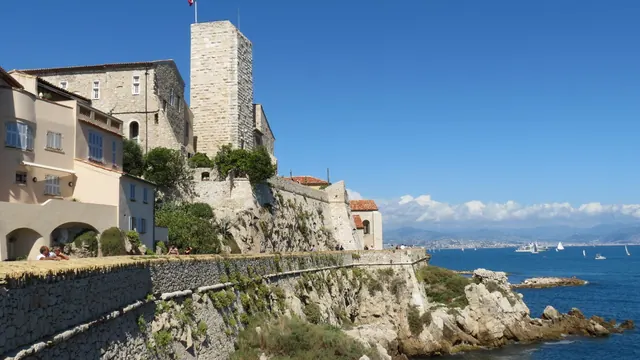
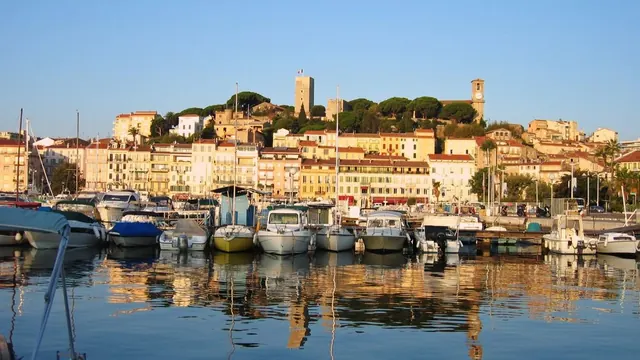
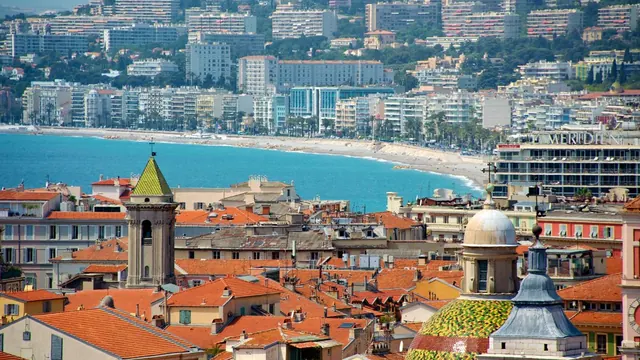
The Riviera is a proper beach destination. You can choose between the pebble beaches of Nice and Menton, the sand at Cannes, Juan-les-Pins and Pampelonne, and the clear red-rock coves of the Esterel. Private beach concessions and summer crowds are the drawbacks.
Food & drink
Both regions eat very well, but the Riviera has more range. The Dordogne's table is duck and goose, walnuts, cèpes and winter truffles, with Sarlat's Saturday market as its high point and Bergerac and Monbazillac wines from the estates. After a week, though, the menus start to repeat.
On the coast, Nice has its own cuisine of socca, pissaladière and daube with ravioli, close to the cooking of Liguria. The stretch from Menton to Cannes also has a high density of serious restaurants. Avoid the seafront set menus and eat a street or two inland.
Culture & sights
The two are level, but the history they offer is completely different. The Dordogne's strengths are prehistory and the Middle Ages: the Lascaux replica, Font-de-Gaume and the museum at Les Eyzies, the castles of Beynac and Castelnaud, and bastide towns such as Monpazier.
The Riviera's strength is twentieth-century art made where you see it, in the Matisse chapel in Vence, the Picasso collection in Antibes and the Fondation Maeght. Around that you have Nice's baroque and Belle Epoque streets and Monaco's palace and casino.
Nightlife
There is effectively no nightlife in the Dordogne. The liveliest evenings are summer night markets and village fêtes with a dance floor in the square, and Périgueux and Bergerac have only a handful of bars.
The Riviera has real nights out, mostly from June to September. You can choose between table-service clubs in Saint-Tropez and Monaco, the late strip at Juan-les-Pins, or the pubs and wine bars of Nice's old town, which stay open year-round thanks to its students.
Nature & outdoors
The Riviera's landscape is more dramatic. Mountains drop to the sea, coastal paths circle the capes, the Esterel's red rock offers walking and kayaking, and the high trails of the Mercantour are about an hour and a half from Nice. Summer heat and wildfire closures can shut some areas.
The Dordogne is gentle, farmed countryside of limestone cliffs, oak woods and walnut orchards. It is best seen by canoe past the river castles, or on foot and by bike along quiet lanes and the greenway near Sarlat. It is lovely, but there is nothing wild enough to hold a keen hiker.
Day trips
Both regions give you a week of easy outings. From the Dordogne they are drives to places with a strong identity: Rocamadour on its cliff, Saint-Cirq-Lapopie in the Lot valley, red-stone Collonges-la-Rouge, and Saint-Émilion or Bordeaux from the Bergerac side.
From a base in Nice, the coastal train reaches Villefranche, Monaco and Menton in well under an hour, and Italy's Dolceacqua and Sanremo are just across the border. The Riviera has a wider mix of towns, but many days are spent on yet another hill village.
Good for families
Both regions work for families, but they suit children of different ages. The Dordogne is best for eight-to-fourteen-year-olds, with gentle canoe trips, siege engines and armour at Castelnaud, and caves that bring prehistory to life. Toddlers have less to do there.
The Riviera's gently shelving sand at Juan-les-Pins, Cannes and Fréjus suits younger children better, and the Monaco aquarium and Parc Phoenix add rainy-day options. In both regions, steep steps defeat pushchairs and July and August are hot.
Getting around
In the Dordogne you need a car. Trains reach only Périgueux, Bergerac and Sarlat, and village buses are sparse. The roads are quiet except in midsummer, when the riverside road through Beynac backs up.
The Riviera is far easier without a car. The shore railway links Cannes, Antibes, Nice, Monaco and Menton, and Nice has a tram to the airport. Hill villages and Saint-Tropez are harder to reach, and a car becomes a burden once you try to park in the resorts.
Shopping & style
Shopping in the Dordogne is mostly about what you can fit in the car boot: foie gras, confit in jars, walnut oil and estate wines from the markets at Sarlat, Issigeac and Ribérac, plus summer brocantes. There is no fashion or design shopping to speak of.
The Riviera has luxury boutiques on the Croisette and around the Monte-Carlo casino, and Nice has department stores. It also has distinctive local crafts: perfume in Grasse, bubbled glass in Biot and pottery in Vallauris.
Affordability
The Dordogne is the cheaper of the two, with rural French prices, village lunch menus and plenty of campsites and simple gîtes. Houses with pools near Sarlat are dear in high summer, and entry fees to caves and castles add up for a family.
The Riviera is expensive, especially in Saint-Tropez, Monaco and Cannes, where sunbeds and seafront lunches quickly push up the bill. Nice is the sensible base, and the cheap regional trains and free coastal paths help. In both regions, June and September are noticeably cheaper.
Live music & performing arts
The Riviera has the far stronger programme. Monte-Carlo has a small gilded opera house, a philharmonic and a ballet company, and Nice has its own opera house and orchestra. In summer, the jazz festivals in the pine grove at Juan-les-Pins and on Place Masséna in Nice add more.
The Dordogne's live performance comes almost entirely in summer. Sarlat has its theatre festival, Périgueux its mime and street-theatre festival, and the Festival du Périgord Noir puts classical concerts in Romanesque churches. Out of season there is very little to see.
Wellness & relaxation
The Riviera has more to offer here, with a long tradition of thalassotherapy in Monaco and on the capes, and large hotel spas in quiet gardens on Cap Ferrat and Cap d'Antibes. The resorts are too loud for real rest in July and August.
The Dordogne has no spa culture beyond a few château hotels. It relaxes you through its pace instead: pool afternoons at a stone farmhouse and empty lanes in the Périgord Vert, especially in late spring and September.
When should you go?
Pick your month. The climate figures are measured averages, not a forecast.
Dordogne in July
French Riviera in July
Daytime high, °C
Rainfall in the month, mm
Temperature and rainfall are climate normals, averaged over the years shown. Dordogne: 1991-2020 normals, Gourdon (21.2 km from centre). French Riviera: 1991-2020 normals, Nice (9.8 km from centre).
The two regions share almost the same summer highs, about 28°C in July and August, so the difference is rain and sunshine. Around the main resorts on the Riviera, summer is very dry and very sunny. The sea is warm enough to swim in from June to early October and reaches about 25°C in August. The rain comes in autumn, and October and November are the wettest months, with close to 140mm in November. Winters there are mild enough for walking the old towns in comfort.
The Dordogne's rain is spread through the year, with the wettest spells in April and May. Summer has less sunshine than the coast but is still bright and warm, and it is the season for river swimming. Spring and September are the best months for walking and touring the villages. Winter is cold, with highs around 9°C, which is fine for truffle markets but quiet for anything else.
Which traveller are you?
On a beach and sun trip, choose the French Riviera. It has sandy bays at Cannes, Juan-les-Pins and Pampelonne, clear coves in the Esterel and a sea warm enough to swim in into October. In the Dordogne, swimming means river gravel banks and small lakes.
On a tight budget, the Dordogne goes further. Lunchtime set menus in the villages, market produce, wine bought from the grower and plenty of campsites keep costs moderate. The Riviera is among Europe's dearest places in summer, although its cheap trains help.
For a food and nightlife trip, the Riviera is the stronger choice. You get Niçois cooking and serious tables from Menton to Cannes, followed by wine bars in Nice's old town or clubs in Saint-Tropez and Juan-les-Pins. The Dordogne eats well, but its villages are asleep by eleven.
Before you go
| Measure | Dordogne | French Riviera |
|---|---|---|
| Official language | French | French |
| Currency | Euro (EUR) | Euro (EUR) |
| Sockets | CE230 V, 50 Hz | CE230 V, 50 Hz |
| Driving side | Right | Right |
| Time zone | UTC+1, UTC+2 in summer | UTC+1, UTC+2 in summer |
| Emergency number | 112 | 112 |
| Main airport | Bergerac Dordogne-Périgord airport (EGC)9 non-stop destinations | Nice-Côte d'Azur Airport (NCE)130 non-stop destinations |
| Public holidays this year | 11 days | 11 days |
By the numbers
| Measure | Dordogne | French Riviera |
|---|---|---|
| Population | 417,614 | - |
| People per km² | 46 | - |
| Swim season, months above 21 °C | - | 4 months |
Where else could you go?
Every comparison below shares a destination with this one, so you can follow Dordogne or French Riviera somewhere new.
- Provencevs French Riviera
- Cinque Terrevs French Riviera
- Corsicavs French Riviera
- French Alpsvs French Riviera
- Loire Valleyvs Dordogne
- Lake Comovs French Riviera