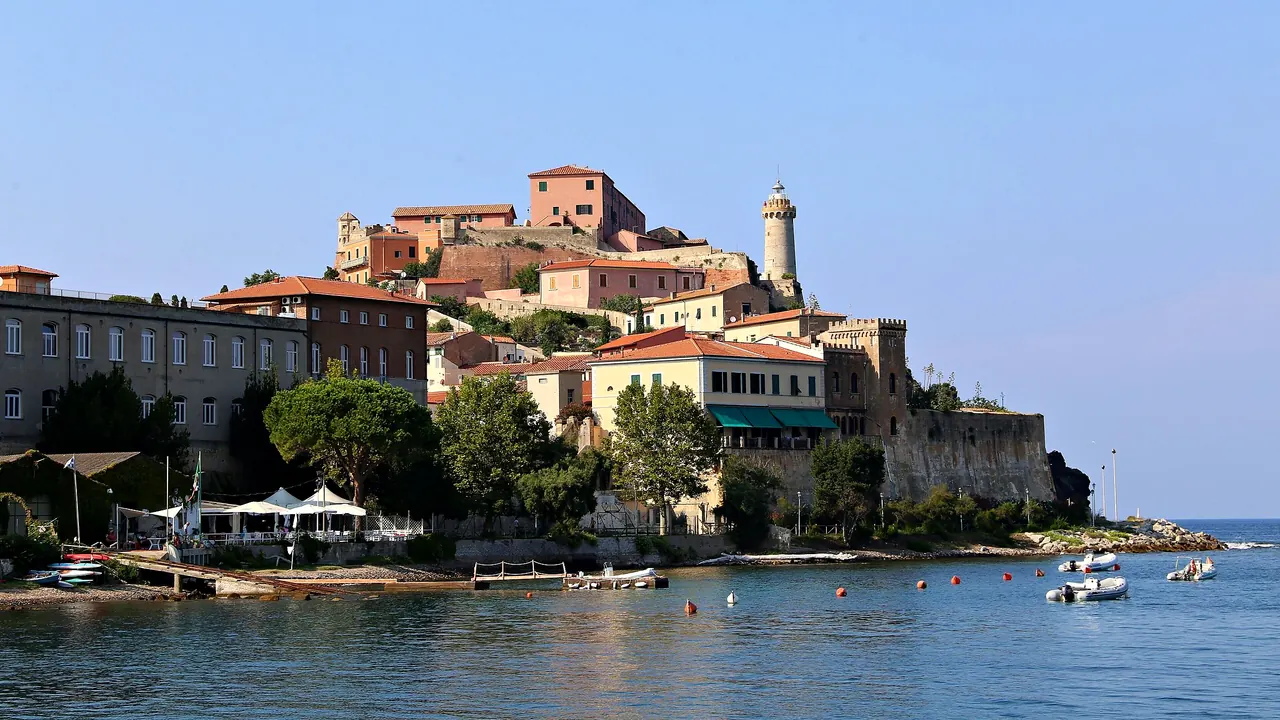
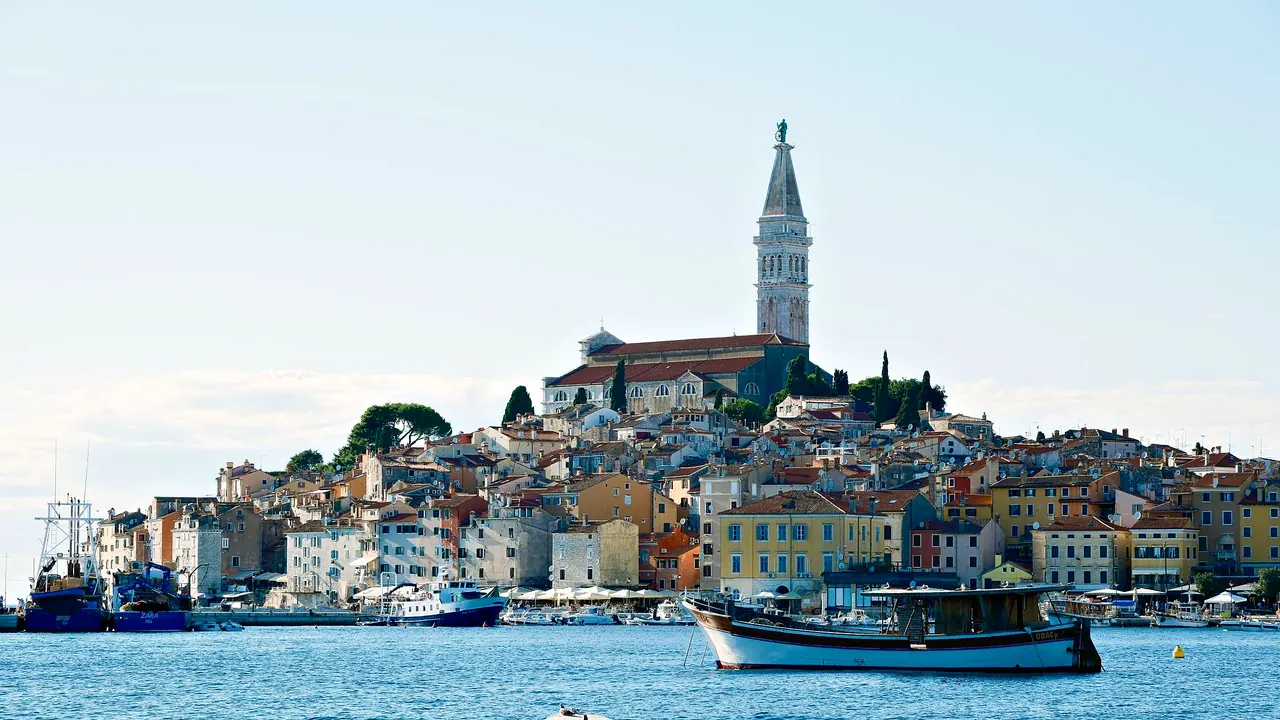
Photos: Elba by Sailko, CC BY 3.0, cropped; Istria by Ramon Karolan, Pexels License.
Elba or Istria?
Our verdict in twelve categories, each scored against the same fixed benchmark cities, and the climate month by month, so you can choose for your trip.
Choose Elba for
- beaches
- nature and the outdoors
Elba is the island for a beach vacation and not much else, and that is what it does well. The sandy granite bays of the south-west and the long, gently shelving beaches at Marina di Campo and Lacona beat Istria's rocky shoreline for lying on the sand and paddling with small children. Mount Capanne and the national park trails fill the days off the beach. Pick it if you want to settle in one place, swim every day and keep the evenings to a late dinner in a hill village.
Choose Istria for
- day trips
- culture and sights
- food and drink
Istria gives you more to do. Its truffle and wine country inland, the Roman Arena at Pula, the Euphrasian mosaics at Poreč and a string of walled hill towns turn a seaside stay into a varied trip. A motorway and short distances also put Piran, Trieste and the Slovenian caves within a day's reach. It suits travellers who care more about eating well, seeing old towns and moving around than about sand under their towel.
Scoreboard
Twelve categories on one fixed scale from 0 to 100. The shaded stretch is the gap between the two.
Your match
Pick a travel style or drag the sliders, and both match scores follow your weighting.
Wins on beaches and nature and the outdoors with your weighting.
Wins on day trips and culture and sights with your weighting.
What matters to you?
Category by category
What the scores mean for a trip.
Beaches & swimming
Elba has the better beaches, because it has real sand. The granite coves of the south-west, Fetovaia, Cavoli and Seccheto, have pale sand and shallow turquoise water, and Marina di Campo, Lacona and Biodola are wide, soft bays. The north coast adds white pebble coves under the cliffs for variety.
Istria's water is just as clear, but bathing there is from rocks, flat limestone ledges and resort platforms, and water shoes are worth packing. Its best swimming is wild rather than comfortable, in the many coves around Kamenjak at the southern tip.
Food & drink
Istria is the place to travel for food. Inland around Motovun and Buzet, truffles go over fuži pasta and eggs, the western hills press outstanding olive oil, and Lim Bay supplies oysters. Rovinj and Novigrad cover everything from simple fish grills to fine dining, and wine cellars across the hills open for tastings.
Elba eats well but simply: cacciucco, stuffed squid, Ansonica with the seafood and wine-soaked schiaccia briaca for dessert. The hill trattorias of Capoliveri and Marciana are the high points. Beyond them there is little depth and no fine-dining scene.
Culture & sights
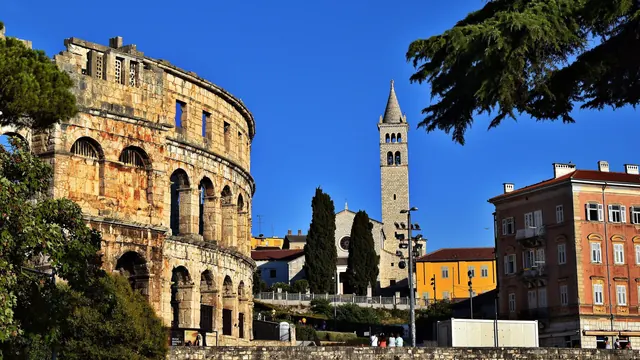
Istria has far more to see. The Arena in Pula stands to its full height, the Euphrasian Basilica in Poreč keeps its sixth-century gold mosaics, and Rovinj, Motovun and Hum make whole days of walking through Venetian stone towns.
Elba's history centres on Napoleon's year of exile, with his town house in Portoferraio and his villa at San Martino. The Medici bastions and the Spanish fort at Porto Azzurro add to it. These are good half-days between swims, not the reason to come.
Nightlife
Neither is a clubbing destination, but Istria has more going on after dark. Pula is a port with a student population and bars that stay open outside summer. Rovinj and Poreč fill their waterfronts with cocktail terraces, and the Medulin coast adds seasonal clubs. On Elba the evening is a passeggiata through Capoliveri's piazza or along the harbour at Porto Azzurro, with a few summer discos near Procchio, and the island goes quiet early out of season.
Nature & outdoors
Elba and Istria are as good as each other outdoors, in very different country. Elba is steep and granite, with most of the island inside the Tuscan Archipelago National Park. It has the basket lift up Monte Capanne, a ridge trail from end to end and diving among the granite reefs.
Istria is gentler: vineyards, oak valleys and red earth. Its strength is cycling, above all on the old Parenzana railway route through tunnels and over viaducts. Učka gives the bigger mountain hike, and Brijuni and Lim Bay are best seen by boat.
Day trips
Istria wins easily here. Its hill towns, coastal towns and wine roads are all short drives from any base. Beyond the region, Piran, Trieste, Opatija and the Postojna and Škocjan caves are all within an easy day, and Ljubljana is not much further.
On Elba every outing starts with an hour on the ferry. From Piombino, Populonia's Etruscan tombs and the hill towns of Suvereto and Campiglia are manageable, and boats go to Pianosa and Capraia. Most visitors make one or two trips and leave it there.
Good for families
Both work well for families, in different ways. Elba's advantage is sand: the gently shelving bays at Lacona, Biodola and Marina di Campo are ideal for toddlers, though there is little else built for children.
Istria has the rockier shore, so families with small children should base themselves near Medulin or Premantura. In return it has more to do on non-beach days: water parks near Poreč and Novigrad, the dinosaur park at Funtana, Pula's aquarium in an old fort and the safari park on Brijuni.
Getting around
Both need a car, but Istria is easier to drive. A motorway runs down its west side, the main towns are within about an hour of each other, and the old towns have parking at their edges.
Elba is smaller, but its narrow mountain roads make every drive slower than the map suggests. Its buses are thin on the ground, and arriving means a ferry that has to be booked in August.
Shopping & style
Neither is a shopping destination, and in both the best buys are edible. Istria has a little more to offer, with truffle products in Motovun and Buzet, estate olive oil and wine straight from the cellar, plus the galleries of Grožnjan and Rovinj's Grisia street. Elba's boutiques in Capoliveri and Porto Azzurro sell linen and beachwear, and its most distinctive souvenirs are Aleatico wine and minerals from the old mines.
Affordability
Elba costs a little more than Istria, largely because reaching and moving around the island adds up. You pay for the car ferry, car hire, beach parking and sunbeds, and August is the dearest month of all.
In Istria, inland farm stays, private apartments and simple tavern meals keep costs down, and wine bought from the producer is reasonable. In both places, campsites and a trip in June or September are the main ways to save.
Live music & performing arts
Istria has something worth catching on summer evenings: concerts and the long-running film festival in Pula's Roman Arena, and young musicians playing in the squares of Grožnjan. Pula's theatre also keeps going through the rest of the year. On Elba, live performance is limited to occasional summer concerts in Portoferraio's fortresses and churches and a classical festival in late summer.
Wellness & relaxation
The two are level here, and each has one historic thermal spa. On Elba it is San Giovanni near Portoferraio, which uses mud and seawater from the old salt pans. Istria's is Istarske Toplice, with sulphur springs in the Mirna valley that have been used since Roman times. In both, the real calm comes from a hill village or farmhouse stay in June or September, not from the busy August coast.
When should you go?
Pick your month. The climate figures are measured averages, not a forecast.
Elba in July
Istria in July
Daytime high, °C
Rainfall in the month, mm
Where the figures come from
Elba's temperatures are measured 62 km from the centre, at Grosseto.
Elba has no rain gauge within 25 km of the centre, so its rainfall comes from a gridded climate dataset read at the destination rather than from a gauge further away.
Istria's temperatures are measured 57 km from the centre, at Trieste.
Istria has no rain gauge within 25 km of the centre, so its rainfall comes from a gridded climate dataset read at the destination rather than from a gauge further away.
Temperature and rainfall are climate normals, averaged over the years shown. Elba: 1991-2020 (sunshine 1961-1990) normals, Grosseto (61.7 km from centre). Istria: 1991-2020 normals, Trieste (56.5 km from centre).
Both have a swimming season from June to late September, and the sea warms to about the same level by August. Elba's summer is hotter and drier. Highs there reach 32°C in August and July sees barely 10mm of rain, so midsummer afternoons on the open slopes and in the old streets are for the shade. Istria peaks a few degrees cooler and has some summer rain, which makes July and August a little easier for sightseeing in the hill towns.
Spring and autumn are the times for walking and cycling in both. Elba's May and late September are warm and sunny. Istria cools faster, and its autumn turns wet, with about 100mm in November. In winter Elba stays milder, but neither place is a winter beach destination, and Istria's interior is chilly at around 9°C.
Which traveller are you?
On a beach and sun trip, choose Elba. The south-west bays at Fetovaia and Cavoli have pale sand over turquoise shallows, and the summers are drier and sunnier. Istria's swimming is mostly from rocks, pebbles and concrete ledges.
For a culture and arts trip, Istria is the clear pick. Elba's Napoleonic houses and Medici forts fill half-days, while Pula's Arena, the gold mosaics of Poreč and the frescoed hill churches fill whole days, with summer concerts in the Arena besides.
On a food and nightlife trip, Istria wins. Elba's piazzas stay full on summer nights, but Istria adds truffles, Lim Bay oysters and Teran tastings, more waterfront terraces in Rovinj and Poreč, and bars in Pula that stay open all year.
Before you go
| Measure | Elba | Istria |
|---|---|---|
| Official language | Italian | Croatian |
| Currency | Euro (EUR) | Euro (EUR) |
| Sockets | CFL230 V, 50 Hz | CF230 V, 50 Hz |
| Driving side | Right | Right |
| Time zone | UTC+1, UTC+2 in summer | UTC+1, UTC+2 in summer |
| Emergency number | 112 | 112 |
| Main airport | Pisa International Airport (PSA)82 non-stop destinations | Pula Airport (PUY)34 non-stop destinations |
| Public holidays this year | 13 days | 14 days |
By the numbers
| Measure | Elba | Istria |
|---|---|---|
| Population | 32,000 | - |
| People per km² | 143 | - |
| Swim season, months above 21 °C | 4 months | 4 months |
Where else could you go?
Every comparison below shares a destination with this one, so you can follow Elba or Istria somewhere new.
- Tuscanyvs Elba
- Cinque Terrevs Elba
- Plitvice Lakesvs Istria
- Corsicavs Elba
- Umbriavs Elba
- Dolomitesvs Istria