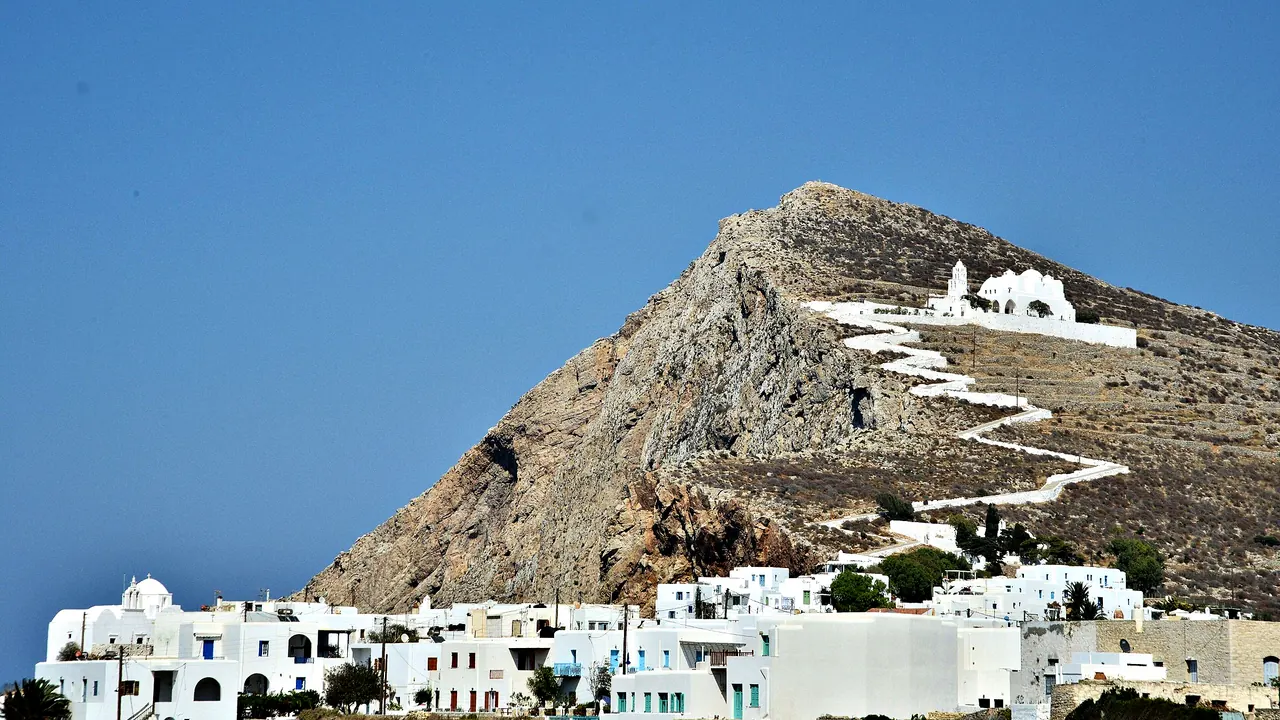
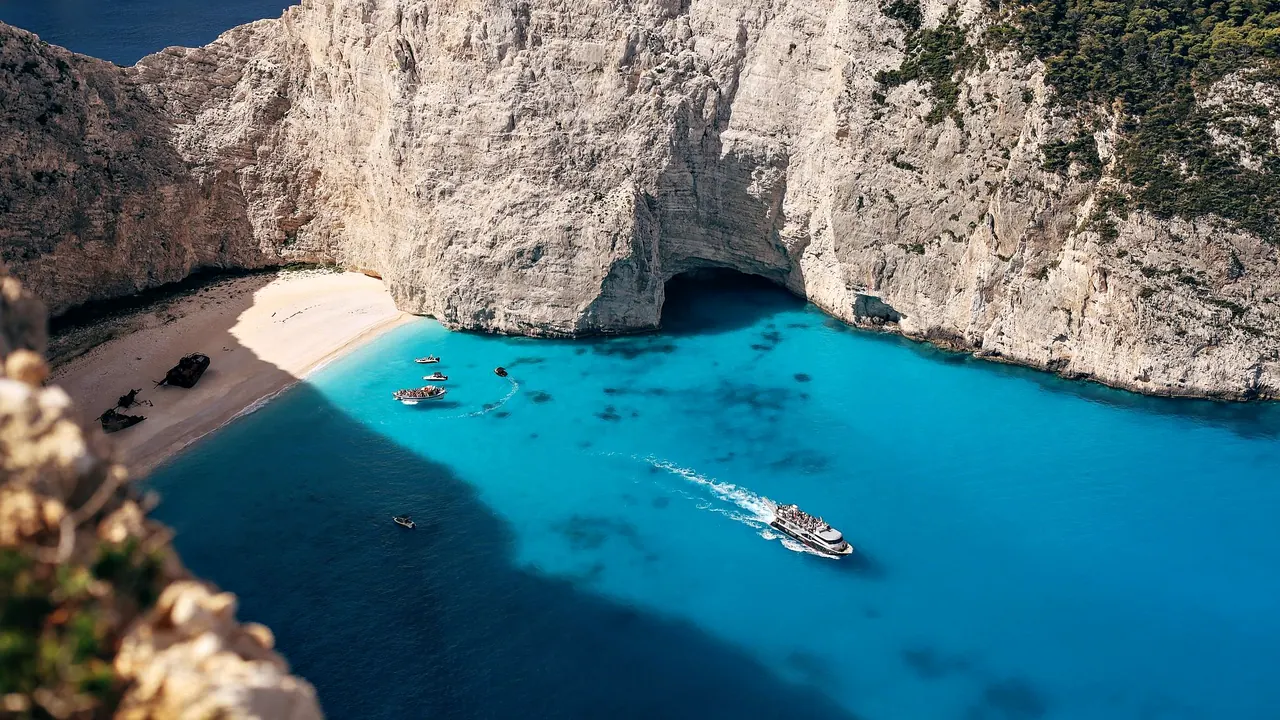
Photos: Folegandros by Chris Kar, CC BY-SA 4.0, cropped; Zakynthos by Sadettin Dogan, Pexels License.
Folegandros or Zakynthos?
Our verdict in twelve categories, each scored against the same fixed benchmark cities, and the climate month by month, so you can choose for your trip.
Choose Folegandros for
- getting around
- wellness
Folegandros suits travellers who want a small, quiet Cycladic island and a slow pace of life. You stay in the cliff-top village of Chora, eat in its squares in the evening and spend the days walking stony footpaths down to clear coves. There are no clubs and no big resorts, and most visitors come for exactly that. The price is fewer facilities, more effort to reach the beaches and a higher bill in summer.
Choose Zakynthos for
- nightlife
- families
- beaches
Zakynthos is the easier and broader choice for a classic sun-and-sea week. Its sandy bays are longer and gentler, there are resort hotels that work well for families, and the boat trips to the turtles, the caves and Navagio fill several days. Laganas gives it a real party strip as well. In return you get package-resort crowds in the busiest areas, and peaceful corners have to be sought out.
Scoreboard
Twelve categories on one fixed scale from 0 to 100. The shaded stretch is the gap between the two.
Your match
Pick a travel style or drag the sliders, and both match scores follow your weighting.
Wins on getting around and wellness with your weighting.
Wins on nightlife and families with your weighting.
What matters to you?
Category by category
What the scores mean for a trip.
Beaches & swimming
Zakynthos has the better beaches for most swimmers. Laganas Bay, the Vasilikos peninsula and the north-east coast offer long stretches of sand with shallow water, and the Blue Caves and Navagio add boat days. The resort beaches come with crowded sunbeds in summer, but the protected turtle beaches at Gerakas and Dafni stay undeveloped.
Folegandros offers small shingle-and-sand coves under bare cliffs with very clear water. Livadi, Vardia and Agali are easy to reach. Others, such as Katergo, mean a rough walk or a caique, and most have no shade. The north wind decides which side of the island is sheltered on any given day.
Food & drink
Zakynthos gives you more choice when eating out. Inland villages and the north coast serve island dishes such as skordostoumbi and ladotyri with local Verdea wine, although the resort strips lean towards English breakfasts.
Folegandros has a smaller but distinctive table. Its matsata pasta, souroto cheese and watermelon pie are eaten mostly in Chora's squares, and the choice is limited, with kitchens closing outside summer.
Culture & sights
Neither island is a sightseeing destination, and on each the sights fill about half a day, but they differ in kind. On Folegandros the sight is the village itself: Chora's walled medieval Kastro on the cliff edge, the zigzag climb to the Panagia, and a small folklore museum in an old farmhouse at Ano Meria.
Zakynthos has more conventional sights. In the capital, rebuilt after the 1953 earthquake, you can see the Ionian school icons in the Byzantine Museum, the museum to Solomos and the Venetian castle on Bochali hill. Out in the countryside, the monastery of Anafonitria and the village churches with their free-standing bell towers are good stops on a drive around the island.
Nightlife
Zakynthos has an actual nightlife, but almost all of it is in Laganas. In summer its strip of clubs, foam parties and promoters, aimed at young British groups, runs until dawn. Outside it, Tsilivi's family bars and Zakynthos Town's waterfront are much tamer.
On Folegandros evenings mean lingering in Chora's squares and a few small bars along the lanes and the cliff edge, some with music late in high summer. There are no clubs, and visitors like it that way.
Nature & outdoors
Zakynthos offers more variety outdoors. You can take turtle-spotting boats in the Laganas Bay marine park, dive and snorkel off Keri and the north, kayak below the white limestone cliffs, and walk or cycle in olive-covered hills up to Mount Vrachionas.
Folegandros is starker and simpler: a bare, almost treeless ridge with some of the Cyclades' highest sea cliffs. Here the outdoors is mostly about walking. Waymarked paths lead to the coves and along the ridge, and a boat trip goes to the Chrysospilia cave. Spring is the best time, since midsummer heat and wind restrict hiking to the early and late hours.
Day trips
Both are islands you mostly stay on, so the difference lies in where the boats go. From Folegandros, summer ferries reach Sikinos, Milos and Santorini, but routes and the north wind make returning the same day unreliable, so island-hopping visitors tend to move on rather than come back. Zakynthos looks towards the mainland. You can take a ferry to Kyllini for Chlemoutsi castle or a long day to ancient Olympia, or cross to southern Kefalonia from the north tip.
Good for families
Zakynthos is much better set up for children. The north-east coast has calm, shallow sand and hotels with pools and kids' clubs, and there are a water park and boat trips to spot turtles and visit sea caves. Journeys stay short on such a small island, although the midday heat in July and August is tiring.
Folegandros feels safe and calm, and its car-free lanes are pleasant for walks in the evening. However, it has little made for children, many coves need a steep descent, and you need to watch the cliffs and the wind. It works better for older children who like walking than for toddlers.
Getting around
Getting around is similar on both, and on both the beaches beyond the road end are reached by boat. Folegandros is small enough for one local bus to link the port, Chora and Ano Meria, and Chora itself is walked on foot. You can only arrive by ferry, and crossings can be disrupted in windy weather. Zakynthos is larger, about 40km long. Buses run only between the town and the main resorts, so the western cliffs and villages really need a car or scooter on winding roads.
Shopping & style
Neither island is a reason to go shopping. Folegandros has a handful of small shops in Chora's lanes selling jewellery, ceramics and linen, nice for a browse after dinner. Zakynthos adds Alexandrou Roma street in town for everyday shopping and village lace around Volimes. On both, the best things to bring home are edible: capers and herbs from Folegandros, mantolato nougat and Verdea wine from Zakynthos.
Affordability
Zakynthos is the cheaper island. Package tourism keeps resort rooms moderately priced even in summer, although boat trips, car hire and sunbeds add up over a week.
Folegandros costs more in high season because Chora is full of boutique cliff-view hotels that book out early. Simpler rooms near Karavostasis or in Ano Meria help, and on both islands June and September are easier on the budget than August.
Live music & performing arts
Zakynthos has more of a living musical tradition to come across. Kantades serenades with guitar and mandolin are heard in tavernas, the old philharmonic band plays at religious feasts, and villagers perform omilies street theatre at carnival.
Folegandros has no venue at all. Its music comes from the summer panigyria, where violin and lute play late into the night on saints' days, and from the Easter procession of the Panagia icon.
Wellness & relaxation
Neither island has a real bathing culture, and both offer rest rather than treatments. On Folegandros that calm covers the whole island, which has no big resorts and only a few hotel spas, and it is quietest in June and September. Zakynthos has more spas in its large resort hotels and the cool sulphur springs at Xigia. For peace, though, you need to stay in Keri, Agios Leon or Vasilikos, well away from Laganas.
When should you go?
Pick your month. The climate figures are measured averages, not a forecast.
Folegandros in July
Zakynthos in July
Daytime high, °C
Rainfall in the month, mm
Where the figures come from
Folegandros has no weather station within reach, so its figures come from a gridded climate model rather than a measured record, and read a broad area rather than one spot.
Temperature and rainfall are climate normals, averaged over the years shown. Folegandros: 2001-2020 normals, NASA POWER reanalysis grid, no weather station within 90 km. Zakynthos: 1991-2020 normals, Zakinthos / Agrilia (4.3 km from centre).
The two islands share the same swimming season, June to October, but feel very different in high summer. Folegandros stays moderate, at about 27°C in August, with a strong north wind that cools the air but stirs up the sea. Zakynthos reaches about 33°C in July and August. That is real beach heat and has plenty of sunshine, but midday walking becomes hard work. Its sea is also slightly warmer, at about 26°C at its peak.
Spring and early autumn are the best times for walking on both islands. Folegandros is the drier of the two in autumn, with October rainfall of 49mm. On Zakynthos the rain arrives sooner and heavier, rising to about 150mm in November. Neither island is a winter beach destination, and Zakynthos has the wetter winter of the two.
Which traveller are you?
On a family trip with children, Zakynthos is the clear choice. Tsilivi, Planos and Alykes have gently shelving sand, calm water and hotels with pools and kids' clubs, and there are turtle-spotting boats as well. On Folegandros many coves need a steep walk and have no shade.
For a food and nightlife trip, Zakynthos offers more on both counts. Its village tavernas around Keri serve Verdea wine and skordostoumbi, and Laganas runs bars and clubs until dawn. Folegandros has good dinners in Chora's squares, followed by a quiet drink.
On a relaxing trip, Folegandros has the edge in feel. The whole island is quiet, with a car-free village, no big resorts and days split between a cove and a nap. On Zakynthos you can find calm in Keri or on Vasilikos, but you have to avoid the resort strips to keep it.
Before you go
| Measure | Folegandros | Zakynthos |
|---|---|---|
| Official language | Greek | Greek |
| Currency | Euro (EUR) | Euro (EUR) |
| Sockets | CF230 V, 50 Hz | CF230 V, 50 Hz |
| Driving side | Right | Right |
| Time zone | UTC+2, UTC+3 in summer | UTC+2, UTC+3 in summer |
| Emergency number | 112 | 112 |
| Main airport | Santorini International Airport (JTR)60 non-stop destinations | Zakynthos International Airport "Dionysios Solomos" (ZTH)69 non-stop destinations |
| Public holidays this year | 15 days | 15 days |
By the numbers
| Measure | Folegandros | Zakynthos |
|---|---|---|
| Population | - | 41,180 |
| People per km² | - | 102 |
| Swim season, months above 21 °C | 5 months | 5 months |
Where else could you go?
Every comparison below shares a destination with this one, so you can follow Folegandros or Zakynthos somewhere new.
- Iosvs Folegandros
- Milosvs Folegandros
- Sifnosvs Folegandros
- Santorinivs Folegandros
- Parosvs Folegandros
- Kefaloniavs Zakynthos