French Riviera or Normandy?
Our verdict in twelve categories, each scored against the same fixed benchmark cities, and the climate month by month, so you can choose for your trip.
Choose French Riviera for
- beaches
- nightlife
- shopping
The French Riviera is the choice for a summer by the sea. The water is warm for swimming through four months, the coast between Cannes and Menton has more to eat, see and do in the evening, and a single railway links most of it, so you can stay in Nice and reach Monaco or Antibes without a car. It suits travellers who want modern art in the morning, a swim in the afternoon and a late night out, and who accept that it costs a lot.
Choose Normandy for
- prices
- wellness
- day trips
Normandy rewards a slower, more historical trip. Mont-Saint-Michel, the Bayeux Tapestry and the D-Day beaches are the reason to go, with cider farms, cheese villages and harbour towns in between. The sea is too cool to be the main event, and you will want a car, but rooms and meals cost less and the countryside is calm. It is the better pick for history lovers, families happy with rock pools and sandcastles, and anyone planning a gentle drive between farmhouse stays.
Scoreboard
Twelve categories on one fixed scale from 0 to 100. The shaded stretch is the gap between the two.
Your match
Pick a travel style or drag the sliders, and both match scores follow your weighting.
Wins on beaches and nightlife with your weighting.
Wins on prices and wellness with your weighting.
What matters to you?
Category by category
What the scores mean for a trip.
Beaches & swimming
Swimming is the clearest gap between the two. The Riviera sea reaches the mid-twenties in summer, and the shore offers everything from the pebbles of Nice to the sand of Cannes and Pampelonne and the red-rock coves of the Esterel. The catch is private concessions and packed public stretches in high season.
Normandy has a real seaside culture, with the boardwalks and striped cabins of Deauville and Cabourg, but the Channel stays cool and the tide retreats a long way. The beaches suit walks, kites and digging more than long swims, and the shingle under Étretat's cliffs is for looking at.
Food & drink
Both regions have a strong local kitchen, but the Riviera offers more depth. Nice's own cooking of socca, pissaladière and stuffed vegetables, the Cours Saleya market, and a dense run of serious restaurants from Menton to Cannes give it the wider range, as long as you avoid the seafront set menus.
Normandy's table is richer and simpler: butter and cream, Camembert and Livarot, oysters from Isigny, and cider and calvados bought straight from Pays d'Auge farms. The best meals are in harbour towns such as Honfleur and Granville, with Rouen the only place offering much variety.
Culture & sights
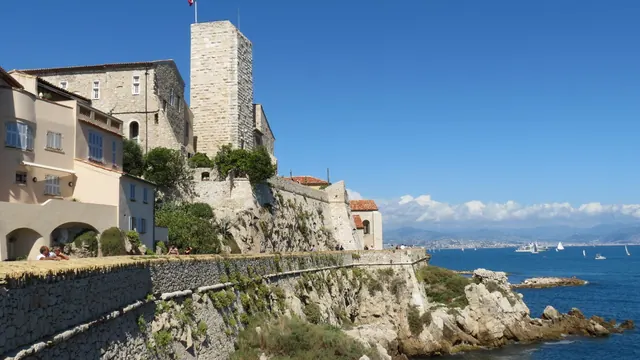
The two are equally rich, but in very different eras. The Riviera is the coast of modern art, with Matisse and Chagall in Nice, Picasso in the Antibes castle, Matisse's chapel at Vence and the Fondation Maeght, plus Belle Epoque Nice and the palace and casino of Monaco.
Normandy is about the Middle Ages and the twentieth century. Mont-Saint-Michel, the Bayeux Tapestry, Rouen's cathedral and William the Conqueror's Caen sit alongside the D-Day beaches and the Caen Memorial. Monet's Giverny and Le Havre's Impressionists add art, but this is history you travel across the region to see.
Nightlife
For going out, the Riviera is far ahead. In summer Saint-Tropez and Monaco run glamorous beach clubs and table-service clubs, Juan-les-Pins has a late strip, and Nice's old town and port fill with wine bars and pubs even off season, though none of it is cheap.
In Normandy an evening usually means a long dinner. Rouen and Caen, both university cities, have bars around the cathedral and the Vaugueux quarter, and Deauville has its casino, but the countryside goes quiet after dark.
Nature & outdoors
The Riviera's landscape is more dramatic. Mountains fall straight into the sea, cape paths circle Cap Ferrat and Cap d'Antibes, the Esterel offers red-rock walking and kayaking, and the high trails of the Mercantour are within easy reach of Nice. Summer heat and fire closures make spring and autumn the seasons for it.
Normandy is gentler and greener. Its highlights are coastal: the chalk arches of Étretat, the granite headlands of Cap de la Hague and guided walks across the bay of Mont-Saint-Michel. Inland, the hedged bocage is for cycling greenways, and the Suisse Normande adds some climbing, but there are no mountains.
Day trips
Both make excellent bases for outings, but the distances differ. On the Riviera everything is close: the coastal train reaches Villefranche, Monaco and Menton quickly, and hill villages such as Eze and Saint-Paul-de-Vence are short hops, though many days feel like variations on the same pretty village.
Normandy's outings are longer but more varied. Honfleur, the cider villages and the Cotentin fishing ports sit within reach of Caen or Bayeux, Saint-Malo is easy to add across the Breton border, ferries cross to Jersey in summer, and Paris is under two hours by train from Rouen.
Good for families
For children, the Riviera means swimming and Normandy means exploring. On the Riviera, small children can paddle in calm, warm water off the gently shelving sand at Juan-les-Pins and Fréjus, and the Monaco aquarium and the boat trips to the Lérins islands fill the other days. High season brings heat, crowds and costly family rooms, and the hill villages are no place for a pushchair.
Normandy gives you rock pools at low tide, kites on wide beaches, the walk-through submarine at Cherbourg's Cité de la Mer and the Cerza safari park. Self-catering cottages make it a calm and practical base. The trade-off is a cold sea, changeable weather and longer drives between sights.
Getting around
The Riviera is easier without a car. One railway runs along the shore from Cannes through Nice and Monaco to Menton, and Nice has a tram to the airport, so a station-side base covers most of the trip. Inland villages and Saint-Tropez are the hard parts.
In Normandy, trains reach the main towns from Paris, but the landing beaches, Étretat, the cider villages and Mont-Saint-Michel are poorly served. You will need a car or organised tours, and the region is wide enough that two bases work better than one.
Shopping & style
The Riviera is far more of a shopping destination. Luxury boutiques line the Croisette, the streets around the Monte-Carlo casino and Saint-Tropez's port, and the crafts are distinctive: perfume in Grasse, bubbled glass in Biot, pottery in Vallauris.
Normandy's best buys go in the suitcase as food and drink: calvados, pommeau, cheese and salted-butter caramels. Bayeux and Alençon lace and Villedieu copper pans add some craft, and Rouen has the most shops, but the choice is narrow.
Affordability
Normandy is the more affordable of the two, though it is not cheap. Cottages, chambres d'hôtes and market-town lunches are fairly priced, and the D-Day sites and beaches are mostly free. Deauville, Honfleur and the Mont-Saint-Michel area cost more in summer, and car hire adds to the budget.
The Riviera is among the dearest places in Europe in summer, especially Saint-Tropez, Monaco and Cannes. Basing yourself in Nice, using the cheap trains and travelling in May, June or September keeps costs down.
Live music & performing arts
The Riviera has more on stage. Monaco's gilded opera house hosts the Monte-Carlo Philharmonic and the Ballets de Monte-Carlo through the winter, Nice has its own opera and orchestra, and in summer the jazz festival in the pines at Juan-les-Pins and the Nice Jazz Festival draw crowds.
Normandy's offer is thinner and more scattered. Rouen's Théâtre des Arts stages opera and ballet, Caen and Le Havre have modern venues, and Jazz sous les Pommiers brings spring jazz to Coutances, but on most evenings there is little to see.
Wellness & relaxation
Normandy is the better place for rest. Seawater cures line its coast at Deauville, Cabourg and Granville, Bagnoles-de-l'Orne is a belle-époque spa town in the Orne forests, and orchards and quiet harbour towns set an unhurried pace.
The Riviera's wellness is concentrated in thalassotherapy centres in Monaco and grand-hotel spas on the capes. Spring and autumn lunches in the hill villages are restful, but in high summer the resorts are too loud for a calm stay.
When should you go?
Pick your month. The climate figures are measured averages, not a forecast.
French Riviera in July
Normandy in July
Daytime high, °C
Rainfall in the month, mm
Temperature and rainfall are climate normals, averaged over the years shown. French Riviera: 1991-2020 normals, Nice (9.8 km from centre). Normandy: 1991-2020 normals, Caen (21 km from centre).
The Riviera is at its best for the beach from June to September. July and August are hot and dry, with highs around 28°C and the sea reaching 25°C. That is ideal for swimming but tiring for long climbs up to the hill villages. June is nearly as dry and a little fresher. September stays warm and the sea is still pleasant, but it is the month the rain comes back, and October and November are the wettest of the year, with up to 138mm. May and June are the most comfortable months for sightseeing. Winters are mild and fairly sunny, good for walking but too cool for the beach.
Normandy's coast is cooler and greyer all year. Summer highs stop around 23°C, the Channel only reaches about 18°C in August, and even in midsummer there is far less sunshine than on the Riviera. Rain falls steadily in every month instead of arriving in one season, and autumn and winter are the dampest. Late spring to September is the time to go, with July and August the only real beach months. Winter is cold and short of light, so it is best spent in museums and abbeys.
Which traveller are you?
On a beach and sun trip, the French Riviera wins easily. The sea is warm enough to swim from June into October, there is fine sand at Cannes, Juan-les-Pins and Pampelonne, and the summer days are long and sunny. Normandy's Channel stays cool.
On a trip on a tight budget, Normandy makes the money go further. Its pleasures cost little: picnics of market cheese and farm cider, cycling the greenways, and beaches without paid sunbeds. On the Riviera, much of the best sand belongs to paying concessions.
For a relaxing and wellness trip, Normandy is the easier place to switch off. Summers stay mild instead of hot, evenings end early, and a farmhouse stay with gentle rides through the bocage asks little of you. On the Riviera, rest takes more planning and usually more money.
Before you go
| Measure | French Riviera | Normandy |
|---|---|---|
| Official language | French | French |
| Currency | Euro (EUR) | Euro (EUR) |
| Sockets | CE230 V, 50 Hz | CE230 V, 50 Hz |
| Driving side | Right | Right |
| Time zone | UTC+1, UTC+2 in summer | UTC+1, UTC+2 in summer |
| Emergency number | 112 | 112 |
| Main airport | Nice-Côte d'Azur Airport (NCE)130 non-stop destinations | Caen Carpiquet airport (CFR)10 non-stop destinations |
| Public holidays this year | 11 days | 11 days |
By the numbers
| Measure | French Riviera | Normandy |
|---|---|---|
| Swim season, months above 21 °C | 4 months | None |
Where else could you go?
Every comparison below shares a destination with this one, so you can follow French Riviera or Normandy somewhere new.
- Provencevs French Riviera
- Cinque Terrevs French Riviera
- Corsicavs French Riviera
- Brittanyvs Normandy
- Devonvs Normandy
- Loire Valleyvs Normandy