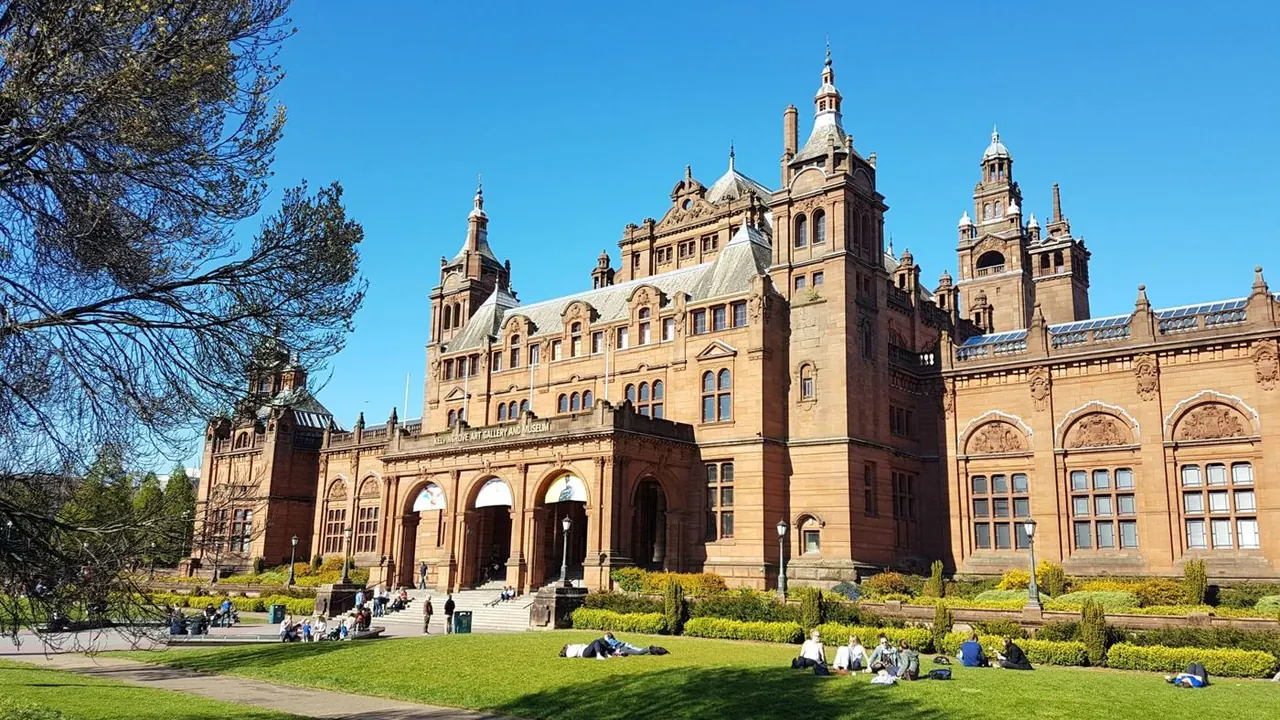
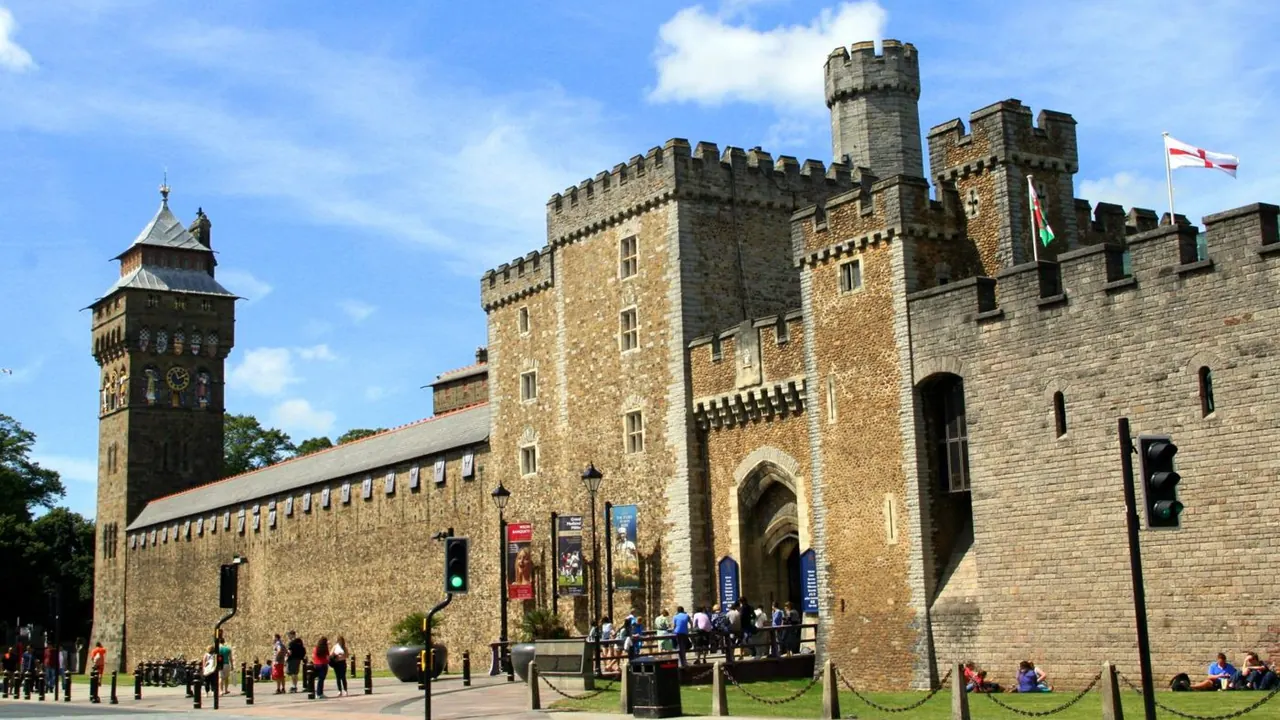
Photos: Glasgow by Stinglehammer, CC BY-SA 4.0, cropped; Cardiff by Tevfik Teker, CC BY 3.0, cropped.
Glasgow or Cardiff?
Our verdict in twelve categories, each scored against the same fixed benchmark cities, and the climate month by month, so you can choose for your trip.
Choose Glasgow for
- nightlife
- live music and the arts
- shopping
For live music, late nights and serious shopping, Glasgow is the stronger pick. Its gig circuit, its pubs and basement clubs, and its long pedestrian shopping loop give a visitor more to do after dark and between museums. The edge of the Highlands and Edinburgh are both within an hour. Pack waterproofs, because it rains far more here.
Choose Cardiff for
- beaches
Cardiff suits a gentler, more compact trip. Its flat centre puts the castle, the market and the arcades a few minutes apart. Short train rides reach Caerphilly, Castell Coch and the sands at Barry Island, and the weather is noticeably drier and sunnier. Choose it for history, an easy pace and a day by the sea.
Scoreboard
Twelve categories on one fixed scale from 0 to 100. The shaded stretch is the gap between the two.
Your match
Pick a travel style or drag the sliders, and both match scores follow your weighting.
Wins on nightlife and live music and the arts with your weighting.
Wins on beaches with your weighting.
What matters to you?
Category by category
What the scores mean for a trip.
Beaches & swimming
Neither city has a beach of its own, but Cardiff gets you to the sand far more easily. Barry Island's traditional bay and funfair are about half an hour by train, Penarth's pebble shore and pier are next door, and the surf at Porthcawl and the wide Gower sands are a drive away.
Glasgow's nearest sand is in the old Clyde resorts of Largs, Troon and Ayr, about an hour away. The water there is a few degrees colder and the weather less settled. It works for a promenade walk with fish and chips, rarely for a swim.
Food & drink
Glasgow eats better. Its long curry-house tradition, its Italian-run cafés and chip shops, and Finnieston's cooking with west coast seafood, game and Highland beef give it more range. The small restaurants of Shawlands and Strathbungo reward anyone who picks a neighbourhood with care.
Cardiff's best eating is Welsh and homely: Welsh cakes off the griddle in the Victorian market, cawl, and laverbread with cockles. For dinner, the bistros of Pontcanna and Canton and the South Asian and Middle Eastern run along City Road are the places to go. Glasgow's pubs add a deep whisky list that Cardiff's local ales do not match.
Culture & sights
The two are broadly level, and both are Victorian cities built on trade, but they show it differently. Cardiff's high points are single set pieces: the castle with its lavish Gothic rooms, the white stone civic centre and the National Museum's Impressionists. St Fagans, where buildings from across Wales have been rebuilt in parkland, tells the story of a whole nation.
In Glasgow the sandstone streets themselves are the sight. Add Mackintosh's buildings, the free Kelvingrove and the Burrell's medieval tapestries and Chinese ceramics, and it suits travellers drawn to art and architecture. The cathedral and the Necropolis also give Glasgow a medieval layer that Cardiff mostly lacks.
Nightlife
Glasgow is the better night out. The Merchant City has cocktail bars, Sauchiehall Street has late bars and student clubs, and Ashton Lane fills with locals. Above all, its basement techno and house nights bring in DJs from across Europe.
Cardiff goes out loudly at weekends, with large groups along St Mary Street and a sea of red on rugby international days. Womanby Street's small alternative bars are its most interesting corner. Clubbing is mainstream and midweek is quiet, so two nights cover it.
Nature & outdoors
The two are close here, and the difference is in the landscape. From Cardiff the big day out is Bannau Brycheiniog, where Pen y Fan gives a half-day walk over open moorland ridges. Nearer to town there is the Taff Trail from Bute Park and the coast path past Penarth's cliffs, but the national park really needs a car.
Glasgow offers lochs and the start of the Highlands. Loch Lomond is about 40 minutes by train, with kayaking and climbs such as Ben Lomond. The West Highland Way begins on the city's edge, and Arran is a ferry ride away. Expect to get wetter than in Wales.
Day trips
Both make excellent bases, with different kinds of outing. Cardiff's theme is castles: Caerphilly's huge fortress, Castell Coch in the woods, and Chepstow with Tintern Abbey. Bath, Bristol and the Big Pit mining landscape add English cities and industrial history.
Glasgow has Edinburgh under an hour away, plus Stirling's castle and Linlithgow Palace for Scottish royal history. The mill village of New Lanark, Culzean on its clifftop and the island ferries to Bute and Arran give it more sea and scenery in the mix.
Good for families
The two are equally easy with children, and both lack a zoo, aquarium or theme park. Cardiff has the advantage of being flat. Techniquest, the farm animals at St Fagans, the rowing boats on Roath Park lake and the funfair at Barry Island are all close by and easy with a buggy.
Glasgow's free museums are its strength for families: trams and a tall ship at the Riverside, a Spitfire in Kelvingrove, and the Science Centre on the Clyde. Expect steep streets and more days indoors when it rains.
Getting around
Both are easy without a car, but they work differently. Cardiff's small, flat, largely pedestrianised centre puts nearly every sight within a few minutes of Central station. Without a metro, you reach the Bay by shuttle train, bus or water taxi.
Glasgow's grid is walkable but climbs steeply to the north. Its little circular Subway is handy for the West End, and a wide suburban rail network covers the rest. Buses run by several companies with separate fares are more confusing for a visitor.
Shopping & style
Glasgow is the place to shop. The pedestrian loop of Buchanan, Sauchiehall and Argyle Streets has the big names and department stores. Princes Square adds upmarket fashion, and Byres Road, the Merchant City and the rough-edged Barras market cover vintage clothes, boutiques and curiosities.
Cardiff's appeal lies in its glass-roofed Victorian arcades, with independent record shops, bookshops and vintage stores. Lovespoons, Welsh blankets and slate are easy to find locally. An afternoon is usually enough.
Affordability
Costs are much the same in both: ordinary British prices for meals and drinks, free national or civic museums, and hotels that jump when a stadium event is on. The difference is in the extras.
Cardiff's train trips to castles and the coast are short and cheap. Glasgow's longer rail journeys to Edinburgh, Stirling or the islands add up, though its curry houses and pub lunches keep meals down.
Live music & performing arts
Glasgow has much more on stage, and live music is its strongest suit. It has the neon-signed Barrowland Ballroom, small rooms where many bands played early shows, folk sessions in pubs and Celtic Connections each winter. Scottish Opera, Scottish Ballet and two major orchestras make the formal side just as deep.
Cardiff has a solid core in the Wales Millennium Centre with Welsh National Opera, the BBC National Orchestra of Wales and student productions at the Royal Welsh College. Womanby Street's grassroots venues and the Welsh choral tradition round it out, but there is less to choose from on a given night.
Wellness & relaxation
Neither city is built for unwinding, and in both a spa day means a hotel or day spa. Cardiff's quiet comes from its easy pace: a slow morning in a Pontcanna café, a stroll along the Taff, or a leisure pool at a Bay hotel.
Glasgow's two Victorian swimming clubs, with Turkish baths and plunge pools, are a real curiosity, though they are mainly for members. Most visitors find their calm out by the lochs.
When should you go?
Pick your month. The climate figures are measured averages, not a forecast.
Glasgow in July
Cardiff in July
Daytime high, °C
Rainfall in the month, mm
Where the figures come from
Glasgow has no rain gauge within 25 km of the centre, so its rainfall comes from a gridded climate dataset read at the city rather than from a gauge further away.
Glasgow's sunshine is measured 57 km from the centre, at Edinburgh Airport.
Temperature and rainfall are climate normals, averaged over the years shown. Glasgow: 1991-2020 (sunshine 1981-2010) normals, Glasgow Airport (11.5 km from centre). Cardiff: 1991-2020 (sunshine 1981-2010, rainfall 1981-2010) normals, Cardiff-Wales Airport (14.9 km from centre).
Both cities are mild and cool rather than hot, and summer peaks at around 20°C in each. That is good weather for walking the streets but never warm enough for a true beach vacation. The real difference is the rain. Cardiff's wettest month, October, brings about 114mm, while Glasgow gets more than that in four months of the year and reaches 141mm in January. Cardiff also gets far more sunshine from spring to early autumn.
May to September is the best stretch in both. Cardiff is the better choice if you want a seaside afternoon, with the sea reaching about 18°C in August against Glasgow's 15°C. From October to March both are dark and damp, and Glasgow especially so, which makes it a winter city for museums, pubs and concerts rather than outdoor days.
Which traveller are you?
On a beach and sun trip, Cardiff is the better of two modest choices. Its summers are drier and sunnier, its sea a little less cold, and a short train ride puts you on the sand. Glasgow's coast suits a bracing walk more than a swim.
For a food and nightlife trip, Glasgow wins. Its food and its nights out happen in the same neighbourhoods, so dinner in the West End or Finnieston leads straight into a busy bar, and clubs run until about 3am. Cardiff eats more homely and goes out mainly at weekends.
On a culture and arts trip, Glasgow gives you more to fill both days and evenings. Its free galleries and Victorian architecture carry the daytime, and a show is easy to find after dark. Cardiff suits travellers drawn more to Welsh history than to the arts.
Before you go
| Measure | Glasgow | Cardiff |
|---|---|---|
| Official language | English | English |
| Currency | Pound Sterling (GBP) | Pound Sterling (GBP) |
| Sockets | G230 V, 50 Hz | G230 V, 50 Hz |
| Driving side | Left | Left |
| Time zone | UTC, UTC+1 in summer | UTC, UTC+1 in summer |
| Emergency number | 112 or 999 | 112 or 999 |
| Elevation | 21 m | 41 m |
| Main airport | Glasgow Airport (GLA)11 km from centre95 non-stop destinations | Cardiff International Airport (CWL)15 km from centre30 non-stop destinations |
| Public holidays this year | 10 days | 8 days |
By the numbers
| Measure | Glasgow | Cardiff |
|---|---|---|
| City population | 626,410 | 383,536 |
| People per km² | 190 | 2,734 |
| Museums within 10 km | 29 | 9 |
| UNESCO World Heritage sites within 50 km | 2 | 1 |
| Swim season, months above 21 °C | None | None |
Where else could you go?
Every comparison below shares a destination with this one, so you can follow Glasgow or Cardiff somewhere new.
- Bristolvs Cardiff
- Bathvs Cardiff
- Edinburghvs Glasgow
- St Andrewsvs Glasgow
- Oxfordvs Cardiff
- Belfastvs Glasgow