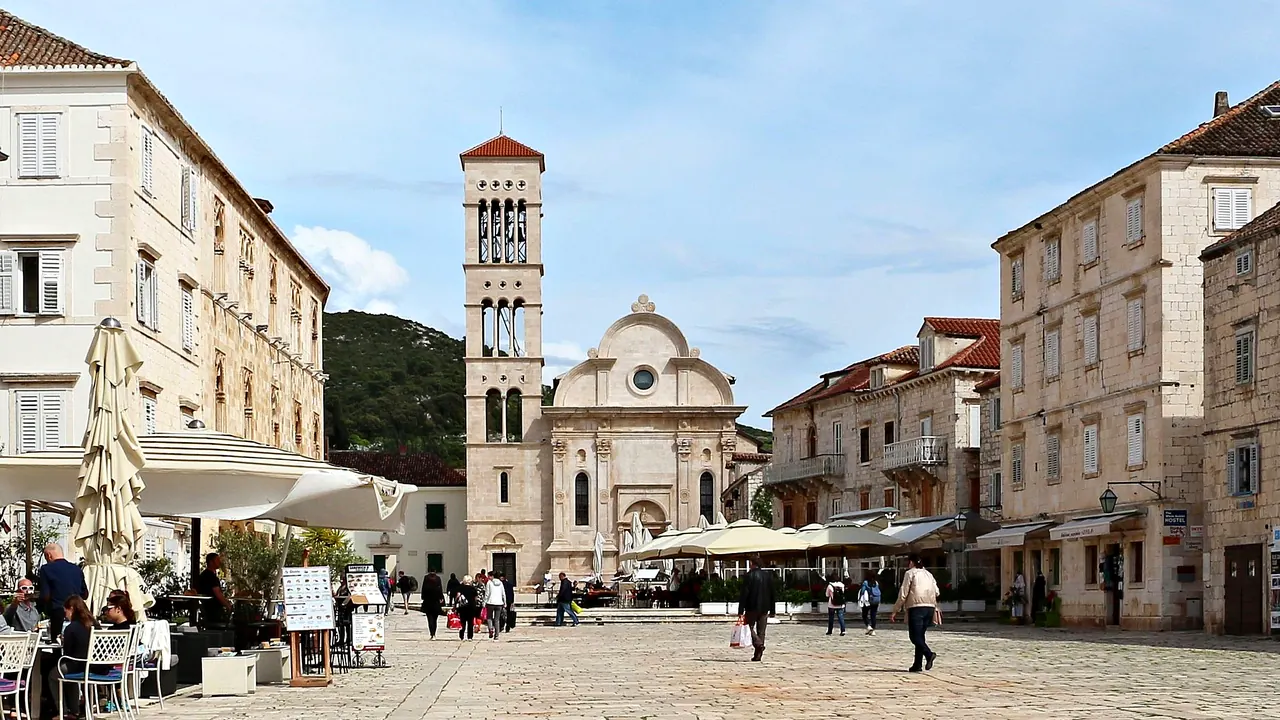
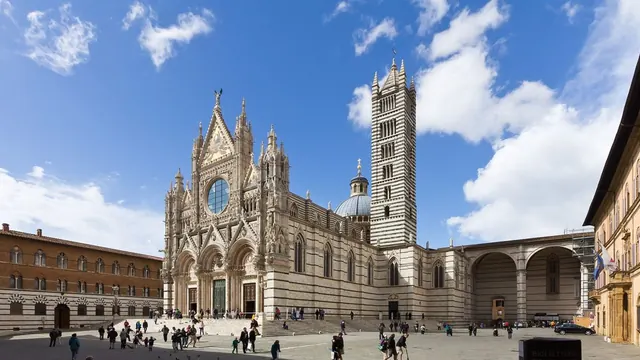
Photos: Hvar by Bernard Gagnon, CC BY-SA 4.0, cropped.
Hvar or Tuscany?
Our verdict in twelve categories, each scored against the same fixed benchmark cities, and the climate month by month, so you can choose for your trip.
Choose Hvar for
- nightlife
- beaches
Hvar is the better pick for a summer built around the water. The sea is very clear, every town sits right on it, and taxi boats to the Pakleni Islands make a different cove easy each day. In July and August, Hvar Town's harbour bars and offshore beach clubs give it a party side that Tuscany's piazzas don't. The island's sights take two or three days, so it suits a trip where swimming is the point and everything else is a pleasant extra.
Choose Tuscany for
- culture and sights
- shopping
- wellness
Choose Tuscany when the trip is about seeing and tasting. Florence, Siena and the hill towns hold far more art and architecture than any island can. The wine roads of Chianti and Montalcino run between them, and hot springs such as Saturnia and Bagno Vignoni offer a kind of rest Hvar has no equivalent for. There is sea on Elba and in the Maremma too. From an inland base, though, the coast becomes a side trip, and the countryside needs a car.
Scoreboard
Twelve categories on one fixed scale from 0 to 100. The shaded stretch is the gap between the two.
Your match
Pick a travel style or drag the sliders, and both match scores follow your weighting.
Wins on nightlife and beaches with your weighting.
Wins on culture and sights and shopping with your weighting.
What matters to you?
Category by category
What the scores mean for a trip.
Beaches & swimming
Hvar is the more natural swimming trip. The water is very clear, the island's towns all sit on the sea, and taxi boats to the Pakleni Islands put a new pine-backed bay within reach every day. The trade-off is the shore itself, which is pebble and rock almost everywhere, with only a little fine gravel on the calm north side.
Tuscany has what Hvar lacks, which is real sand: Elba's bays such as Fetovaia, the Maremma's pine-backed strands and the long Versilia coast, though much of Versilia is rows of private umbrellas. Its coast is also a choice of base in its own right. From Florence or the hills, the sea is a long drive away.
Food & drink
Both regions cook close to the land. On Hvar that means peka lamb, gregada and Plavac Mali from the steep south slopes, often best in the village konobas of Pitve or Velo Grablje. The range is narrow, though, and much of the island closes outside summer.
Tuscany goes much further. There is Florentine steak, ribollita and boar pappardelle, lampredotto from Florence's street carts and the San Lorenzo market. Its wine map runs from Chianti Classico to Brunello and Vino Nobile, with estate lunches along the way. A food-led trip has far more to work with there.
Culture & sights
Hvar's sights are real but few. Hvar Town has its white-stone square and cathedral, the 1612 theatre above the Arsenal and the Fortica fortress. Near Stari Grad, the fields of the plain still follow the boundaries laid out by Greek settlers. A couple of unhurried days covers it all.
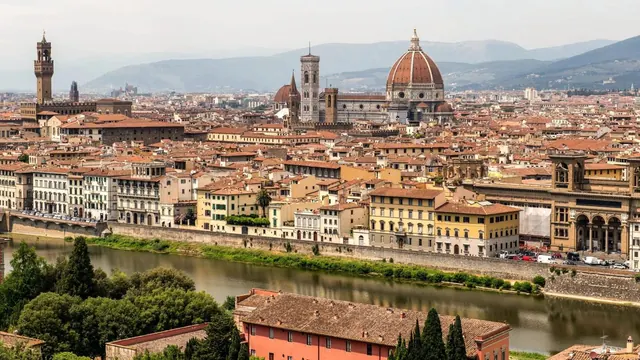
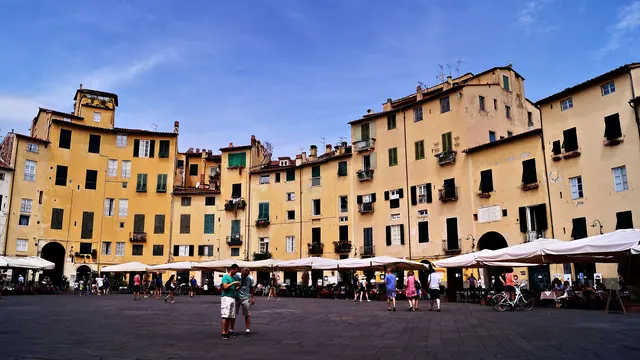
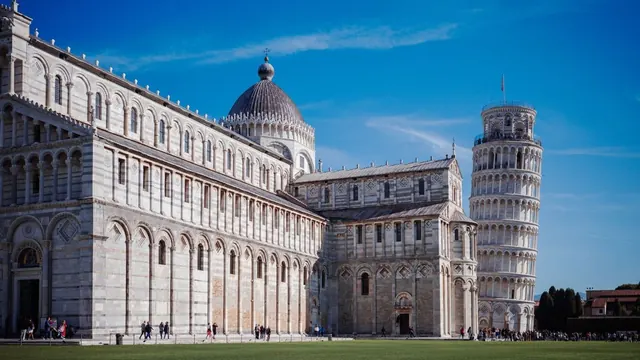
Tuscany is in another league. Florence alone, with the Uffizi, the David and Brunelleschi's dome, could fill a week. After that come Siena, Pisa, Lucca, San Gimignano and Piero della Francesca's frescoes in Arezzo. Here the sights are the reason for the trip, not a break from the beach.
Nightlife
For a night out, Hvar Town in July and August is far livelier. The harbour cocktail bars are packed with yacht crews, and the parties carry on at beach clubs on the Pakleni Islands, reached by taxi boat. It is crowded and costly, and it is over by early September.
Tuscany's evenings are gentler. They centre on long dinners and a drink in the piazza, with the steps of Santo Spirito and the wine bars of Oltrarno as Florence's busiest corners. Only the beach clubs and dance halls of Versilia come close to Hvar's summer energy.
Nature & outdoors
Hvar offers a limestone ridge, lavender fields around Velo Grablje, the walk up Sveti Nikola and good kayaking and snorkelling around the Pakleni Islands. It is pleasant rather than dramatic, and summer heat confines walks to the early morning.
Tuscany has more variety and more scale. The Val d'Orcia has cypress lanes and gold fields for cycling between towns, and the Apuan Alps have proper ridge hikes. There are also the beech forests of the Casentino and the wild coast of the Maremma park. Hvar's one advantage is that the sea is part of every outdoor day.
Day trips
From Hvar, catamarans reach Split, Korčula, Vis and Brač, and each is worth a day. Every outing depends on boat timetables, though, and the choice thins once summer ends.
Tuscany offers far more by comparison. Siena, Lucca, Pisa, San Gimignano and the Montalcino and Pienza loop are all easy to reach, and Bologna, the Umbrian hill towns and the Cinque Terre lie just over the border. Because you travel by road and rail rather than by ferry, you can decide on the morning.
Good for families
Hvar's north-side towns of Jelsa, Stari Grad and Vrboska have calm, shallow bays and a safe, easy pace. There is nothing built for children, though, and Hvar Town's steep steps and party nights suit them poorly.
Tuscany gives families more to do. Farmhouse stays come with pools and animals, and the beaches in Versilia and the Maremma are sandy and lifeguarded. Outings include the Pinocchio park in Collodi and cycling on Lucca's walls. Both places are hard going with small children in the August heat.
Getting around
Neither region is easy without a car. On Hvar the towns are walkable, but buses are infrequent and you need a car or scooter for the south coast and the hill villages. Even getting onto the island means a ferry or catamaran from Split.
Tuscany at least has a useful rail line linking Florence, Pisa, Lucca, Arezzo and Viareggio, so a car-free trip along it is realistic. Away from it, in Chianti, the Val d'Orcia and the Maremma, you will be driving and parking outside each town's walls.
Shopping & style
Hvar's shopping is a short list: lavender, olive oil, honey and wine from family cellars, lace made by Benedictine nuns, and resort linen and swimwear in Hvar Town's lanes.
Tuscany is a real shopping destination, centred on Florence. There are leather workshops around Santa Croce, goldsmiths on the Ponte Vecchio and paper and bookbinding workshops in Oltrarno. Beyond the city, Volterra is known for alabaster, Montelupo for ceramics and Pietrasanta for marble.
Affordability
Neither is a cheap trip in summer, but the costs come from different places. On Hvar, the expensive part is Hvar Town, with its harbour-front rooms, cocktails and taxi boats. You can avoid much of it by staying in Jelsa or Stari Grad, eating in village konobas and coming in June or September.
In Tuscany, the big bills are central Florence hotels, Chianti villas and car hire. Reasonable trattoria meals and cheaper bases such as Lucca, Arezzo or the Maremma towns help, and spring and autumn cost less than high summer.
Live music & performing arts
Hvar has summer chamber concerts in its churches and the Franciscan cloister, plus klapa singing at village feasts. Its historic theatre has no regular season, and out of summer there is little to attend.
Tuscany has a proper calendar. In Florence there is the Maggio Musicale Fiorentino with its opera house, and drama at the Teatro della Pergola. Puccini's operas are staged by the lake at Torre del Lago, and Lucca hosts a summer concert series in its squares.
Wellness & relaxation
On Hvar, calm comes from the pace of life rather than from any spa tradition. That means Vrboska and the hill villages in June or September, pine and lavender in the air and long lunches, with treatments limited to the bigger hotels.
Tuscany offers both the slow pace and the waters. Its hot springs range from the grand pump rooms of Montecatini to the open terraced pools of Saturnia and the limestone pools in the woods at Bagni San Filippo. A farmhouse in the Val d'Orcia adds the slow days.
When should you go?
Pick your month. The climate figures are measured averages, not a forecast.
Hvar in July
Tuscany in July
Daytime high, °C
Rainfall in the month, mm
Where the figures come from
Hvar's temperatures are measured 38 km from the centre, at Split / Marjan.
Hvar has no rain gauge within 25 km of the centre, so its rainfall comes from a gridded climate dataset read at the destination rather than from a gauge further away.
Hvar's sunshine is measured 38 km from the centre, at Split / Marjan.
Tuscany has no rain gauge within 25 km of the centre, so its rainfall comes from a gridded climate dataset read at the destination rather than from a gauge further away.
Tuscany's sunshine is measured 71 km from the centre, at Pisa / S. Giusto.
Temperature and rainfall are climate normals, averaged over the years shown. Hvar: 1991-2020 (sunshine 1971-2000) normals, Split / Marjan (38.2 km from centre). Tuscany: 1995-2020 (sunshine 1991-2020, rainfall 1991-2020) normals, Firenze / Peretola (5.6 km from centre).
Hvar is a summer island. From June to September the sea is warm enough for long swims, reaching about 25°C in August. July and August are dry and very sunny, which suits beach and boat days, though the stone lanes are fierce in the afternoon heat. May and the second half of September are better for walking, and the sea is still warm enough to swim at the end of the season. From October the rain builds, peaking at about 116mm in November.
Tuscany's figures come from inland, where most visitors stay, and the summers there are slightly hotter. August reaches about 33°C, which makes the streets of Florence and Siena hard going at midday. April, May, late September and early October are the best months for touring towns and countryside. Autumn is wetter than on Hvar, with about 105mm in October. Winter is cool in both places, and Hvar gets a little more sun.
Which traveller are you?
On a beach and sun trip, Hvar is the clear choice. Clear water is a short walk or a taxi-boat ride from every town, and the Pakleni coves are just offshore. In Tuscany, staying in Florence or Chianti means a long drive to the sea.
For a culture and arts trip, Tuscany has no real rival here. Florence's galleries and churches, Siena's Campo, Pisa and the walled towns could fill a fortnight, with opera in Florence and Lucca as well. Hvar's Venetian squares and Stari Grad take only a couple of days.
On a relaxing and wellness trip, Tuscany is the stronger choice. Hvar has nothing like its thermal springs at Saturnia, Bagno Vignoni and Montecatini, and a farmhouse in the Val d'Orcia is deeply restful. Quiet Vrboska in June is a gentler, simpler alternative.
Before you go
| Measure | Hvar | Tuscany |
|---|---|---|
| Official language | Croatian | Italian |
| Currency | Euro (EUR) | Euro (EUR) |
| Sockets | CF230 V, 50 Hz | CFL230 V, 50 Hz |
| Driving side | Right | Right |
| Time zone | UTC+1, UTC+2 in summer | UTC+1, UTC+2 in summer |
| Emergency number | 112 | 112 |
| Main airport | Split Saint Jerome Airport (SPU)69 non-stop destinations | Florence Airport, Peretola (FLR)46 non-stop destinations |
| Public holidays this year | 14 days | 13 days |
By the numbers
| Measure | Hvar | Tuscany |
|---|---|---|
| Population | - | 3,729,641 |
| Swim season, months above 21 °C | 4 months | - |
Where else could you go?
Every comparison below shares a destination with this one, so you can follow Hvar or Tuscany somewhere new.