India
Darjeeling
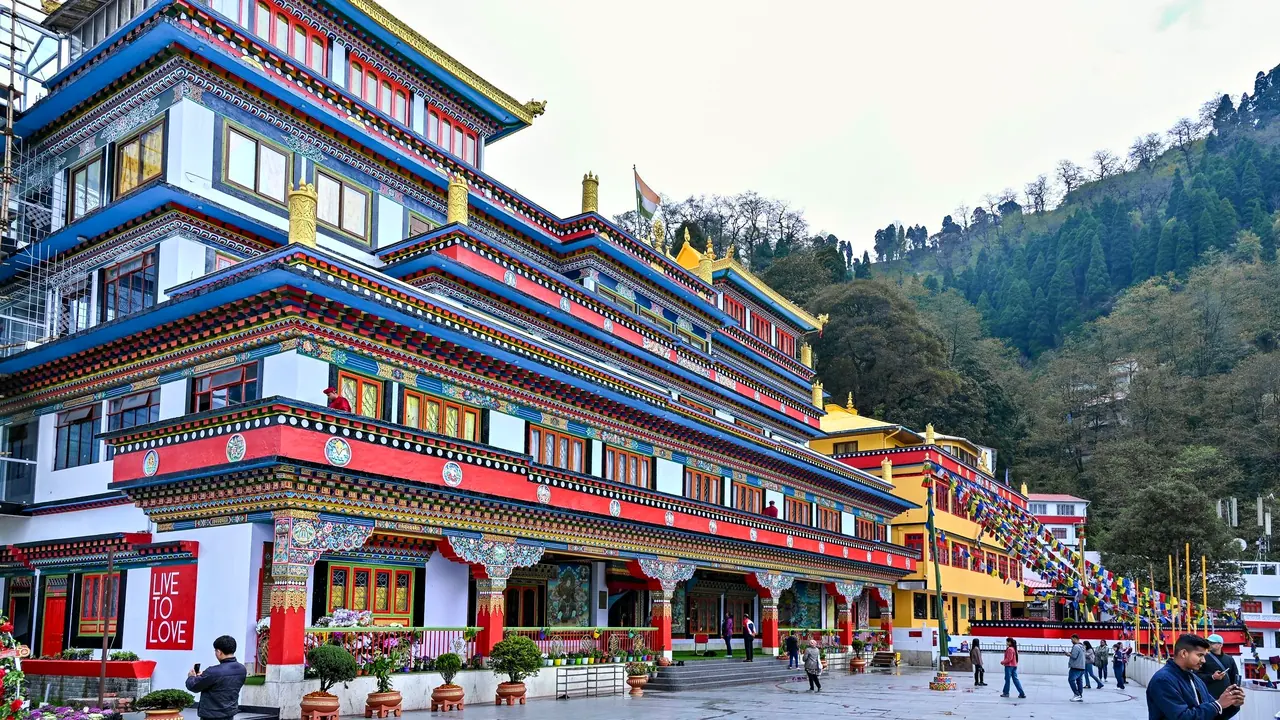
The Druk Sangag Choling monastery
- Affordable cities86
- Nature & outdoors83
- Culture & sights45
Photo: Krishnendu Biswas, Pexels License
Match
39
Every category weighted equally
- Beach & sun39
- Culture & arts38
- Food & nightlife33
- Family trip44
- Outdoors47
- Relax & unwind41
- Shopping & style37
- On a budget44
Darjeeling in twelve categories
Our verdict on each, scored 0 to 100 against the same fixed benchmark cities, so a score means the same thing on every page.
Beaches & swimming. Scores 3 out of 100.
Food & drink. Scores 42 out of 100.
Culture & sights. Scores 45 out of 100.
Nightlife. Scores 8 out of 100.
Nature & outdoors. Scores 83 out of 100.
Day trips. Scores 38 out of 100.
Good for families. Scores 40 out of 100.
Getting around. Scores 33 out of 100.
Shopping & style. Scores 40 out of 100.
Affordability. Scores 86 out of 100.
Live music & performing arts. Scores 10 out of 100.
Wellness & relaxation. Scores 40 out of 100.
Darjeeling category by category
Beaches & swimming
3There is no swimming here. Darjeeling sits on a ridge about 2,000m up in the eastern Himalaya, a long way from any coast, and the rivers in the valleys below are cold, fast and not used for bathing. A visitor who wants water should plan it as a separate part of the trip.
Food & drink
42Tea is the reason to come hungry. This is where the famous muscatel black tea is grown, and tasting first flush and second flush leaves in tea rooms around the Mall, or at an estate on the slopes below town, is a real pleasure. The everyday food comes from the hills: steamed momos, thukpa and thenthuk noodle soups, sel roti, and fiery dalle chilli pickle, served cheaply in small family kitchens around Chowk Bazaar and Laden La Road.
Colonial-era bakeries and tea rooms add cakes, toast and long breakfasts with a view. Beyond that the range is narrow: North Indian, Bengali and some Chinese-style cooking, few serious restaurants, and not much for anyone after fine dining or a wide wine list.
Culture & sights
45The town's heritage is a mix of the Raj and the Buddhist hills. The narrow-gauge Darjeeling Himalayan Railway, a UNESCO World Heritage site, still steams through the streets and loops around the Batasia Loop to Ghoom, where the Yiga Choeling monastery is one of the oldest in the region. Observatory Hill, with its shrine hung with prayer flags, rises above Chowrasta, and the Gothic St Andrew's Church and old colonial schools and hotels give the ridge its character.
The Himalayan Mountaineering Institute, founded after the first ascent of Everest and tied to Tenzing Norgay, has a fine small museum of expedition history. Add the Japanese Peace Pagoda and the Tibetan Refugee Self Help Centre, and two or three days covers it all.
Nightlife
8Darjeeling goes to bed early. There are a few old-fashioned pubs and hotel bars where you can have a drink by the fire, and the Mall stays busy into early evening, but by around ten the streets are quiet and cold. Most visitors are up before dawn for the sunrise anyway.
Nature & outdoors
83On a clear morning Kangchenjunga, the world's third-highest mountain, fills the northern sky above the town, and from Tiger Hill at sunrise the line of snow peaks can stretch as far as Everest. Below the ridge, tea estates fall away in steep green terraces, and walking between their bushes and through the oak and rhododendron forest is easy from the town edge. A ropeway drops into the Rangeet valley gardens.
The great walk is the Singalila Ridge, which starts at Manebhanjan about an hour and a half away and climbs through a national park with red pandas to Sandakphu, with a panorama of four of the five highest peaks. The best seasons are October to December and March to May. From June to September the monsoon brings heavy rain, leeches and cloud that can hide the mountains for weeks.
Day trips
38The outings are to other hill towns, and they share much of Darjeeling's character. Kurseong, about an hour down the Hill Cart Road or slower on the toy train, has old schools, tea estates and a quieter feel. Mirik, around two hours west near the Nepal border, is built around a lake ringed by tea gardens and pines. Kalimpong, across the Teesta valley, has monasteries, nurseries and a Sunday market, but on winding roads it makes a long day.
Small villages such as Lamahatta and Takdah offer homestays and forest walks. Sikkim's capital Gangtok is too far for a day and is better as a separate stop.
Good for families
40Children tend to love the toy train and the Padmaja Naidu Himalayan Zoological Park, one of the few places to see red pandas, snow leopards and Himalayan wolves up close. The ropeway and pony rides on Chowrasta add more. The cool climate also makes it a comfortable escape from the heat of the plains.
The practical side is harder. The town is built on steep slopes with many steps and few pavements, the main roads are narrow and congested, and the long, twisting drive up from the plains often leaves children car sick. The sunrise trip to Tiger Hill means a pre-dawn start in the cold. It suits older children better than toddlers and buggies.
Getting around
33The heart of town, Chowrasta and the Mall, is a car-free ridge that is pleasant to stroll, but almost everything else involves steep lanes and long flights of steps. There is no bus network a visitor would use. Shared jeeps and hired taxis do the work, crowding the narrow Hill Cart Road and the lanes around the main stand, and traffic can slow to a crawl in peak season.
The toy train is a heritage ride rather than transport. Reaching Darjeeling itself means a road trip of three hours or more up from the plains at Siliguri, Bagdogra airport or New Jalpaiguri station. Comfortable shoes and patience help most.
Shopping & style
40Tea is what to bring home, and it is worth taking time over: specialist shops along the Mall and Nehru Road let you taste and compare estates and flushes before buying loose leaf by weight. The Tibetan Refugee Self Help Centre sells hand-knotted carpets, thangka paintings and woodwork made on site.
Around Chowk Bazaar and the Mall there are stalls selling Tibetan jewellery, prayer wheels, singing bowls, woollen shawls and warm hats, with plenty of repetition between them. Beyond that the shopping is everyday and local, with no fashion streets or design boutiques.
Affordability
86Darjeeling is cheap for most of what a visitor does. Simple guesthouses, plates of momos and noodle soup, cups of tea, shared jeep rides and most entry fees cost very little. The main costs are the heritage hotels and tea-estate bungalows, which charge international rates, and private taxis for Tiger Hill and other outings. In the peak autumn and spring seasons and during Indian school vacations, rooms with a mountain view fill up and cost more.
Live music & performing arts
10There is little to attend. The most memorable performances are the masked cham dances at the monasteries during Buddhist festivals such as Losar, and occasional cultural evenings of Nepali and Lepcha music and dance. The hills have a real tradition of local rock and folk bands, but there is no theatre, concert hall or regular live-music venue for a visitor to plan around.
Wellness & relaxation
40Rest here comes from the setting rather than from spas. A few days in a tea-estate bungalow or a quiet hotel above the town, with mountain mornings, long walks and pots of tea, can be very restorative, and the cool air is a relief from the plains. Monasteries such as Ghoom offer quiet corners for sitting.
There is no bathing culture, and spa treatments are limited to a handful of upmarket hotels and estates. In the town itself the crowds on the Mall, honking jeeps and steep climbs work against calm, so it is best to stay on the edge of town or out among the gardens.
When should you go?
Pick a month to see what it is like. The climate figures are measured averages, not a forecast.
Darjeeling in July
Daytime high, °C
Rainfall in the month, mm
The whole year
Shaded against this city’s own year: the deepest cell is its best month for that figure and the palest its weakest.
Where the figures come from
Darjeeling has no weather station within reach, so its figures come from a gridded climate model rather than a measured record, and read a broad area rather than the city itself.
Temperature and rainfall are climate normals, averaged over the years shown. Darjeeling: 1991-2020 normals, TerraClimate 4 km grid at the town, no weather station within 90 km.
Before you go
| Measure | Darjeeling |
|---|---|
| Official language | Hindi, English |
| Currency | Indian Rupee (INR) |
| Sockets | CM230 V, 50 Hz |
| Driving side | Left |
| Time zone | UTC+5:30 |
| Emergency number | 108 or 112 |
| Elevation | 2,115 m |
| Main airport | Bagdogra Airport (IXB)40 km from centre13 non-stop destinations |
By the numbers
| Measure | Darjeeling |
|---|---|
| City population | 118,805 |
| People per km² | 11,208 |
| Museums within 10 km | 7 |
| UNESCO World Heritage sites within 50 km | 1 |
Compare Darjeeling with
Every comparison with a written verdict behind it.