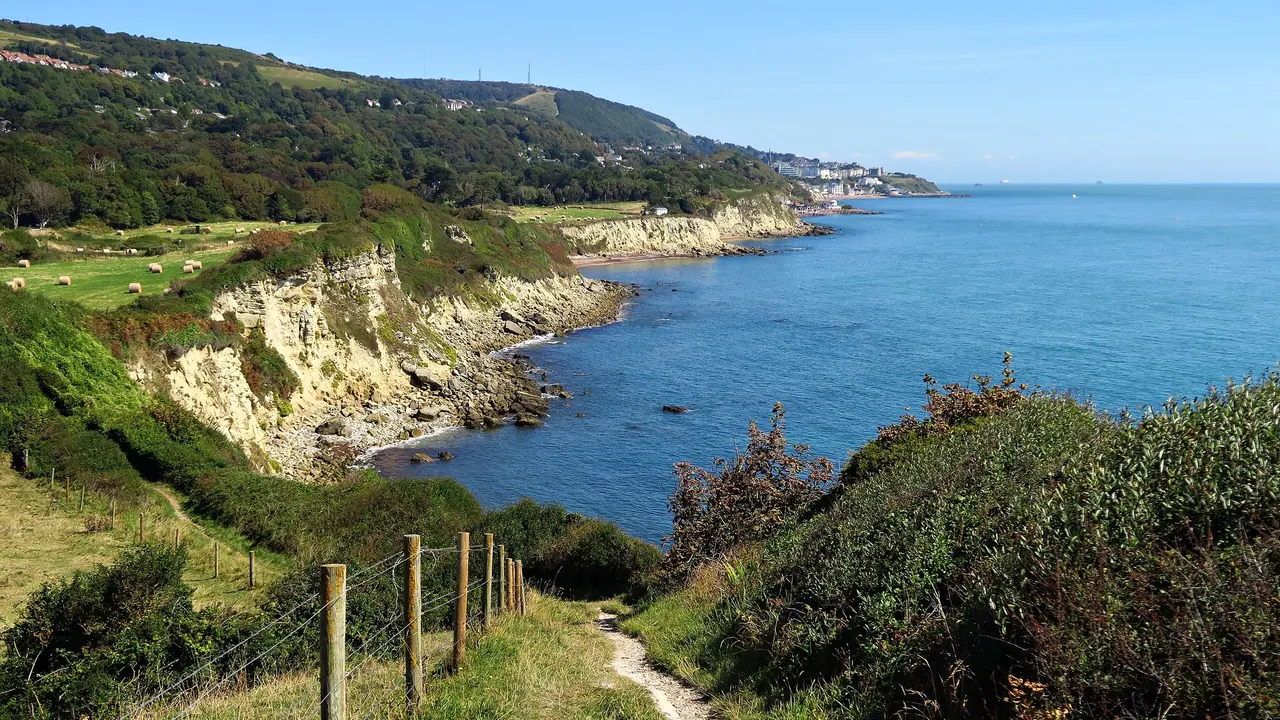
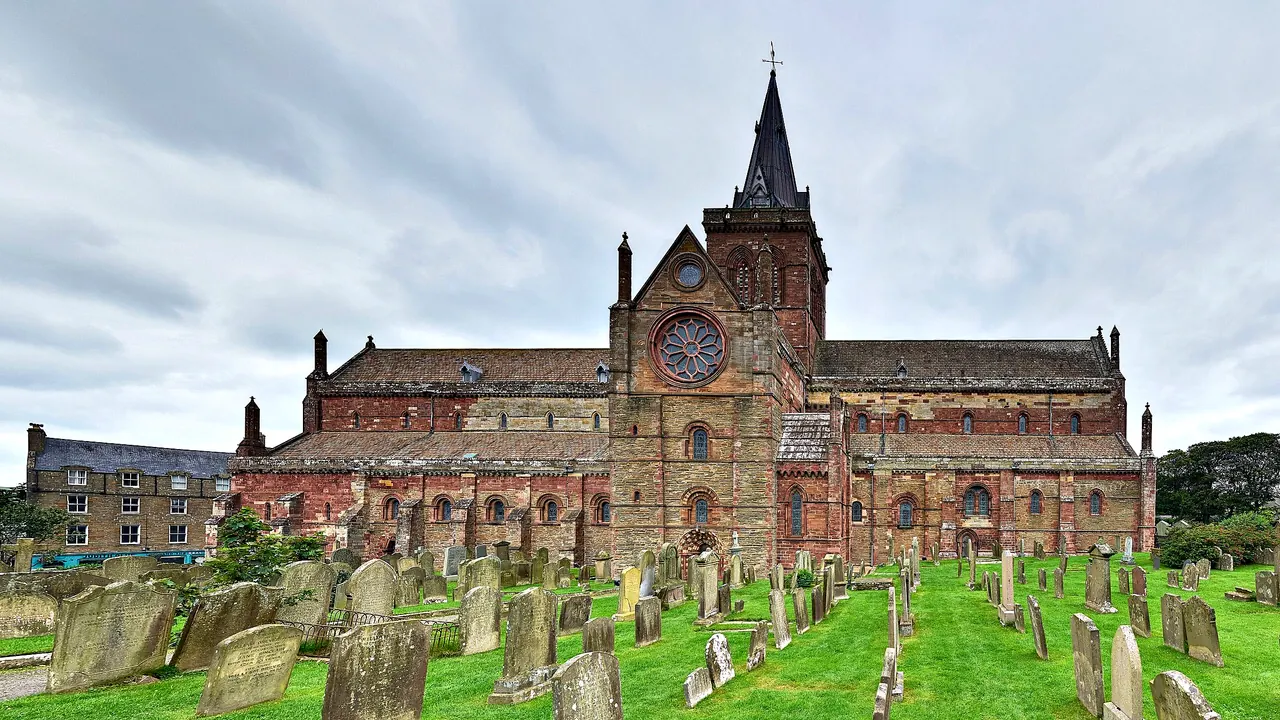
Photos: Isle of Wight by Michael Coppins, CC BY-SA 4.0, cropped; Orkney by Virtual-Pano, CC BY-SA 4.0, cropped.
Isle of Wight or Orkney?
Our verdict in twelve categories, each scored against the same fixed benchmark cities, and the climate month by month, so you can choose for your trip.
Choose Isle of Wight for
- families
- beaches
- day trips
The Isle of Wight suits a relaxed seaside vacation, above all with children. It has the sandy bays and gentle water, attractions built for families, and a bus and train network that gets you between resort towns without much effort. Portsmouth and the New Forest are a short crossing away when you want a change from the island.
Choose Orkney for
- culture and sights
- shopping
Orkney is the choice if you travel to see the deep past. Skara Brae, Maeshowe and the stone circles of Brodgar and Stenness make the West Mainland one of Europe's great prehistoric landscapes, and Kirkwall's sandstone cathedral adds a medieval layer. In return you get cold seas, few comforts laid on for children and more planning around ferries, but the place feels further away and is far less crowded.
Scoreboard
Twelve categories on one fixed scale from 0 to 100. The shaded stretch is the gap between the two.
Your match
Pick a travel style or drag the sliders, and both match scores follow your weighting.
Wins on families and beaches with your weighting.
Wins on culture and sights and shopping with your weighting.
What matters to you?
Category by category
What the scores mean for a trip.
Beaches & swimming
The Isle of Wight is the place for an actual beach day. Sandown Bay runs for miles of sheltered sand that shelves gently, Ryde's flats stretch far out at low tide, and in late summer the Channel is warm enough for a swim, if not a long one.
Orkney's shell-sand bays at Waulkmill, Birsay and on Sanday can be stunning and empty, but the water stays cold even in August and the wind rarely lets up. On Orkney you walk the beach, look for shells and watch the seals. You don't spend the day on the sand.
Food & drink
Both islands eat simply from their own produce, and neither is a reason to go. The Isle of Wight leans towards seaside comforts: crab sandwiches in harbour pubs, fish and chips, cream teas in Godshill and a few ambitious kitchens around Cowes and Ventnor.
Orkney's larder is more distinctive, with hand-dived scallops, grass-fed beef, bere bannocks and two whisky distilleries in Kirkwall. Places to eat are scarce, though, especially on the outer islands, so you will cook for yourself more often there.
Culture & sights
Orkney is far ahead here. The Neolithic heart of the West Mainland, with Skara Brae's furnished stone houses, Maeshowe's Viking graffiti and the two great stone circles, is something few places in Europe can rival. St Magnus Cathedral, the Italian Chapel and the Scapa Flow wartime remains fill several more days.
The Isle of Wight has one sight of national standing in Osborne House, plus Carisbrooke Castle. After those come pleasant half-day visits such as Brading's Roman mosaics and Tennyson's Farringford.
Nightlife
Neither island is for going out, and both end the evening in the pub. The Isle of Wight has a couple of small clubs in Newport and Ryde and a lively regatta week in Cowes. Orkney has no clubs at all, but its Kirkwall and Stromness bars sometimes get a fiddle session going, and on midsummer nights there is still light enough for a late walk.
Nature & outdoors
Both are strong for gentle outdoor time, but in different ways. The Isle of Wight is soft chalk country, with Tennyson Down running out to the Needles, the wooded Undercliff, a coast path that circles the island, lanes made for cycling, the Solent's famous sailing waters and red squirrels in the woods.
Orkney is bare, treeless and more exposed. Its drama is the Old Man of Hoy, seabird cliffs at Marwick Head and Noup Head, puffins, seals everywhere and the occasional orca. It feels wilder, but you are much more at the mercy of the weather.
Day trips
The Isle of Wight has the better range. As well as its own small towns, it has quick crossings to Portsmouth's Historic Dockyard with HMS Victory and the Mary Rose, to Lymington for the New Forest and Beaulieu, and on to Winchester by train.
Orkney's outings mean island-hopping. You can take a small ferry to Rousay's cairns or Westray's bays, or a short flight to Papa Westray's ancient Knap of Howar. These are rewarding but quieter, and each one is shaped by the ferry timetable.
Good for families
The Isle of Wight was built for family vacations and it shows. Gentle sands, Blackgang Chine's smugglers and dinosaurs, Robin Hill, the Sandown zoo, the steam railway and the Alum Bay chairlift will keep children busy for a week, with caravan parks and cottages set up for them.
Orkney is just as safe and its ferries feel like an adventure, but apart from Kirkwall's pool, nothing is aimed at children. The cold sea and wet days mean it suits only families who are happy outdoors in any weather.
Getting around
The Isle of Wight is easier to manage without a car. A good bus network links every town, open-top buses climb to the Needles, and the little railway runs from Ryde Pier to Shanklin. The foot ferries also land you right in town.
On Orkney you really need a car. The Mainland is easy to drive across the Churchill Barriers, but the buses are too infrequent to rely on, and reaching the outer islands means booking small ferries or planes that the weather can cancel.
Shopping & style
Orkney has the more rewarding small finds. Silversmiths on Kirkwall's Albert Street work Norse and Neolithic patterns into their jewellery, and knitwear, the straw-backed Orkney chair and a Mainland craft trail add to the list.
The Isle of Wight is more ordinary: Newport's everyday high street, Cowes's sailing chandlers, a few glassblowers and potters, and jars of Alum Bay sand. Neither is a reason to go.
Affordability
Neither island is a cheap trip, and on both the money goes mainly on getting there and on summer rooms. On the Isle of Wight, taking a car across the Solent is the big expense, and in July and August cottages and seaside hotels charge full high-season prices. A foot crossing with the island's buses, caravan parks, pub meals and a visit outside the school summer break all bring the cost down.
On Orkney the pressure comes from scarcity: there are few rooms, so they book up early and cost more in season. The flight or ferry, a hire car and the inter-island boats add up. Against that, many sites cost nothing to see, among them the stone circles of Brodgar and Stenness, the sea cliffs and the beaches, and cooking with local produce keeps daily spending reasonable.
Live music & performing arts
Both islands depend on a festival, but the music is very different. The Isle of Wight Festival brings a big rock and pop weekend outside Newport each June, with a Victorian theatre in Shanklin the rest of the year.
Orkney's St Magnus International Festival offers classical music and drama in the cathedral around midsummer, and the Folk Festival takes over Stromness. Living fiddle and accordion music turns up in pubs and at dances.
Wellness & relaxation
Neither has spa traditions, but the Isle of Wight is easier to slow down in. Ventnor was built as a Victorian health resort for its mild, sheltered air, a few hotels offer treatments, and Quarr Abbey's gardens are a calm place to spend an afternoon.
Orkney's version of rest is more austere. There are empty roads, long summer evenings and a book by the window, with little pampering beyond Kirkwall's public pool.
When should you go?
Pick your month. The climate figures are measured averages, not a forecast.
Isle of Wight in July
Orkney in July
Daytime high, °C
Rainfall in the month, mm
Where the figures come from
Isle of Wight's temperatures are measured 39 km from the centre, at Bournemouth Airport.
Isle of Wight has no rain gauge within 25 km of the centre, so its rainfall comes from a gridded climate dataset read at the destination rather than from a gauge further away.
Temperature and rainfall are climate normals, averaged over the years shown. Isle of Wight: 1991-2020 normals, Bournemouth Airport (38.9 km from centre). Orkney: 1991-2020 normals, Kirkwall Airport (4.9 km from centre).
The Isle of Wight has a mild southern climate with a proper summer. Highs reach about 22°C in July and August, the sea warms to around 18°C by August, and July is the sunniest month. That makes July to September the time for the beach, while May, June and September are better for walking the downs without the August crowds on the lanes. From October the rain picks up noticeably, and the winter months are grey, damp and cool rather than harsh.
Orkney is several degrees cooler all year. Summer highs stay around 16°C and the sea never really warms, so it suits walking rather than swimming. Its brightest month is May, not July, and late spring to midsummer brings the seabirds and the long light evenings. Autumn turns wet and windy fast, with November the wettest month at about 126mm, and the winter days are short and dark.
Which traveller are you?
On a family trip with young children, the Isle of Wight is the easy choice. Blackgang Chine, the Sandown zoo, the steam railway and fossil hunts on the beaches are all made for children, while Orkney offers seals and rock pools but little laid on.
For a culture and arts trip, Orkney wins clearly. Skara Brae, Maeshowe, the Ring of Brodgar and St Magnus Cathedral are of European importance, while the Isle of Wight's list thins out after Osborne House and Carisbrooke Castle.
On a beach and sun trip, choose the Isle of Wight. Its summers are warmer and sunnier, and the sheltered sand between Sandown and Shanklin makes for a whole day by the water. Orkney's shell-sand bays are lovely to walk, but the sea stays bracing.
Before you go
| Measure | Isle of Wight | Orkney |
|---|---|---|
| Official language | English | English |
| Currency | Pound Sterling (GBP) | Pound Sterling (GBP) |
| Sockets | G230 V, 50 Hz | G230 V, 50 Hz |
| Driving side | Left | Left |
| Time zone | UTC, UTC+1 in summer | UTC, UTC+1 in summer |
| Emergency number | 112 or 999 | 112 or 999 |
| Main airport | Southampton Airport (SOU)15 non-stop destinations | Kirkwall Airport (KOI)9 non-stop destinations |
| Public holidays this year | 8 days | 10 days |
By the numbers
| Measure | Isle of Wight | Orkney |
|---|---|---|
| Population | 140,459 | 22,270 |
| People per km² | 369 | 22 |
| Swim season, months above 21 °C | None | None |
Where else could you go?
Every comparison below shares a destination with this one, so you can follow Isle of Wight or Orkney somewhere new.
- Jurassic Coastvs Isle of Wight
- Cotswoldsvs Isle of Wight
- Devonvs Isle of Wight
- Normandyvs Isle of Wight
- Scottish Highlandsvs Orkney
- Isle of Skyevs Orkney