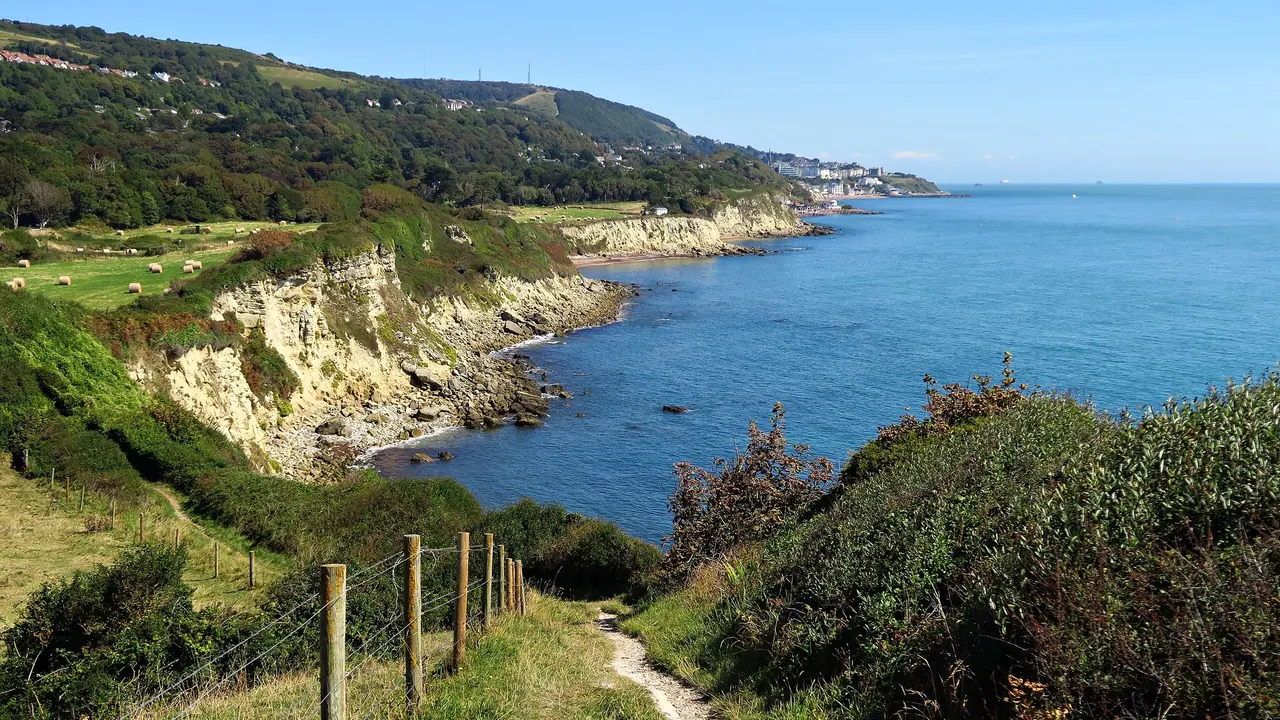
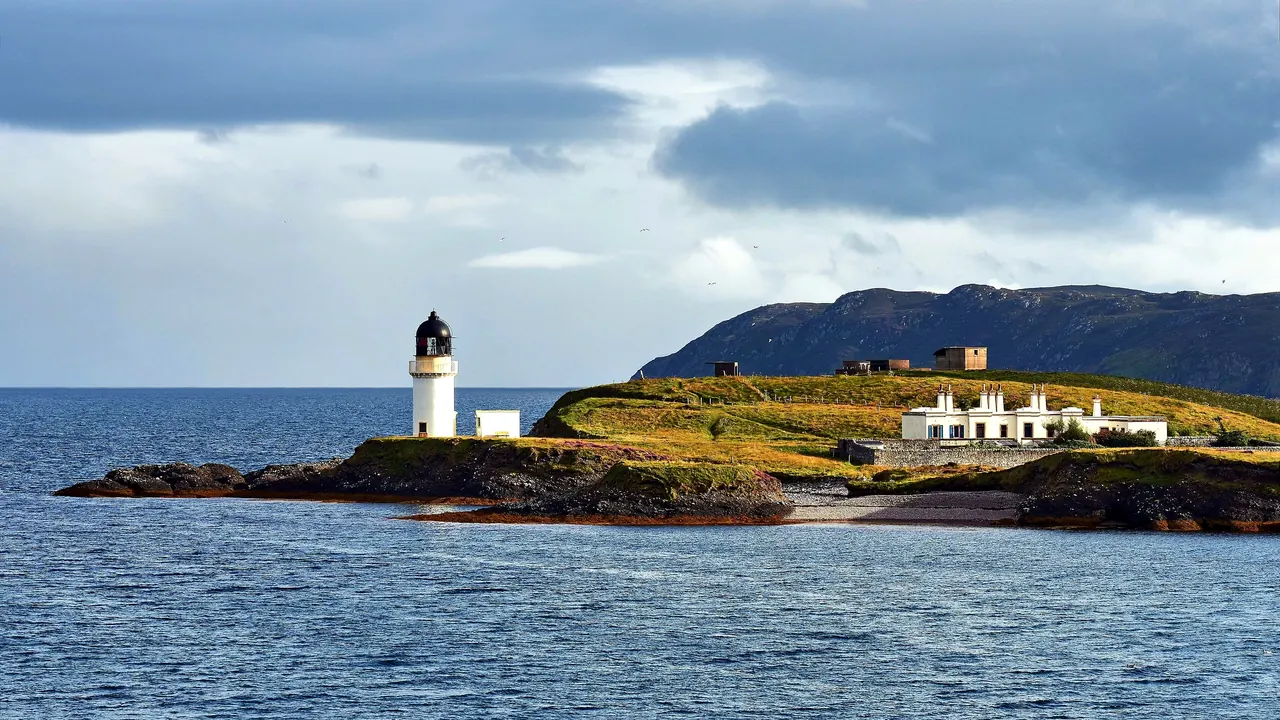
Photos: Isle of Wight by Michael Coppins, CC BY-SA 4.0, cropped; Outer Hebrides by Virtual-Pano, CC BY-SA 4.0, cropped.
Isle of Wight or Outer Hebrides?
Our verdict in twelve categories, each scored against the same fixed benchmark cities, and the climate month by month, so you can choose for your trip.
Choose Isle of Wight for
- families
- getting around
- day trips
The Isle of Wight suits a classic seaside vacation, especially with children. It has sheltered sandy bays on the east coast and attractions built for families. Buses and a short railway serve the resort coast, and Portsmouth or Winchester are a short crossing away, so you can fill a week without long drives. It is gentler and busier than the Hebrides, and its countryside is pretty rather than wild.
Choose Outer Hebrides for
- nature and the outdoors
- shopping
- wellness
Choose the Outer Hebrides for landscape and solitude. Eagles over Harris, otters on quiet shores, empty white strands, the Calanais stones and a boat to St Kilda reward walkers, cyclists, kayakers and wildlife watchers who bring waterproofs and a car. In return you give up comfortable swimming, entertainment for children and towns to wander, and you accept long single-track drives between villages.
Scoreboard
Twelve categories on one fixed scale from 0 to 100. The shaded stretch is the gap between the two.
Your match
Pick a travel style or drag the sliders, and both match scores follow your weighting.
Wins on families and getting around with your weighting.
Wins on nature and the outdoors and shopping with your weighting.
What matters to you?
Category by category
What the scores mean for a trip.
Beaches & swimming
Both islands have cool northern water, but the Isle of Wight's beaches are easier to use for a day by the sea. Sandown Bay's sheltered sand shelves gently past Sandown and Shanklin, and Ryde's flats run far out at low tide. Compton Bay adds surf under its coloured cliffs, and late summer brings water warm enough for a real swim.
The Outer Hebrides have the more beautiful sand: Luskentyre and Scarista on Harris, Uig on Lewis and the twin bays of Vatersay, often empty and turquoise in sunshine. But the Atlantic there stays several degrees colder, so a swim means a quick dip or a wetsuit. Most people come to walk the sand and picnic, not to lie out.
Food & drink
Both depend on their produce more than on their kitchens, but the Isle of Wight has more places to eat. Crab and lobster turn up in harbour pubs at Bembridge, Ventnor and Yarmouth, Godshill does cream teas, and a few serious restaurants sit around Cowes and Ventnor. Farm shops sell island garlic, tomatoes and cheese.
The Hebridean seafood is just as fine: langoustines and scallops straight off the boats, local smoked salmon and Stornoway black pudding. Outside Stornoway and Harris, though, restaurants are few, and many close in winter and on Sundays. Plan to self-cater and buy from the pier or the smokehouse.
Culture & sights
Neither has a long list of sights, and the real difference is the period they come from. The Isle of Wight's sights are mostly royal and Victorian: Osborne House, Carisbrooke Castle where Charles I was held, the Needles Old Battery and Tennyson's Farringford. Brading's Roman mosaics are the oldest of them, and all are within short drives of each other.
The Hebrides go much further back, to the Calanais stones, the Dun Carloway broch and the thatched blackhouses at Gearrannan and Arnol. They also have a living Gaelic culture, which the Isle of Wight has nothing to match. The sites are spread far apart, though, along a long road.
Nightlife
An evening on the Isle of Wight usually ends in a harbour pub in Cowes or Yarmouth, and Newport and Ryde have a few late bars and a small club or two. The one week with real life after dark is Cowes regatta in August, when sailing crews fill the waterfront.
The Outer Hebrides are quieter still. A night out is a hotel bar or one of Stornoway's few pubs, sometimes with a traditional music session at the weekend, and on Lewis and Harris Sundays are almost silent. People come here for the long light evenings outdoors.
Nature & outdoors
The Outer Hebrides are clearly ahead for nature. North Harris has real hill walking up to the Clisham, South Harris is bare grey gneiss above white sand, and the Uists are full of birds and machair flowers. Golden and white-tailed eagles, otters, corncrakes and basking sharks make it one of Britain's great wildlife trips, and in summer boats run to the seabird cliffs of St Kilda.
The Isle of Wight is gentler farmed countryside: chalk downs, the ridge of Tennyson Down out to the Needles, the tangled woods of the Undercliff and a 110km coastal path. Its strength is on the water, with Solent sailing from Cowes, and in the red squirrels of the woods around Newtown Creek.
Day trips
The Isle of Wight offers more variety on a day out. Cowes, Yarmouth, Ventnor and Godshill are all close together, and the mainland is easy to reach. The fast ferry from Ryde gets you to Portsmouth's Historic Dockyard, with HMS Victory and the Mary Rose, and the Lymington ferry gets you to the New Forest and Beaulieu. Winchester is a short train ride beyond Southampton.
From a base in the Hebrides, day trips mean hopping along the causeways from Berneray to Eriskay, or taking the short ferry to Barra. Each one ends at a harbour, a village and a stretch of coast rather than a town. Only the ferry to Skye, for Portree, adds a different kind of place.
Good for families
With children, the Isle of Wight is far easier. It was made for the British family seaside vacation. Sandown Bay's sand shelves gently, and Blackgang Chine has smugglers and dinosaurs. There is also woodland play at Robin Hill, the zoo, a steam railway, fossil hunts and the chairlift at the Needles, none of them far apart.
The Outer Hebrides give children freedom rather than entertainment: rock pools, seals, empty beaches and eagles overhead. On a wet day there is little beyond the pool in Stornoway, and long single-track drives test young patience.
Getting around
The Isle of Wight is small, about 37km from end to end. Buses reach every town, open-top buses run up to the Needles in summer, and a railway runs from Ryde Pier to Shanklin, so you can stay without a car. The foot ferries land right in Ryde and Cowes.
The Outer Hebrides stretch around 210km from the Butt of Lewis to Vatersay, mostly on single-track roads. Buses are infrequent, and on Lewis and Harris there are almost none on Sundays. A car is essential, and inter-island ferries need booking in summer.
Shopping & style
The Outer Hebrides have one thing worth bringing an empty bag for: Harris Tweed, bought from the weavers' own sheds on Lewis and Harris. Knitwear, island gin and smoked fish are good to take home too. The Isle of Wight has glassblowers, potters, chandlers and nautical clothing in Cowes, and farm-shop chutneys and garlic. Newport's high street is ordinary, though, and the souvenirs run to sticks of rock and bottles of Alum Bay sand.
Affordability
Neither is cheap in summer, and both cost noticeably less in spring and early autumn. On the Isle of Wight the costs that add up are the car ferry and English high-season rates in July and August. You can cut them by crossing on foot, using the buses and staying in a caravan park.
In the Hebrides you need a car, so car hire and vehicle ferries can't be avoided, and food costs more because everything is shipped in. The free beaches and walks help, and so do campsites and campervans.
Live music & performing arts
Each has one big summer festival and little else on stage. The Isle of Wight Festival, famous since its late-1960s line-ups, brings rock and pop to the fields outside Newport each June, and Shanklin's Victorian theatre has touring shows and pantomime. In the Hebrides, music is more a part of daily life: the Hebridean Celtic Festival in Stornoway each July, ceilidhs and fèis events in village halls, and Gaelic song in pub sessions.
Wellness & relaxation
The Isle of Wight's quiet is the gentle kind of an old resort. Ventnor was built as a Victorian health resort for its mild, sheltered air, and you can sit on the clifftop benches or in the gardens of Quarr Abbey.
The Hebrides offer a wilder stillness: empty roads, summer light deep into the evening, a cottage by a sea loch and near-silent Sundays on Lewis and Harris. On both islands spas are limited to a few hotel treatment rooms, so come for the pace, not for treatments.
When should you go?
Pick your month. The climate figures are measured averages, not a forecast.
Isle of Wight in July
Outer Hebrides in July
Daytime high, °C
Rainfall in the month, mm
Where the figures come from
Isle of Wight's temperatures are measured 39 km from the centre, at Bournemouth Airport.
Isle of Wight has no rain gauge within 25 km of the centre, so its rainfall comes from a gridded climate dataset read at the destination rather than from a gauge further away.
Temperature and rainfall are climate normals, averaged over the years shown. Isle of Wight: 1991-2020 normals, Bournemouth Airport (38.9 km from centre). Outer Hebrides: 1991-2020 normals, Stornoway (4.1 km from centre).
The Isle of Wight has the warmer and sunnier summer. July and August reach about 22°C and the sea peaks around 18°C in August, so July to September is the time for swimming. June and July are the sunniest months. Rain is moderate through spring and summer and heavier from October to December, when the days are short and grey and the island is quiet.
The Outer Hebrides are cooler all year. Summer highs are around 16°C, the sea barely gets past 13°C and the beaches are for walking. Rain is heavier than on the Isle of Wight in every month, and worst from October to February. May is the best month, the driest stretch of the year and the sunniest month, with long light evenings. From June the sunshine falls away, and from late autumn through winter the islands are dark, wet and windy.
Which traveller are you?
On a family trip with young children, the Isle of Wight is the clear choice. It has gently shelving sand in Sandown Bay, Blackgang Chine, the zoo at Sandown, fossil hunts and only short distances between them. Wet days and restless afternoons are easy to fill there, and the Hebrides cannot match that.
For an outdoors trip, the Outer Hebrides are the stronger choice. Hill walking on North Harris, eagles and otters, the Hebridean Way, sea kayaking, surf on Lewis and the boat to St Kilda add up to real wild country. The Isle of Wight offers gentle downland and sailing.
On a beach and sun trip, go to the Isle of Wight. It has more summer sunshine, a sea warm enough for proper swims in late summer and resort sands with towns behind them. The Hebridean strands are lovelier, but cold water and wind make them better for walking.
Before you go
| Measure | Isle of Wight | Outer Hebrides |
|---|---|---|
| Official language | English | English |
| Currency | Pound Sterling (GBP) | Pound Sterling (GBP) |
| Sockets | G230 V, 50 Hz | G230 V, 50 Hz |
| Driving side | Left | Left |
| Time zone | UTC, UTC+1 in summer | UTC, UTC+1 in summer |
| Emergency number | 112 or 999 | 112 or 999 |
| Main airport | Southampton Airport (SOU)15 non-stop destinations | Stornoway Airport (SYY)6 non-stop destinations |
| Public holidays this year | 8 days | 10 days |
By the numbers
| Measure | Isle of Wight | Outer Hebrides |
|---|---|---|
| Population | 140,459 | 26,720 |
| People per km² | 369 | 9 |
| Swim season, months above 21 °C | None | None |
Where else could you go?
Every comparison below shares a destination with this one, so you can follow Isle of Wight or Outer Hebrides somewhere new.
- Isle of Skyevs Outer Hebrides
- Jurassic Coastvs Isle of Wight
- Cotswoldsvs Isle of Wight
- Scottish Highlandsvs Outer Hebrides
- Devonvs Isle of Wight
- Normandyvs Isle of Wight