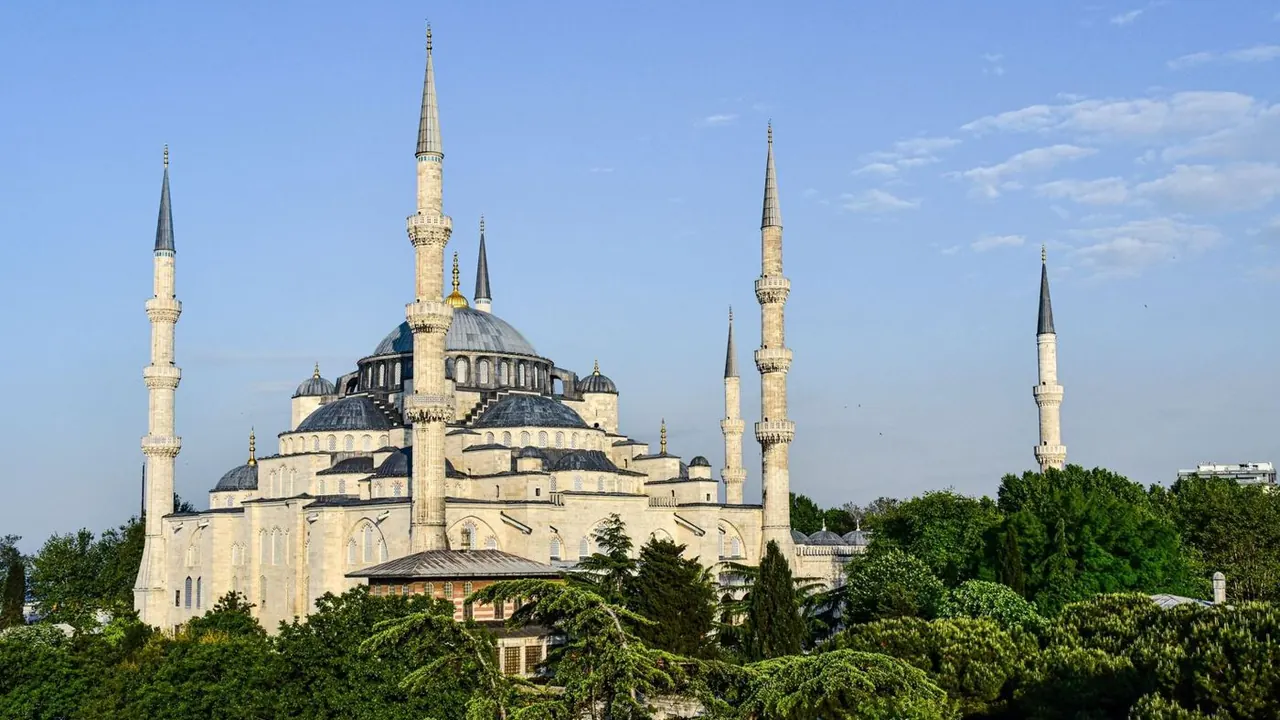
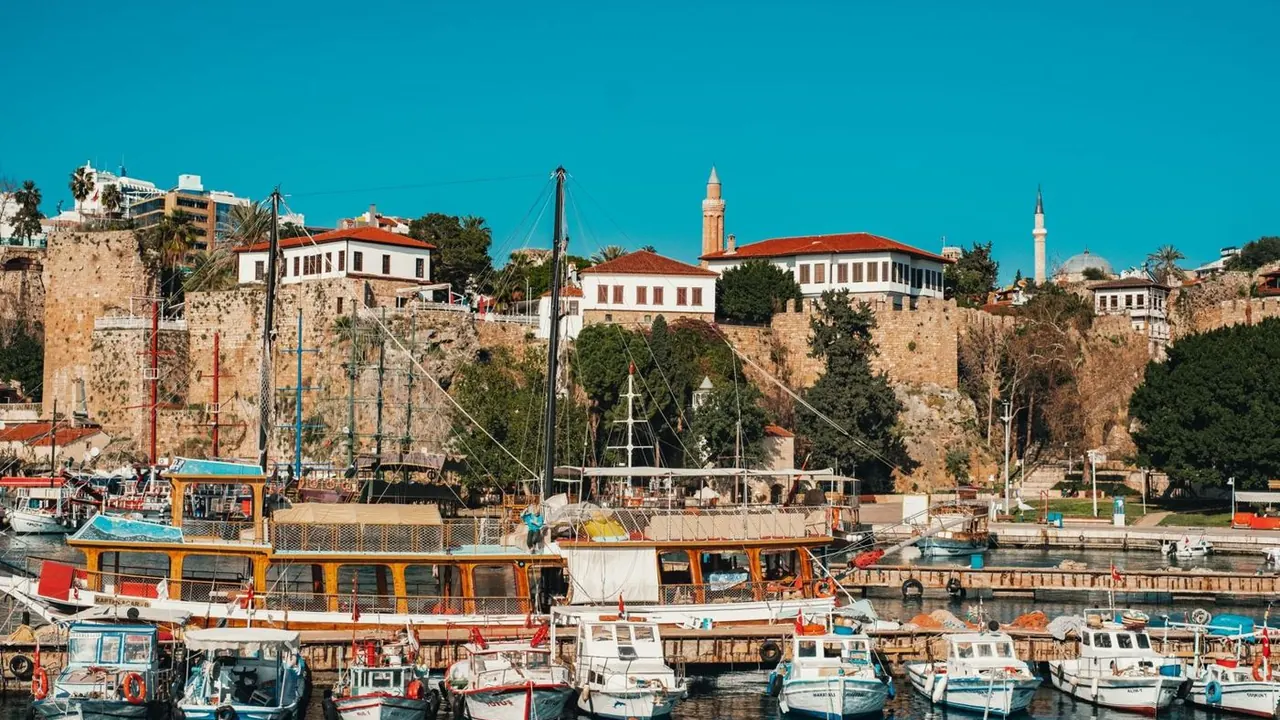
Photos: Istanbul by AXP Photography, Pexels License; Antalya by Furkan Tumer, Pexels License.
Istanbul or Antalya?
Our verdict in twelve categories, each scored against the same fixed benchmark cities, and the climate month by month, so you can choose for your trip.
Choose Istanbul for
- shopping
- culture and sights
- food and drink
Choose Istanbul when the city itself is the point. The monuments of the historic peninsula, food from every region of Turkey, the great bazaars and the late nights in Beyoglu and Kadikoy give you more to do in a week than Antalya could. Its working sixteenth-century hammams beat anything on the coast. Swimming there is only a side trip.
Choose Antalya for
- beaches
- nature and the outdoors
- day trips
Antalya suits a warm-weather trip built around the sea and the landscape behind it. You get pebble and sand beaches inside the city, the Taurus mountains dropping straight to the coast, and Roman cities such as Aspendos and Termessos within a short drive. It is also the easier choice for families, with resorts made for children and shallow water at Lara.
Scoreboard
Twelve categories on one fixed scale from 0 to 100. The shaded stretch is the gap between the two.
Your match
Pick a travel style or drag the sliders, and both match scores follow your weighting.
Wins on shopping and culture and sights with your weighting.
Wins on beaches and nature and the outdoors with your weighting.
What matters to you?
Category by category
What the scores mean for a trip.
Beaches & swimming
Antalya has two kinds of city beach. Konyaaltı is a long pebble shore with clear water that deepens quickly, and Lara has sand for easier paddling. You can also swim off the rocks below Kaleiçi. Kemer and Belek add more choice, and the sea is far warmer than anywhere near Istanbul.
Istanbul lives beside the water without really swimming in it. Its proper beaches at Kilyos and Sile are about an hour north. They are sandy but cooler and known for undertow. The coves on the Princes' Islands make a pleasant half day, not a beach trip.
Food & drink
Istanbul is one of the great eating cities, with cooking from every Turkish region. You can have lunch from the trays at a lokanta, a fish sandwich by the Galata Bridge, an evening of meze and rakı at a meyhane in Beyoglu or Kumkapi, and a day grazing through Kadikoy's market streets.
Antalya's food is narrower but honest. The best meals are piyaz with şiş köfte, tandır lamb and Gulf fish, eaten in plain local places away from Kaleiçi and the hotel buffets. Its weekly markets are piled with citrus and pomegranates from the coastal plain.
Culture & sights
Istanbul's historic peninsula alone outweighs everything Antalya has to see. Hagia Sophia, the Blue Mosque, Topkapi and the Basilica Cistern are within a short walk of each other. Further out are the Süleymaniye, the Chora church and the palaces of the Bosphorus.
Antalya's sights are compact. Kaleiçi's Ottoman lanes, Hadrian's Gate and the Yivli Minare fill a pleasant morning, and the Antalya Museum's statues from Perge are first-rate. The region's great antiquity, though, lies outside the town.
Nightlife
Istanbul's nights are bigger and later. There are rooftop bars and singing meyhanes off Istiklal Avenue, polished cocktail bars in Karakoy and Cihangir, and cheaper, packed bar streets in Kadikoy and Moda. In summer the clubs on the Bosphorus at Ortakoy run until dawn.
Antalya's nightlife is mostly a summer thing: courtyard bars in Kaleiçi, beach clubs at Konyaaltı and Lara, and resort discos. The venues are spread out, so you need taxis between them, and the scene shrinks to a few local bars in winter.
Nature & outdoors
Antalya's setting is far wilder. The Taurus range falls straight into the sea, and the cable car up Tahtalı Dağı climbs to about 2,365m. The Lycian Way runs past Phaselis and Olympos, and there is rafting in Köprülü Canyon, diving along the coast and winter skiing at Saklıkent.
Istanbul's outdoors is gentler and more urban. You can walk along the wooded Bosphorus, see the April tulips in Emirgan, follow the trails in Belgrad Forest and cycle on the car-free Princes' Islands. There are no mountains within easy reach.
Day trips
Antalya is ringed by ancient cities. Perge, the great theatre at Aspendos and Termessos on its mountain peak are all close. Side pairs its temple of Apollo with a seaside town, and Myra and the sunken city at Kekova make a longer but rewarding day.
Istanbul's easiest outings are by ferry, to the Princes' Islands or up the Bosphorus to Anadolu Kavagi. Bursa, the first Ottoman capital, is the best town trip. Edirne and Iznik make long days, and just getting out of the city always takes time.
Good for families
Antalya is the easier choice with children. The resorts in Lara, Belek and Kemer have pools, slides and kids' clubs, Lara's shallow sandy water suits toddlers, and a water park and a walk-through aquarium fill the hottest hours. July and August heat and the steep lanes of Kaleiçi are its weak points.
Istanbul is just as warm towards children, and ferry rides, the Rahmi M. Koç Museum and Miniaturk all go down well. But the crowds, cobbled hills, traffic and stairs tire small legs and defeat pushchairs.
Getting around
Istanbul moves visitors more smoothly. One card covers the metro, the T1 tram, the Marmaray tunnel, the funiculars and the ferries, and the ferries are a sight in themselves. The price of its size is crowded rush hours and slow taxis.
Antalya's tram links the airport, Kaleiçi and the Konyaaltı side well enough. But the resort coast stretches for tens of kilometres, and buses barely reach the ruins and trails, so most visitors who want to explore hire a car or book tours.
Shopping & style
Antalya is a place to pick up souvenirs, while Istanbul is a place to go shopping. In Antalya you buy practical things: chain-store basics in the malls, the usual crafts in the old town, and produce from the weekly markets, which is often the best thing to take home. Be wary of the factory-outlet stops that organised tours build in. If you want fashion, design or anything unusual, you will find little.
Istanbul has the same Turkish crafts in far greater depth and quality. They are sold in covered markets that have traded for more than five centuries and are worth a visit even if you buy nothing. It also has Turkish fashion labels and international designers, antique dealers and Kadikoy's second-hand stalls, so a keen shopper can fill several days and find good pieces as well as bargains. In the old markets of both cities, haggling is expected.
Affordability
The two cost much the same overall. Both are cheap if you live like a local and dearer where visitors gather, so the difference lies in what you spend on. In Antalya, köfte houses, markets and the tram cost little, and all-inclusive packages can suit families. Kaleiçi restaurants, beach clubs and boat trips cost noticeably more, and rooms are cheaper in spring and autumn.
In Istanbul, ferries, simit and lokanta lunches are cheap. Hotels in Sultanahmet and Galata, entry fees at the monuments and heavily taxed drinks add up quickly, and staying in Kadikoy saves a great deal.
Live music & performing arts
Istanbul has much more on stage. The state opera and ballet perform at the Ataturk Cultural Centre, concert halls bring in orchestras and touring stars, and summer music and jazz festivals fill historic courtyards. Add Sema ceremonies in old dervish lodges and small rock and folk venues in Beyoglu and Kadikoy.
Antalya has its own state opera, ballet and theatre in winter, and one magnificent event: the summer festival on the Roman stage at Aspendos. Beyond that, live music means bar bands and hotel shows.
Wellness & relaxation
Istanbul has the more memorable bathing. Sinan's sixteenth-century hammams, such as the Cemberlitas and the Haseki Hürrem, still work under their star-pierced domes. A long tea on a terrace in Kandilli or a slow ferry ride makes up for the noise of the city.
Antalya relaxes you in a different way. There are a few old hammams in Kaleiçi, large resort spas in Lara, Belek and Kemer, and an easy rhythm of long breakfasts and evenings by the sea. It is calmest in spring and autumn.
When should you go?
Pick your month. The climate figures are measured averages, not a forecast.
Istanbul in July
Antalya in July
Daytime high, °C
Rainfall in the month, mm
Temperature and rainfall are climate normals, averaged over the years shown. Istanbul: 1991-2020 normals, Istanbul / Goztepe (9.9 km from centre). Antalya: 1991-2020 normals, Antalya (23.4 km from centre).
Antalya has a long beach season. The sea is warm enough from late May into October and reaches about 29°C in August. But July and August highs of 35°C make sightseeing and inland walking hard work, so April, May and October are the best months to combine ruins, trails and swimming. Summer is almost dry and very sunny. From November to February the rain comes in earnest, peaking at 273mm in December, though the days stay mild.
Istanbul is cooler all year. May, June, September and early October are the best months for walking the streets, warm but without the coastal heat. July and August reach about 30°C, which is also when the Black Sea beaches are at their warmest. Winter is grey and chilly, with highs around 9°C and far less sun than Antalya. The rain is spread more evenly across the year instead of arriving in one wet season.
Which traveller are you?
On a beach and sun trip, Antalya is the clear pick. Konyaaltı and Lara are both in the city, and the coves of Kemer and the sands of Belek are within an hour. Istanbul's real beaches are an hour away on the cooler Black Sea, where currents are strong.
For a culture and arts trip, Istanbul is in another league. It has Hagia Sophia, Topkapi and the Chora mosaics, and also opera, jazz festivals and Sema ceremonies. Antalya offers one fine museum, a short old-town walk and the summer festival at Aspendos.
On a shopping trip, Istanbul wins easily. The Grand Bazaar, the Spice Bazaar, the designer streets of Nisantasi and the antique shops of Cukurcuma cover every taste. Antalya has repetitive souvenir lanes in Kaleiçi, chain malls and very little independent design.
Before you go
| Measure | Istanbul | Antalya |
|---|---|---|
| Official language | Turkish | Turkish |
| Currency | Turkish Lira (TRY) | Turkish Lira (TRY) |
| Sockets | CF230 V, 50 Hz | CF230 V, 50 Hz |
| Driving side | Right | Right |
| Time zone | UTC+3 | UTC+3 |
| Emergency number | 112 | 112 |
| Elevation | 100 m | 30 m |
| Main airport | İstanbul Airport (IST)36 km from centre343 non-stop destinations | Antalya International Airport (AYT)9 km from centre172 non-stop destinations |
| Public holidays this year | 14 days | 14 days |
By the numbers
| Measure | Istanbul | Antalya |
|---|---|---|
| City population | 15,655,924 | 2,426,356 |
| People per km² | 2,930 | 1,712 |
| Museums within 10 km | 75 | 5 |
| UNESCO World Heritage sites within 50 km | 1 | 0 |
| Swim season, months above 21 °C | 3 months | 7 months |
Where else could you go?
Every comparison below shares a destination with this one, so you can follow Istanbul or Antalya somewhere new.