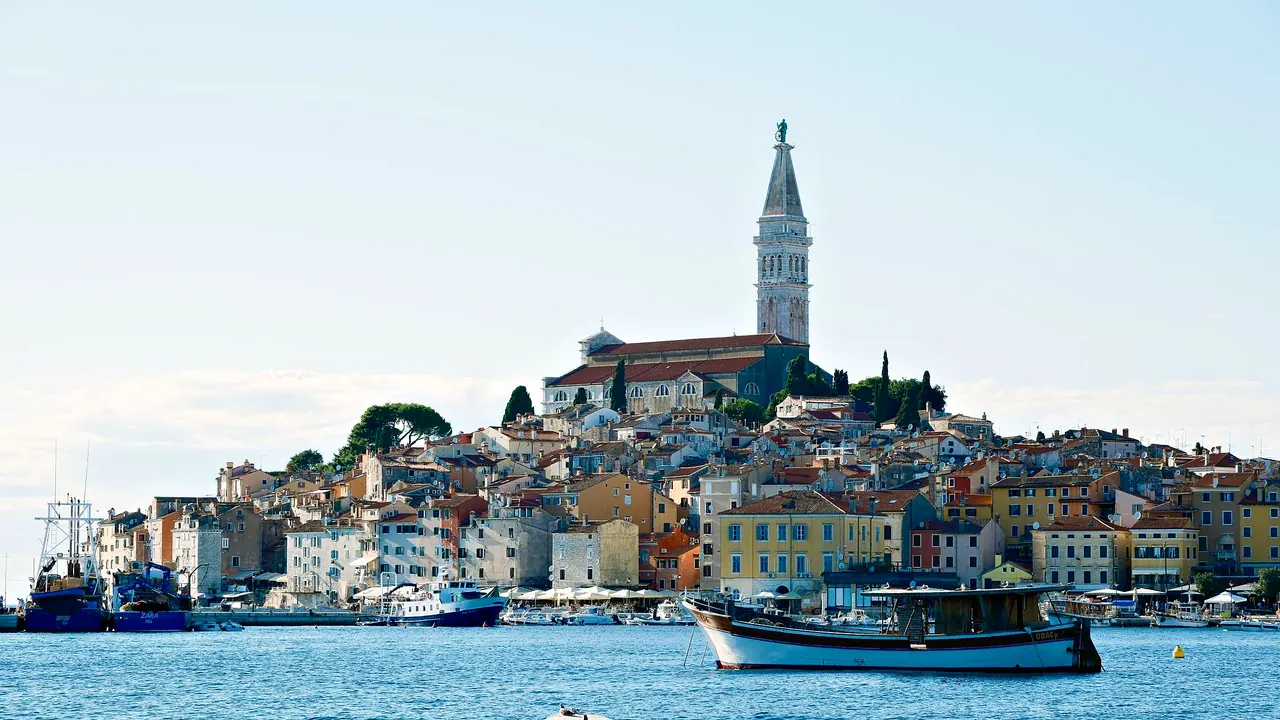
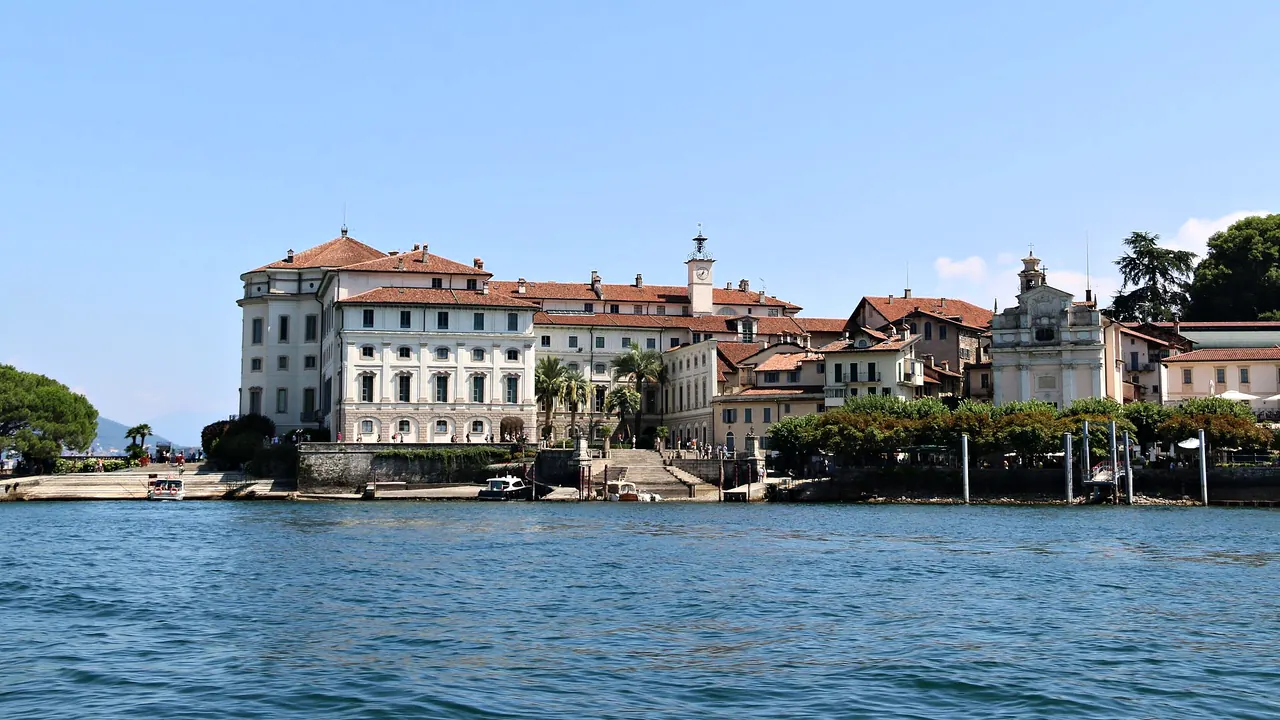
Photos: Istria by Ramon Karolan, Pexels License; Lake Maggiore by FrDr, CC BY-SA 4.0, cropped.
Istria or Lake Maggiore?
Our verdict in twelve categories, each scored against the same fixed benchmark cities, and the climate month by month, so you can choose for your trip.
Choose Istria for
- nightlife
- beaches
- food and drink
Istria suits a summer by the sea with food at the centre of it. You swim off rocky coves in clear, warm water, then drive up to Motovun or Grožnjan for truffle pasta and a glass of Malvazija poured by the people who made it. Its Roman and Venetian towns, Pula's Arena and Rovinj above all, give the days some history, and its summer evenings have more going on than the lake's. Plan on having a car.
Choose Lake Maggiore for
- nature and the outdoors
- wellness
- getting around
Lake Maggiore is the better pick if you want mountains above the water and an unhurried pace. Its strengths are the Borromean palaces and gardens, hikes into the Val Grande and the Ticino valleys, and slow ferries between shore villages that go quiet after dinner. Milan is close by train, so you can stay without a car. Swimming is a fresh dip between other things, and nights are early.
Scoreboard
Twelve categories on one fixed scale from 0 to 100. The shaded stretch is the gap between the two.
Your match
Pick a travel style or drag the sliders, and both match scores follow your weighting.
Wins on nightlife and beaches with your weighting.
Wins on nature and the outdoors and wellness with your weighting.
What matters to you?
Category by category
What the scores mean for a trip.
Beaches & swimming
Istria is the swimming destination of the two. It has open sea that warms to about 25°C in August, very clear water, and a long coast of coves, from the wild inlets of Kamenjak to Rabac's pebble bays. Sand is scarce and you swim from rocks or concrete ledges, but there are endless places to get in.
Lake Maggiore gives a lake swim at about 23°C at best, from pebble beaches, lidos and jetties around Cannobio or the gentler southern end near Arona. It is lovely after a morning in the gardens, but the season is short and the water turns cold after Alpine rain.
Food & drink
Istria is one of the places where food is the reason to go. Truffles from the Mirna valley forests, boškarin beef, top-class olive oils and Lim Bay shellfish come with Malvazija and Teran tasted in the cellars where they are made, and Rovinj has fine dining as well.
Lake Maggiore cooks good, modest northern Italian lake food: perch in butter and sage, risotto and polenta, with Ghemme and Gattinara wines on the list. The Swiss grotti in the woods above Locarno are its most memorable places to eat. A week, though, soon exhausts the choice in any one town.
Culture & sights
Istria has the weightier sights. Pula's Arena stands to its full height, and the Euphrasian Basilica in Poreč holds sixth-century gold mosaics. Add Rovinj's old town and the walled hill towns with frescoed chapels like Beram's, and you have Roman and Venetian stone to walk through for days.
Lake Maggiore's heritage is aristocratic rather than ancient: the Borromeo palace and terraced gardens of Isola Bella, the Rocca di Angera and Santa Caterina del Sasso on its cliff. Each is a fine half-day, but they are scattered and reached by boat. Neither place has major museums.
Nightlife
Neither is a party destination, but Istria has noticeably more to do after dark. Summer nights fill the terraces on Rovinj's waterfront and in Poreč's old town, Pula's students keep bars open around the Arena all year, and the Poreč and Medulin coasts add beach bars and a few seasonal clubs.
Lake Maggiore stops at dinner and a drink on the promenade in Stresa or Ascona, and the lakefronts are quiet by midnight. A real night out means the train to Milan.
Nature & outdoors
Lake Maggiore has the more dramatic landscape: a lake reaching into the Alps, with snow on the peaks into spring. You can walk up Mottarone for the view of Monte Rosa, head into the empty Val Grande, or follow the green river through the Verzasca valley. Sailing and windsurfing on the upper lake add to it.
Istria's countryside is gentler: red-earth vineyards, oak valleys and the ridge of Učka for the one serious hike. Its real outdoor strength is cycling, especially the old Parenzana railway line, with kayaking and walking at Kamenjak.
Day trips
Both are excellent bases for outings, but they work differently. From Istria, most days out are by car: hill towns, coastal towns and wine roads within the region, then over the border to Piran, Trieste, the Postojna and Škocjan caves and, at a stretch, Ljubljana.
Lake Maggiore's outings run mostly by train, and they include a major city. Milan, with its cathedral and the Last Supper, is an hour away. Lake Orta, Bellinzona's castles, Lugano and the Centovalli railway to Domodossola fill out the list.
Good for families
Both work well for families, in different ways. Istria has more built for children: big resort campsites with pools around Poreč and Umag, water parks, a dinosaur park and Pula's aquarium in an old fort. The catch is rocky beaches and July heat, though the shallow Medulin bays help.
Lake Maggiore is calmer and smaller in scale, with safe promenades, shallow lidos and ferry rides that count as outings in themselves. Villa Pallavicino's park and the summer ride on Mottarone are its highlights, but there is no large attraction.
Getting around
Istria is car country, while Lake Maggiore runs on ferries and trains. In Istria a good motorway keeps the main towns within easy reach of one another, but the hill towns, wineries and most beaches are hard to reach by bus. Plan on summer queues on the coast roads and parking that fills early.
At Lake Maggiore you can manage without a car. Ferries link the shore towns and the Borromean Islands, and Stresa, Arona and Locarno sit on railway lines. Its narrow lakeside roads clog in summer, though, and you still need a car for the valleys and the quieter eastern shore.
Shopping & style
Neither is a place to shop for clothes, and in both the best things to take home are edible. In Istria that means truffle products from Motovun and Buzet, estate olive oil and wine bought at the cellar door, plus the craft studios of Grožnjan.
Lake Maggiore's highlight is its weekly street markets, Luino's above all, with cheeses, cured meats and leather. Ascona has a few boutiques, and Milan is close enough for serious fashion.
Affordability
Costs come out much the same, and in both they depend on where you stay. In Istria, summer rooms in Rovinj and seafood or truffle dishes are expensive. Campsites, inland farm stays and June or September bring the cost down.
At Lake Maggiore the border is what matters most. The Swiss shore around Locarno charges Swiss prices, while a small Piedmont town with an agriturismo stays moderate. Ferry fares add up over a week.
Live music & performing arts
Both are summer-only for live performance, and neither has much to plan around out of season. Istria's draw is the setting: open-air concerts and the Pula Film Festival inside the Roman Arena, and young musicians playing in Grožnjan's squares.
Lake Maggiore leans towards classical music and jazz, with the Stresa Festival's concerts in churches and on the Borromean Islands, open-air concerts in Locarno's Piazza Grande and Ascona's lakefront jazz festival.
Wellness & relaxation
Lake Maggiore is the slightly more restful choice. Slow boats, quiet gardens and villages that go silent at night set the pace, lakefront hotels in Stresa and on the Swiss shore have spas, and the thermal baths at Bognanco in the Ossola valleys make a good half-day out.
Istria's calm is found inland, in a stone farmhouse among olive groves or at the old sulphur springs of Istarske Toplice. Its coast is busy in high summer.
When should you go?
Pick your month. The climate figures are measured averages, not a forecast.
Istria in July
Lake Maggiore in July
Daytime high, °C
Rainfall in the month, mm
Where the figures come from
Istria's temperatures are measured 57 km from the centre, at Trieste.
Istria has no rain gauge within 25 km of the centre, so its rainfall comes from a gridded climate dataset read at the destination rather than from a gauge further away.
Lake Maggiore's temperatures are measured 36 km from the centre, at Lugano.
Lake Maggiore has no rain gauge within 25 km of the centre, so its rainfall comes from a gridded climate dataset read at the destination rather than from a gauge further away.
Temperature and rainfall are climate normals, averaged over the years shown. Istria: 1991-2020 normals, Trieste (56.5 km from centre). Lake Maggiore: 1991-2020 normals, Lugano (35.9 km from centre).
Istria is a summer destination first. From June to August the coast is properly hot, peaking around 29°C, and the sea warms through the season to about 26°C in August, so swimming is comfortable from June well into September. July and August are the sunniest months. September is still pleasant at about 24°C, but the rain sets in then, and October and November are the wettest months. Late spring and early autumn are the times for walking the hill towns without the midsummer heat.
Lake Maggiore runs a couple of degrees cooler through the year and is wetter in most months, with rain peaking in May at about 124mm and in November at about 146mm. Even high summer brings showers and hazy heat on the shore, and July and August are the only months for a comfortable swim in the lake. April, May and October suit walking and garden visits if you pack a rain jacket. Winter is cold in both, a little colder by the lake, though the lake sees more winter sun than the Istrian coast.
Which traveller are you?
For a beach and sun trip, Istria is the clear choice. It has a long sunny summer, a warm sea and dozens of clear coves around Kamenjak and Rovinj. The lake offers short, fresh swims from jetties and lidos, which is pleasant but not enough to build a vacation on.
On a food and nightlife trip, Istria wins on both counts. It has truffles, Lim Bay oysters and wine cellars to taste in, then harbour-front terraces in Rovinj and Pula's year-round bars after dinner. Lake Maggiore's menus are pleasant but narrow, and its promenades go quiet early.
For an outdoors trip, choose Lake Maggiore. Alpine valleys such as the Verzasca and the wild Val Grande, ridge walks above Locarno and afternoon breezes for sailing make a bigger, wilder playground than Istria's rolling vineyards and cycle routes.
Before you go
| Measure | Istria | Lake Maggiore |
|---|---|---|
| Official language | Croatian | Italian |
| Currency | Euro (EUR) | Euro (EUR) |
| Sockets | CF230 V, 50 Hz | CFL230 V, 50 Hz |
| Driving side | Right | Right |
| Time zone | UTC+1, UTC+2 in summer | UTC+1, UTC+2 in summer |
| Emergency number | 112 | 112 |
| Main airport | Pula Airport (PUY)34 non-stop destinations | Milan Malpensa International Airport (MXP)208 non-stop destinations |
| Public holidays this year | 14 days | 13 days |
By the numbers
| Measure | Istria | Lake Maggiore |
|---|---|---|
| Swim season, months above 21 °C | 4 months | - |
Where else could you go?
Every comparison below shares a destination with this one, so you can follow Istria or Lake Maggiore somewhere new.
- Lake Comovs Lake Maggiore
- Swiss Alpsvs Lake Maggiore
- French Alpsvs Lake Maggiore
- Plitvice Lakesvs Istria
- Lake Gardavs Lake Maggiore
- Dolomitesvs Istria