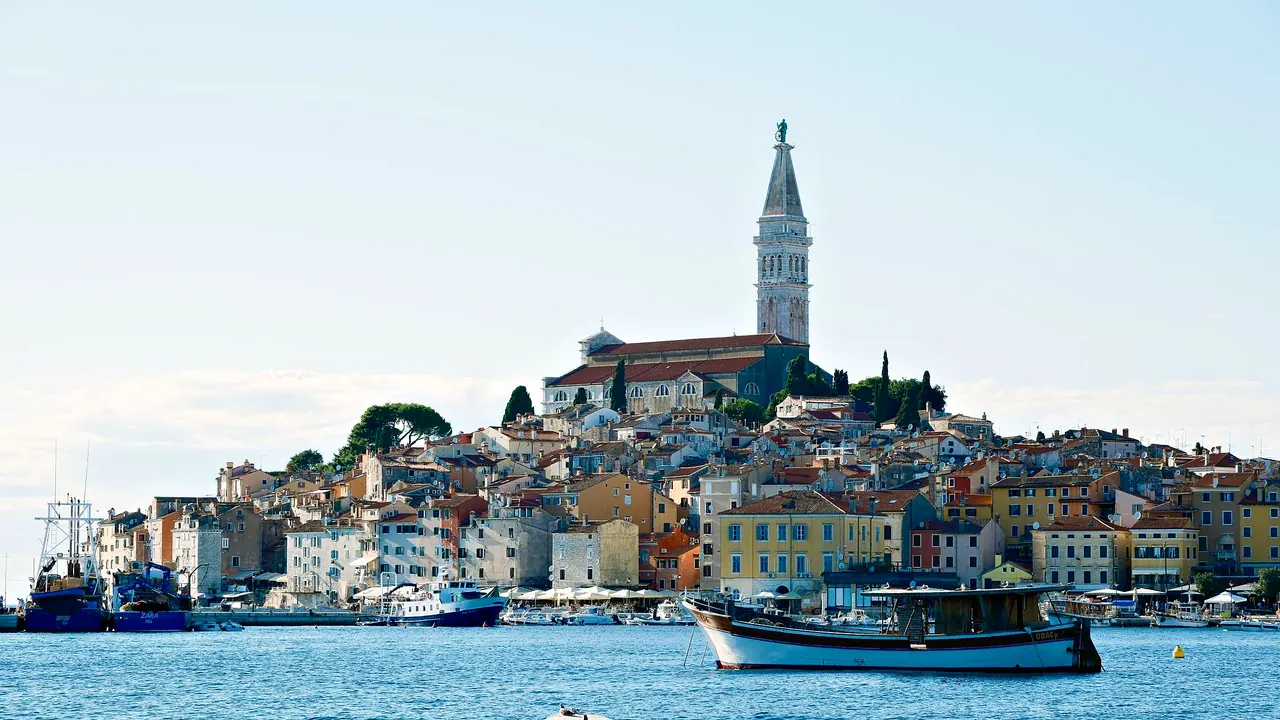
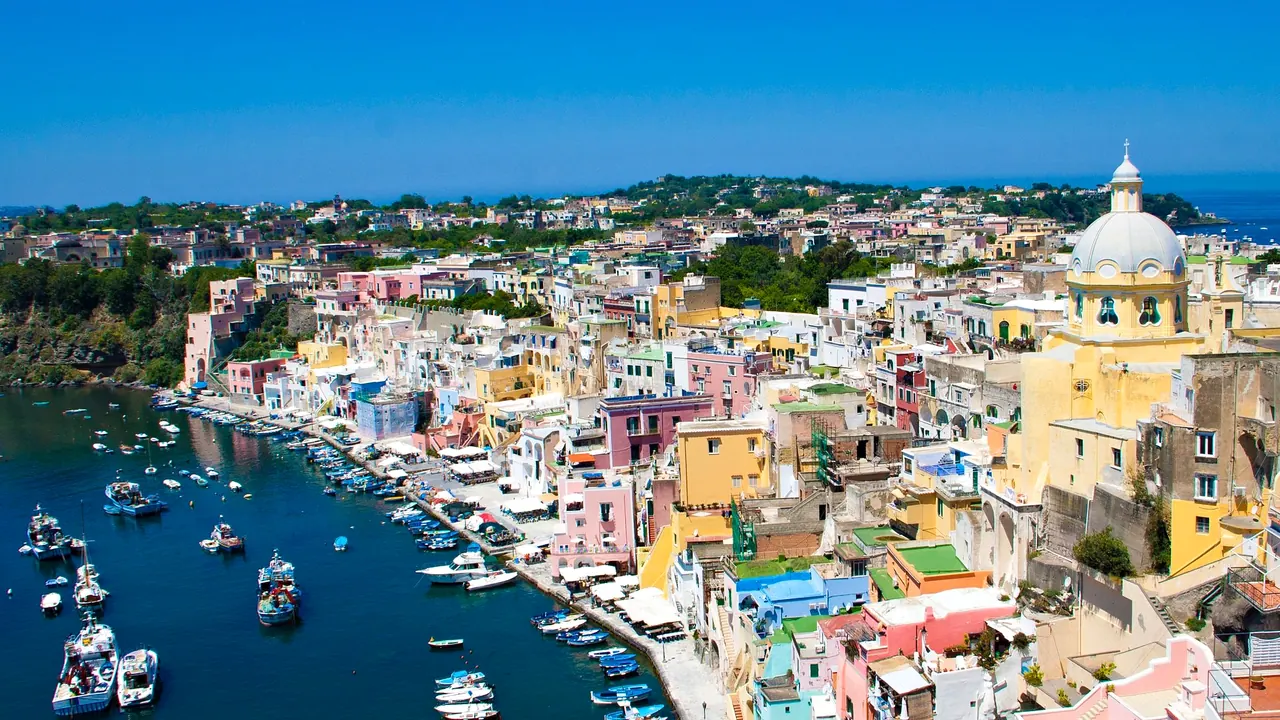
Photos: Istria by Ramon Karolan, Pexels License; Procida by DIANA.GRYGAROVA, CC BY-SA 4.0, cropped.
Istria or Procida?
Our verdict in twelve categories, each scored against the same fixed benchmark cities, and the climate month by month, so you can choose for your trip.
Choose Istria for
- culture and sights
- nightlife
- food and drink
Istria suits travellers who want a region to explore rather than a single base. With a car you can spend the morning at Pula's Roman Arena, eat truffle pasta in a hill town at lunch and swim off a rocky cove by late afternoon. It is the stronger choice for food and wine, for history and for cycling, and its resort villages and campsites make family stays easy. In return you have rocky shores, busy coastal roads in high summer, and a trip that revolves around driving.
Choose Procida for
- wellness
- getting around
- day trips
Procida is for people who want to stay put on a small, colourful island and do very little, with the Bay of Naples within reach when they feel like going further. You get dark-sand coves, harbour dinners at Corricella and a slow pace without a car. On other days a ferry takes you to Ischia's hot springs, the ruins of the Phlegraean Fields or a day in Naples. You give up nightlife, variety at the table and much to see on the island itself.
Scoreboard
Twelve categories on one fixed scale from 0 to 100. The shaded stretch is the gap between the two.
Your match
Pick a travel style or drag the sliders, and both match scores follow your weighting.
Wins on culture and sights and nightlife with your weighting.
Wins on wellness and getting around with your weighting.
What matters to you?
Category by category
What the scores mean for a trip.
Beaches & swimming
The swimming is equally good in both, but the shores feel different. In Istria you bathe from pebbles, smooth limestone ledges and concrete platforms along a long coast, so water shoes are worth packing. The wildest coves are around Kamenjak, and Medulin has the gentle, shallow bays.
Procida has sand, dark and volcanic, though only in a handful of small coves. Chiaiolella and Ciraccio slope gently into the water, and Pozzo Vecchio is the sheltered favourite. With so few beaches, they fill early in August, while Istria's long coastline leaves more room to spread out.
Food & drink
This is one of the widest gaps between the two. Istria is a real food destination. Black and white truffles are grated over fuži and pljukanci, boškarin beef is slow-cooked in family taverns, the olive oils are excellent, and Malvazija and Teran can be tasted at the cellar door. On the coast there are Lim Bay oysters and fish restaurants up to fine dining.
Procida cooks well within a narrow range: the morning's catch at the harbour trattorias, the island's lemon salad with mint and chilli, and a lingua pastry by the ferries. After a few days you have eaten most of it, and many kitchens close out of season.
Culture & sights
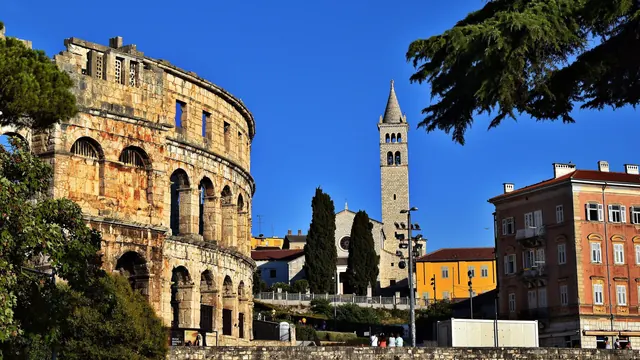
Istria has far more to see. The Roman Arena in Pula stands to its full height and the Euphrasian Basilica in Poreč has sixth-century gold mosaics. Around them are Rovinj's hilltop church of St Euphemia, the walled hill towns of Motovun and Hum, and the frescoes at Beram, enough to fill a week of slow sightseeing.
On Procida the heritage is concentrated in Terra Murata, with its abbey and the former prison of Palazzo d'Avalos, and in the pastel houses of Corricella. Both can be seen in a day or two of walking. For more, you have to take the ferry.
Nightlife
Neither is a party destination, but Istria at least has evenings with some life in them. Rovinj's waterfront and Poreč's old town fill with cocktail terraces in summer, Pula's students keep bars open around the Arena all year, and the Medulin and Poreč coasts add seasonal beach bars and clubs. On Procida the night ends with a drink at Marina Grande or Chiaiolella. A proper night out means a ferry to Ischia or Naples and working out how to get back.
Nature & outdoors
Istria gives you much more ground to cover outdoors. Signposted cycle routes link the hill towns, and the old Parenzana railway line runs over viaducts and through tunnels. You can hike the ridge of Učka at about 1,400m, kayak or windsurf off Kamenjak, and take a boat into the wooded Lim Bay.
Procida is a low island of old craters, where walks lead to viewpoints such as the lookout over Corricella rather than along trails. The Vivara reserve opens only for guided visits, so snorkelling and diving off the south coast are the main outdoor draw, and the island is explored within a few days.
Day trips
Both are excellent bases for day trips, but you travel in different ways. From Istria you drive. The hill towns, the wine roads and the Brijuni boat are all close, and over the border lie Venetian Piran, Trieste, the Škocjan and Postojna caves, and even Ljubljana.
From Procida every outing starts at the ferry port, and the places on the other side are some of the most famous in Italy. There is the castle at Ischia Ponte, the Roman ruins at Pozzuoli, Baia and Cuma, a day in Naples and, further off, Herculaneum and Pompeii. The last boat back sets the end of each day.
Good for families
Istria has been built around family vacations for decades, with large campsites and resort villages with pools, water parks near Poreč and Novigrad, and the safari park on Brijuni. Most beaches are rocky, so families with toddlers do best near Medulin and Premantura.
Procida's gentle sandy beaches at Chiaiolella and Ciraccio are better for small children than Istria's ledges, and the trattorias are relaxed about them. Beyond that, the island has nothing aimed at children, and narrow lanes without pavements and long flights of steps make pushchairs hard work.
Getting around
Getting around is about equally easy, but by opposite means. Istria really needs a car. The motorway makes short work of the distances, but buses barely reach the hill towns, wineries and beaches, and in summer resort traffic and full car parks slow things down. Procida needs no car at all. Small buses, three-wheeled taxis and scooters cover its few kilometres, and frequent ferries link it to the mainland. The catch is the walled, pavement-free lanes, which make walking less relaxing than the short distances suggest.
Shopping & style
Neither is a place to shop, but Istria gives you more to take home. You can buy truffle products in Motovun and Buzet, estate olive oil, wine straight from the cellar, and work from the galleries on Rovinj's Grisia street and in artists' Grožnjan. Procida's choice is limited to ceramics, limoncello and linen along Via Roma, browsed on the way to the ferry. For anything more, take the boat to Naples.
Affordability
The costs are much the same, and neither is cheap in July and August. Istria offers more ways to save: campsites, private apartments and inland farm stays, plus tavern meals and wine bought from the producer. Procida undercuts its neighbours in the gulf, but it has few rooms and island prices at the harbour, so savings come from pizza, pastries, buses and beach days without a sunbed. In both, June and September give the best balance.
Live music & performing arts
Istria has something to plan an evening around, at least in summer. There are open-air concerts in Pula's Roman Arena, the long-running Pula Film Festival screens there too, and Grožnjan fills its squares and churches with young musicians.
Procida has no stage at all. Its one great performance is the Good Friday procession of the Misteri, when hand-built biblical scenes are carried down from Terra Murata to the sea. Opera in Naples is within reach, but the return ferry makes it awkward.
Wellness & relaxation
Both are good for unwinding, in different ways. Istria has its own historic thermal spa, Istarske Toplice in the Mirna valley, used since Roman times, as well as hotel spas on the coast and stone farmhouses among the olive groves. Procida has nothing of the kind, but its slow, almost car-free pace is the treatment in itself, and Ischia's hot springs and thermal gardens are a short boat ride away for a day of soaking.
When should you go?
Pick your month. The climate figures are measured averages, not a forecast.
Istria in July
Procida in July
Daytime high, °C
Rainfall in the month, mm
Where the figures come from
Istria's temperatures are measured 57 km from the centre, at Trieste.
Istria has no rain gauge within 25 km of the centre, so its rainfall comes from a gridded climate dataset read at the destination rather than from a gauge further away.
Procida's temperatures are measured 32 km from the centre, at Grazzanise.
Temperature and rainfall are climate normals, averaged over the years shown. Istria: 1991-2020 normals, Trieste (56.5 km from centre). Procida: 1991-2020 (rainfall 1971-2000) normals, Grazzanise (32.2 km from centre).
The two are close in midsummer, but Procida runs warmer and drier. On Istria's west coast, where most visitors stay, beach weather lasts from June to mid-September, with highs of about 29°C in July and August. Rain picks up from September, and from November to March the days are cool and grey, which suits hill-town walks better than the beach. Procida gets hotter, reaching around 31°C in July and August, which makes steep lanes and stepped harbours hard going in the middle of the day. Its June is almost rainless at about 25mm.
Procida also keeps its swimming season longer. Its sea is still around 22°C in October, when Istria's coast is cooling fast. But Procida's autumn and winter are much wetter, with more than 150mm a month in October and November, so late spring and September are the sweet spot there. In Istria, May, June and September are best for combining the coast with walking and cycling inland. Both are sunny through high summer, and Procida has slightly more sunshine in every month.
Which traveller are you?
On a family trip with children, Istria is the easier choice. Resort villages around Poreč, Umag and Medulin come with pools and playgrounds, and there are water parks, a dinosaur park and Pula's aquarium. Procida offers gentle sandy beaches and little else built for children.
For a food and nightlife trip, Istria comes out well ahead. There are truffles in the hill towns, Lim Bay oysters and Malvazija poured in small cellars, then an evening on Rovinj's waterfront terraces. Procida offers fish, lemons and an early night.
On a relaxing and wellness trip, Procida is the place to do nothing at all. Life is slow, with quiet back lanes, long harbour lunches and evenings watching the light on Corricella, and Ischia's thermal pools are a short boat ride away.
Before you go
| Measure | Istria | Procida |
|---|---|---|
| Official language | Croatian | Italian |
| Currency | Euro (EUR) | Euro (EUR) |
| Sockets | CF230 V, 50 Hz | CFL230 V, 50 Hz |
| Driving side | Right | Right |
| Time zone | UTC+1, UTC+2 in summer | UTC+1, UTC+2 in summer |
| Emergency number | 112 | 112 |
| Main airport | Pula Airport (PUY)34 non-stop destinations | Naples International Airport (NAP)131 non-stop destinations |
| Public holidays this year | 14 days | 13 days |
By the numbers
| Measure | Istria | Procida |
|---|---|---|
| Population | - | 10,092 |
| People per km² | - | 2,347 |
| Swim season, months above 21 °C | 4 months | 5 months |
Where else could you go?
Every comparison below shares a destination with this one, so you can follow Istria or Procida somewhere new.
- Ischiavs Procida
- Caprivs Procida
- Amalfi Coastvs Procida
- Plitvice Lakesvs Istria
- Dolomitesvs Istria
- Krkavs Istria