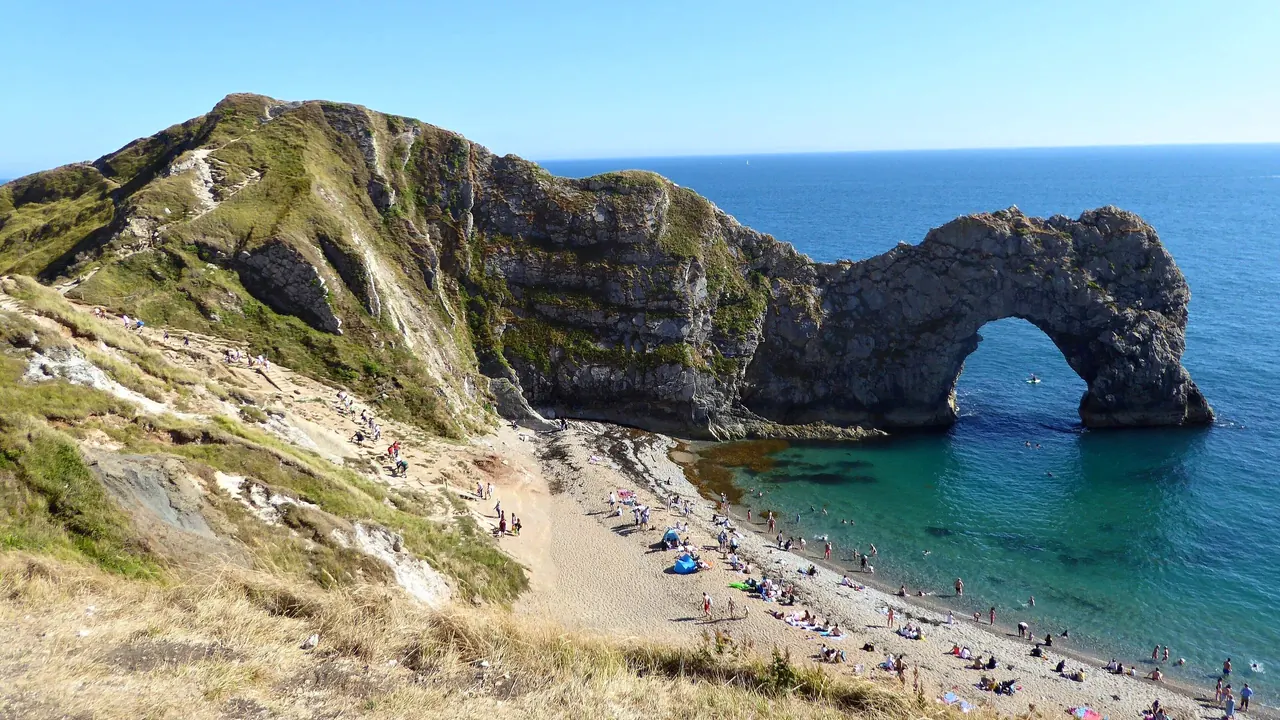
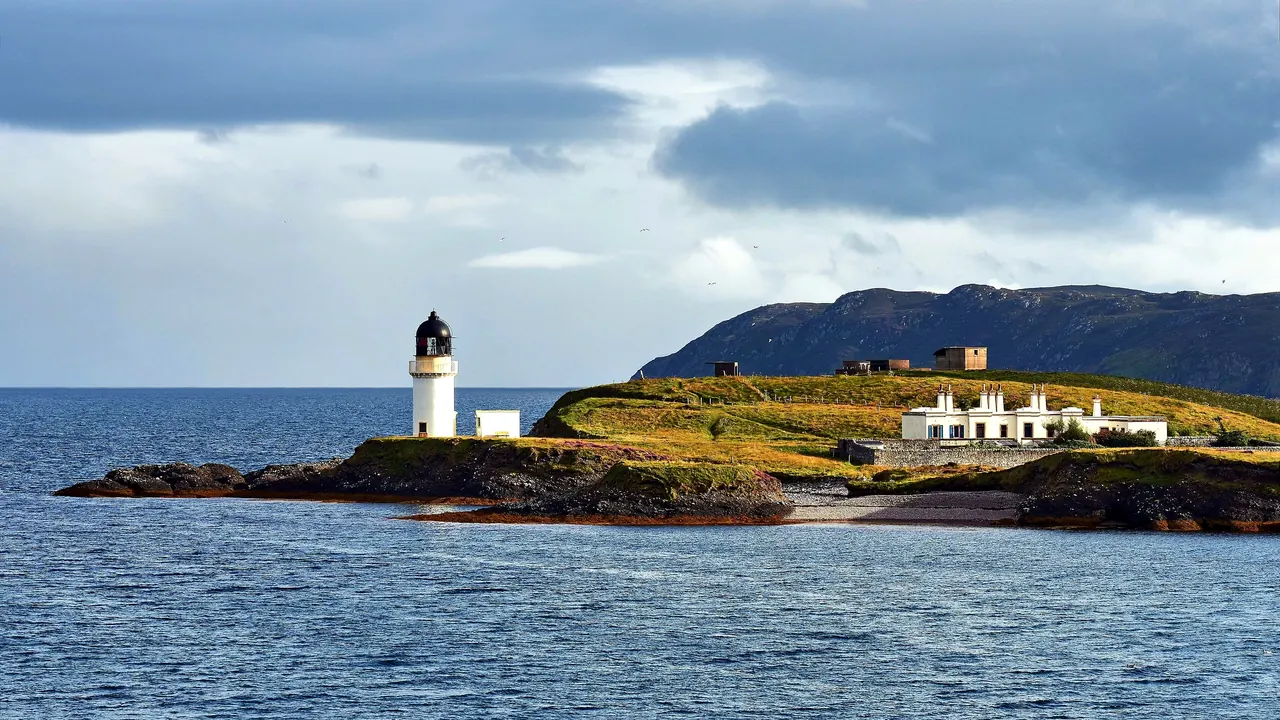
Photos: Jurassic Coast by Ethan Doyle White, CC BY-SA 4.0, cropped; Outer Hebrides by Virtual-Pano, CC BY-SA 4.0, cropped.
Jurassic Coast or Outer Hebrides?
Our verdict in twelve categories, each scored against the same fixed benchmark cities, and the climate month by month, so you can choose for your trip.
Choose Jurassic Coast for
- families
- day trips
- beaches
The Jurassic Coast suits a traditional English seaside vacation with plenty to fill the days. It has sandy, shallow bays at Weymouth and Studland, sea that is pleasant enough for a summer swim, and fossil hunting that children love. Country towns, cathedrals and steam railways are all within easy reach, and the harbour towns have the better spread of places to eat. Families, and anyone who wants walking mixed with towns and outings, will find it the easier and fuller choice.
Choose Outer Hebrides for
- shopping
- live music and the arts
- culture and sights
Travellers who want space and solitude should look north to the Outer Hebrides. The landscape is emptier and wilder, with eagles and otters, white beaches you may have to yourself, and prehistoric stones in a place where Gaelic is still spoken every day. In return you get fewer restaurants, colder water, long single-track drives and very little laid on. It rewards self-sufficient adults who like walking, wildlife and quiet evenings in long northern light.
Scoreboard
Twelve categories on one fixed scale from 0 to 100. The shaded stretch is the gap between the two.
Your match
Pick a travel style or drag the sliders, and both match scores follow your weighting.
Wins on families and day trips with your weighting.
Wins on shopping and live music and the arts with your weighting.
What matters to you?
Category by category
What the scores mean for a trip.
Beaches & swimming
For real beach days, the Jurassic Coast wins. Studland's dune-backed sands and Weymouth's gently shelving bay are good for paddling and sandcastles, and by late summer the sea is warm enough for a proper, if brisk, swim. The shingle coves at Lulworth and Durdle Door are less comfortable to sit on, but the water there is very clear.
The Outer Hebrides arguably have the more striking sand. The white strands of Luskentyre, Scarista and Vatersay turn turquoise in sunshine, and they are often empty. The Atlantic stays bitterly cold, though, and wind often cuts the day short, so these beaches are for walks and picnics rather than swimming.
Food & drink
Both regions eat mainly from the sea, but on the Jurassic Coast it is easier to eat out well. There are crab sandwiches and seafood shacks on the harbours at West Bay and Lyme Regis, and Bridport's market is the base for food lovers. Dorset adds cream teas, Blue Vinny cheese, cider and sparkling wine from its chalk-slope vineyards.
The Hebrides land superb langoustines and scallops, smoke their own salmon and make Stornoway black pudding. Outside Stornoway and a few places on Harris, though, there are few places to eat, and many close on Sundays or in winter. Expect to cook much of the time with seafood bought from the pier.
Culture & sights
There is a similar amount to see in each, but of a very different kind. Dorset's heritage is gentle and varied: Mary Anning's fossil town of Lyme Regis, the ruin of Corfe Castle, Thomas Hardy's Dorchester near the ramparts of Maiden Castle, and Georgian seaside resorts, all fairly close together.
The Hebrides feel older and starker. The Calanais Standing Stones, the Dun Carloway broch and the restored blackhouses at Gearrannan sit on bare moorland, and Gaelic in daily use gives the islands a living culture of their own. The sights are fewer, though, and far apart.
Nightlife
Neither is a place for a night out, but the Jurassic Coast at least has Weymouth. Its seafront bars and a couple of late venues are busiest on summer weekends, and Bournemouth is not far beyond the coast. In the Outer Hebrides an evening means a hotel bar or a Stornoway pub, perhaps with a traditional music session. With the Sabbath kept on Lewis and Harris, Sundays there are almost completely quiet.
Nature & outdoors
Both are first-rate outdoor destinations, with different appeals. The Jurassic Coast is about rock and time. You can follow the South West Coast Path past Durdle Door, Chesil Beach and Old Harry Rocks, look for ammonites below the cliffs at Charmouth, climb on Portland or sail in Weymouth Bay. The hills are gentle and always close to a village.
The Hebrides feel much wilder. The hills of North Harris rise to the Clisham, there is grey gneiss moorland and countless lochans, and the Uists' flowering machair is a sight of its own. Add eagles, otters and basking sharks, Atlantic surf on Lewis, sea kayaking and the trip to St Kilda, and it suits people who want real emptiness.
Day trips
The Jurassic Coast has much more within a day's reach. Exeter's cathedral sits at the western end, while abbey-town Sherborne and hilltop Shaftesbury are easy from Weymouth. The chain ferry leads to Brownsea Island, and Salisbury with Stonehenge makes a longer day out from Purbeck.
In the Hebrides, a day trip means island-hopping by causeway and short ferry from Berneray down to Eriskay and Barra. There is lovely coast at the end of each, but usually only a village, and the ferry over to Skye is the only real change of scene.
Good for families
The Jurassic Coast is much better for children. Weymouth has donkey rides, sandcastle sculptors and a sea-life centre, Studland's shallow water suits toddlers, and guided fossil hunts at Charmouth stay in the memory. On wet days there are the Bovington tank museum, the primate rescue park and the Swanage steam railway, though the crumbling cliffs mean watching small children closely.
The Hebrides give children freedom more than entertainment: empty sand, rock pools and seals. Beyond Stornoway's leisure pool there is almost nothing built for them, and long drives and rain test young patience.
Getting around
On the Jurassic Coast the trouble with driving is summer congestion. In the Hebrides it is sheer distance. In Dorset and east Devon, winding lanes clog in July and August, and the car parks at Lulworth and Durdle Door fill early. Still, trains to Exmouth, Weymouth and Wareham and a chain of coastal buses make a car-free stay in one small, walkable town possible.
The islands stretch about 210km, mostly on single-track roads with passing places, and buses are rare and barely run on Sundays. Traffic is light and the driving is calm, but inter-island ferries need booking in summer, and nothing is walkable beyond a village.
Shopping & style
The Outer Hebrides have the more memorable thing to buy: Harris Tweed, bought from the sheds where islanders weave it by hand, alongside island knitwear, gin and smoked fish. On the Jurassic Coast, the best browsing is at Bridport's street market and antiques quarter and in the fossil shops of Lyme Regis. Beyond those, it is mostly seaside gift shops, and neither region has a proper shopping street.
Affordability
Summer on the Jurassic Coast costs most in beds and parking. In the Hebrides, most of the cost goes on getting there and feeding yourself. Cottages in Lyme Regis and Purbeck charge peak rates in July and August, and parking at the popular spots adds up, though Weymouth and the caravan parks are cheaper.
On the islands, car hire, vehicle ferries and shipped-in food push the bill up, while spring and early autumn bring better rates and more choice. In both, the coast, the beaches and the walks cost nothing.
Live music & performing arts
Neither offers much on stage, and what there is differs in character. Weymouth's seafront pavilion has touring comedy and summer shows, and the market towns host small folk and literary festivals. In the Hebrides, music is part of everyday life: Gaelic song, village-hall ceilidhs and the Hebridean Celtic Festival in Stornoway each July.
Wellness & relaxation
In both, rest comes from the setting rather than spas. Dorset has a few country-house hotel spas, yoga retreats in the hills and cold-water swimming groups, and villages like Beer are calm outside August. The Hebrides have almost no treatments, but the stillness goes deeper: empty roads, light late into the evening, and silent Sundays in a cottage by a sea loch.
When should you go?
Pick your month. The climate figures are measured averages, not a forecast.
Jurassic Coast in July
Outer Hebrides in July
Daytime high, °C
Rainfall in the month, mm
Where the figures come from
Jurassic Coast's temperatures are measured 66 km from the centre, at Bournemouth Airport.
Jurassic Coast has no rain gauge within 25 km of the centre, so its rainfall comes from a gridded climate dataset read at the destination rather than from a gauge further away.
Temperature and rainfall are climate normals, averaged over the years shown. Jurassic Coast: 1991-2020 normals, Bournemouth Airport (65.7 km from centre). Outer Hebrides: 1991-2020 normals, Stornoway (4.1 km from centre).
The Jurassic Coast is a summer destination, and it is warm enough for the beach from late June to early September, with highs of about 22°C in July and August. The sea is warmest in August and September, at around 17°C, so early September is a good choice for swimming. May to July are the sunniest months, while October to December are the wettest and greyest. Spring and early autumn are still mild enough for long walks on the coast path.
The Outer Hebrides are cooler and wetter in every month. Summer highs reach only about 16°C, and the Atlantic stays near 13°C even at its warmest, so the beaches are for walking more than swimming. Measured around Stornoway, May is the brightest month, with more sun than midsummer, and the rain builds heavily from September through winter. May to early September is the time to go, and late spring is often the best of it.
Which traveller are you?
On a family trip with young children, choose the Jurassic Coast. From any one resort there is plenty within a short drive, wet afternoons have indoor fallbacks, and by August the sea is warm enough for a swim. In the Hebrides, days depend on the weather, with long drives in between.
For a beach and sun trip, the Jurassic Coast is also the better choice. Summers are warmer and sunnier, and although the sea stays cool, Studland and Weymouth are fine for a short swim. The Hebridean strands are stunning, but the Atlantic there is colder still.
For wildlife watching, the Outer Hebrides are the place to go. Golden and white-tailed eagles fly over Harris, otters work the quiet shores, corncrakes call in the Uists, and summer boats run to St Kilda's seabird cliffs. Dorset's coast is about geology more than wildlife.
Before you go
| Measure | Jurassic Coast | Outer Hebrides |
|---|---|---|
| Official language | English | English |
| Currency | Pound Sterling (GBP) | Pound Sterling (GBP) |
| Sockets | G230 V, 50 Hz | G230 V, 50 Hz |
| Driving side | Left | Left |
| Time zone | UTC, UTC+1 in summer | UTC, UTC+1 in summer |
| Emergency number | 112 or 999 | 112 or 999 |
| Main airport | Exeter International Airport (EXT)25 non-stop destinations | Stornoway Airport (SYY)6 non-stop destinations |
| Public holidays this year | 8 days | 10 days |
By the numbers
| Measure | Jurassic Coast | Outer Hebrides |
|---|---|---|
| Population | - | 26,720 |
| People per km² | - | 9 |
| Swim season, months above 21 °C | None | None |
Where else could you go?
Every comparison below shares a destination with this one, so you can follow Jurassic Coast or Outer Hebrides somewhere new.
- Devonvs Jurassic Coast
- Isle of Skyevs Outer Hebrides
- Isle of Wightvs Jurassic Coast
- Cotswoldsvs Jurassic Coast
- Scottish Highlandsvs Outer Hebrides
- Cornwallvs Jurassic Coast