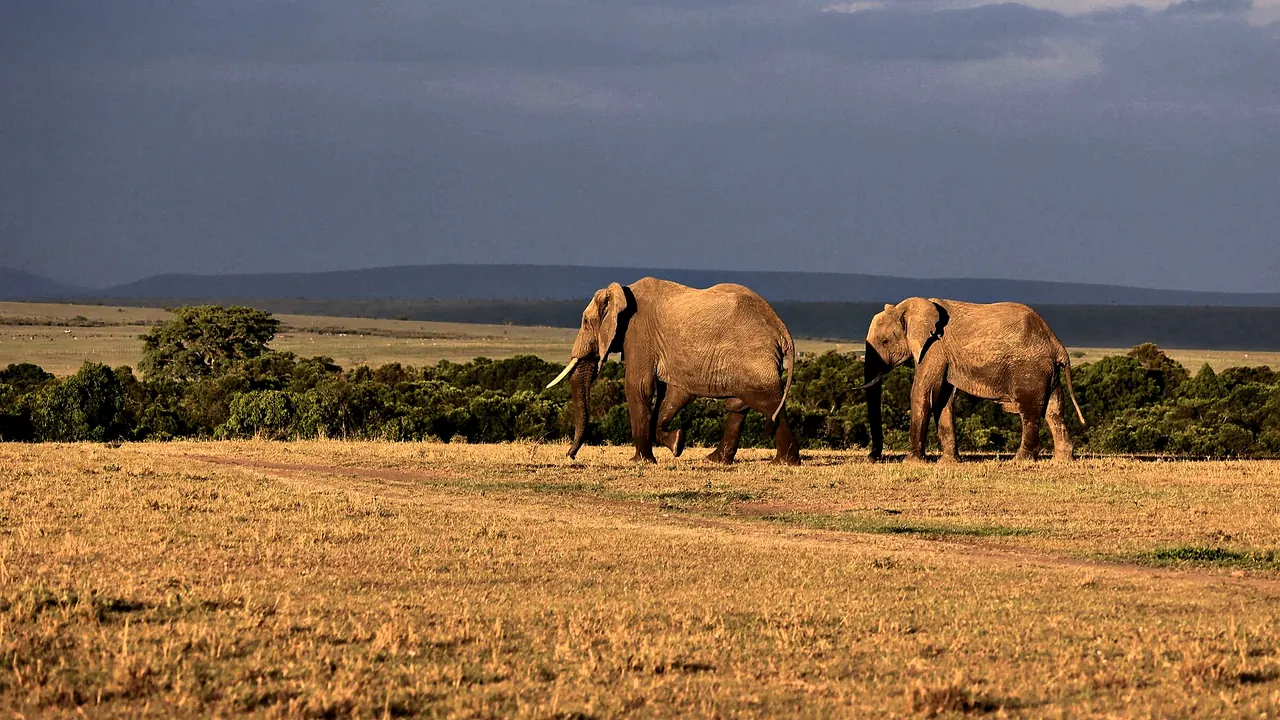
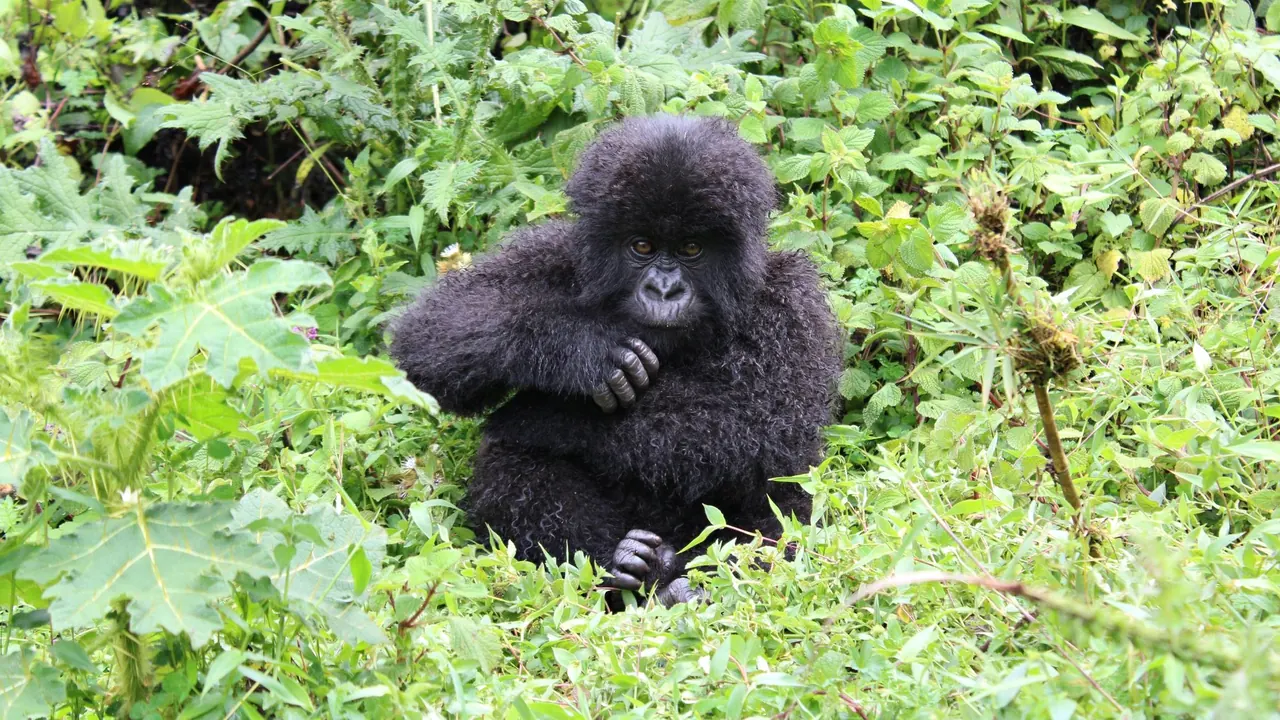
Photos: Kenya by Wladimir Kühne, Pexels License; Rwanda by Ana Kenk, Pexels License.
Kenya or Rwanda?
Our verdict in twelve categories, each scored against the same fixed benchmark cities, and the climate month by month, so you can choose for your trip.
Choose Kenya for
- beaches
- nightlife
- families
Kenya suits a first trip to East Africa that wants the full picture in one go: a classic safari in the Maasai Mara or Amboseli, then a week of Indian Ocean sand at Diani or Watamu. It is the easier choice with children, the better one for evenings out in Nairobi, and the Swahili towns of Lamu and Mombasa give the trip a second character away from the bush.
Choose Rwanda for
- day trips
- getting around
Rwanda is for travellers who have the mountain gorillas at the top of their list and want a shorter, more concentrated trip. Volcanoes, the chimpanzee forest of Nyungwe and the savanna of Akagera all fit into a small country with good roads. It works best for adults and older teenagers, and Lake Kivu offers a quiet few days at the end rather than a beach vacation.
Scoreboard
Twelve categories on one fixed scale from 0 to 100. The shaded stretch is the gap between the two.
Your match
Pick a travel style or drag the sliders, and both match scores follow your weighting.
Wins on beaches and nightlife with your weighting.
Wins on day trips and getting around with your weighting.
What matters to you?
Category by category
What the scores mean for a trip.
Beaches & swimming
This is one of the widest gaps between the two. Kenya has a proper tropical coast: Diani's long white sand and shallow lagoons, Watamu's marine park, Malindi's livelier resort strip and the empty dunes of the Lamu archipelago, all with warm ocean water behind the reef. Swimming does follow the tides, though, and some beaches get seaweed in the windy months.
Landlocked Rwanda offers fresh water instead. Rubavu has a palm-lined sandy lakefront on Lake Kivu, while Karongi and Nyamasheke are better for a dip from a lodge jetty. It is a nice way to end a trip, not a reason to choose the country.
Where in Kenya: Diani, Watamu, Lamu archipelago, Malindi
Where in Rwanda: Rubavu (Gisenyi), Karongi (Kibuye), Nyamasheke
Food & drink
Kenya eats better, mainly because of its coast. Swahili cooking in Mombasa and Lamu uses coconut, tamarind and cardamom with fresh fish, and Mombasa's old town has evening street food. Nairobi adds a deep Indian tradition and a wider range of restaurants than Kigali.
Rwanda's everyday food is similarly plain, with brochettes, isombe, matoke and Kivu sambaza, but its highland coffee is a highlight. Touring washing stations near Huye or Lake Kivu and then drinking the coffee in Kigali gives Rwanda a food experience Kenya's tea and coffee rarely build a day around.
Where in Kenya: Mombasa, Nairobi, Lamu
Where in Rwanda: Kigali, Huye, Lake Kivu shore, Nyungwe tea estates
Culture & sights
The two are much the same in depth but very different in kind. Kenya's heritage is architectural and old: the coral-stone lanes and carved doors of Lamu Old Town, Fort Jesus above Mombasa harbour and the forest ruins of Gede. Nairobi's National Museum is strong on human origins.
Rwanda's sights are mostly about the 1994 genocide. The Kigali Genocide Memorial and the churches at Nyamata and Ntarama are sombre and essential, and they explain much of the country. The older royal past is at Nyanza's King's Palace, with the Inyambo cattle, and at the fine Ethnographic Museum in Huye.
Where in Kenya: Lamu, Mombasa, Watamu, Nairobi
Where in Rwanda: Kigali, Nyanza, Huye, Murambi
Nightlife
Kenya has more going out, almost all of it in Nairobi. The rooftop bars and clubs of Westlands and Kilimani play Afrobeats and gengetone late into weekend nights, and Mombasa and Diani add seafront and beach bars in the high season.
Kigali's scene is smaller and quieter: rooftop terraces over the hills in Kimihurura and Remera, karaoke, a few clubs, and the most street life in Nyamirambo. It feels relaxed and safe to move around after dark, but outside Friday and Saturday there is not much on.
Where in Kenya: Nairobi, Mombasa, Diani
Where in Rwanda: Kigali
Nature & outdoors
Both are among Africa's great wildlife destinations, and Kenya has more range. The Maasai Mara's plains and migration, Amboseli's elephants below Kilimanjaro, Samburu's northern species, flamingo lakes in the Rift Valley, treks on Mount Kenya and reef diving at Watamu add up to a breadth Rwanda cannot match.
Rwanda's strength is one encounter you cannot have in Kenya: mountain gorillas in Volcanoes National Park, with chimpanzees and a canopy walkway in Nyungwe's rainforest. Akagera covers savanna game, though on a smaller scale than the Mara, and the Congo Nile Trail along Lake Kivu offers hiking and cycling in a landscape of terraced hills.
Where in Kenya: Maasai Mara, Amboseli, Samburu and Laikipia, Mount Kenya
Where in Rwanda: Volcanoes National Park, Nyungwe National Park, Akagera National Park, Lake Kivu
Day trips
Neither country is built for day trips from one base, and the outings they do offer are very different. Kenya's best are on the coast. From Lamu, dhows sail to Shela, Matondoni and the Takwa ruins, Diani is within reach of Mombasa's old town and Wasini island, and Watamu is close to Gede and Malindi.
Rwanda is compact, so towns are close together, but there are few of them. A day from Kigali to Nyanza's palace and Huye's museum is the classic outing, and Rubavu and Karongi make easy lakeside drives from the north. Beyond these, excursions in both countries are about landscape rather than places.
Where in Kenya: Lamu archipelago, Mombasa, Watamu and Malindi
Where in Rwanda: Huye, Nyanza, Rubavu (Gisenyi), Karongi (Kibuye)
Good for families
Kenya is the better family destination, largely because it welcomes younger children on safari. From about age six or seven, Mara game drives find animals quickly, many Laikipia ranches offer camel rides and walks, and Nairobi has the elephant orphanage and the Giraffe Centre. A flight to Diani's lagoons then makes for an easy second week.
Rwanda is calm and friendly to children, but its main draw is off limits to anyone under 15. A family trip there comes down to Akagera game drives from a lodge with a pool, then paddling at Rubavu. Both countries require malaria precautions, and Rwanda's winding mountain roads make the drives between parks tiring.
Where in Kenya: Maasai Mara, Nairobi, Diani, Laikipia
Where in Rwanda: Akagera National Park, Rubavu (Gisenyi), Kigali
Getting around
Both take some effort, but for different reasons. Kenya covers long distances, so the useful options are bush flights from Wilson airport to the Mara, Samburu and Lamu, and the train from Nairobi to Mombasa across the Tsavo plains. Overland, the roads to the parks are rough and Nairobi's traffic is slow.
Rwanda is small, with good paved roads and frequent express coaches between Kigali, Musanze, Huye and Rubavu. The hard part comes at the ends: Kigali's steep hills mean moto taxis, and the trailheads at Volcanoes and Nyungwe still call for a car and driver.
Where in Kenya: Nairobi, Mombasa, Lamu
Where in Rwanda: Kigali, Musanze, Huye
Shopping & style
Kenya has a little more to buy and more places to browse. Nairobi's rotating Maasai Market is the biggest place for beadwork, kikoy cloth and soapstone, Karen and Westlands have Kenyan designers, and Lamu sells carved furniture and silver.
Rwanda's crafts are fewer but distinctive: agaseke baskets and bold imigongo panels at Caplaki craft village, and kitenge fabric that Kimironko's tailors can make into clothes. Almost all of it is in Kigali.
Where in Kenya: Nairobi, Mombasa, Lamu
Where in Rwanda: Kigali, Kirehe
Affordability
The two countries cost much the same, with the same split between cheap everyday life and expensive wildlife. In Kenya the cost comes from conservancy fees and the luxury camps of the Mara, but Nairobi is a good place to book a group camping safari, and a beach week in Watamu or Diani can stay modest.
In Rwanda the gorilla permit alone takes a large part of the budget, and the lodges near the parks are priced at the top end. Leaving out the gorillas and doing Nyungwe, Akagera and Lake Kivu on coaches and in guesthouses is the way to keep costs down.
Where in Kenya: Diani, Watamu, Nairobi
Where in Rwanda: Kigali, Lake Kivu shore, Huye
Live music & performing arts
Kenya has somewhat more to see. Nairobi's National Theatre and Cultural Centre stage local drama, music bars play benga, rhumba and jazz at weekends, the coast has taarab, and the Lamu cultural festival with its dhow races is a real event.
In Rwanda, the performance worth seeking out is intore dance with its drums and grass headdresses, best seen on the royal hill at Nyanza. Outside that, Kigali has occasional concerts and not much else. Neither country has an opera or orchestral season.
Where in Kenya: Nairobi, Lamu
Where in Rwanda: Kigali, Nyanza, Musanze
Wellness & relaxation
Neither country has a spa tradition, but Kenya is the better place to unwind. Diani and Watamu have resort spas and yoga retreats, and the car-free Lamu archipelago, where the days follow the tide, is about as slow as a vacation gets.
Rwanda's quieter moments are on its lakes: a lodge veranda on Kivu, the lantern-lit fishing canoes in the evening, the stillness of Burera and Ruhondo, and the hot springs near Rubavu. Early gorilla starts and long hikes mean most Rwanda trips are more active than restful.
Where in Kenya: Lamu archipelago, Diani, Watamu
Where in Rwanda: Lake Kivu shore, Lakes Burera and Ruhondo, Rubavu (Gisenyi)
When should you go?
Pick your month, and for a country the place in it. The climate figures are measured averages, not a forecast.
Where in Kenya
Nairobi (Kenya) in July
Kigali (Rwanda) in July
Daytime high, °C
Rainfall in the month, mm
Temperature and rainfall are climate normals, averaged over the years shown. Nairobi (Kenya): 1991-2020 normals, Nairobi ACC/FIC/RCC/MET/COM/ (13.3 km from centre). Kigali (Rwanda): 1991-2020 normals, Kigali (1.6 km from centre).
On Kenya's coast, Diani is at its best from December to March. The sea is calm then, and January and February are almost dry. The long rains arrive in April and peak in May, when Diani gets around 310mm. From June to September the coast is drier again but windier. The sea is warm in every month and never drops below 25°C. Inland, the Maasai Mara is driest from June to September, which overlaps with the wildebeest migration from July. Nairobi is dry in those months too, but often grey, with the least sunshine of the year in July. The short rains reach both the Mara and Nairobi in November and December.
In Kigali, daytime highs stay close to 28°C all year, so the capital is comfortable for walking in any month. Rain is what decides when to go. June to August is the dry season, with only 17mm in July, and September stays fairly dry. The rains run from March to May and again in October and November, peaking at 148mm in November. Both countries suit a combined trip from June to September. December to February belongs to Kenya's coast, while Kigali stays fairly wet in those months.
Which traveller are you?
On a beach and sun trip, Kenya is the clear choice. Aim for December to March, when the coast is calmest, and check the tide table, because at low tide the sea pulls far back over the reef flats. In Rwanda, Lake Kivu can only round off a trip inland.
On a family trip with children, Kenya is easier to plan. Choose one safari area, fly to the coast instead of driving the long transfers, and check which camps take young children before booking. Rwanda makes more sense once the youngest is old enough to trek.
For travellers set on seeing mountain gorillas, only Rwanda will do. In Kenya, wildlife is watched from a vehicle on open plains. Trek in the drier months from June to September, when the volcano slopes are easier underfoot, and expect the permit to take a large part of the budget.
More comparisons
Each shares a side with Kenya or Rwanda.
Where else could you go?
Set Kenya or Rwanda against any other country.