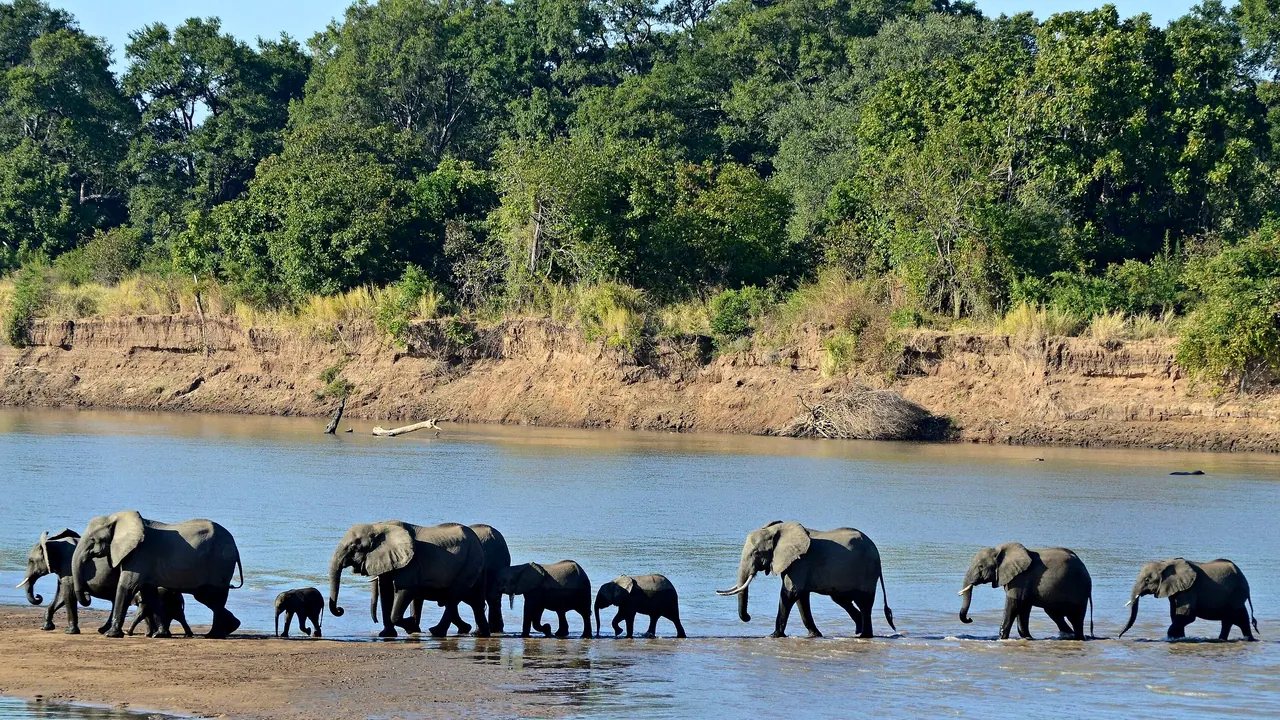
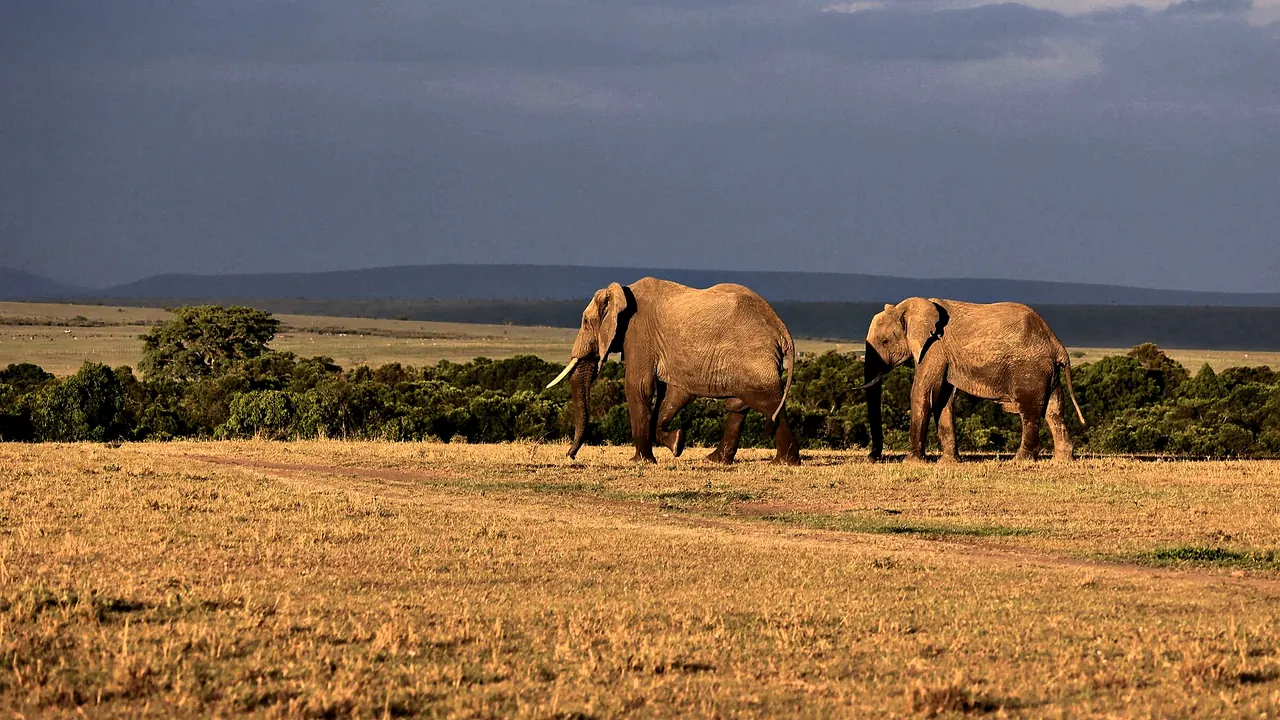
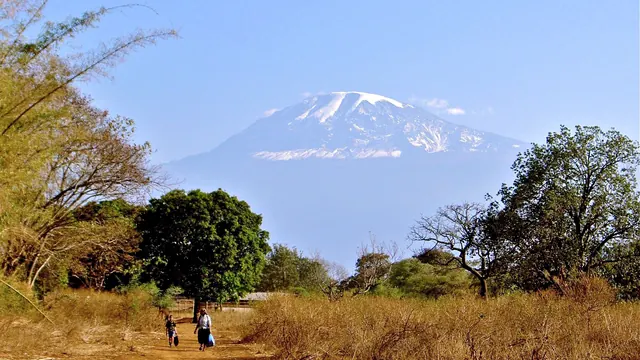
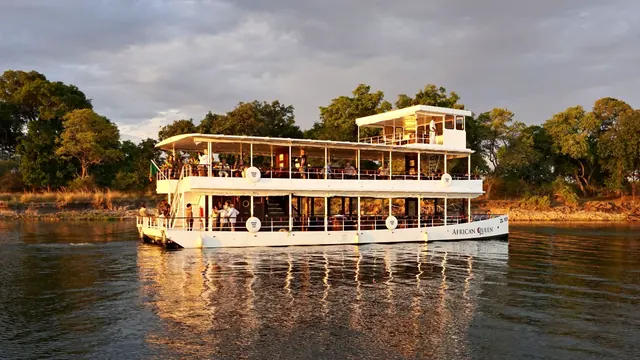
Photos: Zambia by Geoff Gallice, CC BY 2.0, cropped; Kenya by Wladimir Kühne, Pexels License.
Zambia or Kenya?
Our verdict in twelve categories, each scored against the same fixed benchmark cities, and the climate month by month, so you can choose for your trip.
Choose Zambia for
Zambia does not lead in any category we score.
Zambia suits a traveller whose whole trip is the wild. You come here to walk through the bush with a guide in South Luangwa, canoe past elephants on the Lower Zambezi and stand in the spray of Victoria Falls, often with few other vehicles in sight. Almost everything else is thin. Beaches, towns, food and evenings out count for little, and moving between regions mostly means light aircraft. It fits a focused safari, ideally with older children or none.
Choose Kenya for
- beaches
- families
- food and drink
Kenya is the better choice for a rounder trip, with a safari that matches Zambia's at its best. The Maasai Mara, Amboseli and Samburu give classic open-plain game viewing, and a short flight then takes you to the Indian Ocean at Diani, Watamu or Lamu for reef-sheltered sand and Swahili towns. It is easier with young children, eats and goes out better, and Nairobi and the coast give some life between the game drives.
Scoreboard
Twelve categories on one fixed scale from 0 to 100. The shaded stretch is the gap between the two.
Your match
Pick a travel style or drag the sliders, and both match scores follow your weighting.
Has no clear advantage with the weighting you have chosen.
Wins on beaches and families with your weighting.
What matters to you?
Category by category
What the scores mean for a trip.
Beaches & swimming
Zambia has no coast, and its lakes and rivers hold crocodiles, hippos and bilharzia. Swimming mostly means the lodge pool. The two exceptions are a remote sandy shore on Lake Tanganyika in the far north and a guided dip in the Devil's Pool at the lip of Victoria Falls, which is thrilling but no beach.
Kenya has a proper Indian Ocean coast. Diani has long lagoon-fringed sand, Watamu has coves inside a marine park, and the Lamu archipelago has quiet dunes reached by dhow. Plan your swims around the tides and the windy south-east monsoon, but the coast works as a beach week after a safari or as a vacation in its own right.
Where in Zambia: Lake Tanganyika, Victoria Falls
Where in Kenya: Diani, Watamu, Lamu archipelago, Malindi
Food & drink
On safari you eat much the same in both countries: set menus from the camp kitchen, served by a fire or on a riverbank. The difference is off the reserves. In Zambia that means nshima with greens or kapenta at roadside places, and a reasonable restaurant range only in Lusaka.
Kenya gives you more reasons to eat out. The coast has Swahili cooking with coconut, tamarind and fresh fish, and Mombasa's old town sells skewers and spiced coffee on the street in the evening. Nairobi adds long-established Indian cooking, Ethiopian restaurants and nyama choma, and the local coffee and tea are excellent.
Where in Zambia: Lusaka, South Luangwa, Livingstone
Culture & sights
Kenya has the more rewarding heritage, and most of it is on the coast. Lamu Old Town has car-free lanes and carved doors, Mombasa has Fort Jesus above its harbour, and the ruined town of Gede lies in the forest near Watamu. In Nairobi, the National Museum's collection on human origins is worth a morning.
Zambia's sights are scattered and take effort to reach. Livingstone has the country's oldest museum and a few colonial buildings. Further off are the Lozi royal compounds in Barotseland, the English manor of Shiwa Ng'andu and the Stone Age site at Kalambo Falls. These are rewarding detours for the committed, not a reason to choose the country.
Where in Zambia: Livingstone, Lusaka, Barotseland, Shiwa Ng'andu
Nightlife
In both countries the safari camps go quiet early, so nightlife depends on time in town. Kenya gives you more of it. Nairobi's Westlands and Kilimani have rooftop bars and clubs playing Afrobeats and gengetone until late, and Mombasa, Diani and Malindi add seafront and beach bars.
Zambia's going out is mostly in Lusaka, where beer gardens and clubs fill up at weekends, plus a few backpacker and sundowner bars near the falls at Livingstone. In both capitals, take a taxi after dark.
Where in Zambia: Lusaka, Livingstone
Nature & outdoors
Both countries are among the best safari destinations anywhere, and the difference is in the style. Zambia is the place for the bush on foot and on water. You can walk with a guide in South Luangwa, canoe on the Lower Zambezi, explore the huge and little-visited Kafue, see the bat gathering at Kasanka and raft below Victoria Falls.
Kenya is the classic open-plain safari, with lions and the river crossings of the migration in the Mara and elephants under Kilimanjaro at Amboseli. It also has more besides game: flamingo lakes in the Rift Valley, cycling in Hell's Gate, treks on Mount Kenya and reef diving at Watamu.
Where in Zambia: South Luangwa, Victoria Falls, Lower Zambezi, Kafue
Where in Kenya: Maasai Mara, Amboseli, Samburu and Laikipia, Mount Kenya
Day trips
From Livingstone, Zambia's best day out means crossing a border, either over the bridge to the Zimbabwean side of the falls or into Botswana's Chobe for a day of wildlife. Closer to home there is Mukuni village and its market. Around Lusaka there is little beyond farms and small reserves.
On the Kenyan coast, Swahili towns and ruins lie within easy reach of each base, so a day out can take you somewhere with a history of its own. From Lamu, dhows sail to Shela, the farming village of Matondoni, the ruins at Takwa and the old Swahili towns of Pate. Diani is an easy run from Mombasa's old town, and Watamu sits close to Malindi and the forest ruins of Gede.
Where in Zambia: Livingstone
Where in Kenya: Lamu archipelago, Mombasa, Watamu and Malindi
Good for families
Kenya is clearly the easier country with children. Animals are plentiful and easy to see in the Mara, and lodges there and in Laikipia run family tents and junior ranger programmes. Nairobi's baby elephants and giraffe feeding go down well with younger children, and Diani's resort pools and shallow lagoons make an easy end to the trip.
Zambia works best for teenagers. Livingstone is the most practical base, with the falls, river cruises and gentle activities close together. Elsewhere, minimum ages on walking and canoe safaris and the long distances rule out much of the country for little ones. Both countries are malaria areas.
Where in Zambia: Livingstone, South Luangwa
Getting around
Zambia is held together by air. Scheduled flights between Lusaka, Livingstone and Mfuwe cover the routes that matter to most visitors, and light aircraft into bush airstrips do the rest. On the ground the distances are long, the roads are slow and potholed, there is no useful railway and night driving is unwise. Most visitors leave the whole route to their camps or an operator.
Kenya is noticeably easier to piece together yourself. Small planes from Nairobi's Wilson airport reach the main parks and the coast, and the standard-gauge railway crosses the Tsavo plains to Mombasa in about five hours. Once you reach the coast, tuk-tuks cover the towns, and car-free Lamu is walked or crossed by boat.
Where in Zambia: Livingstone, South Luangwa, Lusaka
Shopping & style
Zambia's most distinctive buys come from its mining country: green malachite and copper work, best found at Lusaka's weekly craft market alongside woven baskets. Bright chitenge cloth is sold in every town, and the curio stalls near the falls at Livingstone sell carvings and soapstone. That is about the whole of it.
Nairobi's rotating Maasai Market alone can fill a long afternoon of browsing and bargaining over beadwork, kikoy cloth and kiondo baskets, and Karen and Westlands add a small scene of Kenyan designers selling fashion, jewellery and homeware. On the coast, Lamu is known for carved doors, furniture and silver, and Mombasa's Biashara Street for fabrics and spices.
Where in Zambia: Lusaka, Livingstone
Affordability
The two cost about the same, and in both the local food and transport are cheap while the safari days drive the bill. The cheaper routes differ. In Kenya, a group camping safari from Nairobi and a guesthouse week in Diani or Watamu keep costs down.
In Zambia, saving money means a backpacker lodge in Livingstone or a campsite on the edge of South Luangwa with game drives bought separately. The all-inclusive camps there and on the Lower Zambezi rank with Africa's most expensive.
Where in Zambia: Livingstone, South Luangwa, Lusaka
Live music & performing arts
Kenya has more to see on an ordinary evening. Nairobi's National Theatre and Cultural Centre stage local drama and dance, and music bars play benga, rhumba and jazz at weekends. The coast adds taarab and the Lamu cultural festival with its dhow races.
Zambia's highlights are its annual traditional ceremonies: the Kuomboka royal barge in Barotseland, the Ncwala warrior dances near Chipata and the Makishi masquerades of North-Western Province. They are unforgettable if your dates match, but they need long travel and a flexible plan. The rest is the Lusaka Playhouse and dance evenings at the lodges.
Where in Zambia: Barotseland, Eastern Province, North-Western Province, Lusaka
Where in Kenya: Nairobi, Lamu
Wellness & relaxation
Unwinding in Zambia means the stillness of the bush: a hammock above the Luangwa River during the midday break, nights with only hippos for noise, or a massage at a lodge on the broad, quiet Zambezi above Livingstone. The warm Kapishya hot springs near Shiwa Ng'andu are a lovely soak, but they lie far off the usual routes.
Kenya's coast suits a rest far better. The car-free Lamu archipelago, where days follow the tide and the call to prayer, is about as slow as a stay gets, and Diani and Watamu have resort spas and yoga retreats. It makes an easy place to switch off after the game drives.
Where in Zambia: South Luangwa, Livingstone, Shiwa Ng'andu
Where in Kenya: Lamu archipelago, Diani, Watamu
When should you go?
Pick your month, and for a country the place in it. The climate figures are measured averages, not a forecast.
Where in Kenya
Livingstone (Zambia) in July
Nairobi (Kenya) in July
Daytime high, °C
Rainfall in the month, mm
Temperature and rainfall are climate normals, averaged over the years shown. Livingstone (Zambia): 1991-2020 (sunshine 1981-2010) normals, Livingstone (6.5 km from centre). Nairobi (Kenya): 1991-2020 normals, Nairobi ACC/FIC/RCC/MET/COM/ (13.3 km from centre).
Zambia has one wet season and one dry one, with a sharp change between them. At Livingstone the rains build from November and peak in January at about 154mm, then almost stop from May to August. Those are the sunniest, most comfortable months for safari and walking, and the falls are at their fullest early in that stretch. By October the heat reaches 35°C before the storms return, which makes for tiring days on foot. Many remote camps close in the rains.
Kenya is milder and has two shorter rainy seasons. Nairobi stays temperate all year, around 24°C in the greyer months of July and August. The Mara is driest from June to October, which is migration time, and wettest in April and again in November and December. Diani's sea is warm enough to swim in all year, near 28°C for most of it, but May is very wet at about 310mm. December to March is the hot, dry and best beach season.
Which traveller are you?
For a beach and sun trip, choose Kenya. Diani, Watamu and the Lamu archipelago have white sand, reef-calmed water that stays warm all year, and resort hotels. Landlocked Zambia offers a lodge pool and a remote Lake Tanganyika shore that needs a separate journey.
On an outdoors trip, both countries are superb, so pick by style. Choose Zambia for empty wilderness, such as the vast and little-visited Kafue or the November wildebeest gathering on Liuwa Plain. Choose Kenya for variety, from horseback rides in Laikipia to kitesurfing at Diani.
More comparisons
Each shares a side with Zambia or Kenya.
Where else could you go?
Set Zambia or Kenya against any other country.