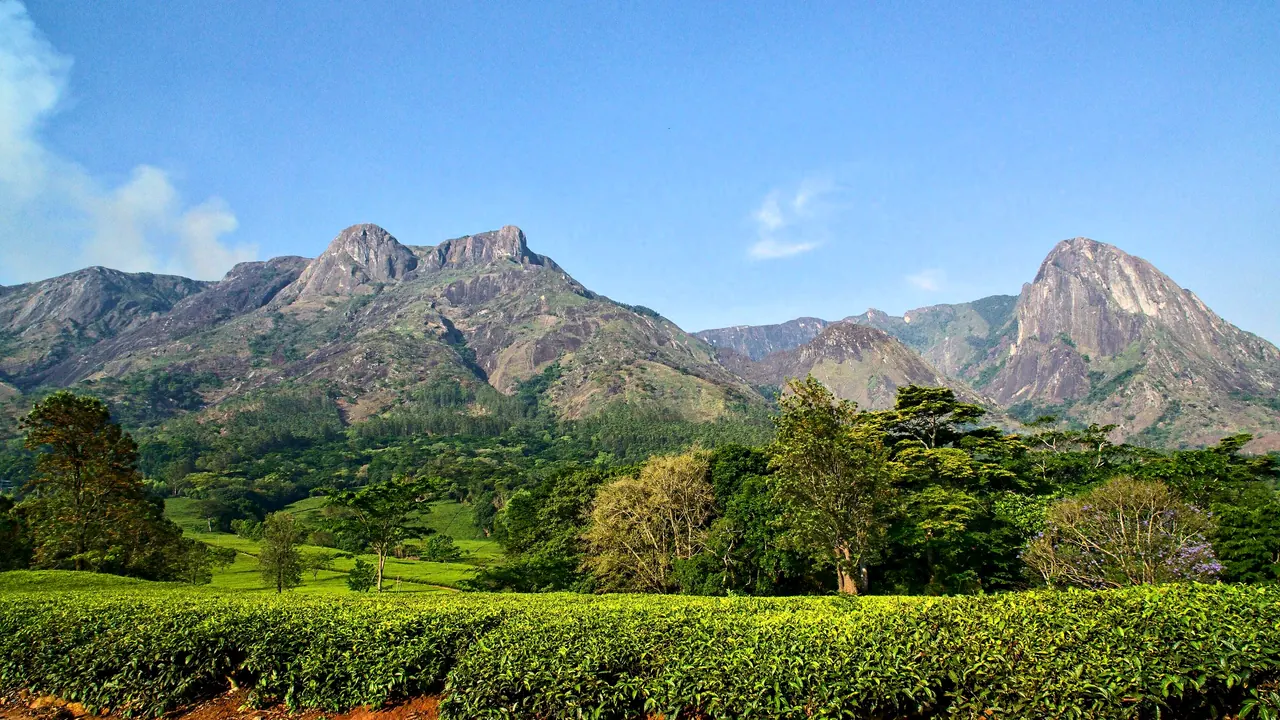
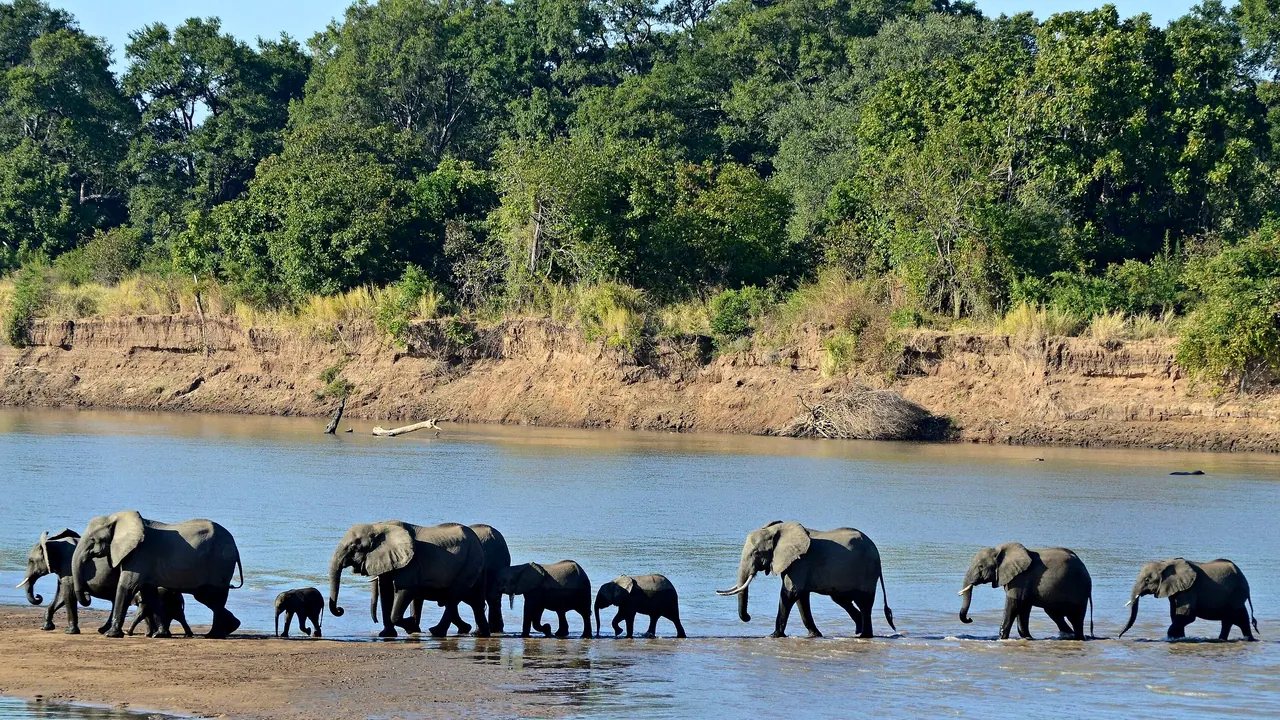
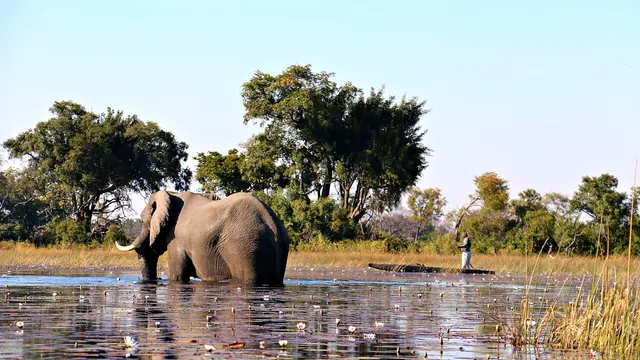
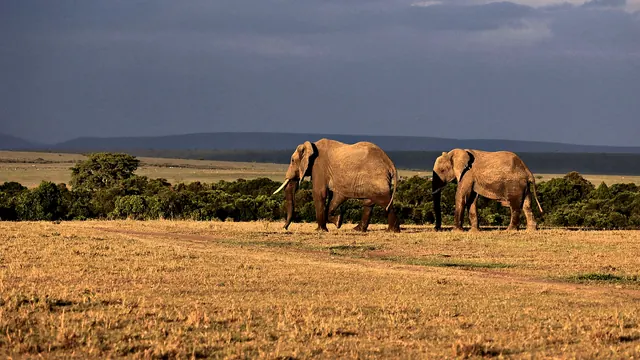
Photos: Malawi by David Davies from Birmingham, UK, CC BY-SA 2.0, cropped; Zambia by Geoff Gallice, CC BY 2.0, cropped.
Malawi or Zambia?
Our verdict in twelve categories, each scored against the same fixed benchmark cities, and the climate month by month, so you can choose for your trip.
Choose Malawi for
- beaches
- prices
- food and drink
Malawi suits travellers who want water, sand and a slow pace on a sensible budget. Lake Malawi gives it the beach life that Zambia simply lacks, from the village shore at Cape Maclear to the coves of Nkhata Bay. Snorkelling among cichlids, hiking on Mount Mulanje and a boat trip in Liwonde round it out. You can stay for weeks in lakeside lodges without the cost of a safari.
Choose Zambia for
- nature and the outdoors
- nightlife
- day trips
Zambia is the choice when wildlife and big landscapes are the whole point of the trip. Victoria Falls, walking safaris in South Luangwa and canoeing on the Lower Zambezi are on a scale Malawi's parks do not reach. The price is real: remote camps, park fees and light-aircraft flights make it a much more expensive trip, and there is no lake beach to fall back on.
Scoreboard
Twelve categories on one fixed scale from 0 to 100. The shaded stretch is the gap between the two.
Your match
Pick a travel style or drag the sliders, and both match scores follow your weighting.
Wins on beaches and prices with your weighting.
Wins on nature and the outdoors and nightlife with your weighting.
What matters to you?
Category by category
What the scores mean for a trip.
Beaches & swimming
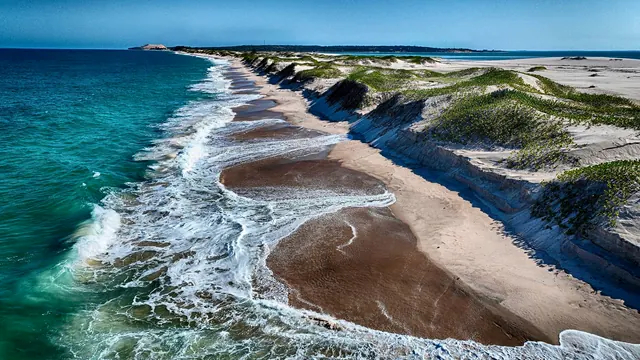
This is where Malawi has a clear lead. Lake Malawi runs almost the full length of the country, so you can choose between the classic village beach and islands at Cape Maclear, the steep green coves of Nkhata Bay, the easy Senga Bay near Lilongwe, or the quiet sand of Likoma Island. Bilharzia in parts of the lake is the main caution.
Zambia has no coast. Crocodiles, hippos and bilharzia rule out most of its rivers and lakes, so a swim usually means the lodge pool. Lake Tanganyika in the far north and the Devil's Pool at Victoria Falls are the two exceptions, and both are things to do once rather than a beach stay.
Where in Malawi: Cape Maclear, Nkhata Bay, Likoma Island, Senga Bay
Where in Zambia: Lake Tanganyika, Victoria Falls
Food & drink
The two eat much the same way: a stiff maize porridge, called nsima in Malawi and nshima in Zambia, eaten by hand with greens, beans or stew. Neither is a reason to travel. The difference is where you eat. In Malawi it is whole grilled chambo from the lake at a lodge on the shore. In Zambia it is the set dinners, bush breakfasts and sundowners of the safari camps, and Lusaka has more restaurant choice than either Malawian city.
Where in Malawi: Lake Malawi shore, Lilongwe, Blantyre
Where in Zambia: Lusaka, South Luangwa, Livingstone
Culture & sights
Neither country makes a sightseeing trip, but their few sights are of different kinds. Malawi's best stops lie close to the road south of Lilongwe: the painted rock shelters of Chongoni near Dedza and the museum of Chewa, Ngoni and Yao culture at Mua. Further afield are the mission town of Livingstonia on its escarpment and the brick church in Blantyre.
Zambia's sights are more scattered. The Livingstone Museum is easy to add to a trip to the falls. The Lozi royal compounds of Barotseland, the manor house at Shiwa Ng'andu and the Stone Age site at Kalambo Falls each mean a long journey.
Where in Malawi: Chongoni and Dedza, Mua, Livingstonia, Blantyre
Where in Zambia: Livingstone, Lusaka, Barotseland, Shiwa Ng'andu
Nightlife
Going out is a small part of a trip to either country. In Malawi, the evenings worth having are in the backpacker lodge bars at Nkhata Bay and Cape Maclear, where travellers gather after a day on the beach. Zambia's nightlife is more urban: Lusaka has beer gardens and clubs playing African pop at weekends. On safari, though, nights end by the campfire with an early bed before the dawn drive.
Where in Malawi: Lilongwe, Blantyre, Nkhata Bay
Where in Zambia: Lusaka, Livingstone
Nature & outdoors
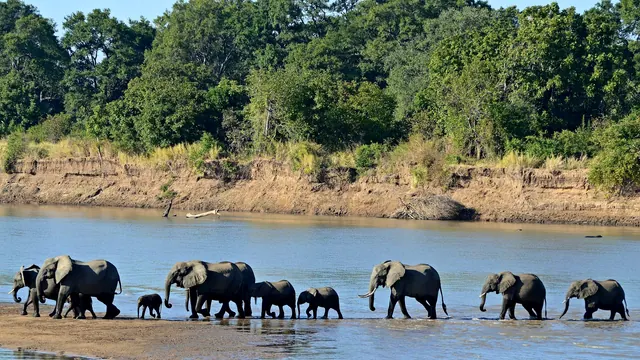
Both countries are worth the trip for their landscapes, but Zambia is in a different league for wildlife. Victoria Falls is its centrepiece. Add walking safaris among the leopards and elephants of South Luangwa, canoe trips on the Lower Zambezi, the empty spaces of Kafue and the rafting in the Batoka Gorge, and the trip can be built entirely around the wild.
Malawi's strengths are more varied and more gentle. There is snorkelling and kayaking among cichlids in Lake Malawi National Park, multi-day hikes on Mount Mulanje, the cool grassland of the Nyika Plateau and boat safaris at Liwonde. Its parks are much smaller, though Majete does hold the big five.
Where in Malawi: Lake Malawi National Park, Mount Mulanje, Liwonde National Park, Nyika Plateau
Where in Zambia: South Luangwa, Victoria Falls, Lower Zambezi, Kafue
Day trips
Neither offers much in the way of town outings, and they differ in where those outings go. From Blantyre, Malawi offers the old capital Zomba and the Thyolo tea estates, and from Lilongwe the road south to Dedza and Mua. Zambia's best outing from Livingstone crosses a border, over the bridge to the Zimbabwean side of the falls or into Botswana's Chobe for wildlife. Mukuni village is the closest local visit.
Where in Malawi: Zomba, Thyolo, Dedza
Where in Zambia: Livingstone
Good for families
Both are hard going with small children: there is malaria throughout, the distances are long and nothing is built for children. In Malawi, families get an easy start on the shallow sandy shore at Senga Bay and a boat trip in Liwonde, and older children can kayak and snorkel at Cape Maclear.
Zambia works best with teenagers, based in Livingstone, where the falls and river cruises are close together. Note that walking and canoe safaris often require children to be 12 or older, and many camps set age limits for families.
Where in Malawi: Senga Bay, Cape Maclear, Liwonde National Park
Where in Zambia: Livingstone, South Luangwa
Getting around
Getting around is slow in both countries, but in different ways. Malawi is a road trip: one narrow main road runs the length of the country, shared with cyclists, goats and crowded minibuses, so most visitors hire a car with a driver and keep off the road after dark. The country is long and narrow, so the lake is never far off, although reaching Likoma Island means a flight or the slow lake steamer.
Zambia covers far greater distances, and safari trips are usually linked by air. Scheduled flights connect Lusaka with Livingstone and with Mfuwe, the gateway to South Luangwa, and light aircraft fly on from there to bush airstrips in the remoter parks. Flying saves days on the road but adds a good deal to the cost. Overland, the roads are slow and potholed, and the tracks inside the parks need a 4x4.
Where in Malawi: Lilongwe, Blantyre
Where in Zambia: Livingstone, South Luangwa, Lusaka
Shopping & style
Shopping in both comes down to crafts and the bright printed wrap cloth, chitenje in Malawi and chitenge in Zambia. Malawi's specialities are tied to particular places: pottery from Dedza, traditional carvings from Mua, and woodwork sold beside the road and along the lake. Zambia adds copper work and malachite at Lusaka's weekly craft market, and soapstone at the curio stalls near the falls.
Where in Malawi: Lilongwe, Dedza, Mua
Where in Zambia: Lusaka, Livingstone
Affordability
Malawi is much kinder to a modest budget. Simple beach lodges at Cape Maclear, long stays above the coves at Nkhata Bay and cheap guesthouses in Zomba let you travel on very little. Costs only climb when you add park lodges, park fees and a car with a driver.
Zambia's daily life is cheap, but the safari most visitors come for is not. The all-inclusive camps of South Luangwa and the Lower Zambezi are priced at the top of the market, and the adventure activities at the falls are expensive too. Backpacker lodges in Livingstone and budget chalets on the edge of South Luangwa are the cheaper ways in.
Where in Malawi: Cape Maclear, Nkhata Bay, Zomba
Where in Zambia: Livingstone, South Luangwa, Lusaka
Live music & performing arts
Neither has much of a stage scene, and what is worth seeing is traditional rather than formal. Malawi's one event to plan around is the Lake of Stars festival on the lakeshore, and you can sometimes see the masked Gule Wamkulu dances near Mua.
Zambia's draw is its annual royal ceremonies: the Kuomboka barge procession in Barotseland, the Ncwala warrior dances near Chipata and the Makishi masquerades. Each needs a long journey and luck with an uncertain calendar. The Lusaka Playhouse puts on local theatre.
Where in Malawi: Lake Malawi shore, Mua, Lilongwe
Where in Zambia: Barotseland, Eastern Province, North-Western Province, Lusaka
Wellness & relaxation
Neither country has a spa tradition, so rest here comes from a slow pace rather than treatments. Malawi's version is the lakeside routine at Cape Maclear and the near-empty quiet of Likoma Island, with a massage or yoga session at some lodges. Zambia is better if you want a proper treatment, at the upmarket lodges on the Zambezi above Livingstone. It also has the calm of midday in South Luangwa's camps and the Kapishya hot springs far in the north.
Where in Malawi: Cape Maclear, Likoma Island
Where in Zambia: South Luangwa, Livingstone, Shiwa Ng'andu
When should you go?
Pick your month, and for a country the place in it. The climate figures are measured averages, not a forecast.
Where in Malawi
Lilongwe (Malawi) in July
Livingstone (Zambia) in July
Daytime high, °C
Rainfall in the month, mm
Where the figures come from
Lilongwe (Malawi)'s station stands 179 m above the city centre, so the centre is likely a little warmer than the figures say.
Temperature and rainfall are climate normals, averaged over the years shown. Lilongwe (Malawi): 1982-2025 (rainfall 1961-1990) normals, Lilongwe International Airport (22.6 km from centre). Livingstone (Zambia): 1991-2020 (sunshine 1981-2010) normals, Livingstone (6.5 km from centre).
Both countries follow the same pattern: a long dry season from May to October and rains from November to March. The dry months are the time for game viewing and hiking in either country. In Malawi, Lilongwe is pleasantly mild in June and July, and the lake shore stays warm enough for swimming and lazing all through the dry season. By October and November the lake shore reaches about 33°C, which is hot but still fine if you spend the day in the water. The rains are heavy, with Lilongwe getting about 230mm in January, and that makes travel on the roads harder.
Livingstone in Zambia runs hotter. It is comfortable in June and July at around 26°C, then rises to about 35°C in October, when walking around midday becomes hard work. Sunshine is highest in the dry months and peaks in August. From December to February the rains bring roughly 120mm to 154mm a month. Late in the dry season the falls shrink, but the Devil's Pool opens, and the high-water spray comes in March to May, after the rains.
Which traveller are you?
For a beach and sun trip, Malawi wins easily. Lake Malawi has sandy bays, warm fresh water and lodges with hammocks at Cape Maclear, Nkhata Bay and Senga Bay. Zambia has no coast, and most of its swimming happens in lodge pools.
On a trip on a tight budget, Malawi goes much further. Beach lodges and campsites at Cape Maclear, cheap grilled chambo and long stays at Nkhata Bay keep costs low. Zambia's main draw, the remote safari camp, sits at the top of the price range.
For an outdoors trip built around wildlife, Zambia is the stronger pick. It has walking safaris in South Luangwa, canoeing on the Lower Zambezi, rafting in the Batoka Gorge and Victoria Falls itself. Malawi's hiking and snorkelling are rewarding, but its parks are smaller.
More comparisons
Each shares a side with Malawi or Zambia.
Where else could you go?
Set Malawi or Zambia against any other country.