Rwanda
Kigali
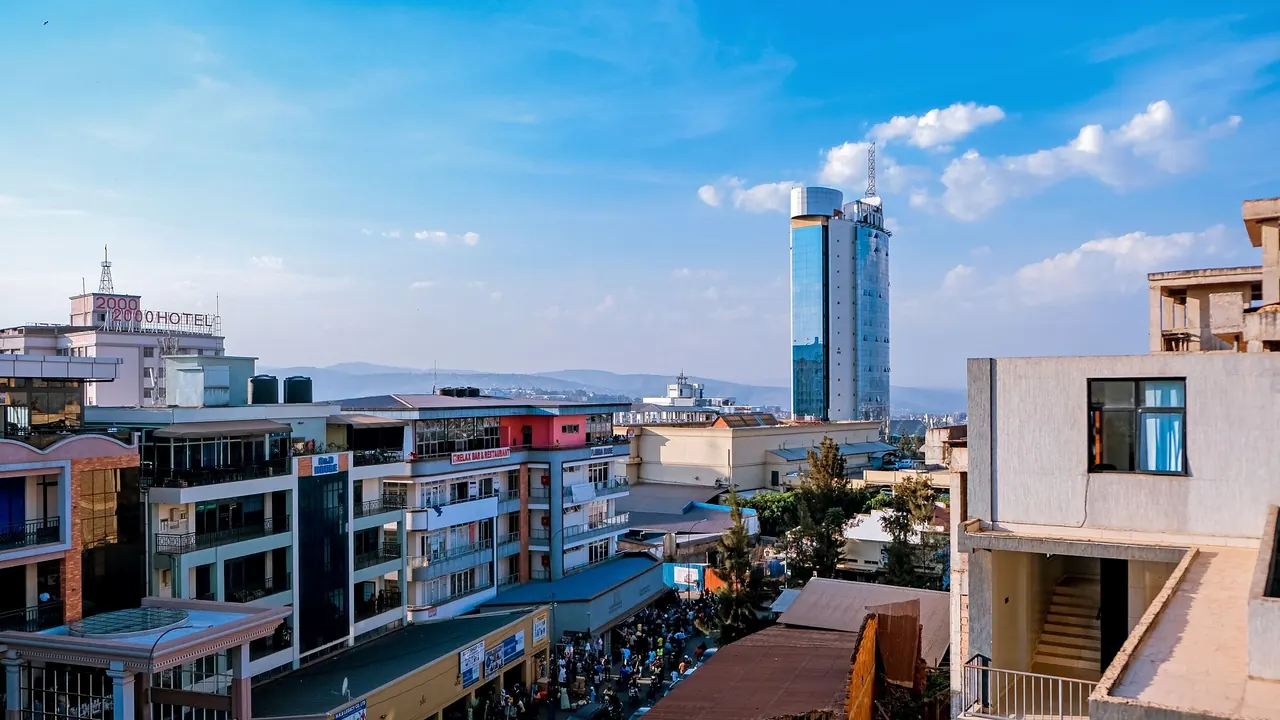
The city centre and Kigali City Tower
- Affordable cities64
- Nature & outdoors55
- Food & drink40
Photo: Jax pexels, Pexels License
Match
36
Every category weighted equally
- Beach & sun35
- Culture & arts36
- Food & nightlife36
- Family trip37
- Outdoors38
- Relax & unwind35
- Shopping & style35
- On a budget39
Kigali in twelve categories
Our verdict on each, scored 0 to 100 against the same fixed benchmark cities, so a score means the same thing on every page.
Beaches & swimming. Scores 7 out of 100.
Food & drink. Scores 40 out of 100.
Culture & sights. Scores 32 out of 100.
Nightlife. Scores 38 out of 100.
Nature & outdoors. Scores 55 out of 100.
Day trips. Scores 34 out of 100.
Good for families. Scores 35 out of 100.
Getting around. Scores 38 out of 100.
Shopping & style. Scores 30 out of 100.
Affordability. Scores 64 out of 100.
Live music & performing arts. Scores 25 out of 100.
Wellness & relaxation. Scores 32 out of 100.
Kigali category by category
Beaches & swimming
7Kigali is a landlocked hill city in the middle of the continent, and beach life plays no part in a stay here. The nearest open water is Lake Muhazi, about an hour east. People go there for a lakeside lunch or a boat out, not for a day on the sand. The real lake beaches are on Lake Kivu at Rubavu, about three hours away by road, and are best done as an overnight trip. In the city itself, swimming means a hotel pool.
Food & drink
40Rwandan cooking is plain, home-style food: beans, plantain, cassava-leaf isombe, sweet potatoes and grilled tilapia, usually served as a lunchtime buffet in local canteens. In the evening, goat brochettes and fried plantain come with cold Primus or Mützig beer in open-air bars all over the hills. Roast pork joints are a Kigali favourite, and there is homemade banana beer if you look for it.
Coffee is the strongest reason to eat and drink here. Beans from the highlands are roasted and brewed with care in cafés around Kiyovu and Kacyiru, and many visitors take a bag home. Thanks to a large diplomatic and NGO community there are good Indian, Ethiopian, Italian and Asian restaurants. Fine dining is limited, though, and few people come to Kigali for the food.
Culture & sights
32Most visitors start with the Kigali Genocide Memorial in Gisozi. It is a sober, carefully made museum built over the mass graves of more than 250,000 victims of the 1994 genocide, and it explains a great deal about the country. The Campaign Against Genocide Museum at the parliament building tells the military side of the story, and the shell-marked walls are still visible. Kandt House covers the colonial period.
Outside these, the sightseeing is thin. Kigali grew fast as a modern capital, so it has no old town and very little historic architecture. Contemporary art galleries and studios around Kacyiru and Kimihurura show lively Rwandan painting and are worth an afternoon, but two or three days covers the city's sights.
Nightlife
38Going out in Kigali is relaxed and centres on the weekend. Evenings usually start with brochettes and beer at open-air bars, or a drink at a rooftop lounge with views across the lit-up hills. On Fridays and Saturdays the clubs in Kimihurura, Kiyovu and Nyarutarama fill with a young local crowd and expats and stay open well past midnight, with Afrobeats, Congolese rumba and East African pop on the speakers.
On weeknights the city is quiet and many places close early. The atmosphere is orderly rather than wild, and that suits anyone who wants a few good nights out without much rowdiness. Rooftop bars are open to anyone, but clubs and moto-taxis tend to mean a late taxi home over the hills.
Nature & outdoors
55Kigali is spread over green ridges and valleys, which makes walking around town a pleasant outdoor experience. You can hike up Mount Kigali for wide views. In the restored wetland at Nyandungu, boardwalks and trails run through birdlife on the edge of the city, and cycling groups ride the rolling roads out of town.
Rwanda's big outdoor draws are further away. Akagera National Park, with lions, elephants, rhinos and boat trips on lakes full of hippos, is about two and a half hours east and works as a long day's safari. The volcanoes in the northwest, home to the mountain gorillas, are similar in distance, but most trekkers sleep near the park for the early start. Nyungwe's rainforest is too far for a day. The climate is mild all year, and the long rains of March to May make trails muddy.
Day trips
34The most important day out is south through the Bugesera countryside, about an hour away, to the genocide memorial churches at Nyamata and Ntarama. Both are left much as they were found and are deeply affecting. Many visitors pair them with the Kigali memorial. A longer drive of about two hours reaches Nyanza and the reconstructed King's Palace, a royal compound of traditional thatched huts where the long-horned Inyambo cattle are kept.
The list ends there. Rwanda's towns are small and modest, and the next places worth seeing, the ethnographic museum at Huye and the lakeside towns on Lake Kivu, take more like three hours. They suit a road trip with overnight stops better than a return the same day.
Good for families
35Kigali is one of the easier African capitals to visit with children. The streets are clean and orderly, it feels safe, the climate is mild all year and Rwandans are warm towards children. Hotel pools, a few playgrounds and the open spaces of Nyandungu's wetland park fill afternoons, and an Akagera safari is a real highlight for older children who can handle a long drive.
What the city lacks is anything built for them. There is no zoo, aquarium, science museum or amusement park, and the main sight, the genocide memorial, is not for young children. Expect a calm, low-key stay rather than a vacation built around children.
Getting around
38The city sits on a series of steep ridges, so places that look close on the map are often separated by a deep valley. The central districts have good pavements and are safe to walk, and the streets are notably clean. Still, few visitors walk far between neighbourhoods.
There is no metro or tram. City buses run on a tap card, but the routes are hard for newcomers to follow. Most visitors use the licensed moto-taxis, whose drivers wear numbered vests and carry a spare helmet, or metered and app-booked cars. Hiring a car with a driver is the usual choice for trips out of town. Heavy traffic is rare, so journeys are short once you have a ride.
Shopping & style
30The best shopping is in crafts. Woven agaseke baskets with lids, imigongo panels painted with geometric patterns in cow dung, carvings and textiles fill the craft cooperatives near the city centre and the stalls at Kimironko market. Kimironko is also the place for kitenge cloth, and tailors there will make it into clothes within days. A small group of Rwandan fashion designers sells bold, modern clothing from studios around Kiyovu and Kimihurura, and packs of local coffee and tea make easy gifts.
Beyond that, the choice is thin. The city's malls are modest and serve residents rather than visitors, and there are no luxury streets or department stores.
Affordability
64Local life in Kigali is inexpensive. Buffet lunches, brochettes, local beer and moto-taxi rides cost little, and entry to the Kigali Genocide Memorial is free. Mid-range guesthouses are reasonable for the comfort they offer.
The tourist end costs much more. International-standard hotels, conference-district restaurants, imported wine and private drivers are priced for diplomats and business travellers. Park fees and especially gorilla permits are high enough to dominate the budget of anyone who goes beyond the city. Kigali is cheap if you live and eat locally and only moderately cheap if you stay at the polished end.
Live music & performing arts
25The most distinctive performance is traditional intore dance. Leaping warriors in grass headdresses perform with drummers and singers at cultural centres and events, and it is worth catching if a show is on. The city also hosts annual festivals of music and theatre, large concerts by East African stars at the indoor arena, and small live-band and open-mic nights in a few bars and arts spaces.
There is no opera house, orchestra or regular theatre programme, so a visitor who wants an evening of performance will find something only on certain nights or around a festival.
Wellness & relaxation
32Kigali has no tradition of bathing, hammams or hot springs, so wellness here means hotel spas, massage studios and a handful of yoga classes in the leafier districts of Kiyovu and Nyarutarama. What helps is the city's temperament. The streets are quiet, clean and orderly, the hills are green, the air at altitude is mild and the pace is unhurried for a capital, so a few slow days with garden hotels and coffee on a terrace come easily. Few people visit just to unwind, but it is a calm base between more demanding trips into the country.
When should you go?
Pick a month to see what it is like. The climate figures are measured averages, not a forecast.
Kigali in July
Daytime high, °C
Rainfall in the month, mm
The whole year
Shaded against this city’s own year: the deepest cell is its best month for that figure and the palest its weakest.
Temperature and rainfall are climate normals, averaged over the years shown. Kigali: 1991-2020 normals, Kigali (1.6 km from centre).
Before you go
| Measure | Kigali |
|---|---|
| Official language | French, English, Swahili, Kinyarwanda |
| Currency | Rwanda Franc (RWF) |
| Sockets | CEG230 V, 50 Hz |
| Driving side | Right |
| Time zone | UTC+2 |
| Emergency number | Police 112, ambulance 912, fire 112 |
| Elevation | 1,567 m |
| Main airport | Kigali International Airport (KGL)3 km from centre24 non-stop destinations |
| Public holidays this year | 13 days |
By the numbers
| Measure | Kigali |
|---|---|
| City population | 1,745,555 |
| People per km² | 2,391 |
| Museums within 10 km | 4 |
| UNESCO World Heritage sites within 50 km | 1 |
Compare Kigali with
Every comparison with a written verdict behind it.