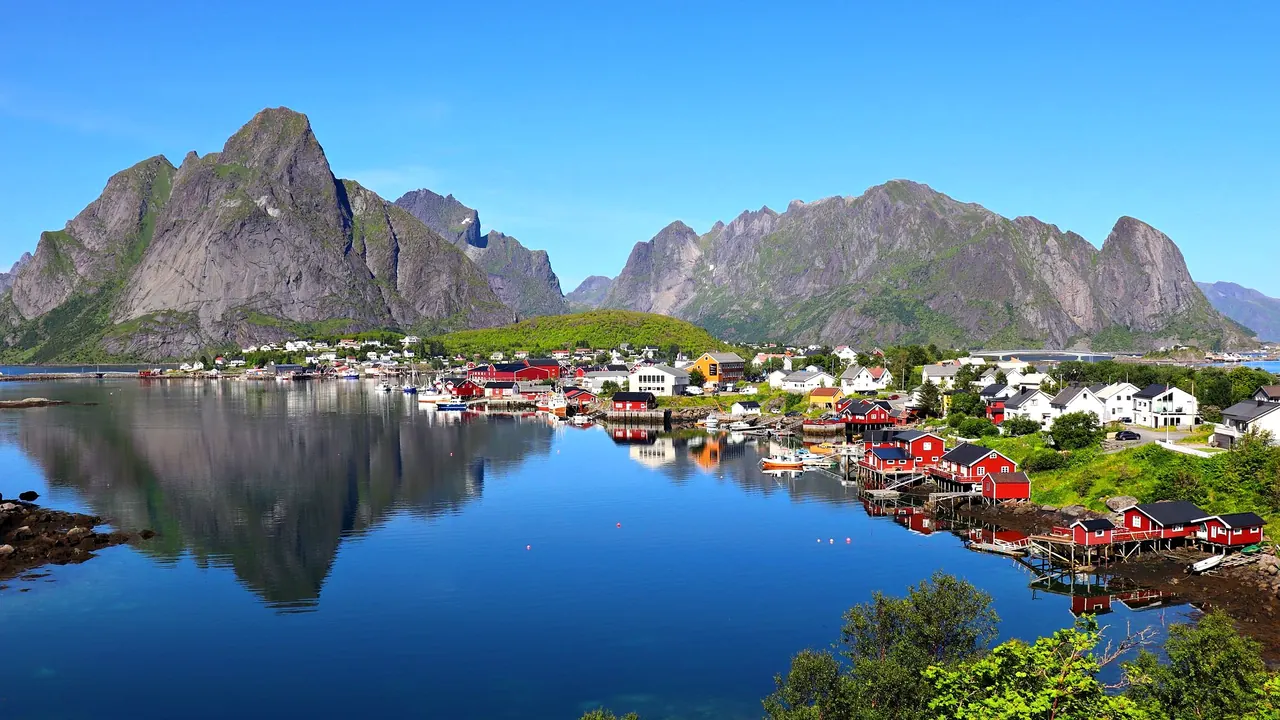
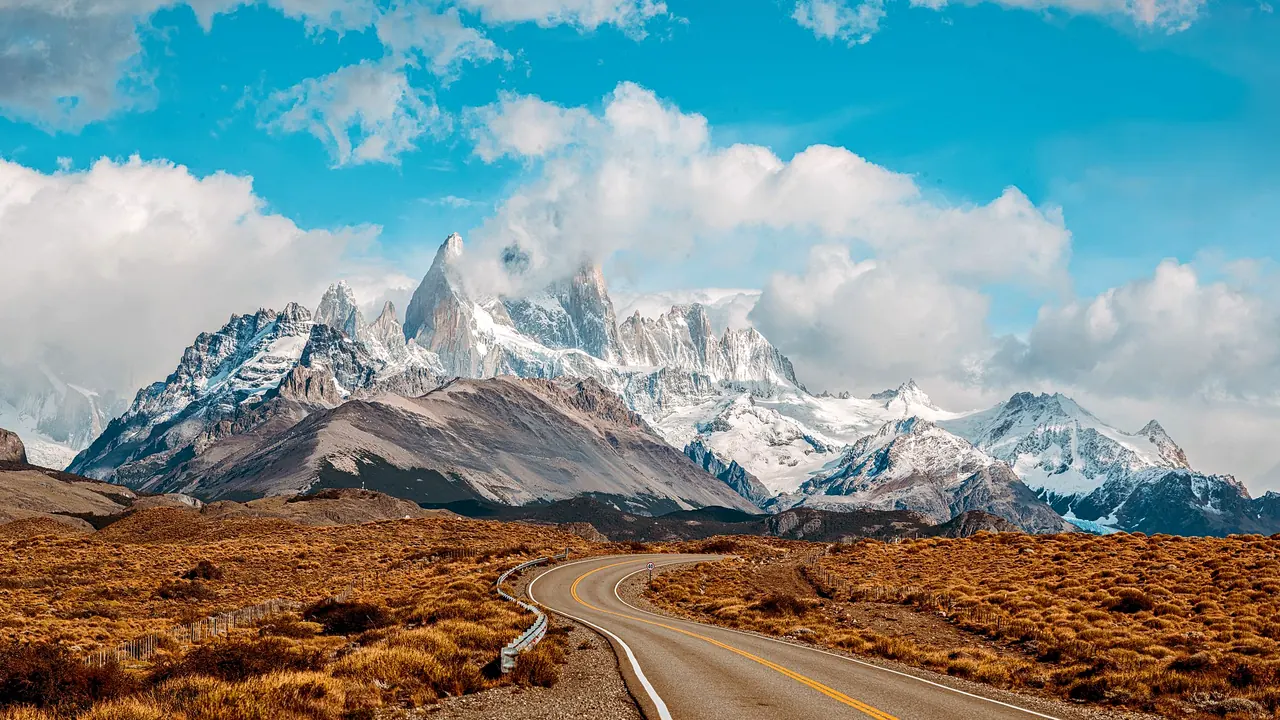
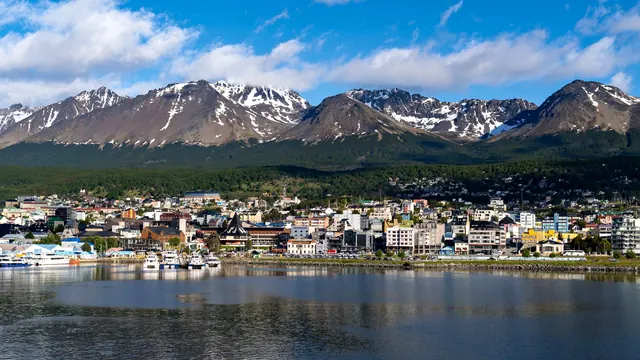
Photos: Lofoten by Mario Vogt, Pexels License; Patagonia by Ema Reynares, Pexels License.
Lofoten or Patagonia?
Our verdict in twelve categories, each scored against the same fixed benchmark cities, and the climate month by month, so you can choose for your trip.
Choose Lofoten for
- culture and sights
- getting around
Lofoten suits a traveller who wants one compact, extraordinary landscape and the freedom to explore it slowly. The whole island chain hangs off a single road, so a week can be spent hiking short, steep peaks above fishing harbours, sleeping in a rorbu over the water and watching either the midnight sun or the northern lights. It is the more expensive choice by a wide margin. The fishing villages at Nusfjord and Å give it a stronger sense of history than you get anywhere in Patagonia.
Choose Patagonia for
- prices
- nightlife
- families
Patagonia is for the bigger journey. It spreads across glaciers, granite spires, a lake district and a wildlife coast with whales and penguins, and it adds more around them: a real night out and the widest food choice in Bariloche, better family outings and lower costs overall. The price is distance. Each area is a flight from the next, so it rewards travellers with time who don't mind moving base two or three times.
Scoreboard
Twelve categories on one fixed scale from 0 to 100. The shaded stretch is the gap between the two.
Your match
Pick a travel style or drag the sliders, and both match scores follow your weighting.
Wins on culture and sights and getting around with your weighting.
Wins on prices and nightlife with your weighting.
What matters to you?
Category by category
What the scores mean for a trip.
Beaches & swimming
Neither region is a beach destination, but the beaches differ in kind. Lofoten's are the more beautiful: pale sand and turquoise water at Haukland, Uttakleiv and Kvalvika under sharp peaks. They are for walking and photographs, and the swimming is a cold dip, ideally followed by a sauna.
Patagonia's lake shores near Bariloche are just as bracing. Its one real swimming beach, Las Grutas, where shallow tidal flats warm the water, is far from the mountains and glaciers people travel for.
Food & drink
Patagonia eats better and with more variety. There's slow-roasted lamb over an open fire, king crab in Ushuaia, trout and venison in the Andes, Bariloche's chocolate and craft beer, Welsh teas in Gaiman and Neuquén wine. Bariloche alone has more choice than all of Lofoten.
Lofoten's cooking is narrower but has real character. It is built on cod, fresh or dried on the racks as stockfish, at its best in the late-winter skrei season. Restaurants are few and scattered, though, and many close out of season, so most visitors end up cooking fish bought at the quay.
Culture & sights
Lofoten has the more rewarding sights, and they sit close together. Most belong to the cod fishery: the rorbuer along the harbours, the preserved trading post at Nusfjord and the fishing and stockfish museums at Å. Borg tells an older story. There the Lofotr longhouse rebuilds a Viking chieftain's hall on its original site, and it is the best single sight in the islands.
Patagonia's sights are older or stranger but scattered across huge distances. They include the stencilled hands of the Cueva de las Manos, the dinosaur museums of Trelew and Neuquén, Ushuaia's prison museum and the Welsh chapels of the Chubut valley. In both regions the sights fill a rainy day rather than shaping the trip.
Nightlife
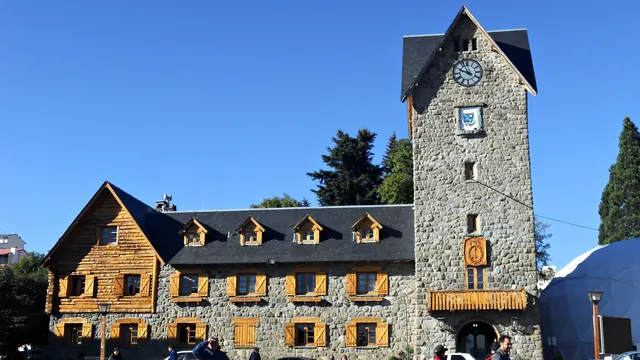
Patagonia has one real nightlife town, which is one more than Lofoten. Bariloche has brewpubs, wine bars and clubs that stay open into the early hours, plus an après crowd at Cerro Catedral in ski season.
In Lofoten a night out means a beer by the harbour in Svolvær or Henningsvær, with no clubs and nothing open late. For most visitors the evening is a midnight-sun hike or waiting for the aurora.
Nature & outdoors
Both regions are among the great landscapes of the world, but the scale is different. Lofoten packs granite peaks, white bays and fjords into one narrow island chain. Short, steep hikes like Reinebringen and Ryten give huge views, and there is surfing at Unstad and ski touring down to the sea. The midnight sun and the northern lights give it two quite different seasons.
Patagonia offers more types of wild country, spread over a far larger area. Fitz Roy and Cerro Torre from El Chaltén, the Perito Moreno glacier and the forested Lakes District are each a world of their own. Península Valdés and Punta Tombo add whales, elephant seals, orcas and penguins on a scale Lofoten's sea eagles cannot match.
Day trips
Patagonia gives more variety for a day away, at least from Bariloche. Villa La Angostura, Colonia Suiza and El Bolsón's craft market and hop farms each feel distinct, and from Puerto Madryn the Welsh village of Gaiman makes an easy half day.
In Lofoten every outing is another harbour village with red cabins and fish racks, pretty but quickly familiar. Beyond them the choice is a ferry to the bird islands of Værøy and Røst or a long drive to Vesterålen.
Good for families
Patagonia is the better family destination, mainly thanks to wildlife children can see up close. Around Puerto Madryn there are whales offshore, sea lions to snorkel with and penguins on the beach. Bariloche adds boat trips, chairlifts, chocolate shops and gentle ski slopes, and Argentine restaurants welcome children even at late dinners.
Lofoten is safe and uncrowded, with rock pools, quayside fishing, the Viking museum at Borg and the small aquarium at Kabelvåg. Beyond those there is little aimed at children. The cold, wet spells and exposed hikes suit only active families.
Getting around
Both regions are hard work without a car, but in different ways. Lofoten is one long, narrow road, about two hours from Svolvær to Å. A hire car covers everything, and the only irritations are single-lane bridges, campervans and full trailhead car parks.
Patagonia's distances are on another scale. Bariloche, El Calafate, Ushuaia and the Valdés coast are each a domestic flight apart, so the usual pattern is a few bases with tours or local buses from each. Within each area, the towns are small and easy to walk.
Shopping & style
Neither is a shopping destination, but Patagonia gives you more to browse. Bariloche's main street has chocolate makers, knitwear and leather, El Bolsón's fair sells handmade crafts and Ushuaia has duty-free shops. Lofoten's shopping comes down to galleries in Henningsvær and Svolvær, a few glassblowers and potters, wool sweaters and stockfish to take home.
Affordability
Lofoten is one of the costliest places you can choose. Norwegian prices apply to meals, groceries, fuel and car hire, and the limited rooms fill early. The main things that help are free hikes and cabins with kitchens.
Patagonia is expensive for Argentina but noticeably easier on the budget. Domestic flights, glacier boats and park fees add up, but hostels, campsites, simple parrillas and the free trails around El Chaltén let independent travellers keep costs down.
Live music & performing arts
Neither region has much live culture, so evenings are rarely planned around a performance. Lofoten has small summer festivals and concerts in churches and old fish-processing buildings. Patagonia has Bariloche's chamber concerts in summer, the odd chacarera folk night and the choirs and eisteddfod of the Welsh communities in Chubut.
Wellness & relaxation
Unwinding in Patagonia can mean a lakeside lodge with a proper spa. In Lofoten it means a wood-fired sauna on the harbour and a plunge into the cold sea. Patagonia offers more: lodges around Bariloche and Villa La Angostura look out over the water, and estancia stays bring horse rides, long meals and almost no phone signal. Copahue in northern Neuquén has volcanic thermal pools and mud treatments in summer.
Lofoten has a few small hotel spas, but most of its calm comes from a rorbu on stilts and the stillness of light summer nights or dark winter ones.
When should you go?
Pick your month. The climate figures are measured averages, not a forecast.
Lofoten in July
Patagonia in July
Daytime high, °C
Rainfall in the month, mm
Where the figures come from
Lofoten has no rain gauge within 25 km of the centre, so its rainfall comes from a gridded climate dataset read at the destination rather than from a gauge further away.
Temperature and rainfall are climate normals, averaged over the years shown. Lofoten: 2011-2025 (rainfall 1991-2020) normals, Svolvaer Airport (4.4 km from centre). Patagonia: 1991-2020 normals, Bariloche Aerodrome (12.2 km from centre).
Lofoten is at its best from June to August, when the hiking routes are clear and the evenings stay light. Even then daytime highs only reach about 17°C in July. The sea peaks around 13°C in August, so a swim is a quick plunge, not a beach day. Rain builds from September to a peak of about 115mm in October, and the cold, dark winter is mainly worth it for the northern lights and late-winter ski touring.
Patagonia's figures come from around Bariloche in the Lakes District. There, December to February is the warm, dry spell, with highs of about 23°C and long sunny days for trails and lake trips. May to August turns cold and wet, with rain peaking around 172mm in June, but that is also the ski season on Cerro Catedral and the start of the whale season off Península Valdés. The far south, around El Calafate and Ushuaia, is cooler and windier than these figures suggest, even in summer. Overall, the two regions are at their best almost exactly six months apart.
Which traveller are you?
On a trip on a tight budget, Patagonia is the one where careful choices actually pay off. Most of its cost lies in extras you can skip. In Lofoten the bed and the hire car are expensive before you have done anything at all.
For a food and nightlife trip, choose Patagonia and base yourself in Bariloche. It is the only place in either region where a long dinner can turn into a late night. Lofoten suits someone happy with good fish and an early night.
On an outdoors trip, both are outstanding, so the choice comes down to time. Lofoten rewards a single week, with a new peak or bay each day and no days lost to travel. Patagonia needs far longer, but adds glaciers and wildlife that Lofoten lacks.
Before you go
| Measure | Lofoten | Patagonia |
|---|---|---|
| Official language | Norwegian, Nynorsk, Bokmål, Sámi | Spanish |
| Currency | Norwegian Krone (NOK) | Argentine Peso (ARS) |
| Sockets | CF230 V, 50 Hz | CI220 V, 50 Hz |
| Driving side | Right | Left |
| Time zone | UTC+1, UTC+2 in summer | UTC-3 |
| Emergency number | Police 112, ambulance 113, fire 110 | 117 or 911 |
| Main airport | Svolvær Airport, Helle (SVJ)3 non-stop destinations | Teniente Luis Candelaria International Airport (BRC)17 non-stop destinations |
| Public holidays this year | 13 days | 16 days |
By the numbers
| Measure | Lofoten | Patagonia |
|---|---|---|
| Swim season, months above 21 °C | None | - |
Where else could you go?
Every comparison below shares a destination with this one, so you can follow Lofoten or Patagonia somewhere new.
- Tromsovs Lofoten
- Laplandvs Lofoten
- Norwegian Fjordsvs Lofoten
- Isle of Skyevs Lofoten
- South Islandvs Patagonia
- Canadian Rockiesvs Patagonia