Nosy Be
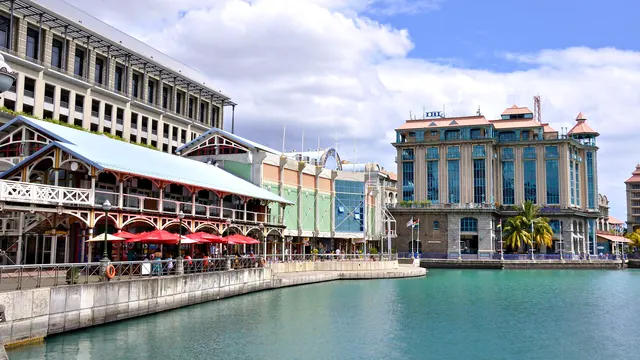
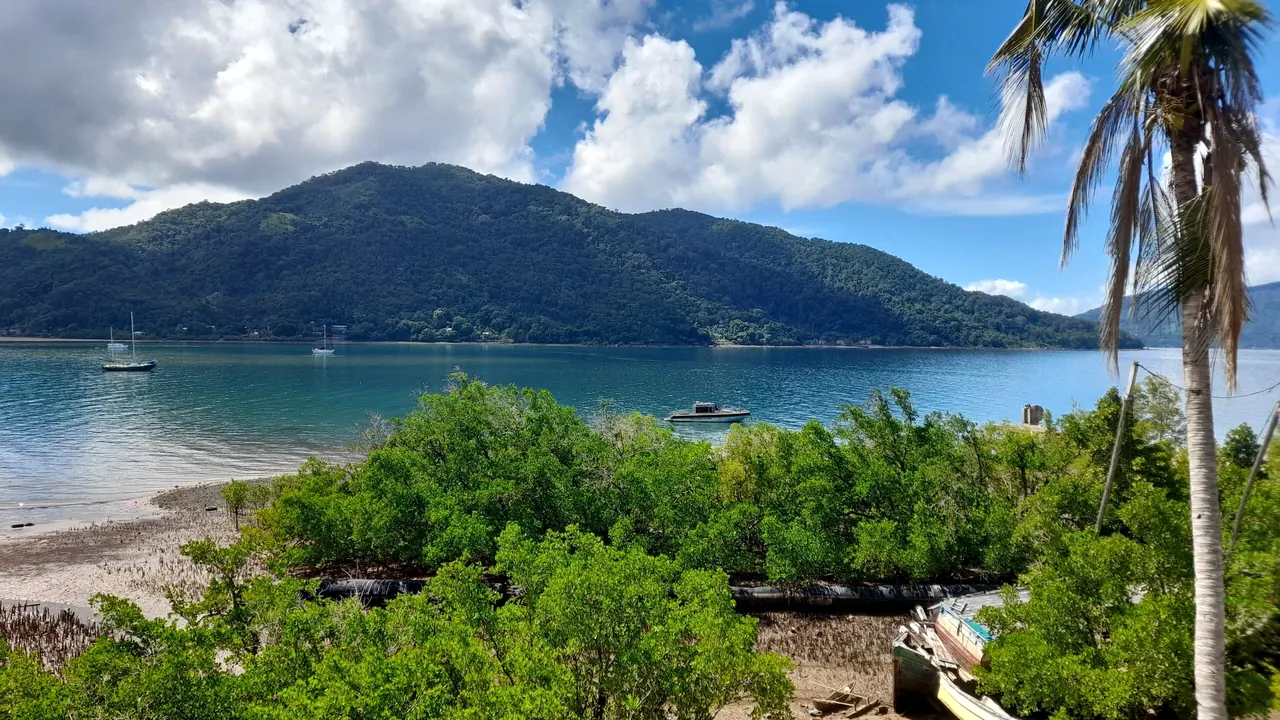
The bay at Hell-Ville below a green hillside, Nosy Be
- Beaches78
- Nature & outdoors78
- Affordability60
Photo: Anai171, CC BY-SA 4.0, cropped
Match
39
Every category weighted equally
- Beach & sun48
- Culture & arts31
- Food & nightlife34
- Family trip45
- Outdoors47
- Relax & unwind46
- Shopping & style32
- On a budget42
Nosy Be in twelve categories
Our verdict on each, scored 0 to 100 against the same fixed benchmark cities, so a score means the same thing on every page.
Beaches & swimming. Scores 78 out of 100.
Food & drink. Scores 38 out of 100.
Culture & sights. Scores 14 out of 100.
Nightlife. Scores 32 out of 100.
Nature & outdoors. Scores 78 out of 100.
Day trips. Scores 30 out of 100.
Good for families. Scores 38 out of 100.
Getting around. Scores 28 out of 100.
Shopping & style. Scores 16 out of 100.
Affordability. Scores 60 out of 100.
Live music & performing arts. Scores 15 out of 100.
Wellness & relaxation. Scores 45 out of 100.
Nosy Be category by category
Beaches & swimming
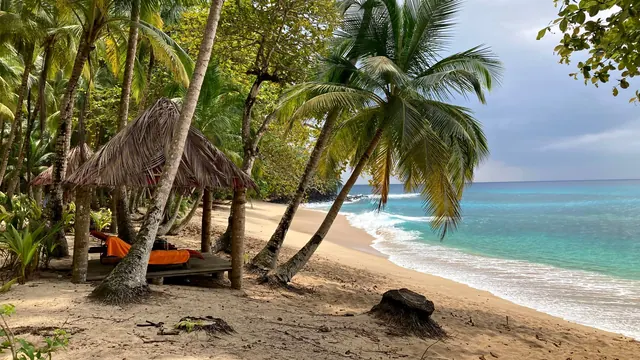
78The sea around Nosy Be is warm all year, rarely below 26°C, and a stay here is built around it. On the main island, Andilana in the far north-west is the best beach, a long curve of pale sand with calm water and sunsets over the Mozambique Channel. The west coast villages of Ambatoloaka, Madirokely and Ambondrona have more convenient beaches, pleasant for a swim but narrower, with stretches of seaweed and shallow water at low tide.
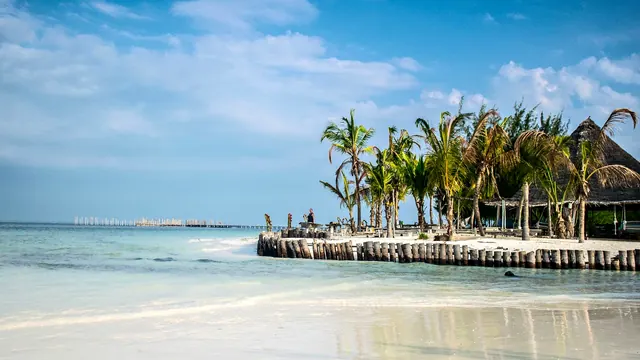
The finest beaches are offshore. Nosy Iranja, two islets joined by a sandbar that appears at low tide, is the classic boat outing, and Nosy Sakatia and Nosy Komba have quieter sand. The best months are the dry season, roughly May to November, when the water is clear and the sea calm.
Food & drink
38Eating on Nosy Be revolves around the sea: grilled fish, prawns, crab, octopus and lobster, often cooked with coconut, vanilla or green pepper. Malagasy staples, rice with zebu stew or romazava, a leafy broth, are served at simple roadside places and in the market at Hell-Ville, where you also find samosas, fruit and grilled skewers. Many beach restaurants in Ambatoloaka and along the west coast are run in a French or Italian style, so pizza, carpaccio and crêpes are as common as local dishes.
The island's own drink is rhum arrangé, rum steeped with vanilla, fruit or spices, served at almost every bar. Beyond that the range is narrow, and a visitor eats well rather than variedly.
Culture & sights
14Nosy Be has little in the way of sights. Hell-Ville, the main town, keeps a few weathered colonial buildings along its main street and a lively market. Nearby stands a huge sacred banyan tree tied to the Sakalava royal line, where visitors dress respectfully and walk barefoot, and a small cemetery holds Russian sailors from a fleet that anchored here in 1905. The ylang-ylang and sugar distilleries around the island give a sense of its plantation history. A morning covers it all; nobody comes here for museums or architecture.
Nightlife
32Going out on Nosy Be means Ambatoloaka, a beach village on the south-west coast where a short strip of bars and a couple of dance clubs keep going until late, loudest at weekends. The music is a mix of salegy, the fast local dance music, and international pop, and the crowd blends visitors, expats and locals. Elsewhere evenings end with rum at the hotel bar. It is lively for a small island but limited in range, and the strip has a seedy edge that some visitors find off-putting.
Nature & outdoors
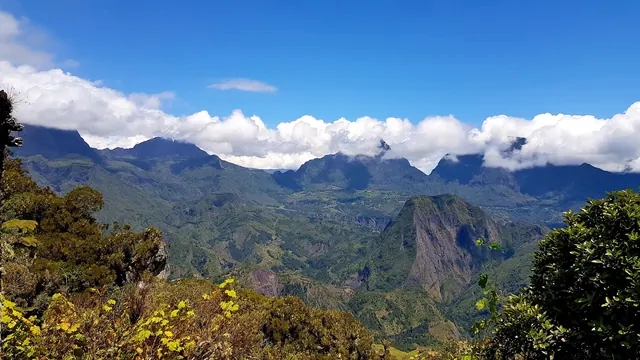
78Nature is the strongest reason to come. Lokobe, the last patch of the island's original rainforest on the south-east coast, is reached by pirogue and walked with a guide, who finds black lemurs, panther chameleons, tiny leaf chameleons and boas. On Nosy Komba, black lemurs come close to visitors. Inland, Mont Passot gives views over a chain of crater lakes, and the hills are planted with ylang-ylang, vanilla and pepper.
The sea adds more. Nosy Tanikely is a marine reserve where turtles and reef fish are easy to see with a mask, and diving around the nearby islets is good. Humpback whales pass from about July to November, and whale sharks gather offshore from roughly October to December. Sport fishing and sailing to the Mitsio islands round out the offer.
Day trips
30Day trips from Nosy Be are almost all by boat, and most are about beaches and wildlife rather than places. The one with a real village is Nosy Komba, where Ampangorinana sells embroidery and carvings along its lanes. Nosy Sakatia and Nosy Iranja have small fishing communities. Across the water, the boat to Ankify, a short crossing, opens the Sambirano valley on the mainland, where cocoa, vanilla and ylang-ylang plantations near Ambanja can be visited in a day. Beyond that there is no other town or heritage site within easy reach.
Good for families
38Children tend to love what Nosy Be offers: warm, calm water at Andilana, lemurs on Nosy Komba, turtles at Nosy Tanikely and boat rides between islands. Resort hotels on the west coast have pools and a relaxed pace that works for young families. There is, however, nothing built for children, no aquariums, parks or play areas, and the practicalities need care. Malaria is present, medical facilities are basic, roads are rough and getting there involves long flights. Families with older children who enjoy wildlife do best.
Getting around
28Nosy Be is small, and nowhere on it is more than about an hour by road, but moving around takes some effort. There is no public transport a visitor would use beyond shared minibuses, so people take taxis and tuk-tuks, hire a scooter or quad, or book a driver through their hotel. Roads are narrow and often potholed, and only the beach villages are pleasant to walk. Anything offshore, which is most of what visitors come for, means a boat excursion, and reaching the island itself usually involves a connecting flight.
Shopping & style
16Shopping is limited to market stalls and crafts. The covered market in Hell-Ville is good for vanilla pods, pepper, cinnamon and other spices, and the island's ylang-ylang oil is sold at distilleries and roadside stands. On Nosy Komba, villagers sell hand-embroidered tablecloths and wood carvings along the paths. Beyond that there are souvenir stalls in Ambatoloaka and little else; bring what you need.
Affordability
60Madagascar is among the cheaper countries to travel in, but Nosy Be is its main resort island and prices reflect that. Local meals, market food, taxis and simple guesthouses in Ambatoloaka or Hell-Ville are inexpensive. Beach resorts along the west coast, restaurants serving visitors, imported wine and the boat excursions that make up most days cost much more, close to European levels. Reaching the island is also costly. A careful visitor can keep costs low; a comfortable resort stay is not a budget trip.
Live music & performing arts
15There is no formal stage life on Nosy Be. Live music means salegy and other local bands playing in the bars of Ambatoloaka and at hotel evenings, sometimes with traditional dance. The island's big cultural moment is Donia, a long-running festival of music from Madagascar and the Indian Ocean islands held in Hell-Ville each year around Pentecost, which fills the town for several days. Outside it, there is little to attend.
Wellness & relaxation
45Nosy Be is a slow place, and unwinding comes naturally. Days follow the tide and the light, and the quieter north-west around Andilana and the small resorts on the outlying islands are especially calm. Spa treatments are mostly found in resort hotels, where massages use the island's own ylang-ylang oil, vanilla and coconut, and some beaches have local masseuses working under the trees. There are no thermal baths or bathing traditions to seek out, so wellness here is more about pace than ritual.
When should you go?
Pick a month to see what it is like. The climate figures are measured averages, not a forecast.
Nosy Be in July
Daytime high, °C
Rainfall in the month, mm
The whole year
Shaded against this destination’s own year: the deepest cell is its best month for that figure and the palest its weakest.
Temperature and rainfall are climate normals, averaged over the years shown. Nosy Be: 1991-2020 normals, Fascene Nossi-Be (14.3 km from centre).
Before you go
| Measure | Nosy Be |
|---|---|
| Official language | French, Malagasy |
| Currency | Malagasy Ariary (MGA) |
| Sockets | CEJK50 Hz |
| Driving side | Right |
| Time zone | UTC+3 |
| Emergency number | Police 117, ambulance 124, fire 118 |
| Main airport | Nosy Be International Airport (NOS)8 non-stop destinations |
| Public holidays this year | 10 days |
By the numbers
| Measure | Nosy Be |
|---|---|
| Population | 60,000 |
| People per km² | 207 |
| Swim season, months above 21 °C | 12 months |
Compare Nosy Be with
Every comparison with a written verdict behind it.