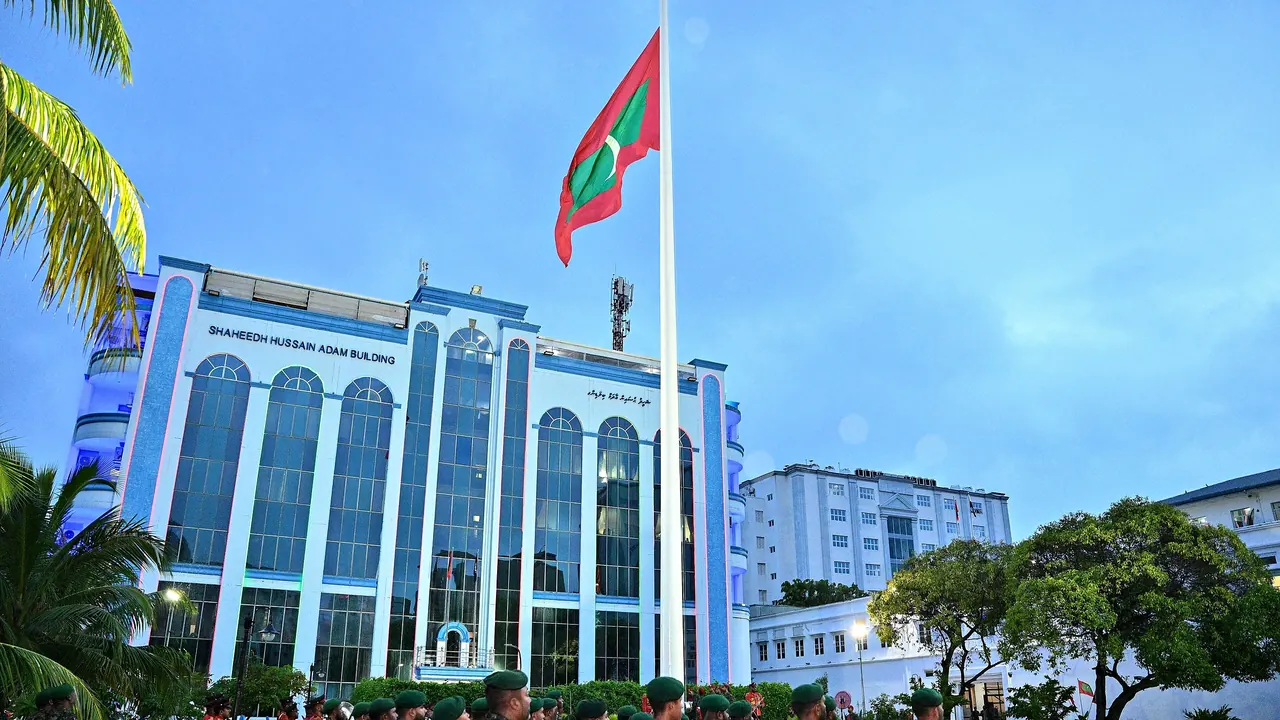
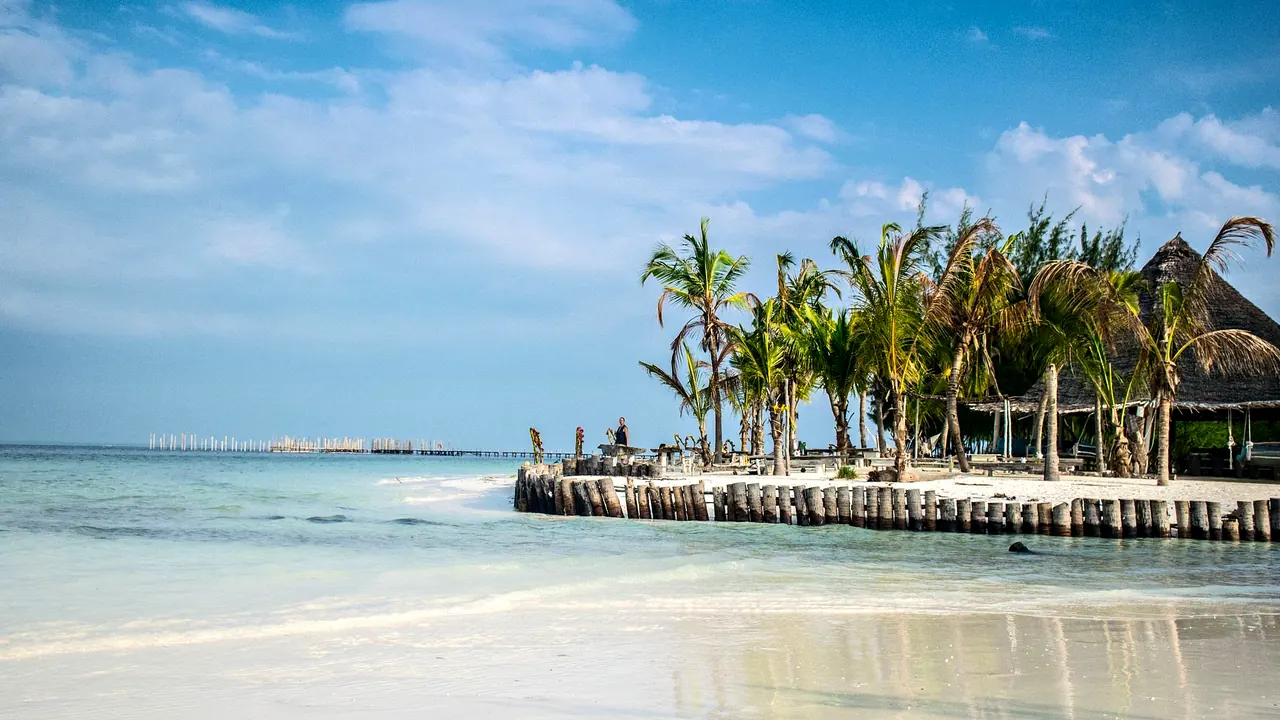
Photos: Malé by The President's Office of the Republic of Maldives, CC BY 4.0, cropped; Zanzibar by Ákos Helgert, Pexels License.
Malé or Zanzibar?
Our verdict in twelve categories, each scored against the same fixed benchmark cities, and the climate month by month, so you can choose for your trip.
Choose Malé for
- getting around
- nature and the outdoors
Malé suits the traveller whose vacation happens under the water. The reefs of North and South Malé atolls, with their channel drifts, mantas and wrecks, are a short boat ride from the city. The capital is compact, quick to cross and handy for a night or two between flights and dive days. Come for the sea and the islands rather than the city. It has no bars, little sand of its own and sights that take a morning.
Choose Zanzibar for
- nightlife
- wellness
- culture and sights
Zanzibar is the better choice for a full beach vacation with more going on around it. It has powder-white strands in the north, the old Swahili trading town of Stone Town to explore, spiced street food at night, and beach bars and yoga on the coast. Getting around is slower, with transfers of an hour or more between town and beach, but there is far more to fill the days.
Scoreboard
Twelve categories on one fixed scale from 0 to 100. The shaded stretch is the gap between the two.
Your match
Pick a travel style or drag the sliders, and both match scores follow your weighting.
Wins on getting around and nature and the outdoors with your weighting.
Wins on nightlife and wellness with your weighting.
What matters to you?
Category by category
What the scores mean for a trip.
Beaches & swimming
Malé has almost no sand of its own. There is a small artificial beach and a surf break off the seawall, and the proper strands are at Hulhumalé and Villimalé, where you swim modestly dressed. For bikinis and sandbanks it takes a speedboat to Maafushi or a resort day pass.
Zanzibar is the real beach destination of the two. Kendwa and Nungwi in the north can be swum at all tides and face the sunset, and Matemwe is quieter. On the east coast the water drains far out at low tide, so plan swims around the tide table there.
Food & drink
Malé cooks around tuna: mas huni with roshi at breakfast, garudhiya broth, and trays of hedhikaa short eats in the tea shops. Beyond that the choice is narrow, and the city is completely dry.
Zanzibar offers more range and more atmosphere. Clove- and cardamom-scented pilau, coconut fish curries and octopus come out of centuries of Indian Ocean trade, and the evening stalls in Forodhani Gardens make a memorable first night. A beer or wine with dinner is also possible in hotels and tourist restaurants.
Culture & sights
Malé's heritage is small but fine. The coral-stone Hukuru Miskiy with its carved headstones, the Mulee-aage palace and the National Museum's Buddhist-era carvings take about a morning, and after that the city is plain concrete.
Stone Town gives Zanzibar far more depth: a whole UNESCO-listed old town of carved doors, mosques, Hindu temples and merchant houses, the Old Fort and the sobering slave market site under the Anglican cathedral. Omani palace ruins at Maruhubi and Mtoni extend it into the countryside.
Nightlife
Malé has no nightlife in the usual sense, because alcohol is not served anywhere in the city. Evenings mean late cafés, juice bars and a stroll on the promenade.
Zanzibar is no party island either, but it does have evenings out. There are beach bars and bonfires at Nungwi and Kendwa, a full-moon party, kitesurfers' bars in Paje and rooftop sundowners over Stone Town harbour, though most places wind down by midnight.
Nature & outdoors
Malé has the edge where it counts for divers. On land there is nothing to explore, but the atolls around it hold some of the best-known dive sites in the Indian Ocean: drift dives with grey reef sharks, manta stations and wrecks. December to April brings the clearest water.
Zanzibar spreads its outdoors more widely. It offers good snorkelling at Mnemba atoll and dolphin trips from Kizimkazi, plus things Malé cannot match: red colobus monkeys in Jozani Forest and one of the region's better kitesurfing lagoons at Paje.
Day trips
Outings from Malé are all by boat, to local islands such as Maafushi, Huraa or Thulusdhoo, or to a resort on a day pass. They are pleasant, but one sandy village island is much like the next.
Zanzibar has more variety on a small scale. You can see the giant tortoises on Changuu, tour a spice farm with lunch, visit the old mosque at Kizimkazi, or spend a day in Stone Town from the beach. Dar es Salaam and Pemba are within reach, but they are better as overnight trips.
Good for families
Malé is tiring with young children. The streets are packed with scooters, there is little shade, and there is not much beyond Sultan Park and a playground. Hulhumalé's calm lagoon is easier, and most families simply transfer to a resort.
Zanzibar works better for a family beach stay. North coast resorts have pools and calm water, and children will remember the tortoises, the monkeys and the turtles. Malaria precautions, limited medical care and long road transfers are the trade-offs.
Getting around
Malé is about two kilometres across, so the whole city is close at hand. Flat-fare taxis cover it, and buses run over the bridge to the airport and Hulhumalé, though the cramped pavements make walking a squeeze. Going further means slow public ferries or speedboats that you book ahead.
Zanzibar asks for more time on the road. Nungwi and Paje are each an hour or more from Stone Town by taxi or transfer. Dala-dalas are slow and crowded, and driving yourself needs a local permit.
Shopping & style
Malé's shops serve residents: clothes and electronics on Majeedhee Magu, and jars of smoked tuna paste at the harbour market. Lacquered boxes and woven mats take real searching.
Zanzibar has more to bring home. Darajani market sells clove, vanilla and cardamom by the bag, and Stone Town's lanes carry kanga cloth, carved chests, Tingatinga paintings and tanzanite. Expect to haggle, and expect to see the same goods on many stalls.
Affordability
Both are cheap on land and expensive on the water. In Malé, tea-shop meals, taxis and Hulhumalé guesthouses are reasonable, but every speedboat, dive and resort pass costs a lot in a country where most goods are imported.
Zanzibar comes out a little kinder overall. Stone Town guesthouses, Forodhani stalls and simple bungalows around Paje and Jambiani keep a stay modest, while northern resorts, diving and the Christmas and midsummer peaks drive costs up.
Live music & performing arts
In Malé, live performance is essentially limited to bodu beru drumming, heard at national celebrations, at Eid or as resort entertainment. There is no stage with a regular programme.
Zanzibar has its own living music in taarab, a mix of Swahili poetry with Arabic and Indian melody. You can hear it at rehearsals in Stone Town's music school and in cultural halls, and the dry season brings East African music and film festivals.
Wellness & relaxation
Malé is a hard place to switch off. Scooters run through the night, green space is scarce and there is no tradition of public bathing. You can still book a massage at one of the small day spas in the city or across the bridge in Hulhumalé, but the street noise is waiting when you come out. For proper rest, visitors book a day at a resort spa or move on to a quieter island.
On Zanzibar you can rest where you sleep, but where you stay matters. Matemwe and Pongwe on the reef-facing northeast coast are the quietest bases, and so are the villages south of Paje towards Jambiani. Stone Town is busy by day, and Nungwi and Kendwa get loud on party nights. The sultans' Persian baths at Kidichi are a ruin to look round, not a place to bathe.
When should you go?
Pick your month. The climate figures are measured averages, not a forecast.
Malé in July
Zanzibar in July
Daytime high, °C
Rainfall in the month, mm
Where the figures come from
Zanzibar's temperatures are measured 78 km from the centre, at Dar Es Salaam Airport.
Zanzibar has no rain gauge within 25 km of the centre, so its rainfall comes from a gridded climate dataset read at the destination rather than from a gauge further away.
Temperature and rainfall are climate normals, averaged over the years shown. Malé: 1991-2020 normals, Male (3.9 km from centre). Zanzibar: 1991-2020 normals, Dar Es Salaam Airport (77.9 km from centre).
Both stay hot all year, with daytime highs of about 30°C to 33°C and warm seas, so rain decides when to go, not heat. Malé's dry spell runs from January to March. February and March see only about 44mm of rain, and March is the sunniest month, with the calmest, clearest water for boat trips. From April the southwest monsoon arrives and the rest of the year is wet, with October the rainiest month. The sea stays bath-warm through it all, and there is still plenty of sun between the showers.
Zanzibar has two dry seasons and two wet ones. June to October is the longest and most reliable dry season. It is sunny and a touch less hot for walking Stone Town, though the sea cools to about 26°C. January and February are hotter and fairly dry too. March is already wet, the long rains peak in April at over 363mm and carry on into May, and November and December bring a second, shorter wet spell. Only January and February suit both destinations. From June to October Zanzibar is clearly the better bet, just as Malé's wettest months set in.
Which traveller are you?
For an outdoors trip built around diving and snorkelling, Malé is the stronger base. Dive centres in the city and Hulhumalé run day trips to famous channel sites with sharks, eagle rays and manta cleaning stations, all a short boat ride away.
On a culture and arts trip, Zanzibar wins clearly. Stone Town's coral-stone lanes, the Palace Museum, the slave market memorial and taarab played in the old town give days of interest, while Malé's heritage is seen in a morning.
For a relaxing and wellness trip, choose Zanzibar. Its beach villages run at the pace of the tide, with coconut-oil massages at coastal spas and yoga around Paje. Malé is dense and noisy, so resting there means leaving for a resort.
Before you go
| Measure | Malé | Zanzibar |
|---|---|---|
| Official language | Maldivian | English, Swahili |
| Currency | Rufiyaa (MVR) | Tanzanian Shilling (TZS) |
| Sockets | ACGJKL230 V, 50 Hz | G230 V, 50 Hz |
| Driving side | Left | Left |
| Time zone | UTC+5 | UTC+3 |
| Emergency number | Police 119, ambulance 102, fire 118 | Police 112, ambulance 115, fire 114 |
| Elevation | 2 m | - |
| Main airport | Velana International Airport (MLE)3 km from centre50 non-stop destinations | Abeid Amani Karume International Airport (ZNZ)40 non-stop destinations |
| Public holidays this year | - | 13 days |
By the numbers
| Measure | Malé | Zanzibar |
|---|---|---|
| Population | 133,019 | 896,721 |
| People per km² | 22,934 | 569 |
| Museums within 10 km | 1 | - |
| UNESCO World Heritage sites within 50 km | 0 | - |
| Swim season, months above 21 °C | 12 months | 12 months |
Where else could you go?
Every comparison below shares a destination with this one, so you can follow Malé or Zanzibar somewhere new.
- Dar es Salaamvs Zanzibar
- Dianivs Zanzibar
- Mombasavs Zanzibar
- Ngorongorovs Zanzibar
- Serengetivs Zanzibar
- Moronivs Zanzibar