Peru
Arequipa
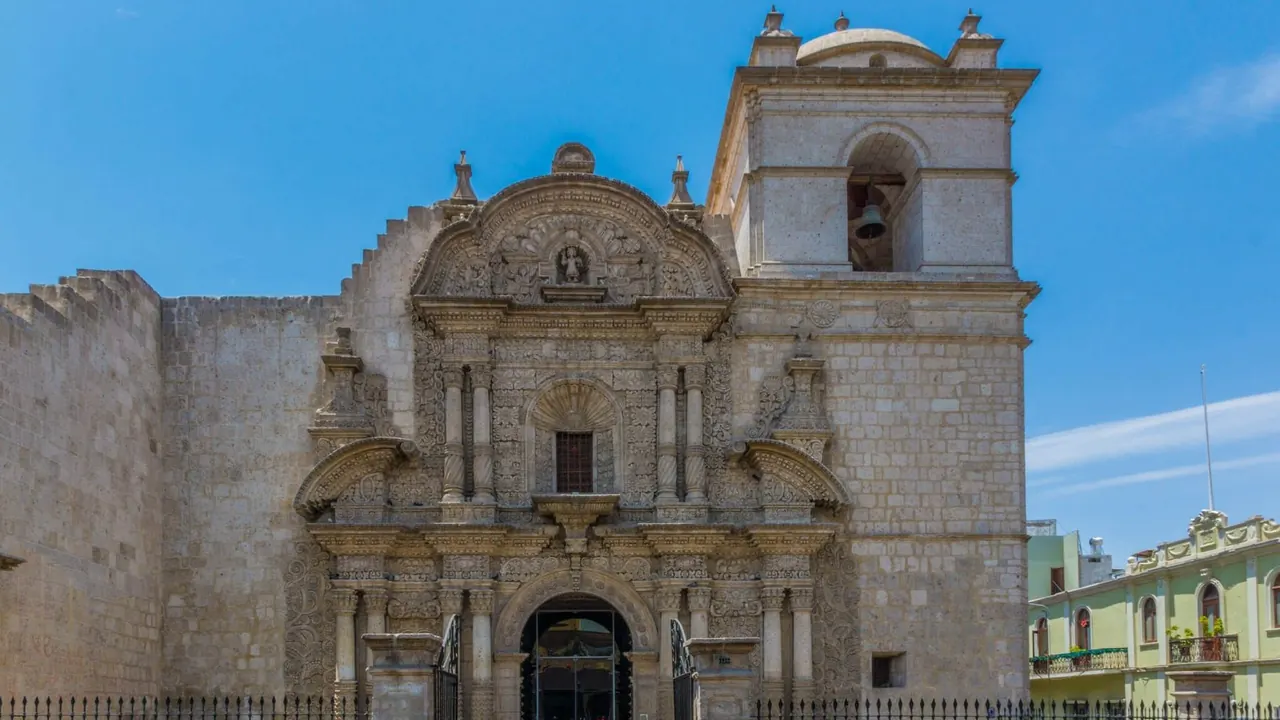
The church of La Compania under a blue sky
- Affordable cities82
- Nature & outdoors74
- Food & drink66
Photo: DocSlyper, CC BY-SA 2.0, cropped
Match
46
Every category weighted equally
- Beach & sun44
- Culture & arts49
- Food & nightlife47
- Family trip47
- Outdoors49
- Relax & unwind45
- Shopping & style48
- On a budget50
Arequipa in twelve categories
Our verdict on each, scored 0 to 100 against the same fixed benchmark cities, so a score means the same thing on every page.
Beaches & swimming. Scores 8 out of 100.
Food & drink. Scores 66 out of 100.
Culture & sights. Scores 64 out of 100.
Nightlife. Scores 36 out of 100.
Nature & outdoors. Scores 74 out of 100.
Day trips. Scores 30 out of 100.
Good for families. Scores 35 out of 100.
Getting around. Scores 54 out of 100.
Shopping & style. Scores 44 out of 100.
Affordability. Scores 82 out of 100.
Live music & performing arts. Scores 27 out of 100.
Wellness & relaxation. Scores 34 out of 100.
Arequipa category by category
Beaches & swimming
8Arequipa sits in a high desert valley at 2,335m, and the Pacific is a long drive away over dry hills. The nearest beach towns, Mollendo and Mejia, take about two hours by road. Their beaches are wide and sandy, but the cold Humboldt Current keeps the water around 16-18°C even in summer, and the surf is often rough. Local families go there between January and March, but for a visitor it is a long outing, not part of a city stay. If swimming matters, use the hotel pool.
Food & drink
66Arequipa has one of the strongest regional cuisines in Peru, and it is best eaten at lunch in the picanterias. These are big, noisy family dining rooms, some with wood-fired clay stoves, serving rocoto relleno (a stuffed hot pepper), chupe de camarones (river-shrimp chowder), solterito salad and spicy chicharrones. On Sunday mornings the city eats adobo, pork slow-cooked with chicha and spices. Chicha de guinapo, a dark corn drink, comes with almost every meal, and street carts sell queso helado, a cinnamon-scented ice cream.
The San Camilo market is the place to see Andean potatoes, cheeses and fruit juices stacked high. Around the Plaza de Armas there are good modern Peruvian restaurants and coffee bars. International cooking is limited and there are only a few fine-dining tables, but a visitor who eats where Arequipenos eat will do very well.
Culture & sights
64The historic centre is built of sillar, a pale volcanic stone, which is why Arequipa is called the White City. Churches and mansions show a mestizo baroque in which Andean flora and faces are carved alongside the Spanish motifs, and the whole centre is a UNESCO site. The Plaza de Armas is framed by arcades and the long cathedral façade, with El Misti volcano behind it. The Jesuit church of La Compania has one of the finest carved portals in the Andes.
The Santa Catalina Monastery is the main sight. It is a walled town of cloisters and lanes painted ochre and indigo, and you can spend half a day in it. The Museo Santuarios Andinos keeps Juanita, an Inca girl found frozen high on a nearby volcano. Add the Recoleta convent, colonial houses such as Casa del Moral and the Yanahuara lookout, and the city fills two or three good days.
Nightlife
36Going out in Arequipa centres on Calle San Francisco and the streets running off it just north of the Plaza de Armas. There are pisco bars, craft beer pubs, terraces and a few dance clubs that fill with students and young locals from Thursday to Saturday. Weekend nights can run late, with salsa and reggaeton. On weeknights the centre is quiet early, and many visitors are in bed anyway before a pre-dawn Colca departure. It suits a relaxed pisco sour and a few drinks more than a big night.
Nature & outdoors
74Three volcanoes stand over the city: snow-capped El Misti at 5,822m, the broader Chachani and the jagged Pichu Pichu. Chachani is one of the more accessible 6,000m peaks in the Americas, and Misti is a popular two-day climb. Both need acclimatisation and a guide. Closer in, the green terraced campina of the Chili valley gives easy walks and cycling, and the river gorge has rafting.
The big draw is Colca Canyon, about three to four hours away across the Salinas y Aguada Blanca reserve, where vicunas graze on the high puna. Andean condors ride the thermals at the Cruz del Condor viewpoint, and multi-day treks drop to oases on the canyon floor. Cotahuasi Canyon and the Valley of the Volcanoes are further, for longer trips. The dry season, May to November, has clear skies.
Day trips
30Within easy reach, most outings stay in the countryside around the city. Sabandia has an old stone mill. The Mansion del Fundador is a restored colonial estate. Small farming districts such as Characato and Tingo have country restaurants serving the local Sunday dishes. The thermal village of Yura and the sleepy port of Mollendo are each a half day or a long day out.
The colonial villages of the Colca valley, with their whitewashed churches, and the Toro Muerto petroglyph field are three hours or more each way. Most visitors see them on overnight tours, not day trips. Beyond that, the next real destinations are Puno and Lake Titicaca, which are better treated as the next stop on the route.
Good for families
35At 2,335m, Arequipa is far easier on children than the high Andes. The centre is flat, the plazas are relaxed and Peruvian families are warmly welcoming to small children. Older children tend to enjoy Santa Catalina's maze of coloured lanes and the frozen mummy at the Museo Santuarios Andinos. Otherwise there are no zoos, aquariums or theme parks of note to fill the days. Colca and the volcano roads go above 4,800m, often with pre-dawn departures and long drives, which is hard on young children. The sun at this altitude is fierce, so hats and sunscreen are essential.
Getting around
54The historic centre is a compact grid, and the plaza, the cathedral, Santa Catalina, the main museums and most hotels are a few blocks apart, so most of a city stay happens on foot. The streets near the plaza are busy with traffic and the pavements are narrow, but there are few hills. Yanahuara is a short walk or taxi ride across the river. Taxis and ride-hailing apps are the practical way to reach the campina and the outer districts. The city buses and colectivos are hard for a visitor to work out. Colca and the volcanoes are reached by organised tour, private driver or long-distance bus.
Shopping & style
44Arequipa is the centre of Peru's alpaca wool industry, and that is the reason to shop here. The big textile mills run outlet stores and showrooms selling baby alpaca and vicuna sweaters, scarves and throws. The quality is reliable and well above most market stalls elsewhere in Peru. Around the plaza and in converted colonial courtyards there are craft and design shops, and Fundo El Fierro gathers artisans in a colonial building. San Camilo market is for food and everyday goods. There are no luxury streets, and fashion shopping beyond textiles means suburban malls.
Affordability
82Arequipa is a cheap city for a visitor. Comfortable guesthouses in colonial buildings, set lunch menus and picanteria meals cost little, and taxis across town are inexpensive. Most museums and churches charge modest entry fees, and Santa Catalina costs the most. Organised tours to Colca and guided volcano climbs are the largest costs, and the restaurants near the plaza charge more than the rest of the city. Even so, a visitor gets good comfort for modest spending.
Live music & performing arts
27Performance in Arequipa is modest. The Teatro Municipal and the university cultural centres put on theatre, the regional symphony orchestra and visiting productions. The most accessible live music is in the penas, where Andean folk bands and dancers perform over dinner, mostly on weekends. In mid-August, celebrations for the city's founding anniversary bring parades, folk dance and concerts into the streets. Outside that, a visitor will find little to attend.
Wellness & relaxation
34Arequipa is a calm place to spend time: dry, almost always sunny and unhurried, with long lunches and cloister courtyards that are easy to linger in. Proper bathing means leaving the city. Yura, under an hour away, has simple old thermal pools fed by volcanic springs. In the Colca valley the open-air hot springs near Chivay are a pleasure after a day on the canyon rim. In the city itself, wellness means hotel spas and massage studios rather than any local tradition.
When should you go?
Pick a month to see what it is like. The climate figures are measured averages, not a forecast.
Arequipa in July
Daytime high, °C
Rainfall in the month, mm
The whole year
Shaded against this city’s own year: the deepest cell is its best month for that figure and the palest its weakest.
Where the figures come from
Arequipa's station stands 203 m above the city centre, so the centre is likely a little warmer than the figures say.
Temperature and rainfall are climate normals, averaged over the years shown. Arequipa: 1991-2020 normals, Arequipa (9.2 km from centre).
Before you go
| Measure | Arequipa |
|---|---|
| Official language | Spanish, Aymara, Quechua |
| Currency | Sol (PEN) |
| Sockets | ABC220 V, 60 Hz |
| Driving side | Right |
| Time zone | UTC-5 |
| Emergency number | 111 or 911 |
| Elevation | 2,335 m |
| Main airport | Rodríguez Ballón International Airport (AQP)7 km from centre2 non-stop destinations |
| Public holidays this year | 17 days |
By the numbers
| Measure | Arequipa |
|---|---|
| City population | 1,008,290 |
| People per km² | 1,551 |
| Museums within 10 km | 3 |
| UNESCO World Heritage sites within 50 km | 1 |
Compare Arequipa with
Every comparison with a written verdict behind it.