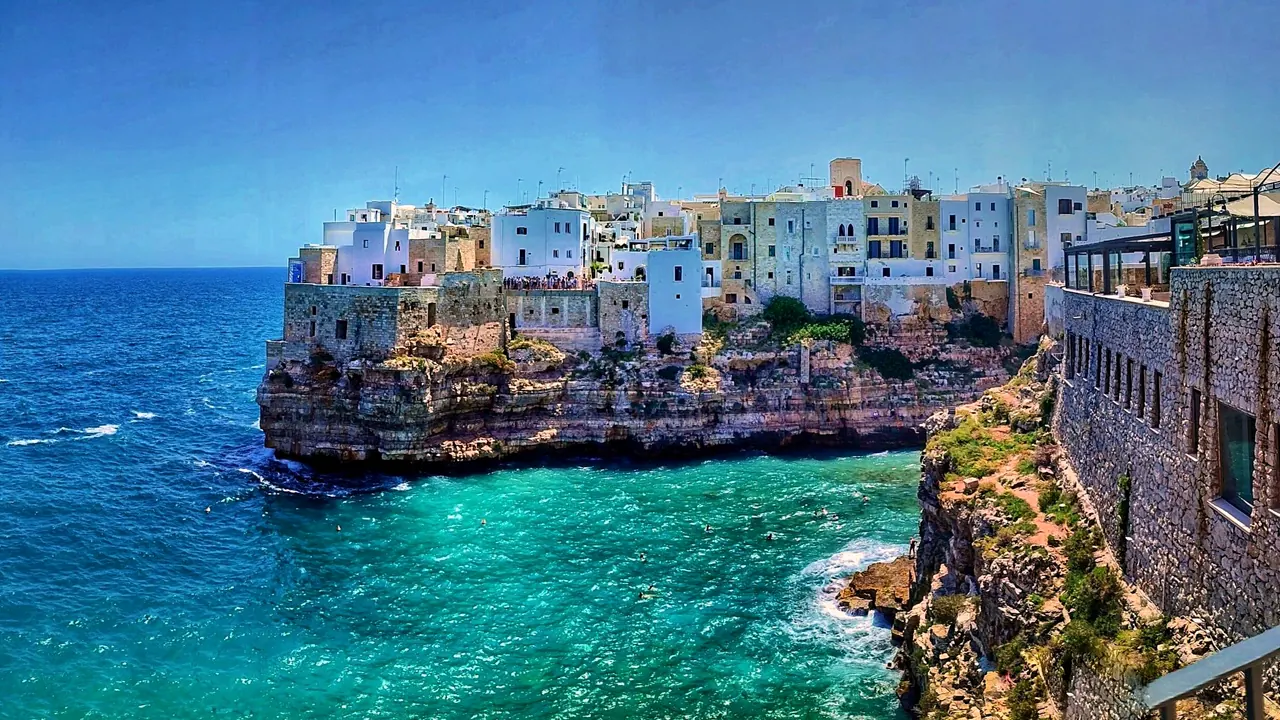
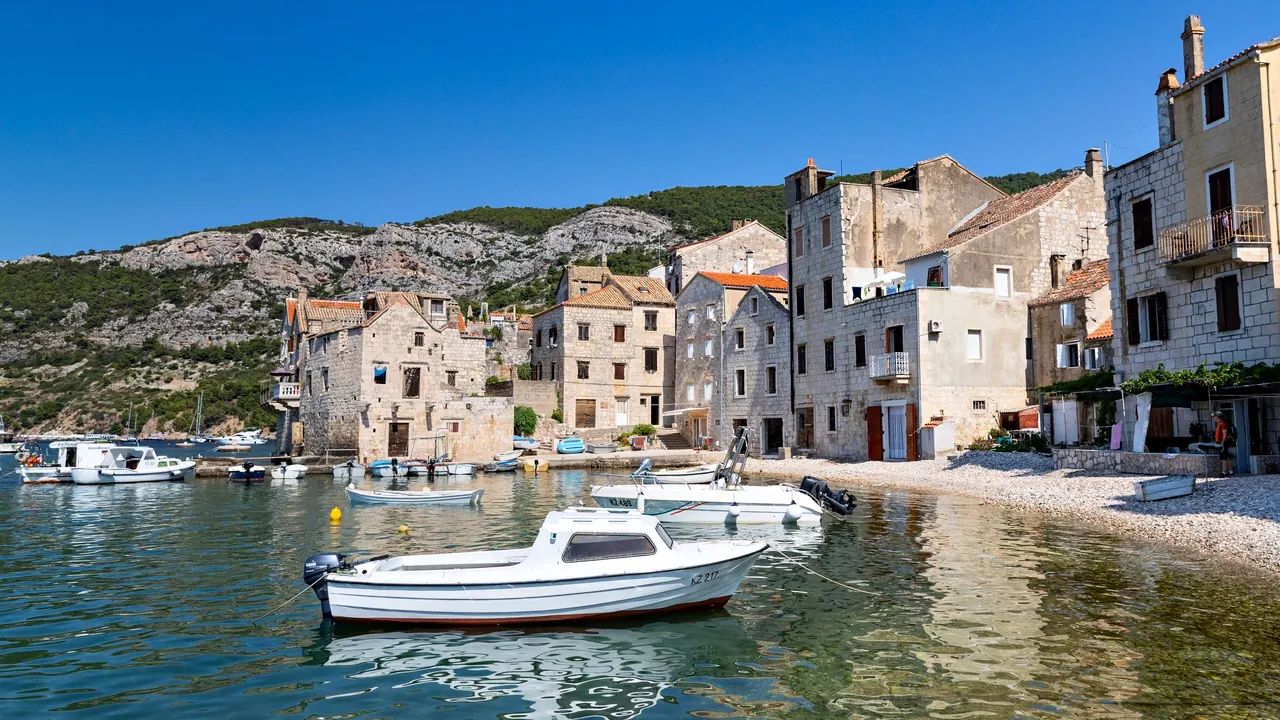
Photos: Puglia by Acquario51, CC BY-SA 4.0, cropped; Vis by dronepicr, CC BY 2.0, cropped.
Puglia or Vis?
Our verdict in twelve categories, each scored against the same fixed benchmark cities, and the climate month by month, so you can choose for your trip.
Choose Puglia for
- day trips
- culture and sights
- live music and the arts
Puglia is the stronger choice for most trips. It is a long region with sandy Ionian beaches and rocky Adriatic coves, baroque Lecce, the trulli of Alberobello and a string of whitewashed hill towns, and its food is a reason to go in itself. It suits travellers who want variety, a hire car and a different town each day, and families who need shallow sand and evenings in the piazza.
Choose Vis for
Vis does not lead in any category we score.
Choose Vis if what you want is to stop moving. It is a remote island of pebble coves and very clear water, a long ferry ride from Split, with two small harbour towns, early nights and very little to tick off. Divers, kayakers and couples after long fish lunches and a quiet sea will be happy there. Anyone who wants sights, shops or nights out will run out of things to do within days.
Scoreboard
Twelve categories on one fixed scale from 0 to 100. The shaded stretch is the gap between the two.
Your match
Pick a travel style or drag the sliders, and both match scores follow your weighting.
Wins on day trips and culture and sights with your weighting.
Has no clear advantage with the weighting you have chosen.
What matters to you?
Category by category
What the scores mean for a trip.
Beaches & swimming
Puglia comes out slightly ahead because it has both kinds of coast. The Ionian side of the Salento, around Gallipoli and Pescoluse, has long pale sands and shallow water, while the Adriatic side around Polignano and Otranto has rock platforms and coves. The Gargano adds cliffs and sea caves, and a base in the Salento puts both seas within reach.
Vis has only coves and pebble, but its water is among the clearest in the Adriatic, and Stiniva is its famous bay. The drawback is getting there: the best bays need a scooter or a taxi boat, there is little shade and there is no long stretch of sand to spend a whole day on.
Food & drink
Puglia's food is far more varied: orecchiette, burrata from around Andria, focaccia, raw sea urchins on the Bari waterfront, Lecce's pasticciotto, the butcher-grill houses of the Valle d'Itria and Primitivo from Manduria. With street snacks and trattorias everywhere, you eat well on any budget.
Vis does one thing well: fish and lobster at konoba tables, along with peka, Komiza's anchovy pogaca and Vugava wine from the inland vineyards. Beyond that the choice is small, and much of it closes outside the summer.
Culture & sights
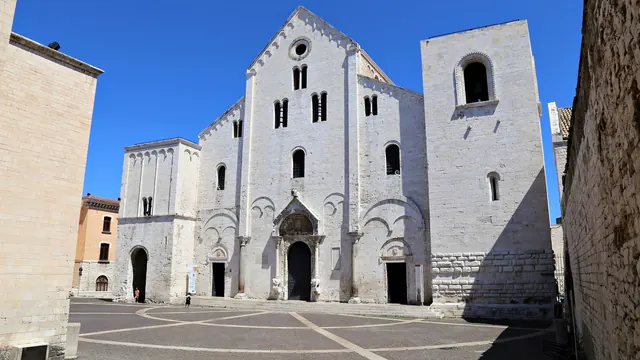
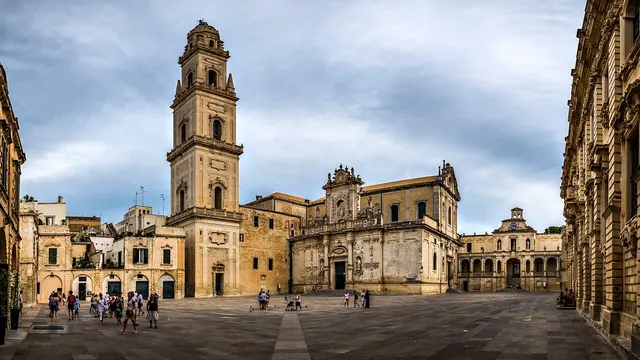
Puglia is far ahead here. It has a whole baroque town in Lecce, the trulli of Alberobello, Castel del Monte alone on the Murge, and a chain of Romanesque cathedrals from Trani to Otranto. That is enough for a week of sightseeing, though you will drive from one to the next.
Vis has a small but unusual history: the remains of the Greek colony of Issa, amphorae and a bronze Greek head in the museum inside the Austrian fortress, British forts, and the tunnels and submarine pens left from its time as a military zone. They make an interesting morning or two, but not the reason for a trip.
Nightlife
Puglia has real nights out in summer. Gallipoli's beach clubs run into the small hours, crowds drink in Lecce's lanes and Bari's old town stays lively all year. Vis has harbour bars in Vis town and Komiza, the odd beach party and no clubs, and the island is asleep well before dawn.
Nature & outdoors
The two are evenly matched outdoors, but their best is in different places. Puglia's is mostly on land: cycling through the olive groves of the Valle d'Itria, the beech woods of the Foresta Umbra and the Gargano cliffs, with the Tremiti islands offshore for diving.
On Vis the sea is the main attraction. The island is part of a geopark of volcanic islets and sea caves, with wreck and wall diving and kayaking round empty coves. The plateau and Hum are good for a walk outside the summer heat.
Day trips
Puglia is ideal for day trips. From the Valle d'Itria you can reach Ostuni, Locorotondo and Martina Franca, north of Bari are the harbour towns, and Matera is about an hour away across the border. From Vis, outings are boat trips to Bisevo's Blue Cave and the outer islets, plus the island's other town. Split is too far for a day, so plan mainland sights for before or after your stay.
Good for families
Puglia is the easier choice for families. Shallow, sandy Ionian beaches, the safari park at Fasano, the trulli that children enjoy and villas with pools cover most needs, and Italian piazza life keeps children welcome late into the evening.
Vis works for families who are happy with simple sea days in safe harbour towns, and the shallow water at Stoncica is the best spot for small swimmers. Steep paths, pebble beaches, little shade and nothing built for children make it harder going.
Getting around
Neither is easy without your own transport, but Puglia takes less effort. Its roads are good, a main railway links Bari, Monopoli and Lecce, and the main areas are short drives apart. Covering the whole region, from the Gargano down to Leuca, needs two bases.
Vis starts with a ferry crossing from Split of an hour and a half or more, with few sailings a day. On the island a bus links the two towns, which are 10km apart, but reaching the coves means a scooter on winding roads or a taxi boat.
Shopping & style
Puglia gives you plenty to bring home: ceramics from the Grottaglie workshops, Lecce's papier-mache figures, linen and pottery from the Valle d'Itria, and olive oil and Primitivo. Bari also has chain stores around Via Sparano. On Vis there are grocery shops, souvenir stalls and local producers selling wine, oil and carob brandy, and little else.
Affordability
Puglia is the cheaper of the two, mainly because eating out, street snacks and local wine cost little. Summer rooms near the Salento beaches, paid sun-loungers at the lidos and car hire do push the bill up.
Vis costs more day to day. Even with a modest apartment, fish sold by weight, taxi boats, scooter hire, the ferry and island shop prices add up. In both places, June and September are easier on the budget.
Live music & performing arts
Puglia has proper venues and festivals: Bari's Teatro Petruzzelli, the opera festival in the ducal palace courtyard at Martina Franca, and pizzica folk music, which comes together each August at the Notte della Taranta in Melpignano. Vis has no theatre at all. Klapa singing in the harbour or a feast day in Komiza is a pleasant thing to come across, not a reason to go.
Wellness & relaxation
Puglia has the edge thanks to its masserie, quiet farmhouse stays with pools and often their own spas, plus the thermal springs at Santa Cesarea Terme and Torre Canne. Vis has no bathing tradition and only a few massage rooms, but its stillness is restful in a simpler way. With little traffic and early evenings, it suits anyone who wants to feel cut off by the sea.
When should you go?
Pick your month. The climate figures are measured averages, not a forecast.
Puglia in July
Vis in July
Daytime high, °C
Rainfall in the month, mm
Where the figures come from
Puglia's temperatures are measured 64 km from the centre, at Brindisi.
Puglia has no rain gauge within 25 km of the centre, so its rainfall comes from a gridded climate dataset read at the destination rather than from a gauge further away.
Vis's temperatures are measured 55 km from the centre, at Split / Marjan.
Vis has no rain gauge within 25 km of the centre, so its rainfall comes from a gridded climate dataset read at the destination rather than from a gauge further away.
Vis's sunshine is measured 55 km from the centre, at Split / Marjan.
Temperature and rainfall are climate normals, averaged over the years shown. Puglia: 1991-2020 (sunshine 1981-2010) normals, Brindisi (64.4 km from centre). Vis: 1991-2020 (sunshine 1971-2000) normals, Split / Marjan (54.8 km from centre).
The two share the same Adriatic summer. In Puglia, where the figures are taken on the coast most visitors use, the sea is warm enough to swim from June to September and peaks at about 26°C in August. July and August highs around 30°C make midday walks through Lecce or Ostuni hard going, so May, June and the second half of September suit a trip that mixes sightseeing with the beach. The dry spell ends early. September is already far wetter than August, and the rain builds through October to its peak in November.
Vis is a degree or so hotter in high summer, and its sea is about a degree cooler, at around 25°C in August. July on the island is the driest and sunniest month in either place. Winters are a little colder than Puglia's but slightly sunnier, and November is the wettest month, at 94mm. For both, June and September give warm sea without the hardest heat.
Which traveller are you?
On a culture and arts trip, Puglia rewards a week on the move. Base yourself in Lecce or the Valle d'Itria, hire a car and see a different town each morning, with an opera evening in summer. On Vis, the history fills a day.
For a food and nightlife trip, Puglia lets you eat well and cheaply from breakfast to late dinner. Bari's bars stay open all year, and the Salento coast parties through July and August. On Vis, a long harbour dinner is the whole evening.
On an outdoors trip centred on the water, Vis makes things simple. Stay in Komiza or Vis town, go out by boat most mornings and keep the inland walks for spring or autumn. Puglia's wildest ground, the Gargano, needs a base of its own.
Before you go
| Measure | Puglia | Vis |
|---|---|---|
| Official language | Italian | Croatian |
| Currency | Euro (EUR) | Euro (EUR) |
| Sockets | CFL230 V, 50 Hz | CF230 V, 50 Hz |
| Driving side | Right | Right |
| Time zone | UTC+1, UTC+2 in summer | UTC+1, UTC+2 in summer |
| Emergency number | 112 | 112 |
| Main airport | Bari Karol Wojtyła International Airport (BRI)104 non-stop destinations | Split Saint Jerome Airport (SPU)69 non-stop destinations |
| Public holidays this year | 13 days | 14 days |
By the numbers
| Measure | Puglia | Vis |
|---|---|---|
| Population | 3,866,174 | - |
| People per km² | 198 | - |
| Swim season, months above 21 °C | 4 months | 4 months |
Where else could you go?
Every comparison below shares a destination with this one, so you can follow Puglia or Vis somewhere new.