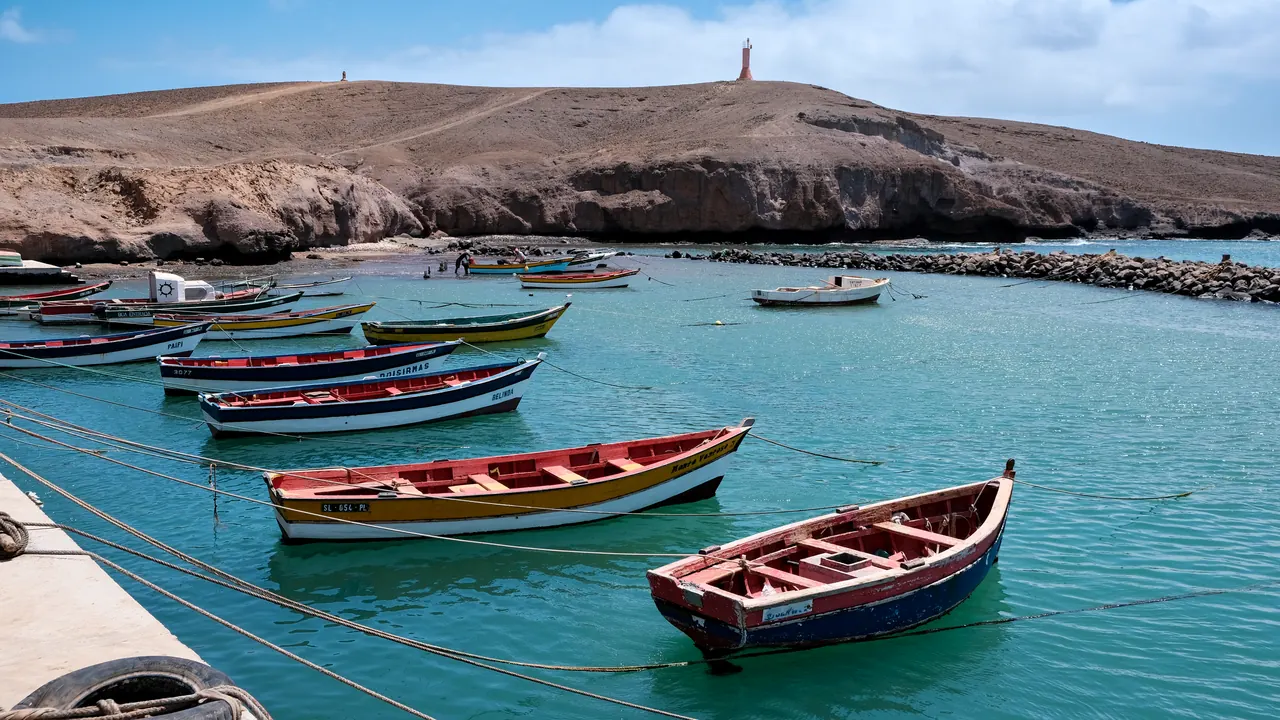
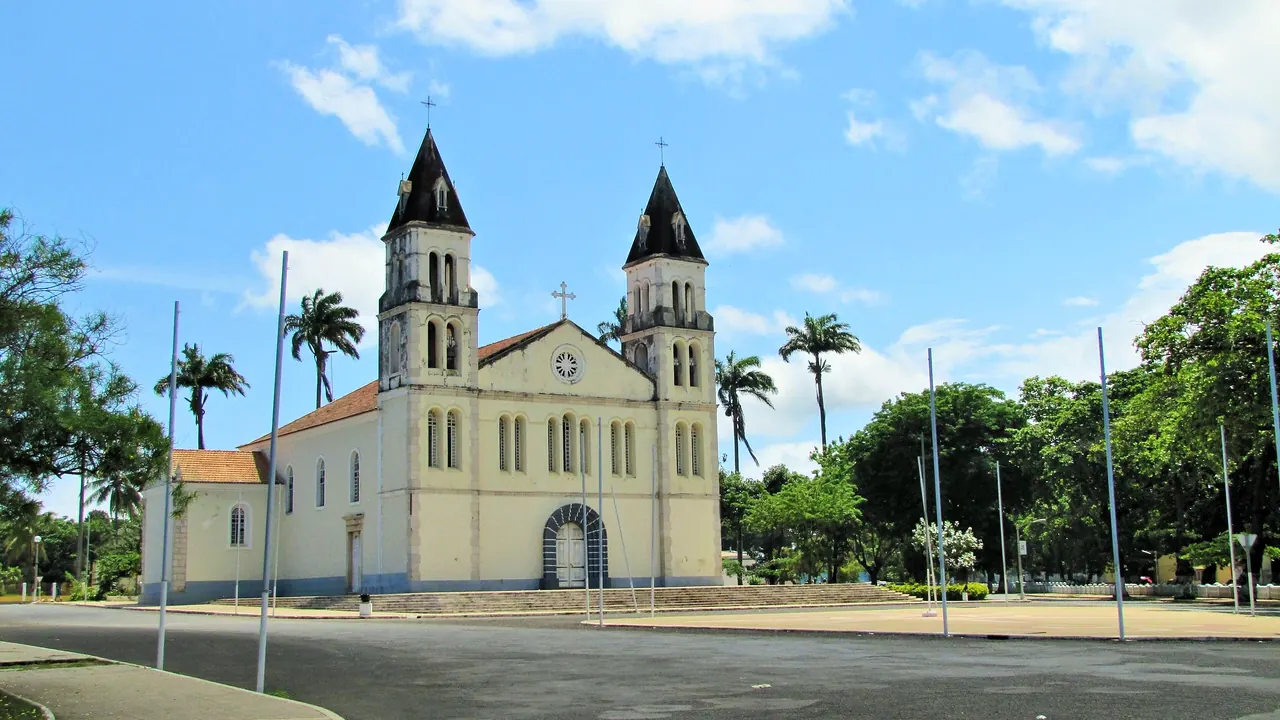
Photos: Sal by Rob Mowe, Pexels License; São Tomé by Chuck Moravec, CC BY 2.0, cropped.
Sal or São Tomé?
Our verdict in twelve categories, each scored against the same fixed benchmark cities, and the climate month by month, so you can choose for your trip.
Choose Sal for
- getting around
- families
- wellness
Sal suits a simple sun trip. One long sandy beach at Santa Maria is a short drive from the airport, the resorts have pools and kids' clubs, the trade wind makes Kite Beach a reliable place to kitesurf, and evenings bring live morna and an easy walk between bars. You give up green scenery, history and most reasons to leave the sand.
Choose São Tomé for
- nature and the outdoors
- day trips
- culture and sights
São Tomé is the island for travellers who would rather explore than lie still. It has cloud forest in Obô Natural Park, the climb up Pico de São Tomé, the strange volcanic needle of Pico Cão Grande and the crumbling cacao roças out in the countryside. In return you get slow roads, few facilities and malaria, and you will need a driver or guide. It is better for adventurous adults and older children than for a first family trip in the sun.
Scoreboard
Twelve categories on one fixed scale from 0 to 100. The shaded stretch is the gap between the two.
Your match
Pick a travel style or drag the sliders, and both match scores follow your weighting.
Wins on getting around and families with your weighting.
Wins on nature and the outdoors and day trips with your weighting.
What matters to you?
Category by category
What the scores mean for a trip.
Beaches & swimming
Sal is built around one great beach. The pale sand of Santa Maria runs west from the wooden pier with clear turquoise water, and the calmest swimming is beside the pier. Wilder Ponta Preta and Kite Beach serve surfers and kiters. Everything is within walking distance of the hotels, which is why the beach outshines São Tomé's.
São Tomé has a warmer sea and emptier shores, but you have to make more effort. Lagoa Azul and the coves near Micoló are calm and good for snorkelling within half an hour of the capital. The palm-fringed beaches at Praia Jalé and Praia Piscina are a long day's drive south, with grey or golden sand, no facilities and surf that can be strong in places.
Food & drink
Neither island is a reason to travel for food, but they eat differently. Sal relies on resort buffets and imported supplies. The best local food there is fish grilled straight from the Santa Maria pier and cachupa fried with an egg at breakfast, with grogue to finish.
São Tomé's cooking comes from what grows on the island: calulu stewed with greens and smoked fish, breadfruit and matabala root, palm wine, and coffee and chocolate from the old plantations. Its restaurants are even fewer than Sal's, but what you eat there tastes more of the place.
Culture & sights
Sal's heritage comes down to salt. Its sights are the crater saltpans at Pedra de Lume with their rusting cableway and harbour chapel, and Espargos and Palmeira fill an hour at most. Anyone curious about Cape Verde's past has to fly to another island.
São Tomé has more to see. The capital has pastel Portuguese colonial buildings, a cathedral and the pink presidential palace. The Forte de São Sebastião holds a national museum that deals directly with slavery, the plantation economy and the 1953 Batepá massacre. The great cacao estates out in the countryside add the island's most striking history.
Nightlife
Santa Maria gives Sal the livelier evenings. People drink sunset cocktails at the beach bars by the pier, then move on to bars along the pedestrian streets and a couple of small clubs where locals and kitesurfers dance to kizomba and funana at weekends. It is modest, but there is always somewhere to go.
In São Tomé's capital, evenings mean a beer at an open-air bar on the bay and, at weekends, a few dance spots playing zouk and Angolan music. Most visitors eat dinner and turn in early, ready for a morning in the forest.
Nature & outdoors
Sal's outdoors depends on the wind. It is flat, stony desert and salt flat, but from November to May Kite Beach is one of the Atlantic's most dependable kitesurfing spots. There are also turtle hatchlings in late summer, young lemon sharks at Shark Bay and wreck dives offshore.
São Tomé is a different kind of place: volcanic, densely green and largely protected as Obô Natural Park. Guided hikes lead through cloud forest to the Lagoa Amélia crater and up the 2,024m Pico de São Tomé. Pico Cão Grande, the São Nicolau waterfall and a long list of endemic birds make this the island for walkers and naturalists, as long as they can cope with mud and long drives.
Day trips
Sal offers little to do away from the beach. A half-day tour takes in Pedra de Lume, the Buracona rock pool, Palmeira and Espargos. Neighbouring Boa Vista has so few sailings that it works better as an overnight trip.
São Tomé gives you real days out. You can walk the long avenue at Roça Agostinho Neto, learn about coffee at Monte Café in the cool hills, and combine estate ruins with fishing villages at São João dos Angolares. Further south, at Porto Alegre, a monument on Ilhéu das Rolas marks the equator. The roads are slow, but each trip shows you a different side of the island.
Good for families
Sal is the easier place with children. The resorts around Santa Maria have pools, kids' clubs and shallow entries, the airport transfer is short, and the sheltered water by the pier suits young swimmers. The strong sun and constant wind can wear out toddlers, and the surf further west is too rough for little ones.
São Tomé makes a warm welcome and offers turtle-watching nights that older children love. However, malaria is present all year, medical care is basic, and the best places are long, bumpy drives away. It works for adventurous families with older children rather than very young ones.
Getting around
Sal is small and flat. In Santa Maria you walk everywhere along the seafront, aluguer minibuses and taxis link it to Espargos, and a half-day tour or a hired quad covers the rest on short, quiet roads.
São Tomé takes far more planning. Yellow taxis serve the capital, but anywhere beyond it needs a driver, a four-wheel drive or a tour. The road south is narrow and slow, interior tracks turn to mud in the rains, and a trip that looks short on the map can take much of a day.
Shopping & style
Neither island is a place to shop. Santa Maria has more stalls: West African carvings and fabrics, Cape Verdean music, bags of local salt, grogue, Fogo coffee and some surfwear, though street sellers can be pushy. São Tomé has its municipal market and a few craft stalls, and its best souvenir is chocolate made from cacao grown on the island.
Affordability
Sal works out a little cheaper, mainly because all-inclusive packages make costs predictable. Eating out and drinks in Santa Maria still cost about what they would at a southern European resort, since almost everything is imported.
On São Tomé, local food and shared taxis cost little, but comfortable lodges and restored plantation houses charge international prices. Because seeing the island means hiring a driver or booking a guided tour, transport becomes a real part of the budget in a way it rarely does on Sal.
Live music & performing arts
Live music is easier to find on Sal. Many restaurants and bars in Santa Maria have evening players on guitar and cavaquinho, from slow morna to coladeira and funana you can dance to. The beach music festival late in the summer brings bigger Cape Verdean acts.
São Tomé's tradition is more unusual: Tchiloli, a masked folk drama based on a sixteenth-century Portuguese play, and the related Danço-Congo. Neither has a regular schedule, so catching a performance depends on luck or local contacts, and otherwise music mostly means weekend dances.
Wellness & relaxation
Sal is better for switching off. Days in Santa Maria drift from sunbed to sunset, resort spas offer massages, and some hotels and kite camps run yoga. At Pedra de Lume you can float effortlessly in brine pools inside an old crater.
São Tomé's version of rest is the slow leve-leve pace on a remote plantation estate or an empty stretch of coast. Treatments are limited to a few lodges, so expect peace and quiet rather than pampering.
When should you go?
Pick your month. The climate figures are measured averages, not a forecast.
Sal in July
São Tomé in July
Daytime high, °C
Rainfall in the month, mm
Where the figures come from
São Tomé has no weather station within reach, so its figures come from a gridded climate model rather than a measured record, and read a broad area rather than one spot.
Temperature and rainfall are climate normals, averaged over the years shown. Sal: 1991-2020 normals, Sal (15.8 km from centre). São Tomé: 2001-2020 normals, NASA POWER reanalysis grid, no weather station within 90 km.
Around Santa Maria in the south of Sal, the weather rarely gets in the way of a beach trip. It is dry almost all year, with only a short spell of light showers around September. Days stay warm and get hotter towards autumn, when highs reach about 31°C. What changes is the sea. It is a refreshing 22°C in late winter and spring and about 27°C from August to November, the best months for long swims.\n\nSão Tomé is warm and humid in every month, and its sea is warmer than Sal's for most of the year.
When to go depends on the rain. From October to May the rains are heavy, peaking at about 176mm in April, and the forest trails turn to mud. The dry gravana season runs from June to September, with rainfall down to around 20mm in August and slightly cooler days. That is the best time for hiking and for the long drives south. The two islands only line up in August and September, when Sal's sea has warmed and São Tomé is still dry. By October, Sal is still good for swimming but the rains have returned on São Tomé.
Which traveller are you?
On a beach and sun trip, Sal is the clear pick. Santa Maria's long pale beach has gently shelving water and sunbeds a short walk from your room, while São Tomé's best sands lie hours away down slow southern roads.
For an outdoors trip, São Tomé wins easily. You can hike through cloud forest to the Lagoa Amélia crater, climb Pico de São Tomé, look for endemic birds and visit waterfalls. Sal's flat, arid landscape is mainly for kitesurfers and divers.
On a family trip with young children, Sal is far easier. The airport transfer is short, resorts offer kids' clubs and shallow pools, and there are lemon sharks to spot at Shark Bay. São Tomé has basic medical care, malaria and long, bumpy drives.
Before you go
| Measure | Sal | São Tomé |
|---|---|---|
| Official language | Portuguese, Cape Verdean Creole | Portuguese |
| Currency | Cabo Verde Escudo (CVE) | Dobra (STN) |
| Sockets | CF220 V, 50 Hz | CF220 V, 50 Hz |
| Driving side | Right | Right |
| Time zone | UTC-1 | UTC |
| Emergency number | Police 132, ambulance 130, fire 131 | 112 |
| Elevation | - | 137 m |
| Main airport | Amílcar Cabral International Airport (SID)57 non-stop destinations | São Tomé International Airport (TMS)5 km from centre6 non-stop destinations |
| Public holidays this year | 9 days | 8 days |
By the numbers
| Measure | Sal | São Tomé |
|---|---|---|
| Population | 35,267 | 65,468 |
| People per km² | 164 | 3,851 |
| Museums within 10 km | - | 1 |
| UNESCO World Heritage sites within 50 km | - | 1 |
| Swim season, months above 21 °C | 12 months | 12 months |
Where else could you go?
Every comparison below shares a destination with this one, so you can follow Sal or São Tomé somewhere new.
- Boa Vistavs Sal
- Príncipevs São Tomé
- Librevillevs São Tomé
- Zanzibarvs São Tomé
- Tenerifevs Sal
- Lanzarotevs Sal