Apia
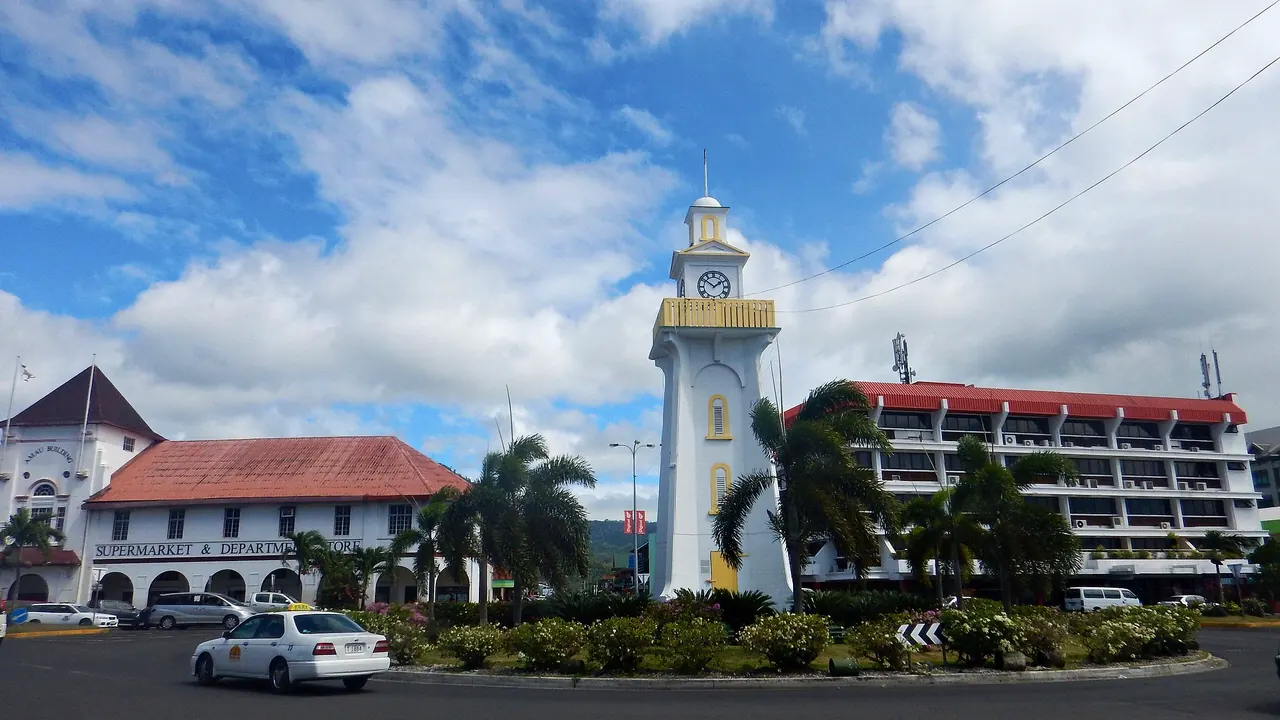
The clock tower in the centre of Apia, among colonial buildings and palms
- Nature & outdoors70
- Affordability52
- Beaches50
Photo: Rickard Törnblad, CC BY-SA 4.0, cropped
Match
37
Every category weighted equally
- Beach & sun40
- Culture & arts33
- Food & nightlife32
- Family trip41
- Outdoors42
- Relax & unwind41
- Shopping & style33
- On a budget39
Apia in twelve categories
Our verdict on each, scored 0 to 100 against the same fixed benchmark cities, so a score means the same thing on every page.
Beaches & swimming. Scores 50 out of 100.
Food & drink. Scores 32 out of 100.
Culture & sights. Scores 30 out of 100.
Nightlife. Scores 20 out of 100.
Nature & outdoors. Scores 70 out of 100.
Day trips. Scores 18 out of 100.
Good for families. Scores 40 out of 100.
Getting around. Scores 40 out of 100.
Shopping & style. Scores 22 out of 100.
Affordability. Scores 52 out of 100.
Live music & performing arts. Scores 28 out of 100.
Wellness & relaxation. Scores 42 out of 100.
Apia category by category
Beaches & swimming
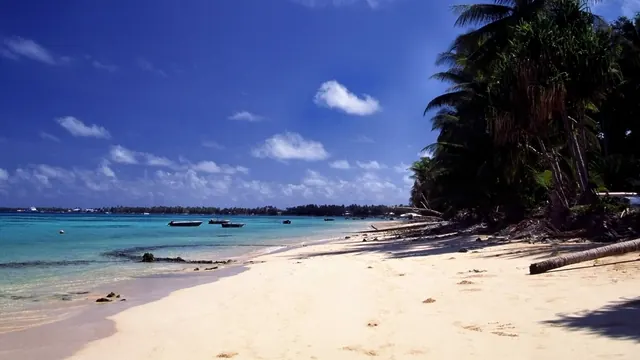
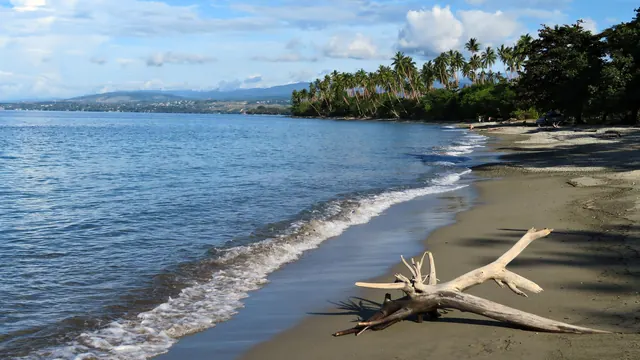
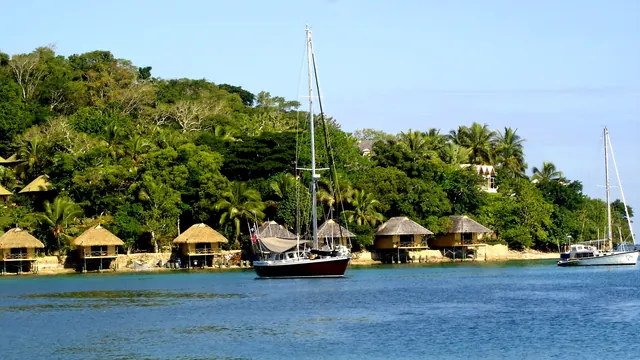
50Apia is a harbour town, not a beach town. Beach Road faces a shallow reef flat and a working port, and nobody swims off the town waterfront. The closest thing to a swim in town is snorkelling at Palolo Deep, a small marine reserve where the reef drops into a deep blue hole. The sea itself is never the problem: it stays warm all year, around 28°C.
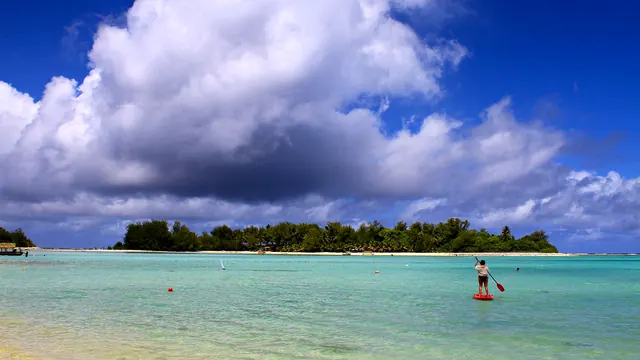
The beaches visitors picture are on the south and east coasts of Upolu, about an hour to an hour and a half away by winding road: white sand and turquoise lagoons at Lalomanu, Return to Paradise and Matareva, often lined with simple open-sided beach fales. From Apia they are a full day out by car or bus, and reef shallows make some best at high tide. Travellers who come for the beaches usually spend a night or two in town and then move to the coast.
Food & drink
32Eating in Apia is simple and close to the source. The main produce market sells taro, breadfruit, bananas and coconuts alongside cheap cooked plates, and the fish market by the harbour shows what the reef and open sea provide. Dishes worth seeking out are oka, raw fish in coconut cream, palusami, taro leaves baked in coconut milk, and a cup of koko Samoa, the local cocoa. On Sundays families cook in the umu, an above-ground stone oven, and some guesthouses share the meal.
Beyond that the choice is modest: a handful of waterfront cafés, Asian-run takeaways and hotel restaurants. Imported ingredients are costly, so menus lean on local fish and produce.
Culture & sights
30The main sight is Villa Vailima, the hillside house where Robert Louis Stevenson spent his last years, kept as a museum with period rooms and gardens. His tomb sits on the summit of Mount Vaea above it. In town there are the white Immaculate Conception Cathedral on the waterfront, the Museum of Samoa, and the Mulinu'u peninsula with the parliament house and the tombs of Samoan paramount chiefs.
The real cultural interest is fa'a Samoa, the Samoan way of life, which is very much lived rather than displayed. Open-sided fale houses, village councils, church on Sunday and traditional tattooing are part of everyday life around the town. A morning or two covers the formal sights.
Nightlife
20Going out in Apia means a few bars along the Beach Road waterfront, hotel bars with a view of the harbour and a couple of nightclubs where locals dance on Friday and Saturday nights. It is friendly and informal, with local Vailima beer the usual order. Midweek is quiet, and Samoa is a devoutly Christian country where Sunday is kept for church and family, so the town is close to silent then. Visitors after a big night out will not find it here.
Nature & outdoors
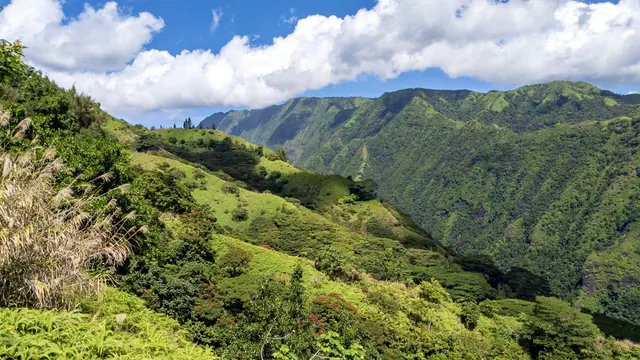
70Upolu is a volcanic island of rainforested ridges, and the outdoors starts right above Apia. A steep trail climbs Mount Vaea through forest, and the Cross Island Road leads up to the crater lake of Lanoto'o and down past the Papapapaitai Falls. On the south coast, O Le Pupu-Pu'e National Park runs from the interior to cliffs of black lava, and waterfalls such as Sopoaga and Togitogiga are easy stops on a drive round the island.
The reef is the other half: snorkelling and diving in clear lagoons, the To Sua Ocean Trench, freshwater cave pools at Piula, and experienced surfers' reef breaks. Humpback whales pass in the southern winter. The wet season from November to April brings heavy downpours and makes trails muddy.
Day trips
18Apia is the only town of any size on Upolu, so trips out are to villages rather than other towns. A drive round the island passes churches, fale-lined villages and coastal communities, and small Manono island, reached by boat from the west end of Upolu, has no cars and a footpath linking its villages. Savai'i, the larger island, is a ferry ride away and possible in a long day, though it rewards an overnight stay far more. Most of what lies within reach is landscape and coast rather than places to visit.
Good for families
40Samoa is a child-loving culture, and families with young children are welcomed everywhere, from markets to village churches. Apia is small, relaxed and safe, and the best family days are natural ones: snorkelling the sheltered pools of Palolo Deep, swimming at the Piula cave pools or under waterfalls, and lazing at beach fales on the south coast.
There is nothing made specifically for children, though: no zoo, aquarium or theme park. Medical facilities are basic, mosquitoes carry dengue so repellent matters, and getting around the island means long, winding drives. Families who enjoy simple outdoor days will manage well; those who need organised entertainment will run out of things quickly.
Getting around
40Central Apia is compact, strung along Beach Road around the harbour, and the market, cathedral, government buildings and waterfront are an easy walk apart, if a hot one. Taxis are plentiful and cheap for hops to Vailima or the outskirts. The brightly painted wooden buses are a cheerful local experience and fan out from the market to villages around the island, but they leave when full and slow to a trickle on Sundays.
To explore Upolu properly most visitors hire a car, which requires a temporary local licence, or engage a driver. Roads are mostly paved but narrow, with dogs, pigs and children on the verges, and traffic drives on the left.
Shopping & style
22Shopping in Apia is mostly about crafts. The flea market by the waterfront sells siapo, the patterned bark cloth, woven mats and baskets, wooden kava bowls and carvings, shell jewellery and printed lavalava wraps, alongside plenty of cheaper imported souvenirs. The main produce market is good for coconut oil and local cocoa. Beyond that there are a few small boutiques and general stores, and little else; shops close on Sundays.
Affordability
52Apia mixes cheap local life with remote-island costs. Market food, buses and taxis cost little, and the simple beach fales on the coast, with meals included, are among the most affordable places to sleep by the sea anywhere in the Pacific. Entry to sights such as villages, pools and waterfalls usually means a small customary fee to the landowning village.
Comfortable hotels and resorts are another matter, priced in line with the region, and almost everything imported, from wine to groceries, costs more than at home. Car hire adds up for anyone wanting to see the island. A traveller living locally spends little; one wanting resort comforts spends a good deal more.
Live music & performing arts
28There is no theatre or concert hall scene, but music and dance run deep. Several hotels stage weekly fiafia nights with Samoan dance, the slap dance and the fire knife dance, staged for visitors but performed with real skill. The most moving sound in Apia is free: Sunday services, where congregations sing in full, unaccompanied harmony that carries out of every church.
The Teuila Festival, held each September, fills the waterfront with dance and choir competitions, fautasi longboat races and the fire knife dance. Outside that, the formal programme is thin.
Wellness & relaxation
42There are no thermal baths or bathhouse traditions here. What Apia offers is fofō, the traditional Samoan massage using coconut oil, available from local practitioners and in a few day spas and resort spas, often using locally made oils.
The main restorative quality is the pace. Life moves slowly, the heat discourages hurry and Sundays are close to silent, which suits travellers who want to unplug. The town itself has traffic and a busy market, so most people looking to rest base themselves at a quiet resort or beach fale on the coast and visit Apia for errands.
When should you go?
Pick a month to see what it is like. The climate figures are measured averages, not a forecast.
Apia in July
Daytime high, °C
Rainfall in the month, mm
The whole year
Shaded against this destination’s own year: the deepest cell is its best month for that figure and the palest its weakest.
Temperature and rainfall are climate normals, averaged over the years shown. Apia: 1998-2025 (sunshine 1981-2010, rainfall 1991-2020) normals, Faleolo Intl / Apia (18.1 km from centre).
Before you go
| Measure | Apia |
|---|---|
| Official language | English, Samoan |
| Currency | Tala (WST) |
| Sockets | I230 V, 50 Hz |
| Driving side | Left |
| Time zone | UTC+13 |
| Emergency number | 999 |
| Elevation | 2 m |
| Main airport | Faleolo International Airport (APW)19 km from centre6 non-stop destinations |
| Public holidays this year | 11 days |
By the numbers
| Measure | Apia |
|---|---|
| Population | 37,708 |
| People per km² | 305 |
| Museums within 10 km | 4 |
| UNESCO World Heritage sites within 50 km | 0 |
| Swim season, months above 21 °C | 12 months |
Compare Apia with
Every comparison with a written verdict behind it.