Sri Lanka
Colombo
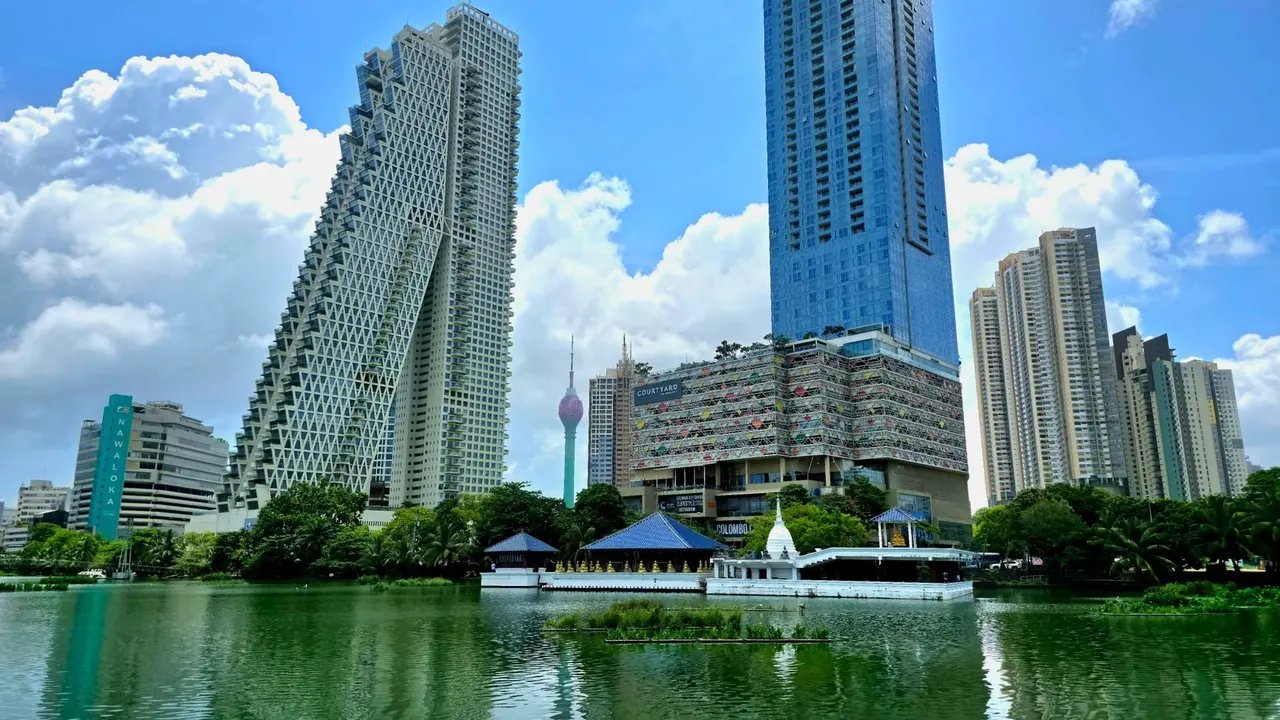
Beira Lake with Seema Malaka and the Lotus Tower
- Affordable cities78
- Food & drink66
- Beaches55
Photo: Mohamed Ansaf, Pexels License
Match
46
Every category weighted equally
- Beach & sun50
- Culture & arts45
- Food & nightlife47
- Family trip48
- Outdoors47
- Relax & unwind48
- Shopping & style46
- On a budget50
Colombo in twelve categories
Our verdict on each, scored 0 to 100 against the same fixed benchmark cities, so a score means the same thing on every page.
Beaches & swimming. Scores 55 out of 100.
Food & drink. Scores 66 out of 100.
Culture & sights. Scores 45 out of 100.
Nightlife. Scores 35 out of 100.
Nature & outdoors. Scores 32 out of 100.
Day trips. Scores 50 out of 100.
Good for families. Scores 35 out of 100.
Getting around. Scores 35 out of 100.
Shopping & style. Scores 45 out of 100.
Affordability. Scores 78 out of 100.
Live music & performing arts. Scores 30 out of 100.
Wellness & relaxation. Scores 48 out of 100.
Colombo category by category
Beaches & swimming
55Colombo sits on the Indian Ocean, but the city itself is not a beach base. Galle Face Green faces the sea as a promenade, not a place to swim. The nearest sand worth using is Mount Lavinia, a broad beach at the southern edge of the city. Negombo, about an hour north, offers a longer stretch of hotel beach. The water is warm all year, around 28°C, but the shore is open surf with strong currents rather than calm bays.
Timing matters. From roughly December to April the west coast is calm and sunny. During the southwest monsoon, from about May to September, the sea turns rough and swimming is often unsafe. For a real beach vacation, travellers head further south to Bentota or beyond.
Food & drink
66Eating is one of the best reasons to spend time in Colombo. Rice and curry comes as a spread of small dishes: dhal, jackfruit, fish curries, mallung of shredded greens and fiery sambols. Breakfast and evening mean hoppers, bowl-shaped rice-flour pancakes often cooked with an egg inside, and string hoppers with coconut gravy. Late at night you hear the clatter of kottu roti being chopped on hot griddles. Lamprais, a Dutch Burgher parcel of rice and curry baked in banana leaf, is a dish particular to the city.
The sea supplies lagoon crab, prawns and cuttlefish, and the Muslim and Tamil quarters add biryani, dosa and thali. Short eats, cutlets and patties under glass, fill the bakeries. Tea is the national drink, and arrack and toddy are the local spirits. The upper end is mostly seafood and hotel dining in Colombo 3 and 7, with less range than in larger food capitals.
Culture & sights
45Colombo is a working port city more than a heritage capital, but it rewards a day or two of looking. The National Museum, in a white colonial building beside Viharamahadevi Park, holds the best collection of royal regalia and ancient sculpture in the country. Gangaramaya Temple is an eccentric, crowded Buddhist complex, and the small Seema Malaka pavilion on Beira Lake is a quiet piece of Geoffrey Bawa design.
In Fort and Pettah, Dutch and British colonial buildings stand alongside the red-and-white striped Jami Ul-Alfar mosque, Hindu kovils and the Dutch-era Wolvendaal Church. The Kelaniya temple sits on the northern edge of the city. Sri Lanka's ancient cities, rock fortresses and cave temples are in the interior, well beyond a day from here.
Nightlife
35Going out in Colombo mostly happens in hotel bars, rooftop lounges looking over the ocean and a small set of clubs in Colombo 3 and around Galle Face. At weekends a lively local crowd fills the dance floors, and the city's casinos stay open late. Otherwise the night is fairly contained. There is little street life after dark, and the scene does not spread across neighbourhoods.
Alcohol is not sold on Poya days, the monthly full-moon Buddhist observances, and many bars close. Arrack cocktails on a sea-facing terrace at sunset are the city's most characteristic drink. Late nights are for the weekend rather than every evening.
Nature & outdoors
32Colombo is flat, hot and built up, and its green space is mostly urban. Viharamahadevi Park and the walk around Beira Lake give shade. The Diyasaru and Beddagana wetland parks on the city's eastern edge are good for birdwatching, with herons, kingfishers and monitor lizards. The Muthurajawela marsh north towards Negombo can be explored by boat.
The island's dramatic landscapes are further away. Rafting at Kitulgala, the Sinharaja rainforest, the tea hills and whale watching off the south coast all take a long drive or an overnight stay. Most visitors treat Colombo as a starting point rather than an outdoor base.
Day trips
50The best day out is Galle, about two hours south by the expressway or the coastal railway. Its ramparted Dutch fort town is a UNESCO site of churches, lighthouses and quiet colonial lanes. On the way, Bentota has Lunuganga and the Brief Garden, two celebrated landscape gardens linked to the Bawa brothers. Ambalangoda is known for its carved masks, and Kalutara for a large white stupa beside the river.
North of the city, Negombo, about an hour away, has a Dutch canal, fish markets and Catholic churches. Kandy, the Temple of the Tooth and the hill country are a longer journey of around three hours. Most travellers make that an overnight stop rather than a day trip.
Good for families
35Sri Lankans are warm towards children, and families are welcomed in restaurants and temples alike. There is, however, little in Colombo made for young visitors. The National Zoological Gardens at Dehiwala is the main attraction. Feeding fish and turtles at temple ponds, flying kites on Galle Face Green in the evening and a train ride along the coast are the simple pleasures.
The heat, heavy traffic and broken or missing pavements make pushchairs impractical. The sea at the city beaches is often too rough for small children. Families usually spend a night or two here before moving on to calmer beach resorts or the hill country.
Getting around
35Colombo has no metro. Most visitors get around by tuk-tuk, usually booked through a ride-hailing app to avoid haggling, or by app-booked car. Both are quick to find, though traffic in the centre and along Galle Road is heavy at peak hours. City buses are crowded and hard to read for a newcomer.
The coastal railway is the most pleasant way to reach Mount Lavinia or travel south. Walking works along Galle Face, around Beira Lake and in parts of Fort and Cinnamon Gardens. Elsewhere, the heat, uneven pavements and wide roads make longer walks hard going. A hired car is unnecessary, and most travellers hire a driver for trips out of the city.
Shopping & style
45Shopping in Colombo splits into two worlds. Pettah, behind the Fort, is a dense wholesale bazaar where each street keeps to its own trade: fabrics, spices, hardware, jewellery, electrical goods. It is chaotic and fascinating to walk even with no intention of buying.
In Colombo 3 and 7, a small set of design-led local stores sells bright handloom cotton, batik, homeware and Sri Lankan fashion. Some of these are housed in old colonial villas. Ceylon tea is the obvious thing to take home, along with spices, cinnamon and sapphires and other gems, which call for a reputable dealer. International luxury brands are few, and the malls are functional rather than a reason to come.
Affordability
78For a visitor, Colombo is inexpensive by international standards. A rice-and-curry lunch in a local eating house, a hopper supper or a plate of kottu costs very little. Tuk-tuk rides and train fares are cheap enough that nobody needs to think about them. Comfortable mid-range hotels and well-run guesthouses cost much less than in Europe.
Colombo is still the most expensive place on the island. Upscale seafood restaurants, rooftop bars and the large seafront hotels charge close to international rates. Imported wine and spirits are heavily taxed, and some museums and temples charge foreigners more than locals. A traveller who eats where Colombo residents eat keeps costs very low.
Live music & performing arts
30Colombo has the country's main stages but a modest programme. The lotus-shaped Nelum Pokuna theatre hosts concerts, dance and visiting productions. The Lionel Wendt theatre is the long-standing home of local English-language drama and recitals. The Symphony Orchestra of Sri Lanka gives concerts several times a year.
The tradition most worth seeking out is Kandyan and low-country dance, with drumming, acrobatic leaps and elaborate costumes. Performances are staged for visitors and at festivals. Hotels and a few bars host jazz and live bands at weekends. There is no nightly round of theatre or music to plan a trip around.
Wellness & relaxation
48Wellness in Colombo means Ayurveda, Sri Lanka's traditional medicine. It is a genuine local practice, not something imported for tourists. Ayurvedic clinics and spas across the city offer warm-oil massage, shirodhara, where oil is poured steadily over the forehead, and herbal steam baths. Prescribed treatment courses are also available. The large hotels add conventional spas and pools.
The city itself is not restful. Traffic, heat and noise fill the day, and the calm moments are a sunset on Galle Face or the quiet grounds of a temple. For full Ayurveda programmes lasting a week or more, most travellers go to the residential retreats along the coast at Beruwala and Bentota.
When should you go?
Pick a month to see what it is like. The climate figures are measured averages, not a forecast.
Colombo in July
Daytime high, °C
Rainfall in the month, mm
The whole year
Shaded against this city’s own year: the deepest cell is its best month for that figure and the palest its weakest.
Temperature and rainfall are climate normals, averaged over the years shown. Colombo: 1991-2020 normals, Colombo (3 km from centre).
Before you go
| Measure | Colombo |
|---|---|
| Official language | Tamil, Sinhala |
| Currency | Sri Lanka Rupee (LKR) |
| Sockets | GM230 V, 50 Hz |
| Driving side | Left |
| Time zone | UTC+5:30 |
| Emergency number | Police 119, ambulance 110, fire 110 |
| Elevation | 1 m |
| Main airport | Bandaranaike International Colombo Airport (CMB)28 km from centre56 non-stop destinations |
By the numbers
| Measure | Colombo |
|---|---|
| City population | 647,557 |
| People per km² | 17,361 |
| Museums within 10 km | 10 |
| UNESCO World Heritage sites within 50 km | 0 |
| Swim season, months above 21 °C | 12 months |
Compare Colombo with
Every comparison with a written verdict behind it.