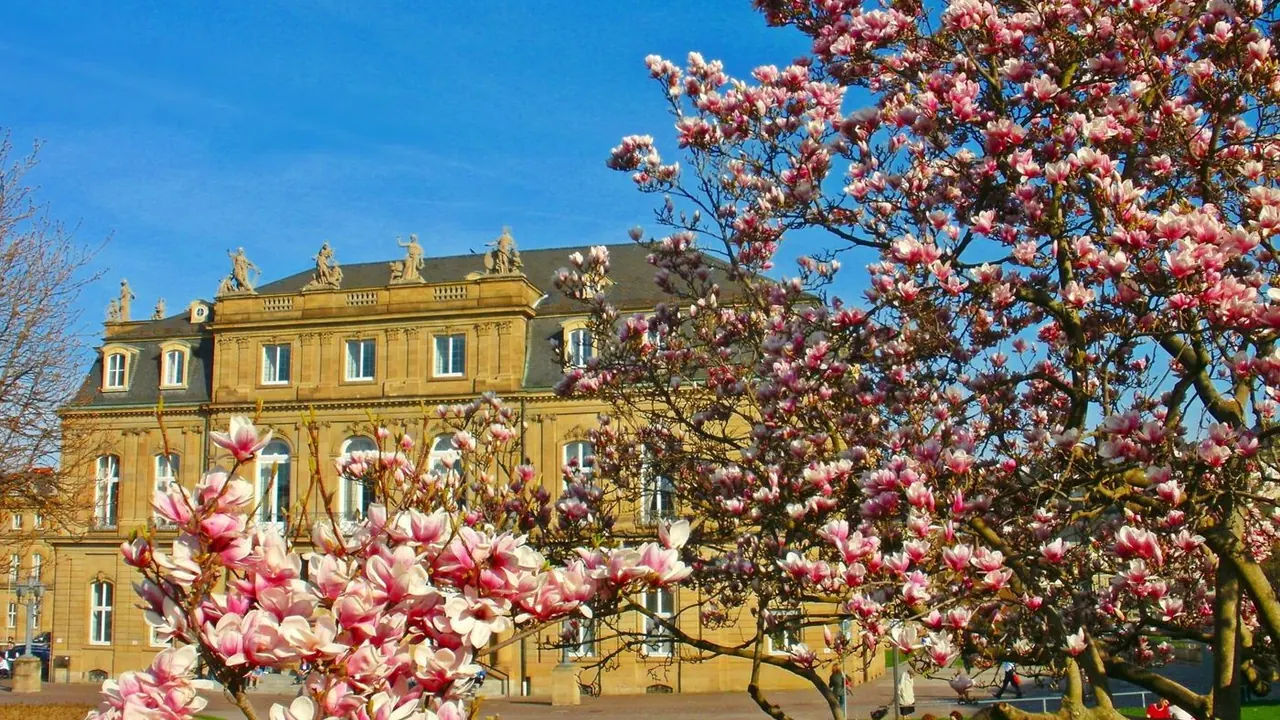
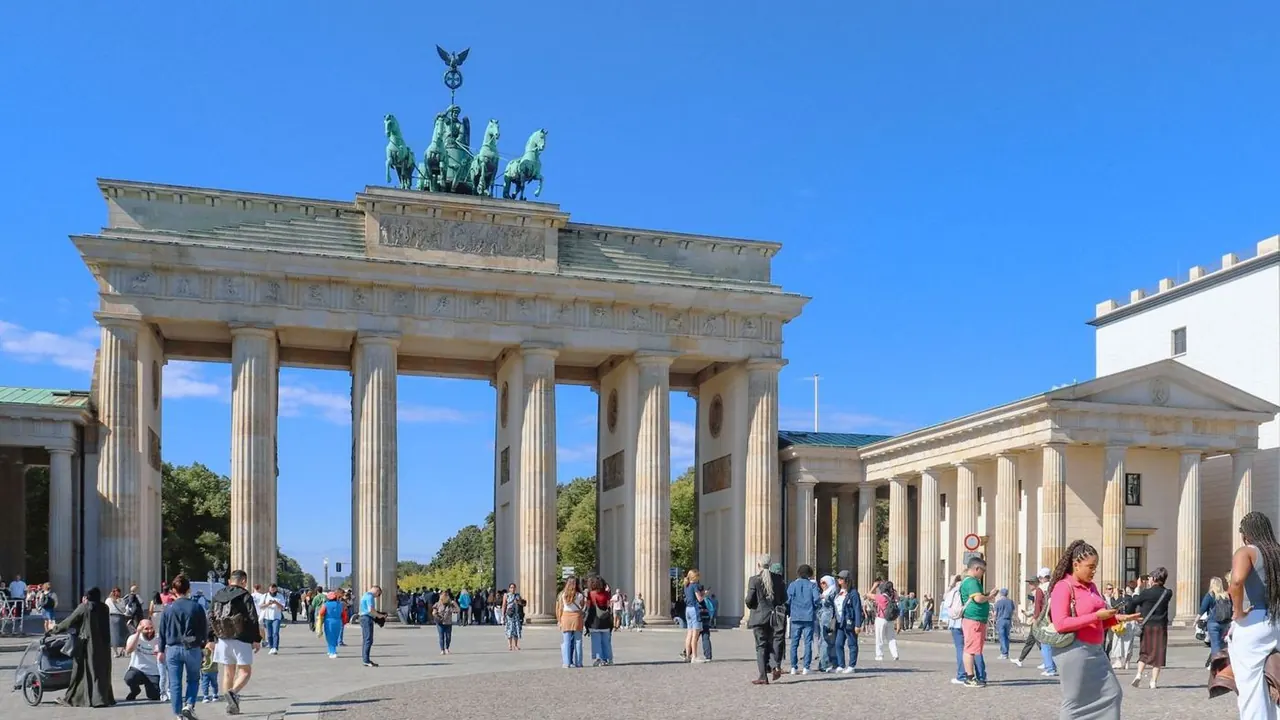
Photos: Stuttgart by Baden de, CC BY 3.0, cropped; Berlin by Claudia Solano, Pexels License.
Stuttgart or Berlin?
Our verdict in twelve categories, each scored against the same fixed benchmark cities, and the climate month by month, so you can choose for your trip.
Choose Stuttgart for
- day trips
- nature and the outdoors
- wellness
Choose Stuttgart if you would rather spend the days out of town. Heidelberg, Tübingen, Ludwigsburg and Hohenzollern Castle are all within easy reach, and the vineyards and wooded hills start at the edge of the centre. An afternoon in the warm mineral baths of Bad Cannstatt is something Berlin cannot offer. The car museums, the ballet and the Swabian wine taverns give the city its own character, and evenings are quieter.
Choose Berlin for
- nightlife
- beaches
- culture and sights
Berlin is the stronger pick for a city trip built around history and long evenings. It has world-famous clubs and a bar open at almost any hour, three opera houses and the Philharmonic, and Museum Island alongside the places where the twentieth century happened. It is also a little easier on the budget, has more for children to do, and on a hot summer day you can swim in a lake.
Scoreboard
Twelve categories on one fixed scale from 0 to 100. The shaded stretch is the gap between the two.
Your match
Pick a travel style or drag the sliders, and both match scores follow your weighting.
Wins on day trips and nature and the outdoors with your weighting.
Wins on nightlife and beaches with your weighting.
What matters to you?
Category by category
What the scores mean for a trip.
Beaches & swimming
Neither city has a coast, but Berlin at least has proper lake bathing. There is Strandbad Wannsee with its sandy shore and wicker chairs, the Müggelsee, and the forest lakes of Schlachtensee and Krumme Lanke, all reachable by S-Bahn and good for swimming in July and August.
Stuttgart has nothing like this. The Neckar is a working river and Max-Eyth-See is not for bathing, so summer swimming means the outdoor pools, some of them fed by mineral springs, or a trip of more than two hours to Lake Constance.
Food & drink
Berlin wins on range and on cheap eating. It has Turkish grill houses and bakeries in Kreuzberg and Neukölln, good Vietnamese, Levantine and Korean kitchens, street-food evenings in the market halls, and beer gardens. Its own cooking, though, barely goes beyond currywurst and pork knuckle.
Stuttgart is the opposite. It has a real regional cuisine of Maultaschen, Käsespätzle and Zwiebelrostbraten, wine from vineyards inside the city, and seasonal Besen taverns run by growers in their own houses. Go there for Swabian dishes and a glass of local Trollinger, and to Berlin for variety and casual late meals.
Culture & sights
Berlin is in another league here. Museum Island, the Gemäldegalerie and Charlottenburg Palace would justify a trip on their own. The Wall Memorial on Bernauer Strasse, the Reichstag and the Memorial to the Murdered Jews of Europe let you walk through twentieth-century history where it happened, and there is easily a week's worth.
Stuttgart's sights are fewer and more specialised: the Mercedes-Benz and Porsche museums, the Staatsgalerie, and Le Corbusier's houses on the Weissenhof Estate. Both cities lost much of their historic fabric in the war, but Stuttgart's essentials fit into two or three days.
Nightlife
This is where the two cities differ most. Berlin's techno clubs in old power stations and warehouses run from Saturday night into Monday, and Friedrichshain, Kreuzberg and Neukölln have bars open at almost any hour.
Stuttgart offers a lively weekend strip of bars on Theodor-Heuss-Strasse and quieter wine bars in the Bohnenviertel, but on weekdays it winds down early. Its big nights come with the beer tents of the Cannstatter Volksfest in autumn and the wine village in late summer.
Nature & outdoors
Stuttgart has the better landscape close at hand. The city sits in a basin of wooded hills and vineyards, wine trails begin just above the Neckar, and the cliffs and caves of the Swabian Jura and the fir-covered ridges of the northern Black Forest are about an hour away.
Berlin is flat. It has plenty of green space, from the Tiergarten and the old Tempelhof runways to the Grunewald and the Havel lakes, and the Wall Trail makes an easy bike ride. But there is nothing to climb, and Brandenburg's lake country is pleasant rather than striking.
Day trips
Stuttgart has more within easy reach, and more variety. Baroque Ludwigsburg and half-timbered Esslingen are a short S-Bahn ride away, and Tübingen and Heidelberg are both under an hour. Further out are the monastery at Maulbronn, Hohenzollern Castle, the spire of Ulm Minster, and even Strasbourg.
Berlin has one superb outing in Potsdam's palaces and gardens, plus Wittenberg, Leipzig, the Spreewald and the Sachsenhausen memorial. Dresden makes a long day, and after that the choice runs out.
Good for families
Berlin gives children more to do. It has two large zoos, a towering dinosaur skeleton at the Natural History Museum, and trains, planes and hands-on science at the German Museum of Technology. The flat streets are easy with a pram.
Stuttgart has one standout in Wilhelma, the zoo and botanical garden set among Moorish-style pavilions, plus the Killesberg park railway and the fairy-tale garden at Ludwigsburg. It is calm and well organised, but the hills make pushing a pushchair harder work.
Getting around
Berlin's network is larger, trains run through the night at weekends, and the flat city is ideal for cycling. The catch is size: Mitte, Kreuzberg and Charlottenburg are separate centres, so you take trains between them.
Stuttgart's centre is small and easy to walk, and the Stadtbahn, the rack railway and the funicular deal with the hills. Away from the flat core, though, the steep slopes and Stäffele stairways make getting about on foot or by bike more of an effort.
Shopping & style
Berlin is the better city for browsing. There are concept stores around Hackescher Markt, vinyl and vintage clothing in Kreuzberg and Prenzlauer Berg, and Sunday flea markets at Mauerpark and Boxhagener Platz full of East German curios. KaDeWe and the Kurfürstendamm cover the big brands.
Stuttgart suits a straightforward brand-shopping trip. Königstrasse is a long pedestrian high street, a long-established family department store carries the designer labels, and the outlet town of Metzingen is half an hour away. There is less to discover off the main streets.
Affordability
Neither is a bargain, but your money goes further in Berlin. Hotels are cheaper than in most capitals, and döner stands, Vietnamese canteens and corner Kneipen keep daily costs down.
Stuttgart is a prosperous business city where hotels charge more, especially during trade fairs, and cheap street food is harder to find. Weekend stays and the generous portions in its taverns help to balance this.
Live music & performing arts
Berlin offers more on any given night. It has three opera houses, the Berlin Philharmonic in Scharoun's Philharmonie, the Berliner Ensemble and the Volksbühne, the Friedrichstadt-Palast revue, and a deep circuit of jazz and experimental music.
Stuttgart punches above its size, and its ballet, famous since John Cranko's time, is a reason to visit on its own. With the bold productions of the Staatsoper, concerts at the Liederhalle and the musicals at Möhringen, it fills a short stay well, though it cannot match the sheer amount on in Berlin.
Wellness & relaxation
Stuttgart has what Berlin lacks: natural mineral springs. At Bad Cannstatt and Berg you can soak in warm, naturally carbonated water indoors and out, the larger baths have saunas, and vineyard paths nearby make for a quiet walk afterwards.
Berlin relies on its sauna culture instead, with large clothes-free complexes and the columned halls of the Stadtbad Neukölln. For thermal spring water you have to travel about an hour into Brandenburg.
When should you go?
Pick your month. The climate figures are measured averages, not a forecast.
Stuttgart in July
Berlin in July
Daytime high, °C
Rainfall in the month, mm
Temperature and rainfall are climate normals, averaged over the years shown. Stuttgart: 1991-2020 normals, Stuttgart / Neckartal (2.8 km from centre). Berlin: 1991-2020 normals, Berlin / Alexanderplatz (0.9 km from centre).
Both cities are at their best from May to September. Berlin peaks at around 25°C in July and August. That is the only time its lakes are warm enough for a swim, though July is also its wettest month. April is the driest month of Berlin's year and mild enough for walking the streets. Winters are cold, grey and dark, with only about 41 hours of sunshine in December, so a winter visit is for the museums and the stage.
Stuttgart is a degree or two warmer for most of the year, with March already reaching 12°C, and its winters are a little milder and sunnier than Berlin's. May to August are its wettest months, with up to 79mm in July, so April and September are the most settled times for hiking. Both are drier and pleasantly mild. October brings autumn colour to the Swabian Jura and is a good month for walking too.
Which traveller are you?
For a food and nightlife trip, Berlin is the clear choice. Its clubs run through the weekend, bars stay open almost any hour, and the eating is cheap and varied, from Kreuzberg's Turkish grills to Vietnamese canteens. Outside its festivals, Stuttgart quietens down early.
On an outdoors trip, Stuttgart makes the better base. Vineyard trails and forests with deer start at the edge of the city, and the cliffs and caves of the Swabian Jura and the ridges of the northern Black Forest are about an hour away. Berlin's parks and lakes are pleasant but completely flat.
For a relaxing and wellness trip, Stuttgart comes out ahead with its warm, naturally carbonated mineral baths at Bad Cannstatt and Berg, fed by some of Europe's most productive springs, and quiet vineyard walks nearby. Berlin has good saunas but no spring water in the city.
Before you go
| Measure | Stuttgart | Berlin |
|---|---|---|
| Official language | German | German |
| Currency | Euro (EUR) | Euro (EUR) |
| Sockets | CF230 V, 50 Hz | CF230 V, 50 Hz |
| Driving side | Right | Right |
| Time zone | UTC+1, UTC+2 in summer | UTC+1, UTC+2 in summer |
| Emergency number | 112 | 112 |
| Elevation | 245 m | 34 m |
| Main airport | Stuttgart Airport (STR)10 km from centre124 non-stop destinations | Berlin Brandenburg Airport (BER)19 km from centre161 non-stop destinations |
| Public holidays this year | 12 days | 10 days |
By the numbers
| Measure | Stuttgart | Berlin |
|---|---|---|
| City population | 609,365 | 3,700,577 |
| People per km² | 2,938 | 4,153 |
| Museums within 10 km | 42 | 157 |
| UNESCO World Heritage sites within 50 km | 3 | 4 |
Where else could you go?
Every comparison below shares a destination with this one, so you can follow Stuttgart or Berlin somewhere new.
- Baden-Badenvs Stuttgart
- Heidelbergvs Stuttgart
- Strasbourgvs Stuttgart
- Leipzigvs Berlin
- Frankfurtvs Stuttgart
- Colmarvs Stuttgart